个人介绍
信号与线性系统分析(全英文)(Analysis of Signals and Linear Systems)

主讲教师:郝延红(Yanhong Hao)

教师团队:共1

  • 郝延红(Yanhong Hao)
学校: 西安电子科技大学
开课院系: 机电工程学院
专业大类: 电子信息类(E. E.)
课程负责人: 郝延红(Yanhong Hao)
课程编号: X2ME2107
学分: 3
课时: 48
课程介绍
Analysis of Signals and Linear Systems is a major fundamental course for the students major in Electronics, Computer Science, Communication, Automatic Control and Artificial Intelligence, etc, which cover most subjects of Xidian University. It is about the conceptions of Signal and System, also the methods to analyze Linear Time Invariant (LTI) Continuous and Discrete System. It deals with the problems of how to establish and solve an equation from a LTI system, and how to control the systems as what you want. It the foundation of the subjects above. Its lecturer, Ms. Yanhong Hao, has 20 year teaching experience in the subject. So if the students major in the subjects but have not learned it yet, it is better for you to choose it. 

教师团队

郝延红(Yanhong Hao)

职称:教师

单位:西安电子科技大学(Xidian University)

部门:机电工程学院(School of Mechano-Electronic Engineering)

职位:教师(Teacher)

教学方法与考核方法(Teaching Approaches and Assessment Methods)

Teaching Approaches:

1.online course: 

100% online live course from Sept. to Dec., 2021 on website https://xdspoc.xidian.edu.cn/

There are 48 classes included. Every class lasts 45 minutes and 2 classes in one day. 

2. Learning materials: 

Learning materials (teaching presentations, supplement reading, homework and discussion.) on website https://learning.xidian.edu.cn/portal or https://xdspoc.xidian.edu.cn/

3. Office hour 

Office hour is 1 hour per week online.

Assessment Methods:

Final scores (100%)=final exam online (40%)+homework for every unit online (40%)+quizzes, interactions and dicusstion during and after class (20%)


教材和参考书(Textbook and Bibliography)

Textbook

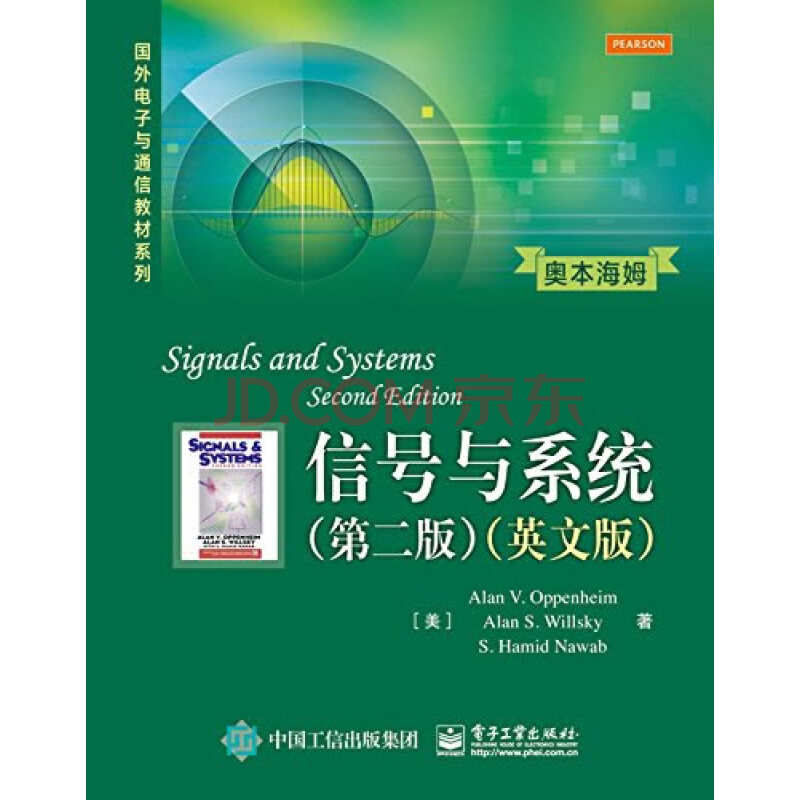
Alan V. Oppenheim,Alan S. Willsky, and S. Hamid Nawab, Signals and Systems, 2nd ed., BJ: Publishing House of Electronics Industry, Aug. 2020.

Bibliography

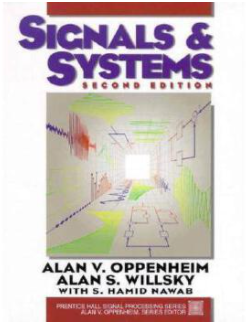
[1]Alan V. Oppenheim,Alan S. Willsky, and S. Hamid Nawab, Signals and Systems, 2nd ed., NJ: Prentice Hall, Aug. 1988

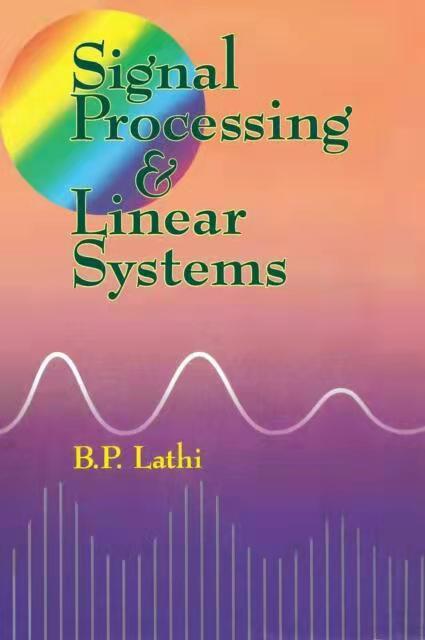
[2]B. P. Lathi,Signal Processing and Linear Systems, Berkeley Cambridge Press

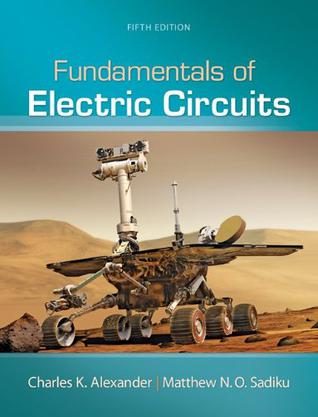
[3]Charles K. Alexander, and Matthew N. O. Sadiku, Fundamentals of Electric Circuits, 5th ed., Press: Science Engineering & Math,2012

课程体系(Curriculum System)

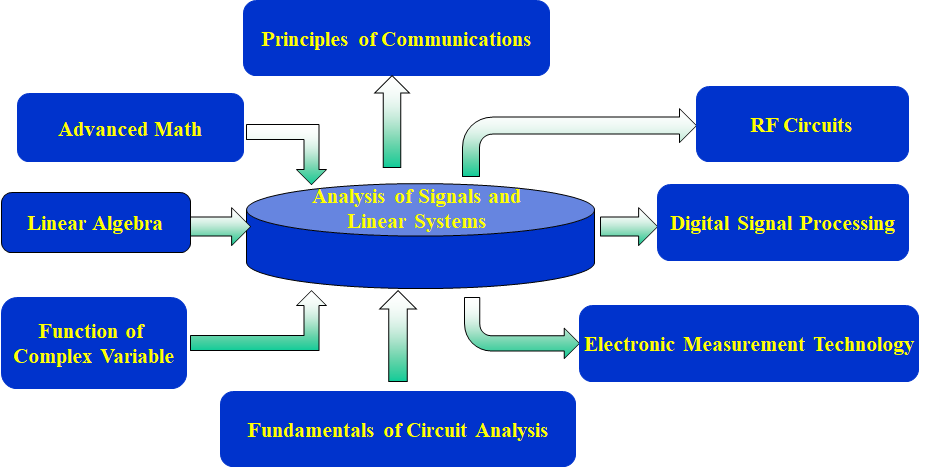
Curriculum System:


章节目录(Contents)
  • Chapter 0  Introduction

  • Chapter1  Signals and Systems

  • 1.1 The Concept of Signals and Systems

  • 1.2 Classification of Signals and Systems

  • 1.2.1 Classification of Signals

  • 1.2.1.1 Continuous-Timeand Discrete-Time Signals

  • 1.2.1.2 Periodicand Aperiodic Signals

  • 1.2.2 Classigication of Systems

  • 1.2.2.1 Continuous-Timeand Discrete-Time Systems

  • 1.2.2.2 Linear Time-Invariant Systems

  • 1.3 Time Domain Transformation of One Signal

  • 1.3.1 Time Shifting

  • 1.3.2 Time Reversal

  • 1.3.3 Time Scaling

  • 1.3.4 Mixed Transformationand Examples

  • 1.4 The Unit Impulse and Unit Step Functions

  • 1.4.1 The Continuous-Time Unit Impluse and Unit Step Functions

  • 1.4.1.1 Representation

  • 1.4.1.2 Properties

  • 1.4.2 The Discrete-Time Unit Impluse and Unit Step Sequences

  • 1.4.2.1 Representation

  • 1.4.2.2 Properties

  • Chapter 2  Analysis of Continuous-Time LinearTime-Invariant Systems in Time-Domain

  • 2.1 Causal Continuous-Time LTI Systems Described by Linear Constant-CoefficientDifferential Equations

  • 2.2 Solutions to Causal Continuous-Time LTI Systems

  • 2.3 The Convolution Integral

  • Chapter 3  Analysis of Discrete-Time LinearTime-Invariant Systems in Time-Domain

  • 3.1 Causal Discrete-Time LTI Systems Described by Linear Constant-Coefficient DifferenceEquations

  • 3.2 Solutions of Causal Discrete-Time LTI Systems

  • 3.3 The Convolution Sum

  • Chapter 4  Analysis of Linear Time-Invariant Systems in Frequency-Domain

  • 4.1 The Continuous-Time Fourier Series (CFS) for Periodic Signals

  • 4.2 The Continuous-Time Fourier Transform (CTFT) for Aperiodic Signals

  • 4.3 The Continuous-Time Fourier Transform (CFT) for Both Periodic and Aperiodic Signals

  • 4.4 Properties of the Continuous-Time Fourier Transform

  • 4.4.1 Linearity

  • 4.4.2 Time Shifting

  • 4.4.3 Conjugation and Conjugate Symmetry

  • 4.4.4 Differentiation and Integration

  • 4.4.5 Time and Frequency Scaling

  • 4.4.6 Duality

  • 4.4.7 Parseval's Relation

  • 4.4.8 The Convolution Property

  • 4.4.9 The Multiplication Property

  • 4.5 Analysis of Linear Time-Invariant Systems in Frequency-Domain

  • 4.6 The Sampling Theorem

  • 4.7 The Discrete-Time Fourier Series (DFS) for Periodic Sequences

  • 4.8 The Discrete-Time FourierTransform (DTFT) for Aperiodic Sequences

  • 4.9 The Discrete Fourier Transform (DFT) for Time Limited Sequences

  • Chapter 5  Analysis of Continuous-Time LTI Systems Usingthe Laplace Transform

  • 5.1 The Laplace Transform

  • 5.2 Properties of The Laplace Transform

  • 5.3 Analysisof Continuous-Time LTI Systems by Laplace Transform

  • 5.4 System Block Diagram representations in S-Domain

  • 5.5 Circuit Model Representations in S-Domain

  • Chapter 6  Analysis of Discrete-Time LTI Systems Using the z-Transform

  • 6.1 Thez-Transform

  • 6.2 Properties of The z-Transform

  • 6.3 Analysisof Discrete-Time LTI Systems by z-Transform

  • Chapter 7  System Function

  • 7.1 The Characteristics of System Functions

  • 7.2 Signal Flow Gragh and Mason Formula

  • Chapter 8  State Variable and State Equation for ASystem

  • 8.1 StateVariable and Establishment of State Equation

  • 8.2 Solutionto State Equation

课程评价

教学资源
课程章节 | 文件类型   | 大小 | 备注
1.1 0.1 Introduction
文档
.pdf
1006.60KB
2.1 1.1 The Concept and Classification of Signals and Systems
文档
.pdf
1.91MB
2.2 1.2 Time Domain Transformation of One Signal
文档
.pdf
2.90MB
2.2.1 Video: Mar.3rd, 2023 The 2nd Class-1
视频
.mp4
366.94MB
2.3 1.3 The Unit Impulse and Unit Step Functions
文档
.pdf
4.37MB
2.3.2 Video: 2022 The third class part 1 video with caption
视频
.mp4
670.50MB
 
视频
.mp4
277.37MB
2.3.3 Supplementary reading: What is Dirac Delta Function ?
文档
.docx
13.46KB
2.4 1.4-1.5 The Classification and Representation of Systems
文档
.pdf
5.59MB
3.1 2.1 Classical Solutions and y(0+)
文档
.pdf
1.22MB
3.1.1 the course video with caption on how to get y(0+)
视频
.mp4
699.98MB
3.2 2.2 y(0+), yzi(t), yzs(t) and h(t)
文档
.pdf
1.68MB
3.2.1 the course video on y(0+), yzi(0+) and yzs(0+) with captions
视频
.mp4
767.11MB
3.2.2 the course video on h(t) and h(0+) with captions
视频
.mp4
647.66MB
3.3 2.3 The Convolution Integral
文档
.pdf
899.37KB
3.4 2.4 The Properties of Convolution
文档
.pdf
1.80MB
4.1 3.1 Classical Solutions
文档
.pdf
969.70KB
4.2 3.2 The Response of δ(k) and E(k), the Initial Value, yzs(k) and yzi(k)
文档
.pdf
1.66MB
4.3 3.3 h(k), g(k) and the Convolution Sum
文档
.pdf
2.21MB
4.4 3.4 The Properties of Convolution Sum and Deconvolution
文档
.pdf
3.65MB
5.1 4.1 Decomposition of f(t)
文档
.pdf
827.04KB
5.2 4.2 Fourier Series
文档
.pdf
1.59MB
5.3 4.3 Frequency Spectrum
文档
.pdf
1.06MB
5.4 4.4 Fourier Transform
文档
.pdf
1.79MB
5.5 4.5 The Properties of Fourier Transform
文档
.pdf
1.51MB
5.6 4.6 The Power and Energy Spectrum
文档
.pdf
1.10MB
5.7 4.7 Fourier Transform for Periodic Signals
文档
.pdf
890.80KB
5.8 4.8 Analysis of Continuous-Time LTI Systems in Frequency-Domain and Distortionless Transmission
文档
.pdf
1.51MB
5.9 4.9 Sampling Theorem
文档
.pdf
2.17MB
5.10 4.10 DFS, DTFT and DFT(supplement))
文档
.pdf
1.39MB
6.1 5.1 The Laplace Transform
文档
.pdf
860.38KB
6.2 5.2 Properties of The Laplace Transform
文档
.pdf
794.17KB
6.3 5.3 Inverse Laplace Transform
文档
.pdf
1.43MB
6.4 5.4 s-Domain Analysis
文档
.pdf
1.00MB
课程章节
提示框
提示框
确定要报名此课程吗?
确定取消

京ICP备10040544号-2

京公网安备 11010802021885号