
教学目的及要求
Present an overview of many of the key areas of the file system design. Specifically, we will look at the messages, the file system layout, the bitmaps, i-nodes.
Requirement: Master another important subsystem within the file system manages directories and path names and we will look at how file descriptors are managed within the file system.
教学重点及难点
Emphasizing: Understanding the file system layout.
Difficulties: difference between zones and blocks.How a path name is converted to an i-node, how the two system calls affect the file system as a whole are mount and umount.
教学内容
Users and application programs interact with the file system by means of commands for creating and deleting files and for performing operations on files.
Before performing any operation, the file system must identify and locate the selected file.
This requires the use of some sort of directory that serves to describe the location of all files, plus their attributes.
In addition, most shared systems enforce user access control
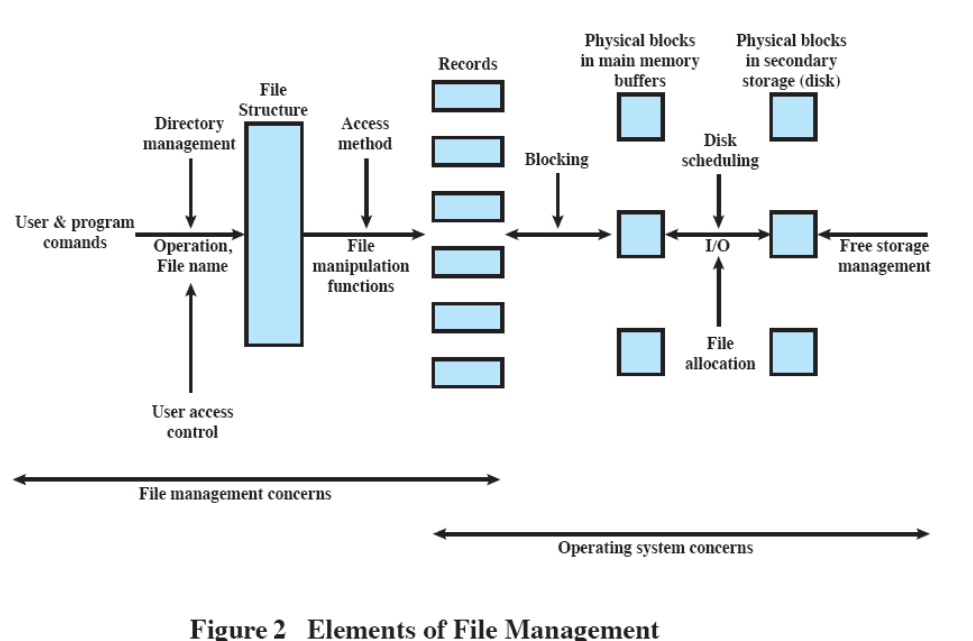
The basic operations that a user or application may perform on a file are performed at the record level.
The user or application views the file as having some structure that organizes the records, such as a sequential structure
The secondary storage must be managed.
This involves allocating files to free blocks on secondary storage and managing free storage so as to know what blocks are available for new files and growth in existing files.
In addition, individual block I/O requests must be scheduled
Disk scheduling and file allocation are both concerned with optimizing performance.
The optimization will depend on the structure of the files and the access patterns.

