
§2.2.1Replicationof prokaryotes
Initiation(起始)
1.Recognize the startsite(识别复制起始位点)
2.Unwind dsDNA(解链)
3. Primer synthesis(合成引物)
Startsite
★Thereplication starts at a particular point called origin(复制起始点).
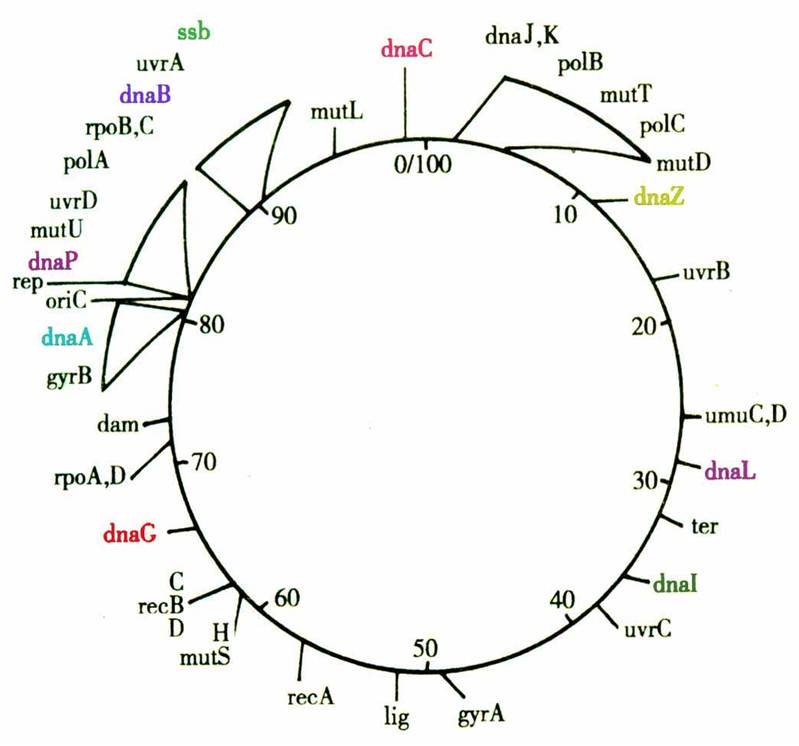
★Theorigin of E. coli, ori C, is at the location of 82.
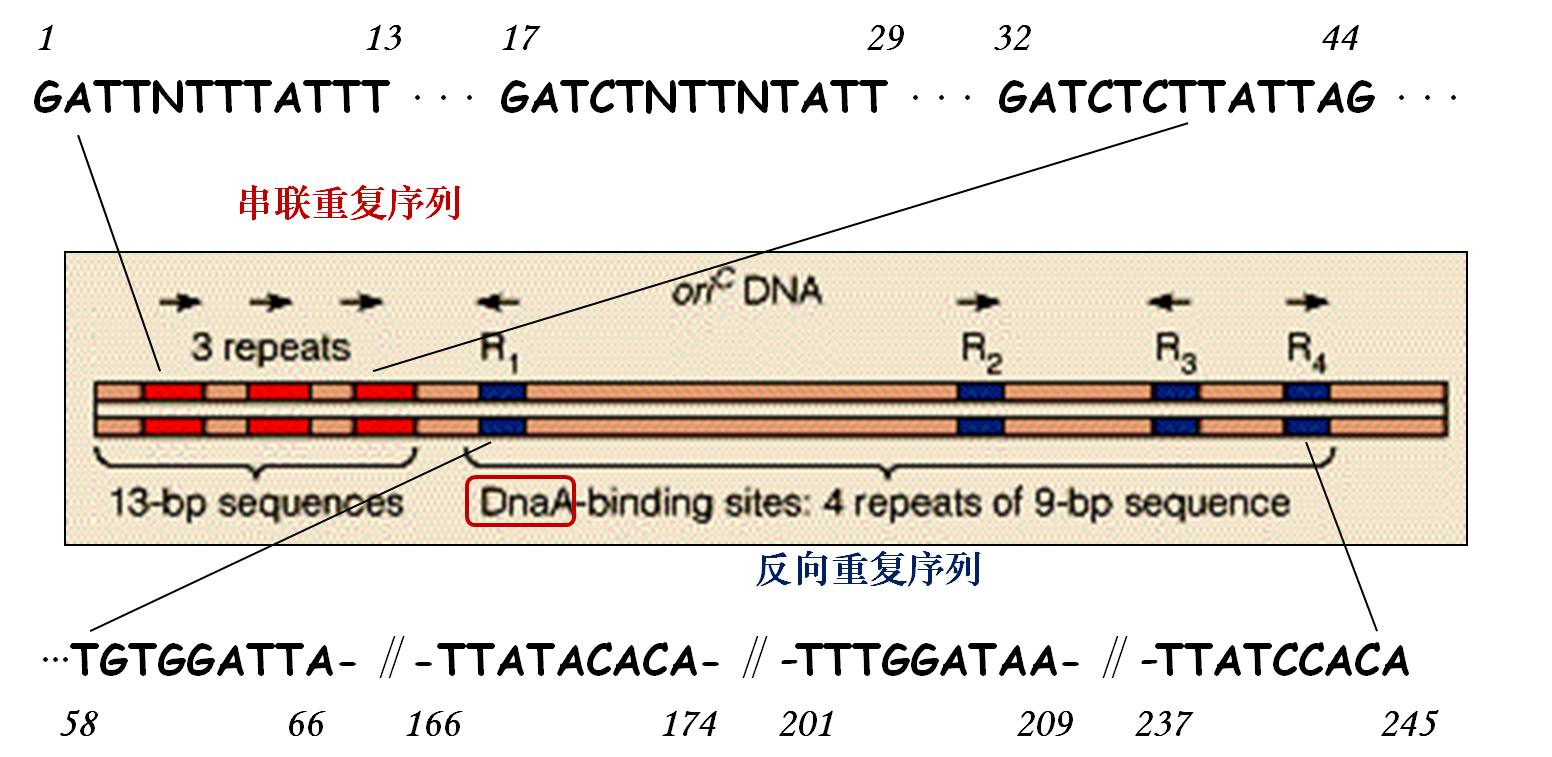
★Thestructure of the origin is 248 bp long and AT-rich.
Structureof ori C in E.coli
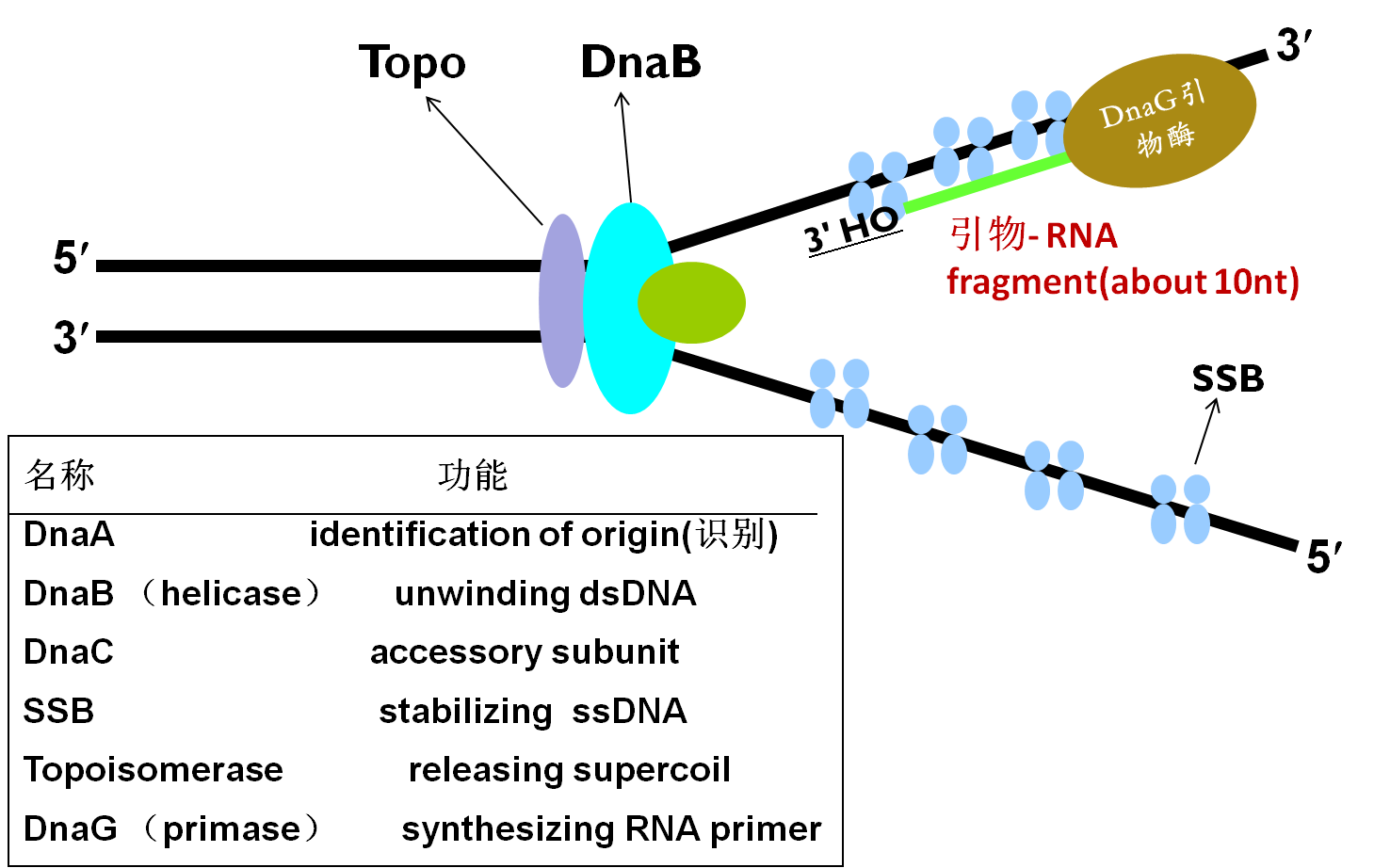
Initiation process
★DnaA recognizes ori C.
★DnaB and DnaC open the local AT-rich region, and move downstream further to separate enough space.
★DnaA is replaced gradually.
★SSB protein binds the complex to stabilize ssDNA.
Ready for elongation
Elongation(延长)
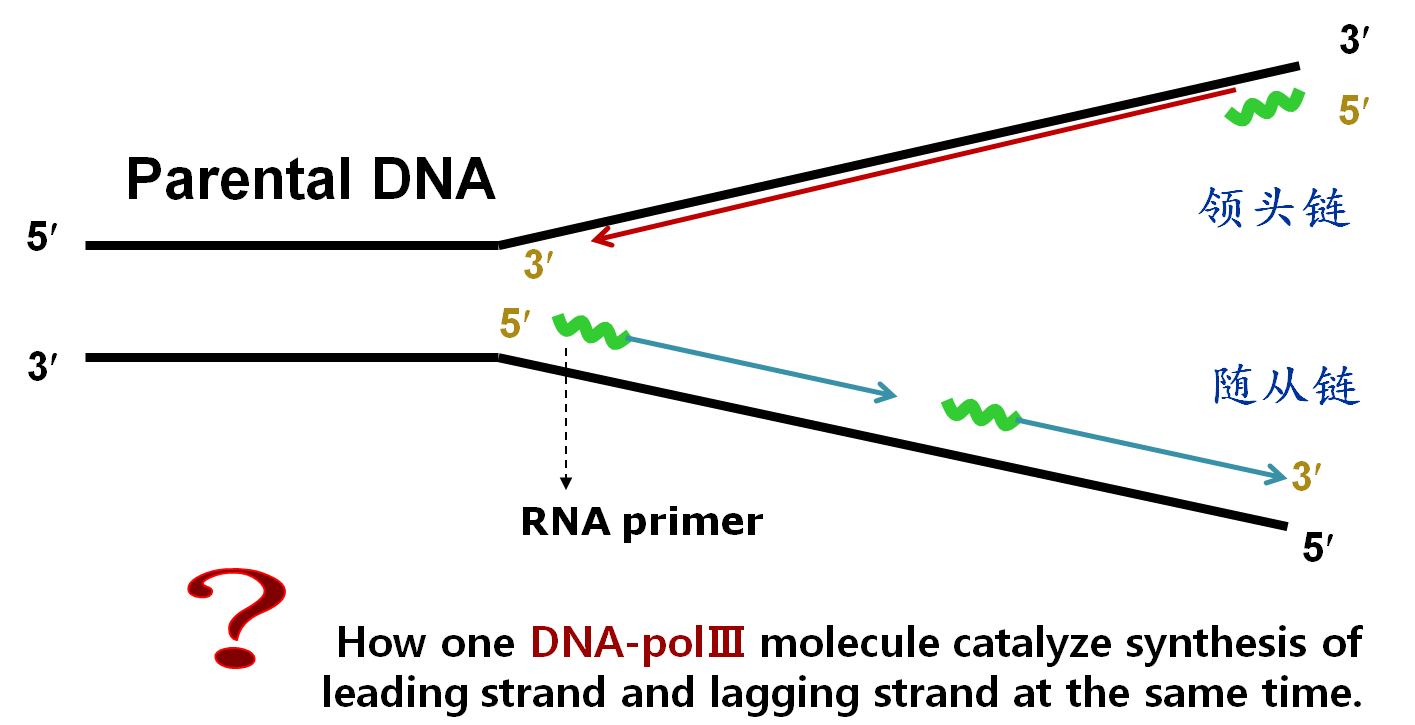

★γ complex enables DNA-primer double chain to thread through β clamp(后随链发生回折,使前导链和后随链合成方向一致).——making synthesis direction of lagging strand the sameas that of leading strand.
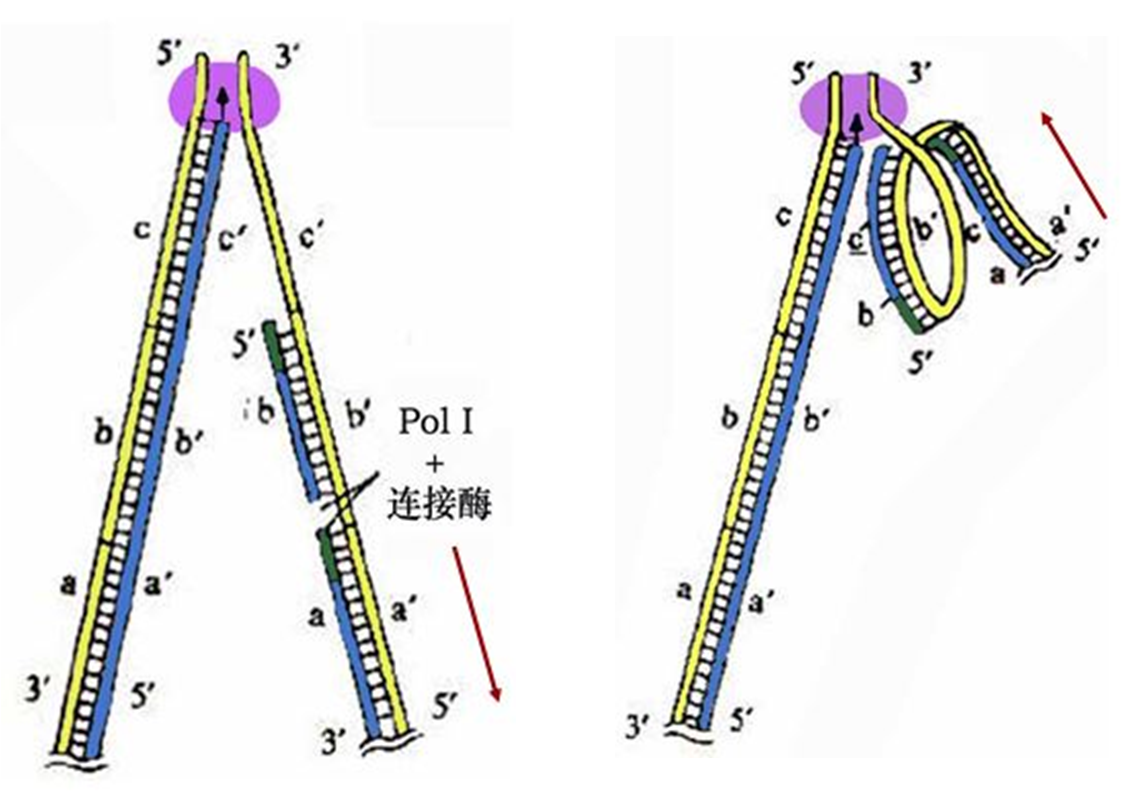
回折是前导链和后随链合成方向一致
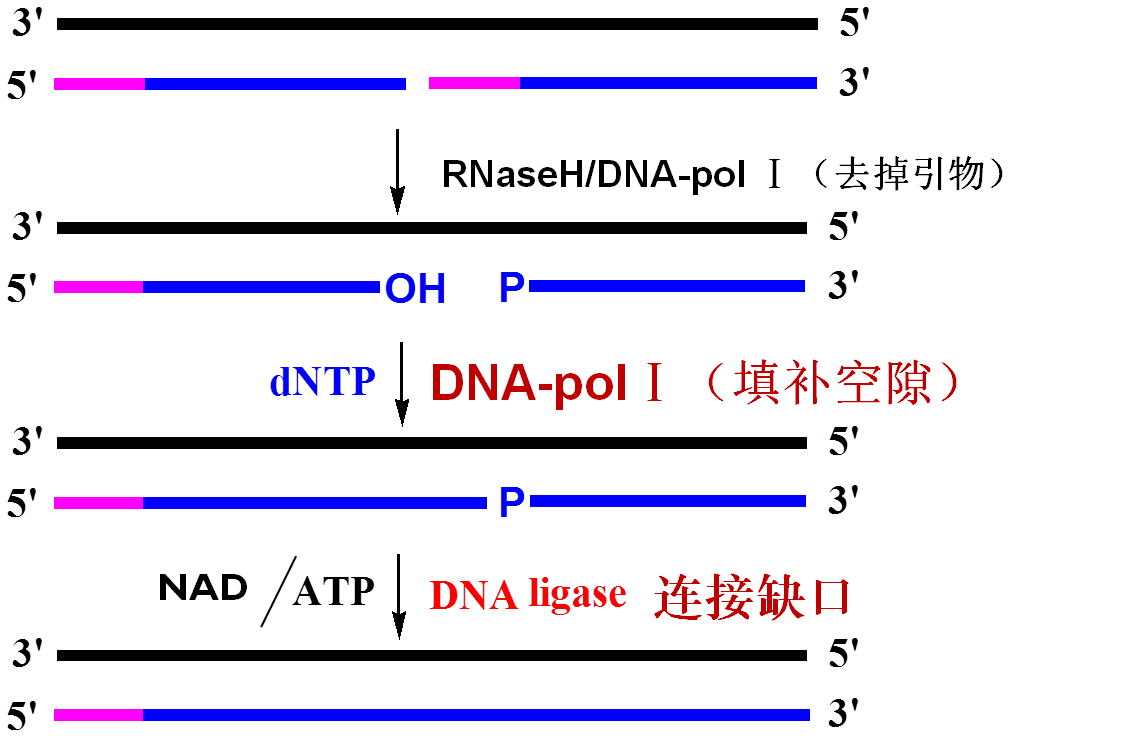 ★Primers on Okazaki fragments are digested by RNaseH or polⅠ.
★The gaps are filled by DNA-pol I in the 5´→3´direction.
★The nick between the 5´end of one fragment and the 3´end of the next fragment is sealed by ligase.
Termination(终止)
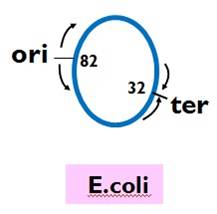
★Tus protein recognizes and binds termination site and terminates replication.
★The replication of E. coli is bidirectional from one origin, and the two replication forks must meet at one point called ter at 32.
§2.2.2 Replication of eukaryotes-真核生物DNA复制
★1.Genome is much huge(3×10⁹ bp)
★2. Genome structure is much more complicated (Nucleosome –核小体).
Elongation rate islower than that of prokaryote.
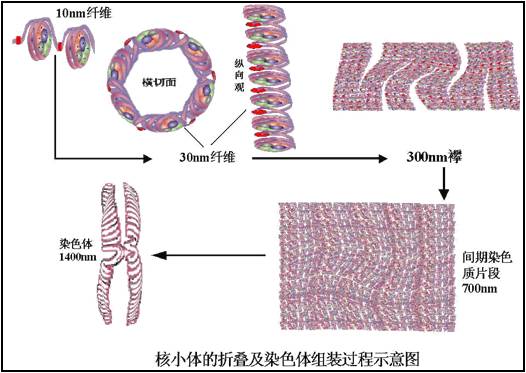

Replication process of eukaryotes
Initiation(起始)
★1. DNA replication is closely related with cell cycle(细胞周期).
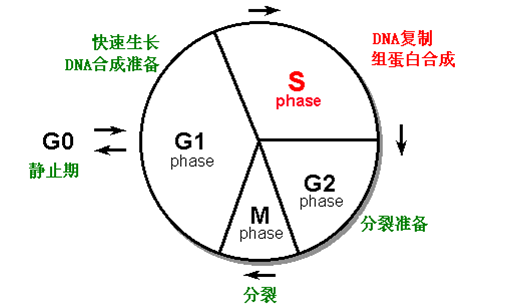
★2. Multiple origins(多复制起点) on one chromosome, and replications are activated in a sequential order rather than simultaneously.
· Ori in yeast:,ARS(autonomously replicating sequences),自主复制序列。
· ARS is recognized by origin recognition complex(ORC)-起点识别复合物
· 400 ARS in yeast genome.
· No similar sequence is found in human.
★3. Enzyme and protein factors involved in initiation.
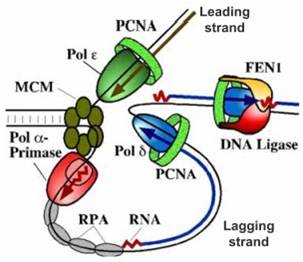
· Helicase: Dna2(yeast), MCM(mini-chromosome maintainence protein)
· Topo
· SSB: Replication factor A(RFA)
· DNA-pol α : Sythesize primer
Elongation(延长)and Termination (终止)
★1. Enzyme and protein factor involved in elongation.
· DNA-pol ε/δ : catalyze elongation of leading and lagging strand.
· RF-C: similar to γ complex
· PCNA(proliferating cell nuclear antigen-增殖细胞核抗原): similar to β clamp
· RNase H1 and FEN1( in human): removing primer
· DNA-pol ε/δ: gap-filing (填补空隙)
· ligase
DNA replication and nucleosome assembling(核小体装配) occur simultaneously.
Current model of DNA replication on
eukaryotic cell
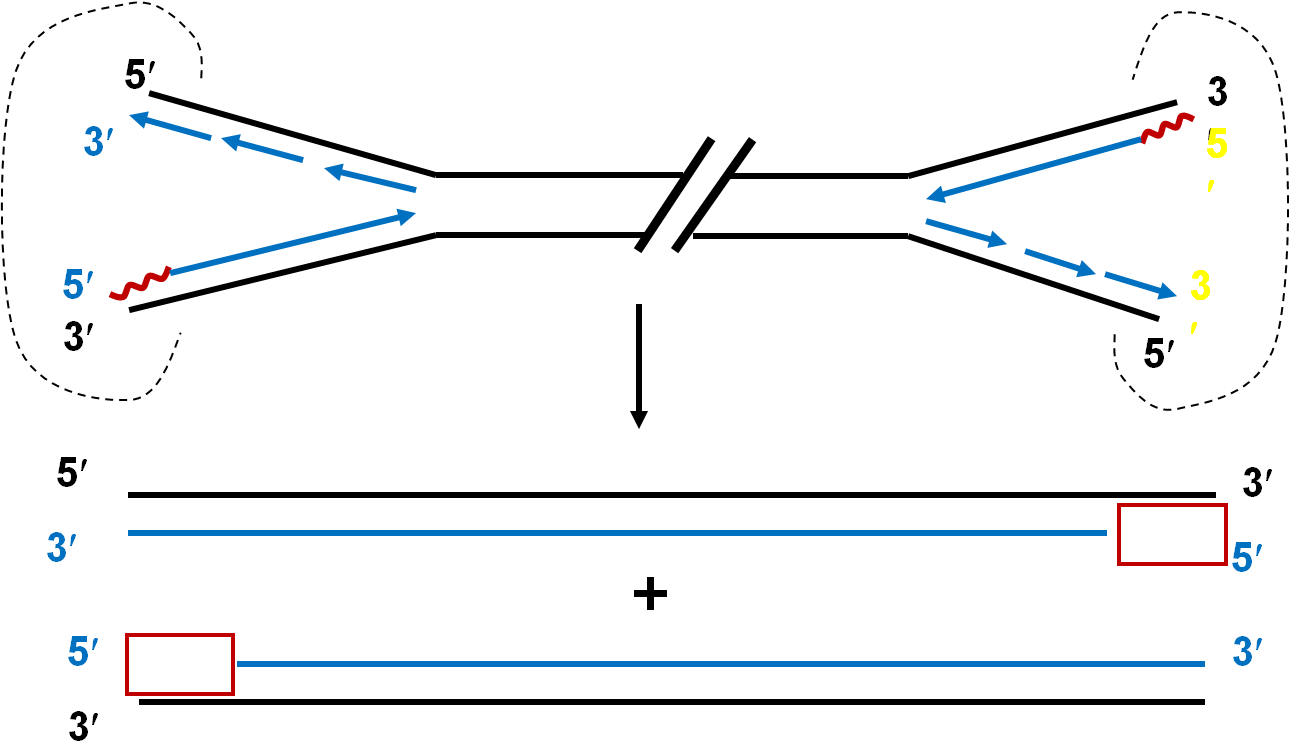
Gap filing inchromosome end
染色体末端复制的问题
§2.2.3 Telomere (端粒)
★1. Telomere
·The terminal structure of eukaryotic DNA of chromosomes is called telomere (染色体末端).
·Telomere is composed of
·The sequence of typical telomeres is rich in T and G.
·The telomere structure is crucial to keep the termini of chromosomes in the cell from becoming entangled and sticking to each other(维持染色体结构的稳定和完整).

★2. Telomerase(端粒酶)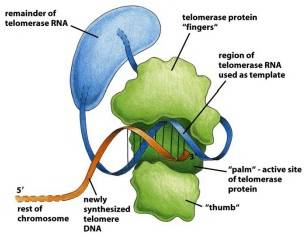
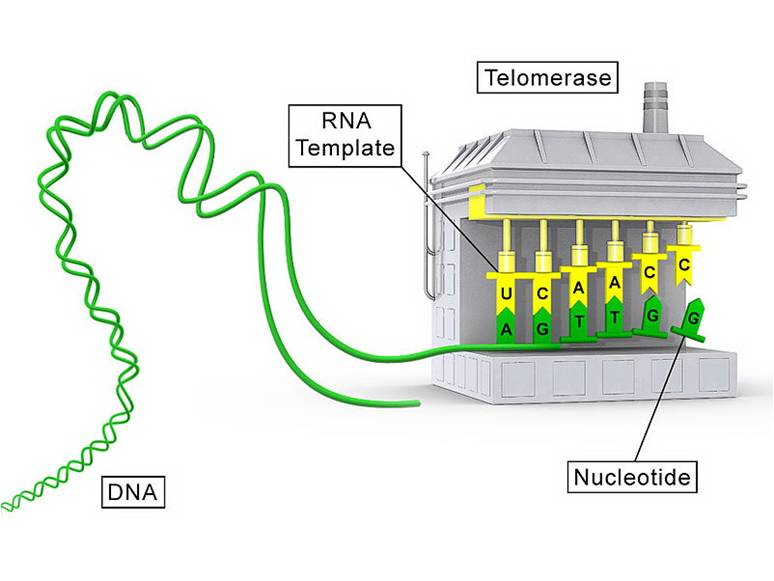
·The eukaryotic cells use telomerase to maintain the integrity of DNA telomere.
·The telomerase is composed of
 telomerase RNA (CA rich)
telomerase associationprotein
telomerase reverse transcriptase (逆转录酶)
·It is able to synthesize DNA using RNA as the template.
Inchworm model-爬行模型
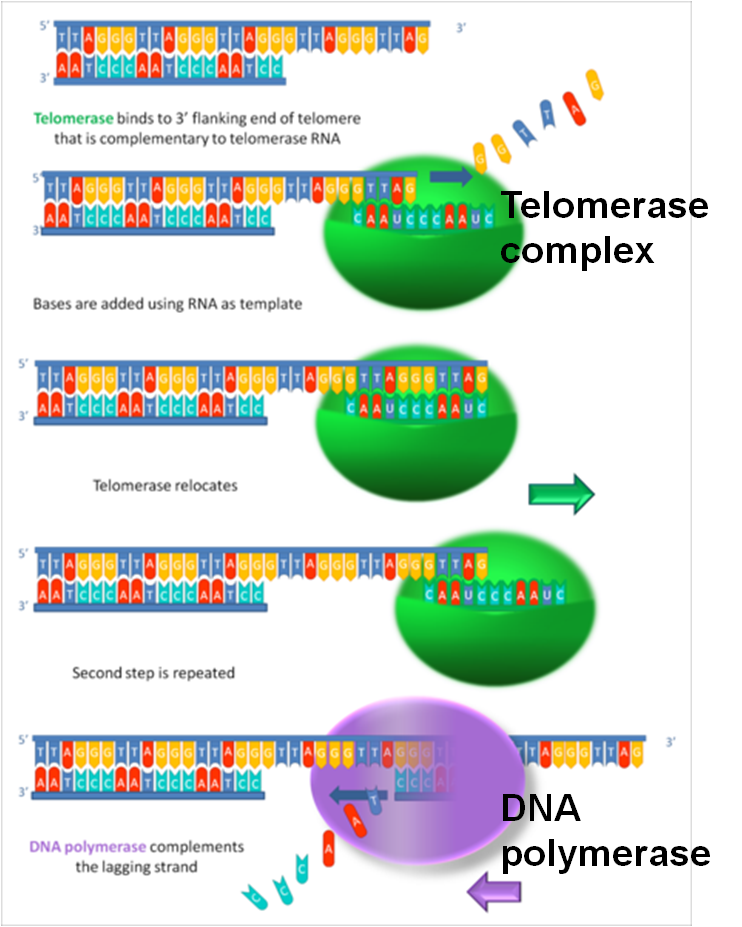 ★ 1.DNA template is extended.
★ 2.DNA daughter strand end is further supplemented.
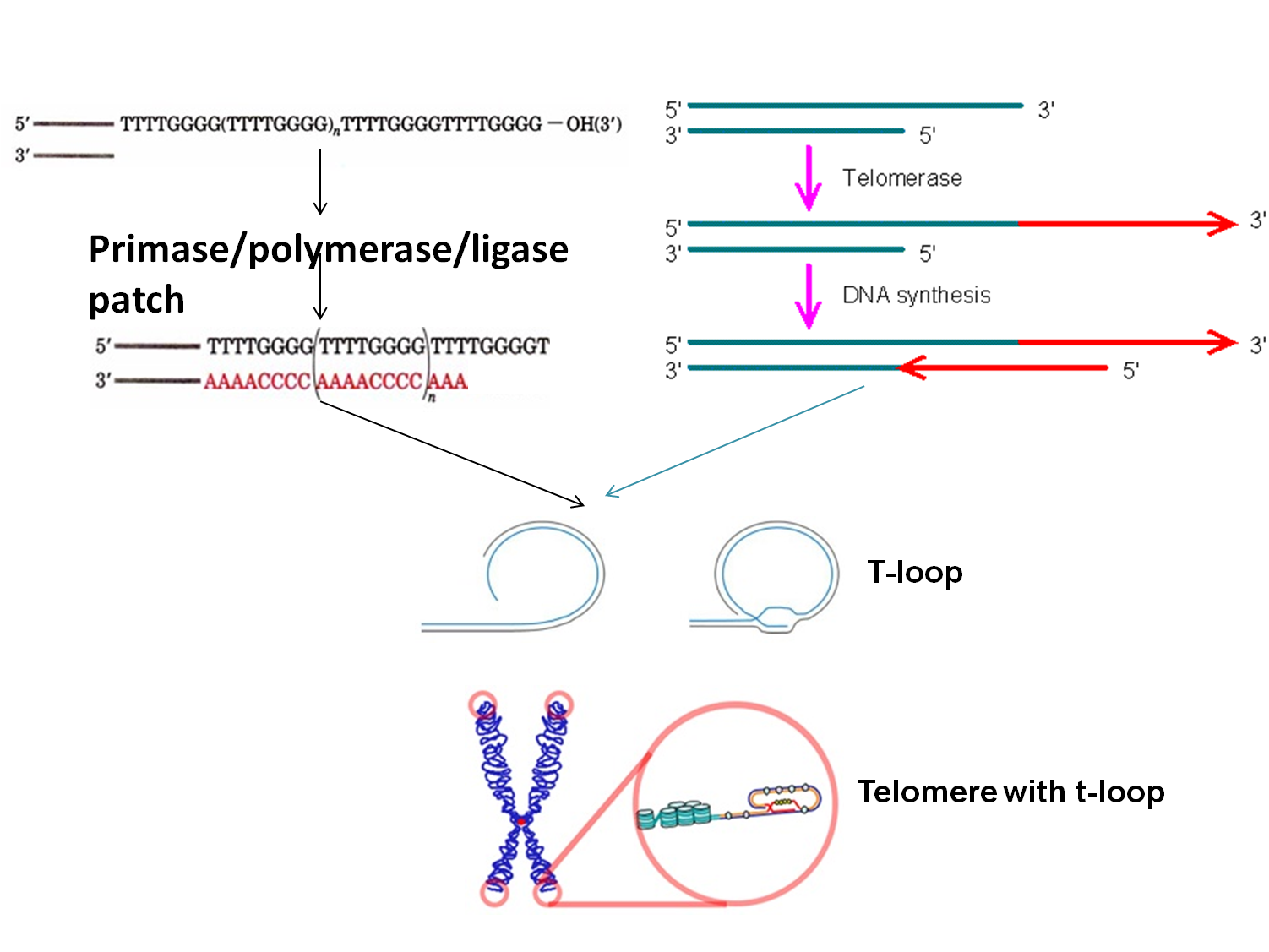
Significance of Telomerase
★Telomerase may play important roles in
Cancer cell biology
Cell aging
Stem cell
§2.3 Fidelity of Replication -复制保真性

★Mechanisms to ensure the fidelity of DNA replication are:
· 1. Balanced levels of dNTPs (底物浓度,种类)
· 2. principle of base pairing is crucial to the high accuracy of the genetic information transfer. (碱基互补配对)
· 3. Base selection garanted by DNA-pol.(碱基选择)
· 4. Proofreading and mismatch correction. (校读和修复)
★1. Balanced levels of dNTPs (底物池浓度,种类)
Prereplication: dNTP pool cleansing
· 1.Balance concentration of each dNTPand total dNTP.
· 2.Avoid potentially mutagenic nucleotide.
★2. 碱基互补配对
★3. 碱基选择
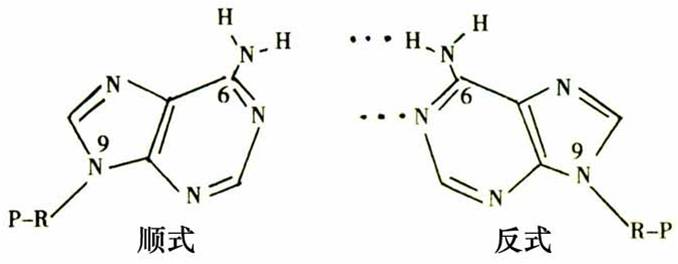
• DNA pol 选择正确碱基有序形成氢键.
Trans-form of A is proper for forming hydrogen bond(B-DNA).
★4. Proofreading and mismatch correction. (校读和修复-核酸外切酶功能)


