以下内容来自
https://www.lrgarden.cn/statuses/1000150485.html 仅供同学学习使用
Pests of Cacti and Succulents
 Cacti and succulents are relatively pest-free plants, but, like any others, they occasionally fall prey to typical greenhouse pests like mealybug, scale, mites and white fly. Don’t worry. Plants and pests go hand-in-hand. You’ll constantly be bringing pests home with new plants and no matter what you do, you’ll NEVER be completely free of them. The goal is control. Thankfully there are some simple, relatively toxin-free ways to help deal with the little nasties.

Mealybug
Probably the most common pest of cacti and succulents is the mealybug. There are several kinds of mealybug but the greenhouse, citrus, and occasionally long-tailed versions are the ones you’ll encounter most often. They look like tiny, white sow-bugs and have the annoying habit of finding the most out-of-the-way spots on your plants. White, cottony masses are signs that they’re reproducing…these are the “nests” that their little crawlers (nearly invisible) call home.
These buggers literally sap the strength of an infested plant and, with time and exploding numbers, can cause visible (though not usually fatal) decline.

Thankfully they are among the easiest of pests to control. Lug your plant to the nearest sink or hose and give the plant a good, strong shower. Mealys can be blasted off their hosts with a forceful stream of water. Another painless way to clean a plant up is with a cotton swab dipped in rubbing alcohol (isopropyl). Simply wipe off any that you see and then rinse the plant with clear water before returning to its spot. A couple of drops of dishwashing liquid to a quart of water is another weapon in the arsenal. The soap acts as a wetter, breaking down the waxy outer coating of many soft bodied insects, including mealybugs. Biological controls like predatory ladybugs and lacewings are also effective, but take some time to get their game on.
See signs of decline in your succulents for no apparent reason? Dump them out of their pots and check the roots. There is a mealy that makes its home underground and feeds on the roots of our plants. They are the worst as they are often not noticed until the plant has suffered. Off to the sink it went and got a thorough spraying until no insects or evidence of them was left.

Mites
I hate mites. First, you don’t usually notice them until they’ve disfigured your plant. Second, they are attracted to….warmth and dry conditions–the same environment enjoyed by cacti and succulents. Third, they are tougher to control than some of the other pests. Plants that are otherwise stressed are particularly susceptible.
Mites are not really insects, but they are sucking monsters. On other plants it’s common to find fine webbing…but not always on cacti and succulents. More commonly you’ll notice brown, corky patches beginning to show up on formerly healthy plants.
Start your control by keeping a close eye on your plants. Scout for trouble. Keep them healthy and properly watered. Step two: bump your humidity up a bit and mist the plants once in a while (most will experience fog in their native haunts–it won’t harm them). If you suspect an infestation of spider mites, use the “spray them off” technique discussed under mealybug.

It only seems fair that another of their ilk, a predatory mite, is one of the biological controls. It’s a perverse little twist of Mother Nature’s—and I like it!
Scale
After mealybug, scale is probably the most commonly encountered pest of cacti and succulents. These insects are like little armored tanks that clamp themselves to a leaf’s surface and do their damage while hidden underneath a relatively impervious shell.
Not as easy to spray off, I usually use the rubbing-alcohol treatment to remove them by hand. A cotton swab or a small, stiff paintbrush will do the trick. They are very difficult to get a good handle on and it’s always best to spot an infestation early. There are predator insects available but they are most effective if you can identify the species of scale that you’re dealing with.

White Fly
White fly round out the list of important pests to be on the guard against. They are, as their name implies, small white flies. While not common on most succulents, they seem to have a taste for Euphorbias, particularly the ones that have soft leaves. (I find this unusual since Euphorbias are characterized by their poisonous sap–the white flies don’t seem to mind).
Parasitic wasps are the most enjoyable way to control these pests. This winter it took them only a few weeks to knock down a population of white fly that was threatening to get out of hand. Insecticidal soap sprays can be effective
 People have been known to shake their plants and vacuum the insects out of the air. As a short term help to remove adults if may have some benefit, but I suspect that it does more for the psyche of the grower than it does for the plants!
以下内容来自
https://mp.weixin.qq.com/s/TDuJ18gwiICD7kgME3JL8g
仅供同学们学习使用,如有不妥,请告知删掉。
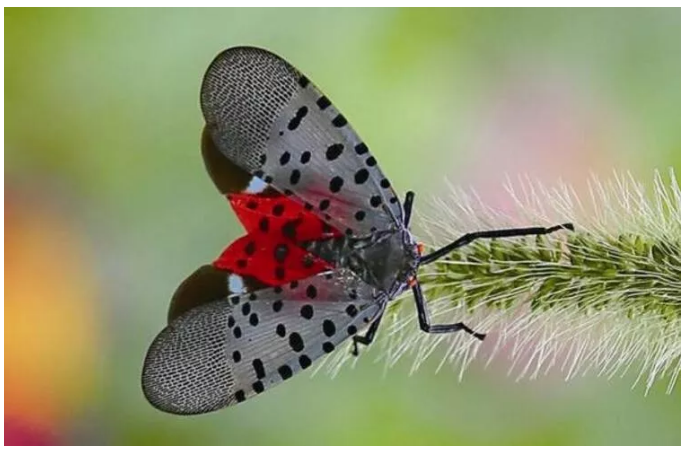
斑衣蜡蝉 Lycorma delicatula,想必你十分熟悉,每年夏天臭椿树上都能发现它们欢脱的身影。
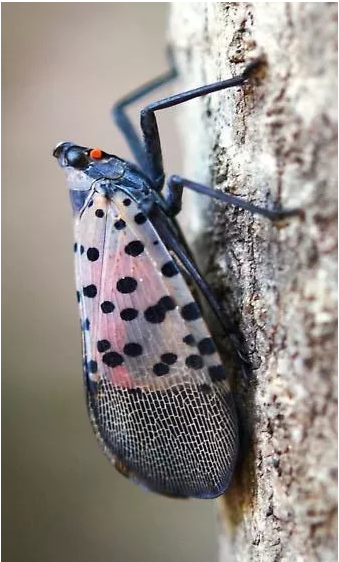
像蛾子,穿花衣;实为蝉,却叫鸡。
由于为害樗树,我国古籍称之为“樗鸡”。除此之外,它们还有很多好玩的俗名——“花姑娘”、“椿蹦儿”、“花蹦蹦”、“椿媳妇‘’,是不是听上去格外亲切?

它们20~26 mm的个头,身上附有一层薄薄的蜡粉,鲜红色的圆球状触角,再搭配灰底黑斑的“波点裙”,颇有一番“时尚”味道。
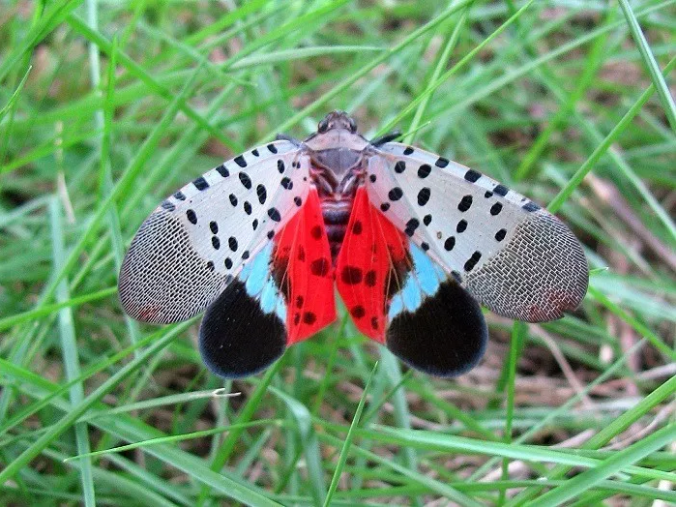
若是被招惹惊吓,还会“唰”得亮出红底黑斑的波点“内衣”,那鲜艳的配色,那性感的图案,着实让捕食者“心猿意马”。
你以为只有成虫如此妖娆,不是的,斑衣蜡蝉若虫期就懂得“波点时尚”。初孵的若虫小小白白的,不多久就会变为黑色,还零星点缀白色的斑点:
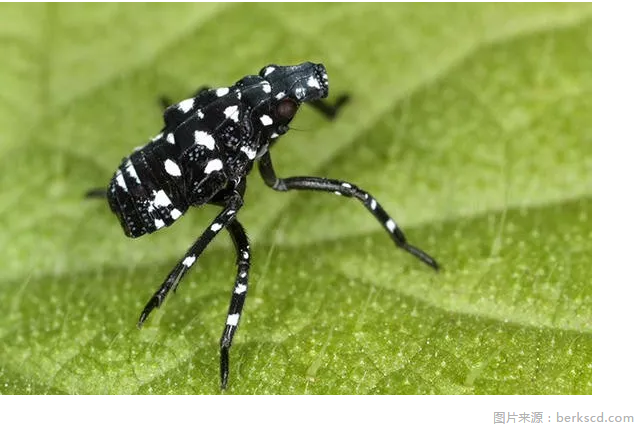
波点外形不仅美观,也是它们的防身“武器”:若虫喜欢聚集在一起群体活动,黑底白点打乱了它们身体间的界限,让捕食者分不出哪只是哪只,很难锁定目标。

到了四龄若虫期,斑衣蜡蝉会有个华丽丽的变身,褪下黑底白斑的波点服换上红色加黑白点缀的“衣裳”。
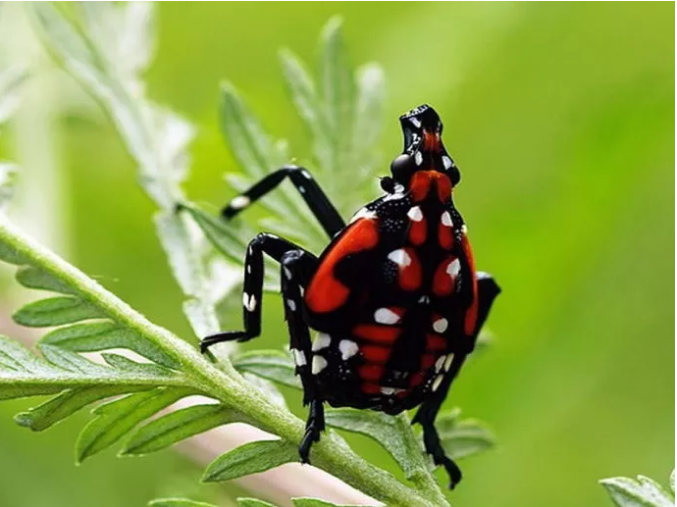
虽然斑衣蜡蝉模样尚佳,但品行极差,成虫、若虫均刺吸嫩叶、枝干汁液,常常造成叶片破裂、穿孔、枝条萎蔫,它们的排泄物会污染果枝、果实引起煤污病的发生。
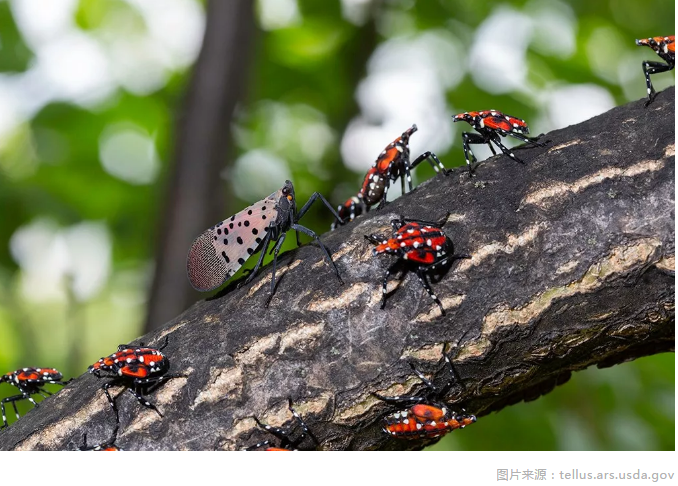
目前,我国多个主要葡萄产区均遭受到斑衣蜡蝉的侵害,严重影响葡萄产量和品质;此外,斑衣蜡蝉还为害苹果、石榴、梨、桃、猕猴桃。。。
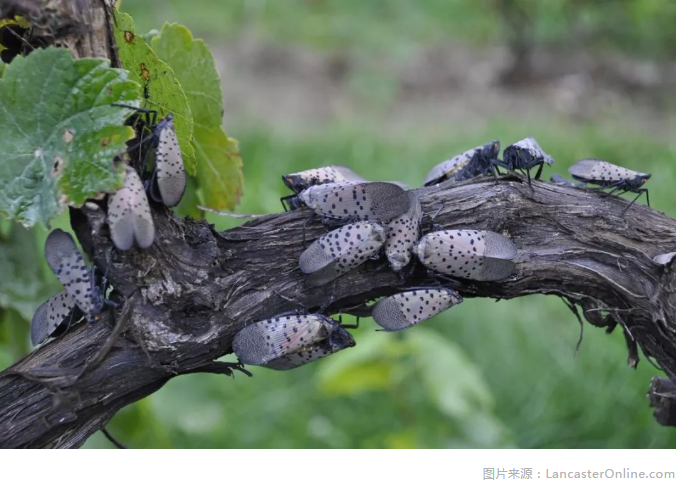
在绿化树种中,斑衣蜡蝉最喜欢臭椿,但又不仅仅祸害臭椿,什么苦楝、悬铃木、杨树、香椿、千头椿、合欢、刺槐等都是它们的取食对象,为害严重时可以导致果树减产和行道树病害,是令人头疼的农业和绿化害虫。
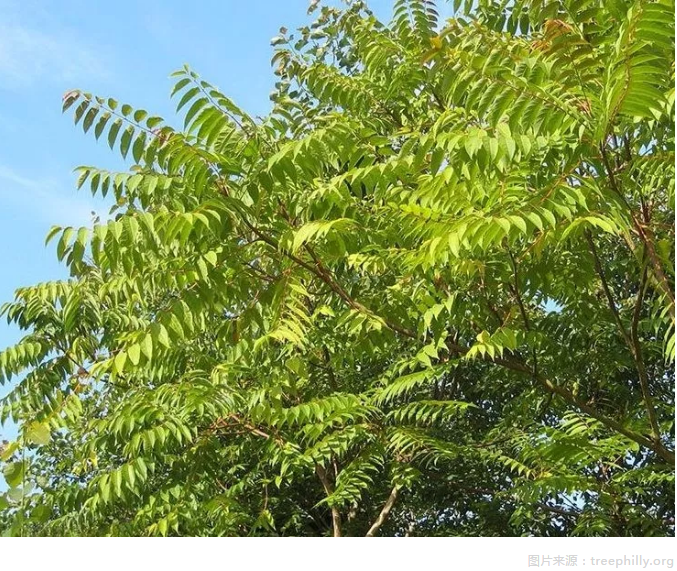
被誉为天堂树的臭椿树,是斑衣蜡蝉的最爱
斑衣蜡蝉在我国北方地区一年发生一代,以卵越冬。翌年 4 月中旬孵化,开始为害树木,6 月中旬成虫出现,开始繁殖,子子孙孙无穷尽也。
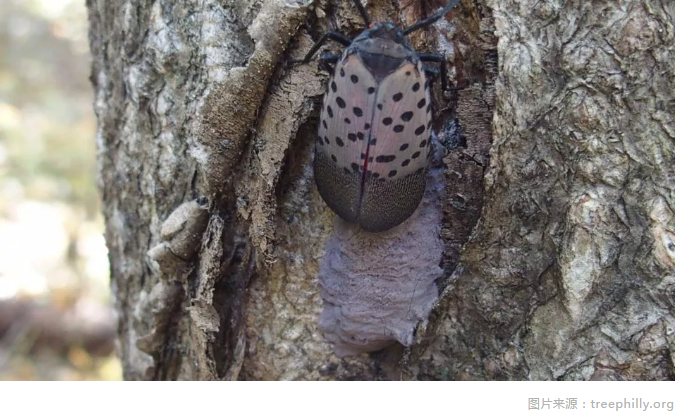
成虫、若虫喜欢群集,遇惊扰时,会迅速移动或跳跃逃避,它们分布广、迁移性强、寄主多、危害大,常规防治效果不佳。

难道它们没有天敌吗?
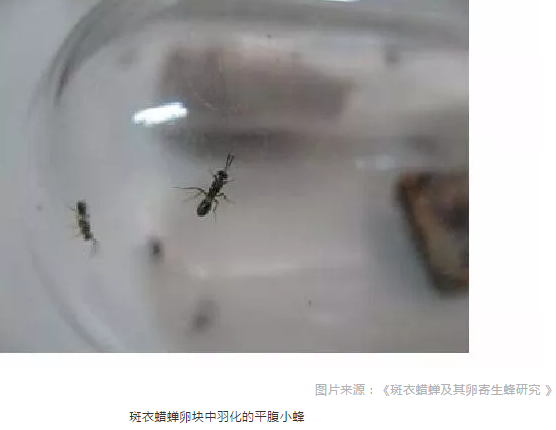
有的!目前报道的自然界中斑衣蜡蝉的天敌主要有斑衣蜡蝉平腹小蜂Ananstatus sp.、布氏螯蜂Dryinus browni 、小黄家蚁Monomorium pharaonis、中华大刀螳螂Tenodera sinensis、圆蛛科的棒络新妇Nephila clavata和大腹圆蛛Araneus ventricosus等,其中,斑衣蜡蝉平腹小蜂和布氏螯蜂是优势天敌。
+ 进 军 美 国 +
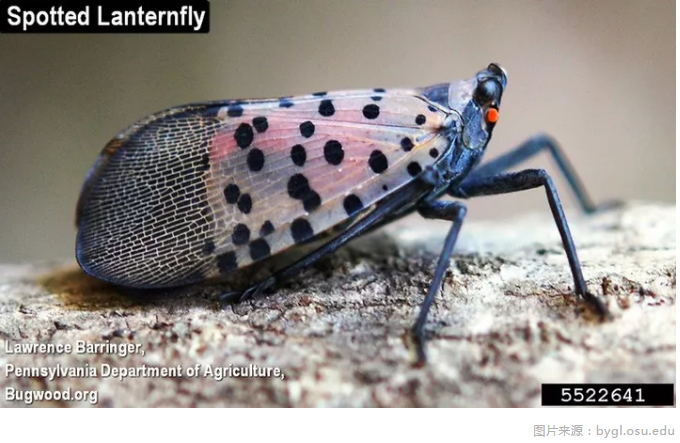
斑衣蜡蝉原产我国,由于受到天敌或病原体的影响,处于受控状态。但当它们入侵至美国宾夕法尼亚州时,由于缺少天敌,得到了暴发式扩展,对当地农林业尤其是葡萄种植业造成严重威胁。
2014年9月,美国宾夕法尼亚州费城西北部的伯克斯县首次发现了斑衣蜡蝉,其扩散和泛滥对宾夕法尼亚州果树业和苗圃业造成巨大危害,甚至影响了当地人的日常生活。
葡萄园中的斑衣蜡蝉:
苹果园中的斑衣蜡蝉: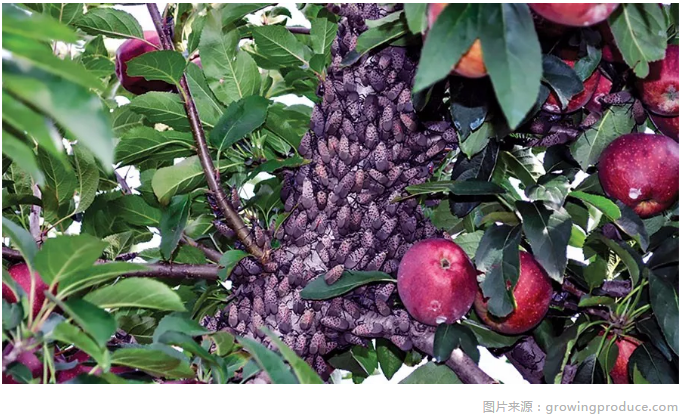
行道树上的斑衣蜡蝉:

图片来源:treephilly.org
据统计,入侵的斑衣蜡蝉威胁着宾夕法尼亚州总价值高达180亿美元的葡萄、果树、硬木和苗圃产业。

发放卡片,帮助人们了解斑衣蜡蝉的不同阶段
为了除掉斑衣蜡蝉,宾夕法尼亚准备将臭椿列入B级有毒杂草进行消灭,甚至花费大量人力物力教育居民如何识别斑衣蜡蝉、如何消灭虫卵,以及如何上报虫害。

清除斑衣蜡蝉虫卵
尽管已经加强了杀虫、检疫工作,但斑衣蜡蝉还是扩散到了美国另外六个州。
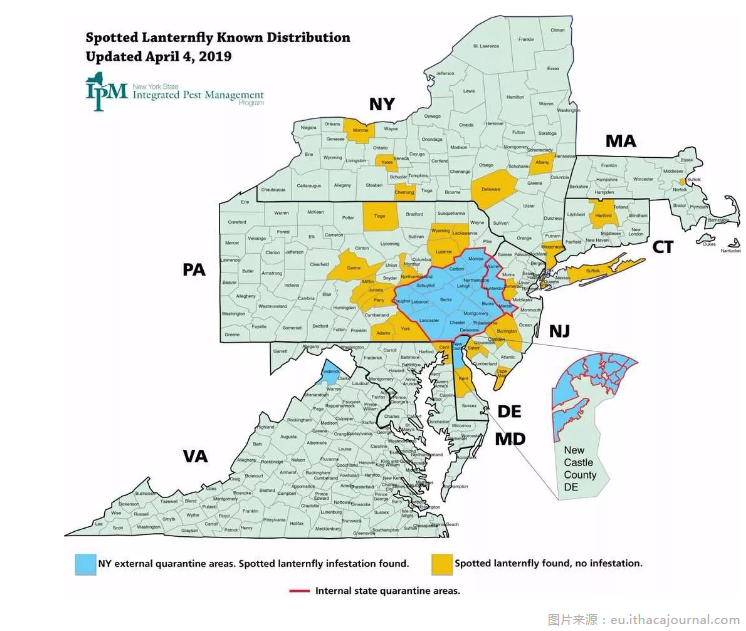
2017年,仅仅纽约州控制入侵物种的资助就高达到1300万美元,以加强预防和根除入侵性的斑衣蜡蝉。
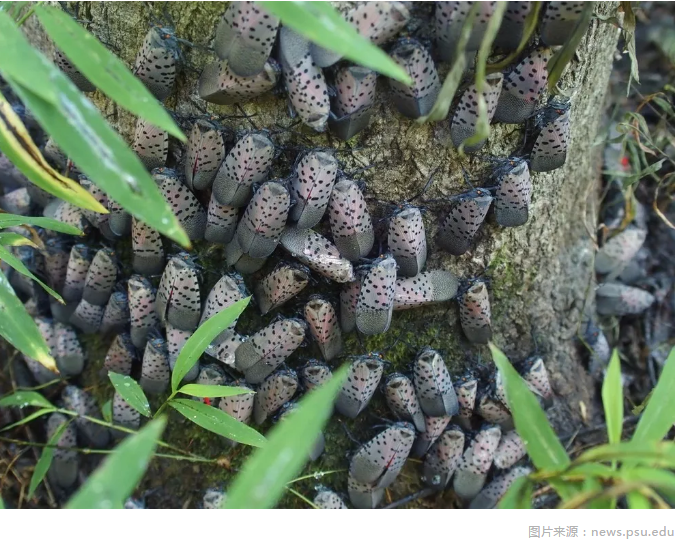
+ 团 灭 了 ?+
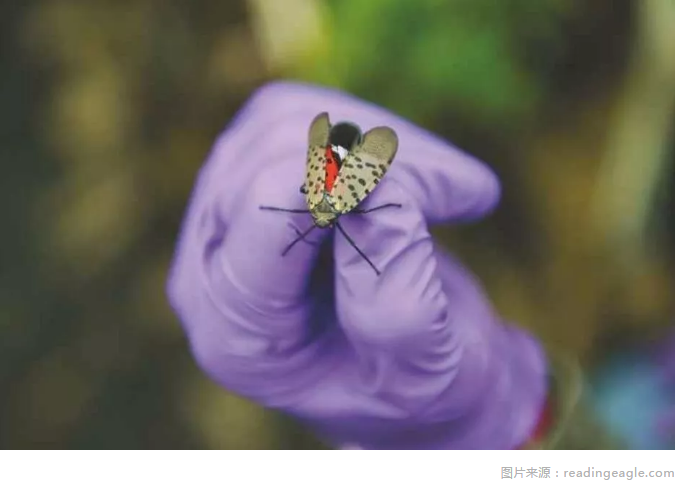
斑衣蜡蝉在美国嚣张度日,直到遇到了Ta们——Batkoa major真菌和Beauveria bassiana真菌。
康奈尔大学的研究人员在美国国家科学院院刊(PNAS)发表了研究结果,显示这两种真菌病原体具有阻止入侵物种斑衣蜡蝉的能力。
原来,2018年10月,研究人员在一颗树以及临近地面上发现了大量斑衣蜡蝉的尸体。
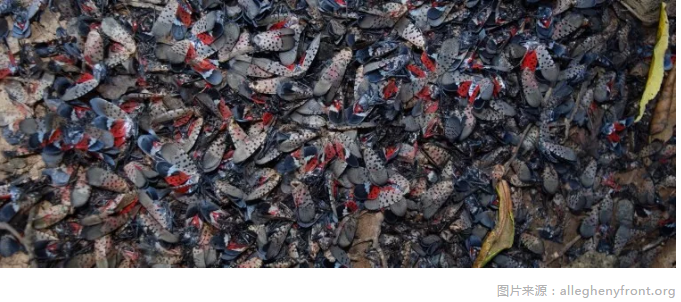
进一步调查发现,这些突然死亡的斑衣蜡蝉,都是被北美本土的真菌——Batkoa major真菌和Beauveria bassiana真菌感染所致。

被Batkoa major真菌杀死的斑衣蜡蝉
研究人员使用遗传技术来鉴定这两种真菌,他们发现,97%的树干上的斑衣蜡蝉被Batkoa major真菌杀死;而在地面上,51%的尸体被Batkoa major真菌感染,其余的被Beauveria bassiana真菌杀死。

被Beauveria bassiana真菌杀死的斑衣蜡蝉

美国科研人员一直在探索将天然捕食者或病原体引入美国消杀斑衣蜡蝉,但这两种真菌物种的发现可能提供了一种天然的选择。
使用原生天敌,而不是从另一个大陆引入天敌,可以防止出现意想不到的后果,这也为中国入侵生物防治提供了好的借鉴。
参考资料:
https://www.pnas.org/content/pnas/116/19/9178.full.pdf
https://eu.ithacajournal.com/story/news/local/2019/05/03/cornell-researchers-may-have-found-way-stop-spotted-lanternfly/3639164002/
https://news.psu.edu/story/544741/2018/10/30/impact/citizens-play-vital-role-spotted-lanternfly-management-efforts
侯峥嵘 《斑衣蜡蝉及其卵寄生蜂研究 》