词根辅助记忆:
generation gene(生殖)+rat(e)动词后缀+ ion(名词后缀)
plantation plant 种植;植物 + ation 行为 → 种植植物〔的地方〕 种〔树〕→ 大农场;造林
polyphagous poly(多)+phag(feed)+ous(形容词后缀)
herbaceous herb草 + aceous 有…性质,具有…特征的 → 草本植物的
sprout spr(spring)+out 春天里出来的 → 发芽(联想记忆)
rootstock stock 最早就是树干的意思

以下内容来自https://diypestcontrol.com/crickets.htm仅供同学学习使用
Mole Crickets
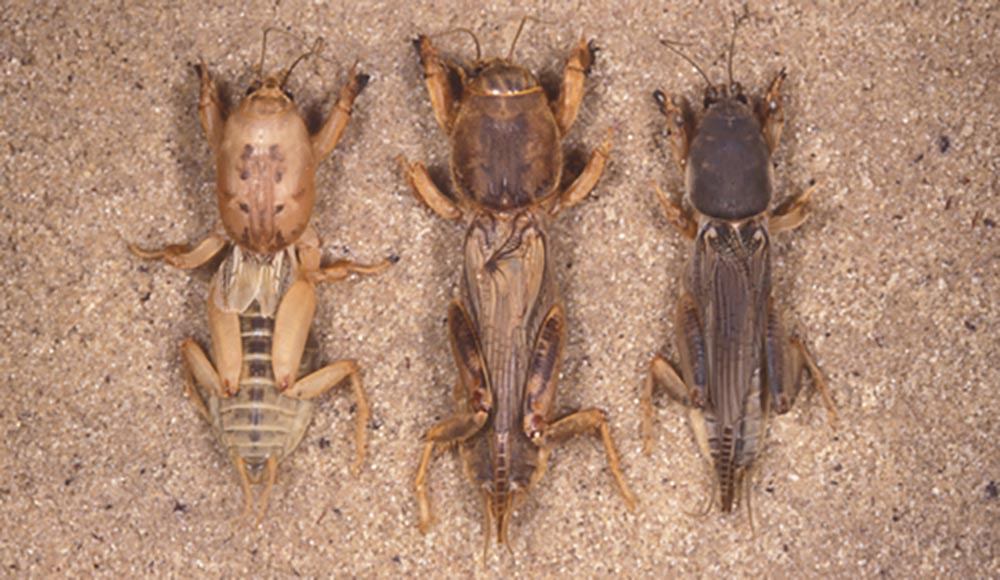
Adult mole crickets are rounded, winged, and 1 to 1.25 inches long.
If you are not sure that you have Mole Crickets, you can soak the suspected area with soapy water. Mix 1-2 oz of liquid dishwashing soap to a couple of gallons of water. Starting at the outer edge of the suspected area, begin to soak the area. If the mole crickets are present, they will start to emerge as you flush them out. This technique is also handy for searching for Chinch Bugs.
Mole crickets are seldom seen because, like moles, they stay underground most of the time.
Mole Crickets overwinter as adults in the soil. Mole crickets fly and mate twice a year, spring and fall. At this time, you will find their exit holes of an inch or more.
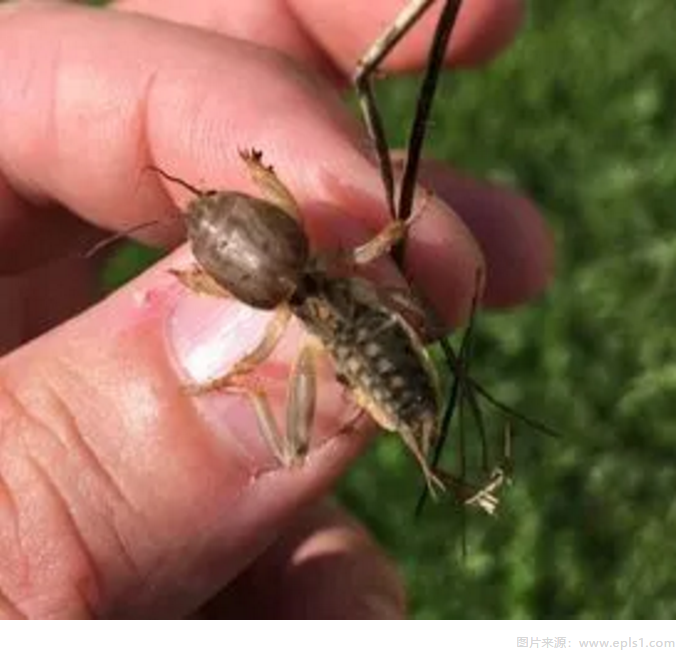
Mole cricket nymphs are wingless but look like small adults. The nymphs can become very numerous and cause great damage to your grass during the warm summer months.
Control methods aimed at eliminating mole cricket nymphs yield the best results only because they easier to kill than adults.
The adult Mole Crickets appear in late winter or early spring and tunnel through the soil surface (looks like a narrow tunnel). They are often seen on sidewalks, driveways, around swimming pools, and are attracted to lights.
They lay their eggs in the soil in pockets. It is important to wait for the nymph stages to treat. Treating adult Mole crickets is very difficult. Treat the nymph stage instead of targeting the adult stages.
Mole Cricket Treatments
It is easier to kill mole cricket nymphs than mole cricket adults when getting rid of your mole cricket population. Even though the mole cricket nymphs are wingless, they look like adults. The mole cricket nymphs can cause considerable damage grass and lawns during the summer months when it is warm.
Thoroughly treat the targeted area with a granulated systemic insecticide such as Imidacloprid .5 Granules. Imidacloprid is a systemic insecticide, reaching into the soil to kill the nymphs that cause the damage. An alternative treatment would be using Bifen XTS is a liquid treatment. The Imidacloprid .5 Granules will last 3-6 months, and the Bifen XTS will last 30 days.
Mole Cricket Treatment-Timing-Important for Control
Mole crickets treatment should be timed to kill immature crickets (nymphs), which do the most damage to turfgrasses. In the Southern states, treat with Imidacloprid .5 Granules during the latter end of May or beginning of June. These granules last 3-6 months. From mid-June to July, most of the eggs have hatched into nymphs. At this point, the nymphs are not large enough to cause much damage; mid-June-July would be the time to apply the liquid insecticide such as Bifen XTS. If you use the Imidacloprid .5 Granules, since they last so long, they may be applied before June and last through the
Mole Cricket Damage Symptoms
Mole cricket damage appears as surface ridges. Tunnels made by the mole crickets have damaged the turf.
Both nymphs and adults feed on grassroots and stems, so there will be damaged or dead plants.
The Northern Mole Crickets and the Southern Mole Crickets are two common mole cricket species that attack plants.
Areas with sandy soil with Bermudagrass and bahiagrass are more affected than is St. Augustinegrass.
The mole crickets may also damage vegetable crops.
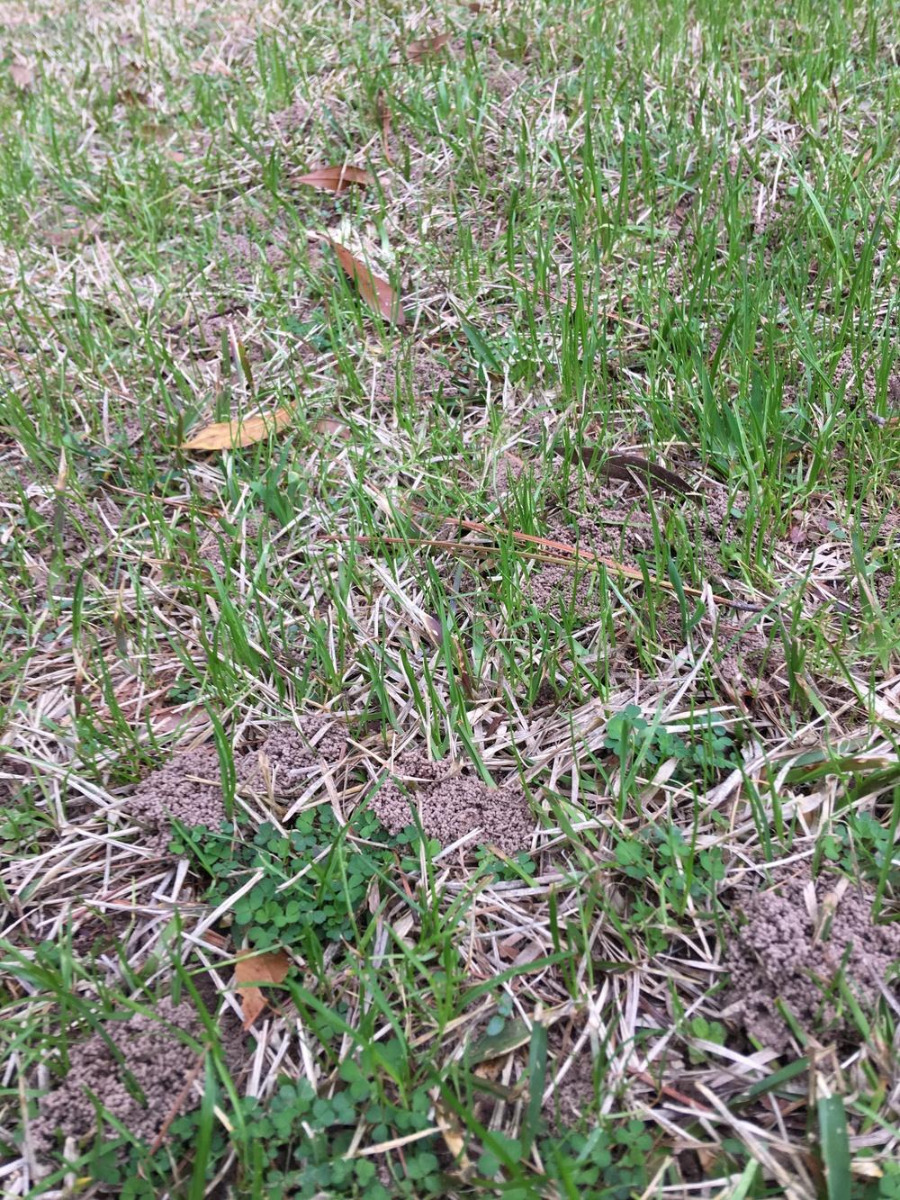
Mole crickets are the number one pest of turf in southern Alabama and Georgia, spread quickly along the Gulf Coastal region and Eastern Seaboard throughout Florida. Their damage appears as brown, spongy areas within normal green grass.
Upon inspection, you will notice the grass has been eaten just below the surface, separating the plant from its roots. Mole crickets are especially fond of Bermuda and centipede grass. Still, they have also been found in St. Augustine lawns in the Florida Panhandle and along the Alabama coast.
Mole crickets prefer sandy soil and are active at night. When the soil is moist, Southern Mole crickets can tunnel beneath the surface to 20 feet per night, looking for insects and earthworms as a food source. The Tawny mole cricket feed on plants, damaging roots, stems, and tubers.
下内容来自:
https://mp.weixin.qq.com/s/tuYwhX9K3WOdnTzMStkN8Q
仅供同学们学习之用,如有侵权请告之删掉。
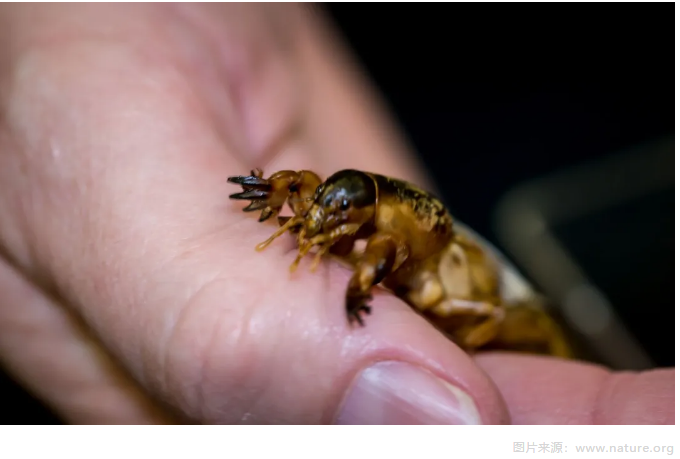
硕鼠硕鼠,无食我黍。。。有人指出《诗经》中的硕鼠,其实并不是“鼠”,而是指一种直翅目的昆虫——蝼蛄。
那你知道蝼蛄是什么吗?它对我们农田有哪些危害?又该如何防治呢?
+ 蓝 翔 一 哥 +
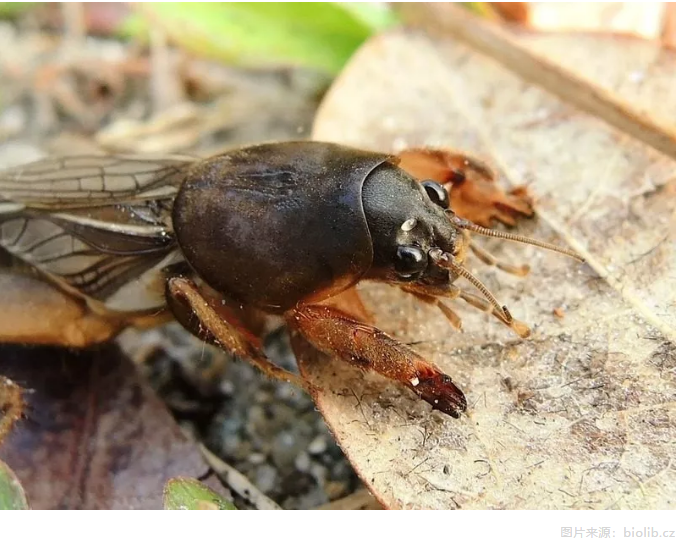
蝼蛄属于直翅目蝼蛄科,俗称土狗、蝲蝲蛄,是田间地头十分常见的土栖昆虫,它有着奇异的相貌,与直翅目的其他成员——蝗、蜢、蚱、螽、蟋,很容易区分。

细看蝼蛄,是不是还有点萌萌哒,它拥有大虾的脑袋、鼹鼠的爪子、短粗的触角、结实的前胸以及短小的前翅。
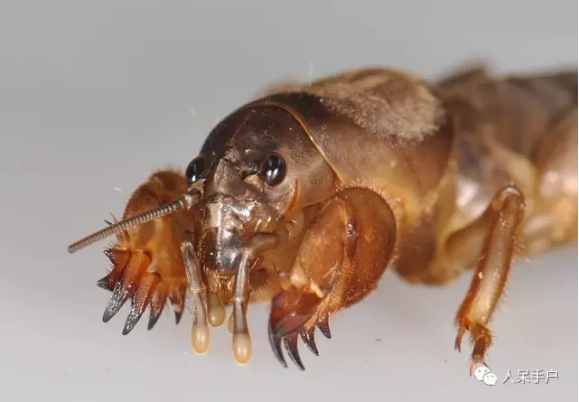
而且由于是喜欢土栖的“地下工作者”,蝼蛄长着高度特化的开掘足,它的前足爪趾结构很锋利,善于开掘土壤和刨食植物根茎。
看看这因为刨土而断了的“指甲”,也是满满的心疼。

蝼蛄不仅外形与鼹鼠有些许相似,习性也雷同,它们都喜欢在地上打洞、挖出弯弯曲曲的隧道,所以蝼蛄在英文中也被称为“鼹鼠蟋蟀”(mole cricket)。

凭借着高超的挖土技能,蝼蛄还引起了科研人员的关注。
研究发现:蝼蛄能够在地下实现高效快速掘进,不仅因其前足特化的结构材料,也与其挖掘足的“挖-扩式”掘进运动方式有关。通过分析和模仿蝼蛄挖掘运动原理,科研人员还设计出独特的仿生触土挖掘机。
+ 土 壤 害 虫 +

提及蝼蛄,我们常常将其归为地下害虫。那是因为蝼蛄在潮湿的土壤中蛀道,尤其春秋两季格外活跃,不仅咬食播下的种子或靠近地面的嫩茎,造成缺苗断垄;也因其在地表挖掘,会使幼苗移位、干燥,对植物造成额外的损伤。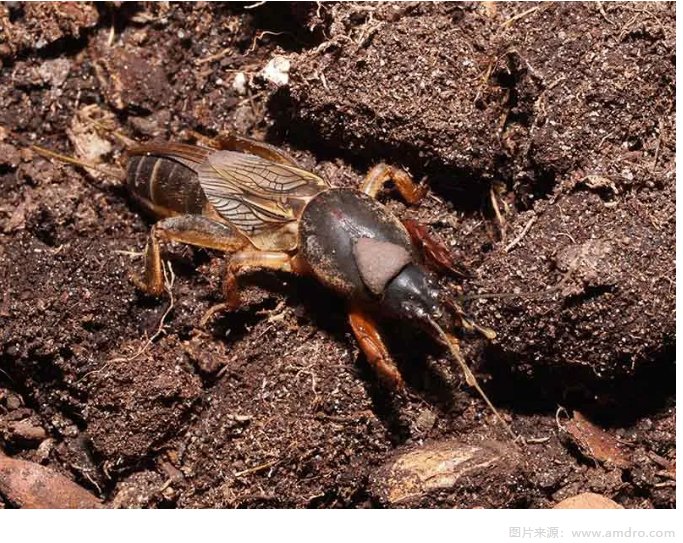
蝼蛄不仅对农业种植造成危害,也是造成草坪破坏的主要原因。在美国,每年因蝼蛄造成的损失在数个南部州达到数千万美元,在佛罗里达州更高达数亿美元。

蝼蛄毁坏的结缕草草坪
但因为蝼蛄昼伏夜出,在白天时常潜入地下,不易察觉,只有晚上才开始活跃,因而难以被防治、灭杀。

+ 喊 麦 达 人 +

虽然蝼蛄是贪吃的土壤害虫,可它们也不全是吃素的,它们的食性多且杂:有些是植食性的,主要以植物根茎为食;有些是杂食性的,食谱中除了植物根茎以外,偶尔还会捕食一些柔弱的小虫;还有些则主要以捕食为主。

蝼蛄的卵
蝼蛄一生只经过卵、若虫、成虫三个虫期。
卵孵化后,若虫出现,最初呈白色,但在24小时内变色,若虫与成年蝼蛄模样相似,但它们的翅发育不全。若虫在土壤表层下挖掘隧道,并多以草根和有机质为食。