-
1 主页
-
2 资料
一、根的生理功能和经济利用价值(P)
根是植物适应陆上生活在进化中逐渐形成的器官,它具有吸收、固着、输导、合成、储藏和繁殖等功能。
(一)吸收、输导功能
根吸收土壤中的水、二氧化碳和无机盐类。植物体内所需要的物质,除一部分由叶和幼嫩的茎自空气中吸收外,大部分都是由根自土壤中取得。如生产1kg小麦需要水300~ 400 kg,而这些水主要是靠具有吸收和输导组织的根部吸收获得,而且周围环境中水的情况,影响着植物的形态、结构和分布;二氧化碳是光合作用的原料,除去叶从空气中吸收二氧化碳外,根也从土壤中吸收溶解状态的二氧化碳或碳酸盐,以供植物光合作用的需要;无机盐类是植物生活所不可缺少的,如硫酸盐、硝酸盐、磷酸盐以及钾、钙、镁等离子,它们溶于水,随水分一起被根吸收。
根的另一个输导功能,主要是由根毛、表皮吸收的水分和无机盐,通过根的维管组织输送到茎和叶,而叶所制造的光合产物等经过茎输送到根,再经根的维管组织输送到根的各部分,以维持根的生长发育和生命活动。
(二)固着、支持功能
植物体庞大的地上部分,很容易受到风雨冰雪及其他机械力的侵袭,而仍然能巍然屹立于大地之上,这就是由于植物体具有反复分枝,深入土壤的庞大根系,以及根内牢固的机械组织和维管组织的共同作用。
(三)合成、分泌功能
目前研究已发现植物的根可以合成多种有机物,如氨基酸、生物碱(如尼古丁)及植物激素等物质;同时根还能分泌近百种物质,包括糖类、氨基酸、有机酸、维生素,以及核苷酸和酶等。这些分泌物中有的可在根生长过程中减少根与土壤的摩擦力;有的在根表面形成促进吸收的表面;有的对他种植物是生长刺激物或毒素,如寄生植物列当种子要在寄主根的分泌物刺激下才能萌发,而苦苣菜属、顶羽菊属的一些杂草的根能释放生长抑制物,使周围的作物死亡;根的分泌物还能促进土壤中一些微生物的生长,在根的表面及其周同形成一个特殊的微生物区系,这些微生物能对植物体的代谢活动、吸收作用、抗病性等产生影响。
(四)储藏、繁殖功能
一般根内的薄壁组织都比较发达,常作为物质储藏之所;另外,很多植物的根都能产生不定芽,尤其在伤口处更易形成不定芽,这些不定芽既可作为扦插繁殖的主要组织,又是森林植被更新的主要方式。此外,有些植物的根还有特殊的形态及相应的功能,如储藏、繁殖、呼吸、攀缘等功能。
根还有多种用途,它可以食用、药用和作工业原料,具有很重要的经济利用价值。如汁薯、木薯、胡萝卜、萝卜、甜菜等皆可食用,部分也可作饲料。人参、大黄、当归、甘草、乌头、龙胆等可供药用。甜菜可作制糖原料,甘薯可制淀粉和酒精。某些乔木或藤本植物的老根,如枣、杜鹃、苹果、葡萄、青风藤等的根,可雕刻成或扭曲加工成树根造型的工艺美术品。在自然界中,根还有保护坡地、堤岸和防止水土流失的作用。
What are the Main Functions of the Root System in a Plant
Root systems
There are two main types of root systems: tap root and fibrous root system.
Tap Root System
In the tap root system, a single root (called the primary root) comes out from the seed after germination. Tap roots are also called true roots.
Later, smaller roots called lateral roots branch out from this primary root. Mango, neem, pine, sheesham, pea, carrot, radish, turnip, and beetroot are examples of plants in which tap roots are found.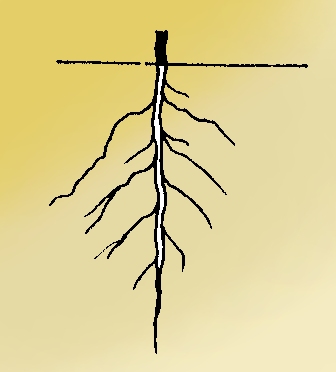
Tap root system Fibrous Root System
Fibrous roots, which grow from the base of the stem have a bushy appearance. These roots are thin and almost equal in size. Grass, maize, wheat, onion, sugarcane, and rice are examples of plants with fibrous roots.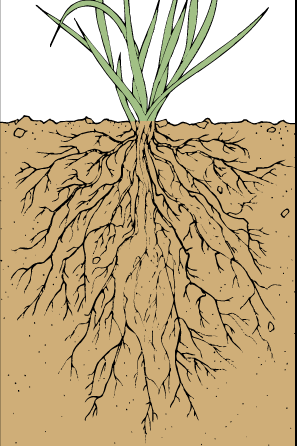
Fibrous Root System
Functions of Roots
Some functions of roots are given below:
Anchoring the plant Roots help to anchor the plant firmly into the ground.
Absorption of water and nutrients from the soil They help plants to absorb water and nutrients from the soil, which are essential for their survival.
Preventing soil erosion They help to bind the soil particles together, thereby preventing them from being carried away by water or wind.
Sometimes roots are modified to perform various other functions like reproduction, nutrition, etc.
Activity
Aim: To observe anchorage by roots Method: Try pulling out a handful of grass from the ground.
Observation: It would not be easy to pull out the grass and something would prevent the grass from being pulled out. Carefully dig out some grass and see what prevented the grass from being pulled out.
Conclusion: Roots bind soil particles and hold the plant firmly in one place to the ground.
Activity
Aim: To observe absorption by roots
Materials needed: A carrot, a glass of water, and blue colouring agent
Method:
1. Put a carrot in a glass of water containing some blue colouring agent.
2. Leave the carrot in water for some days.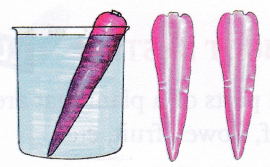
3. Then cut it into half (lengthwise) and look inside.
Observation: Blue colouring can be seen from the bottom to the top of the carrot.
Conclusion: Water is absorbed by the tip of the carrot and travelled up inside it along with the blue colouring agent.
Root Modifications
Roots of some plants are modified to perform additional functions. Let us study some of these modifications and their functions.
For storage of food, the roots of some plants, like radish, carrot, turnip, sweet potato, and beetroot, become fleshy.
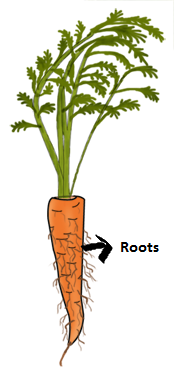
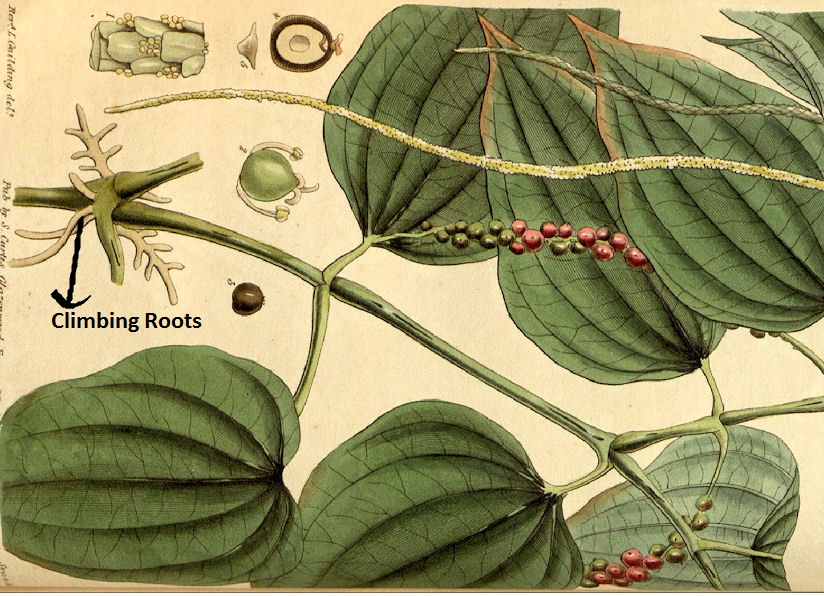
For climbing, some plants have climbing roots that help the plant to climb up a support like a wall, rock, or tree, e.g., money plant, black pepper, and betel.
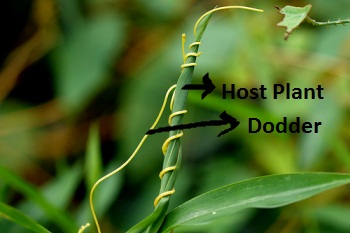
For nutrition, plants like dodder have specialized roots called parasitic roots arising from their stem, which help them to absorb water and nutrients from the host.
For multiplication, roots of plants like dahlia and asparagus can develop into new plants.
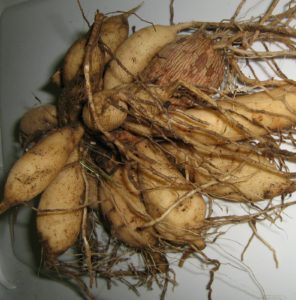
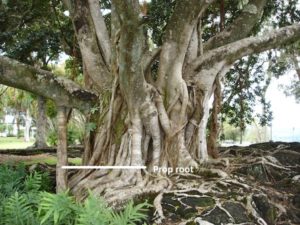
For extra support, root of plants like bamboo, sugarcane, and banyan give out extra roots from their branches. These roots grow downwards and give extra support to the stem of the plant. These are called prop roots.