
第三节侧根的发生
不论是主根、侧根还是不定根,其上所产生的支根都称为侧根,侧根上又能依次生长出各级侧根。侧根重复的分枝连同原来的母根,共同形成了直根系和须根系;这些侧根使根系在适宜条件下可以不断地向新的土壤中扩展分布,扩大吸收范围与面积,增强了根的吸收能力。同时,侧根还可以加强根的固着、吸收、支持和输导能力。
一、侧根原基的发生
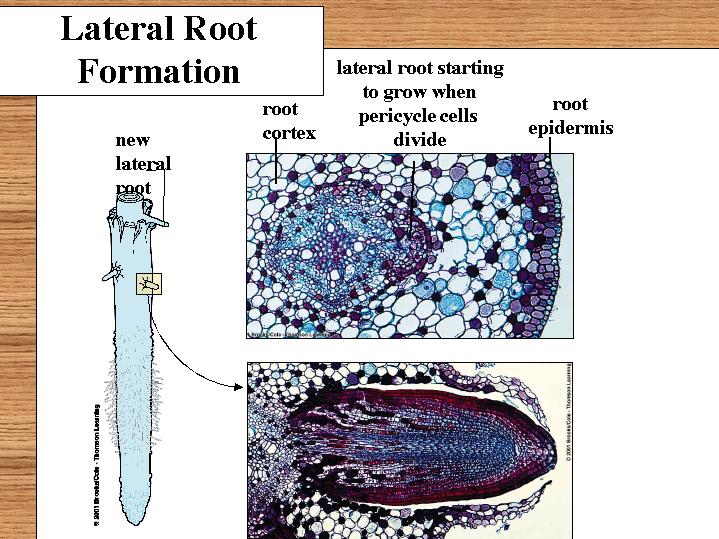
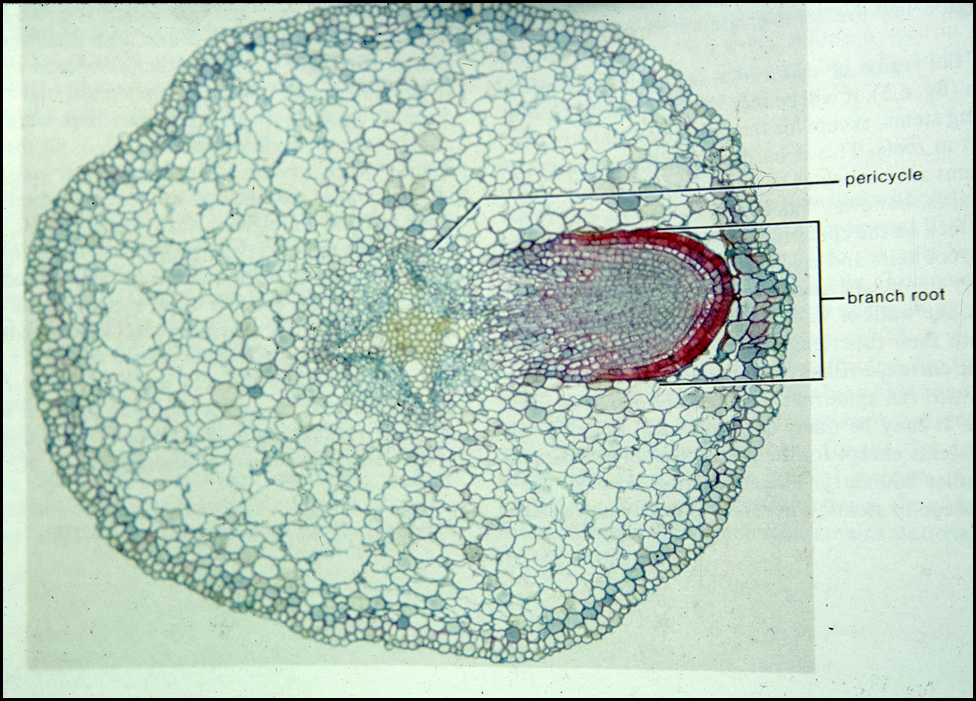
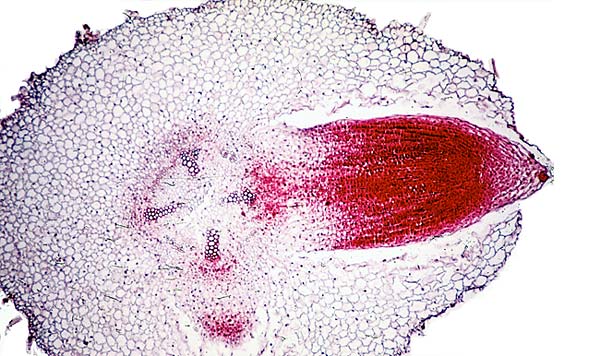
侧根是由侧根原基发育而成的。侧根原基是由母根皮层内的中柱鞘的一部分细胞经过脱分化、恢复分裂能力形成的,故被称为内起源(endogenous origin)侧根开始发生时,中柱鞘的某些细胞发生脱分化,细胞质变浓厚,液泡化程度变小,恢复分裂能力,开始分裂。最初的几次分裂是平周分裂,使细胞的层数增加并向外突起,以后的分裂是多方向的,最终产一团新细胞,从而形成侧根原基。这是侧根最早的分化阶段,以后侧根原基再进行分裂、生长、逐渐分化出生长点和根冠。
Origin of Lateral Roots
The origin of lateral roots is endogenous - from a deeper layers. The seat of its origin is pericycle where cells opposite the protoxylem divide and form a hump in the endodermis. The hump penetrates into the cortex, and emerges as a lateral branch.
Later, the hump differentiates into 3 regions of the root apex - dermatogen, periblem and plerome. Finally the lateral root comes out. The number of lateral roots corresponds to the number of xylem bundles.

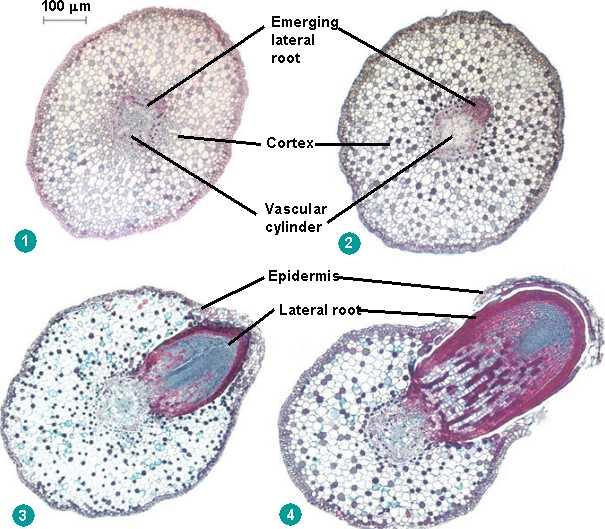

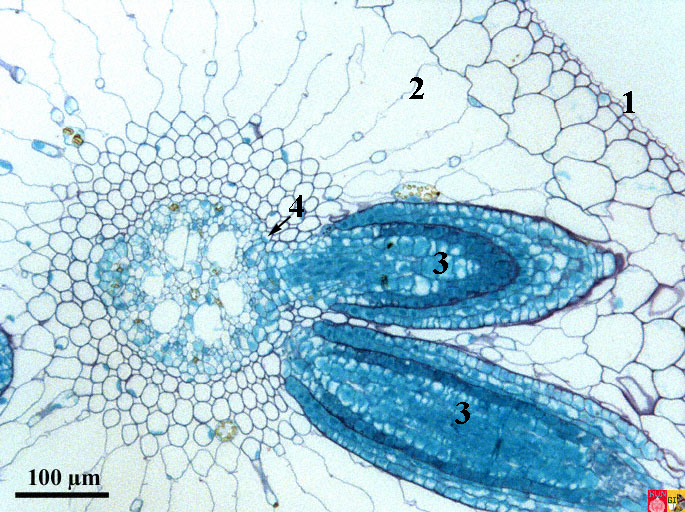
Legend:
1 epidermis
3 lateral root
4 endodermis
2 cortex
English name: Water hyacinth
Scientific name: Eichhornia sp.
Familia: Pontederiaceae
Classis: Dicotyledonas
Phylum: Angiospermae
Regnum: Plantae
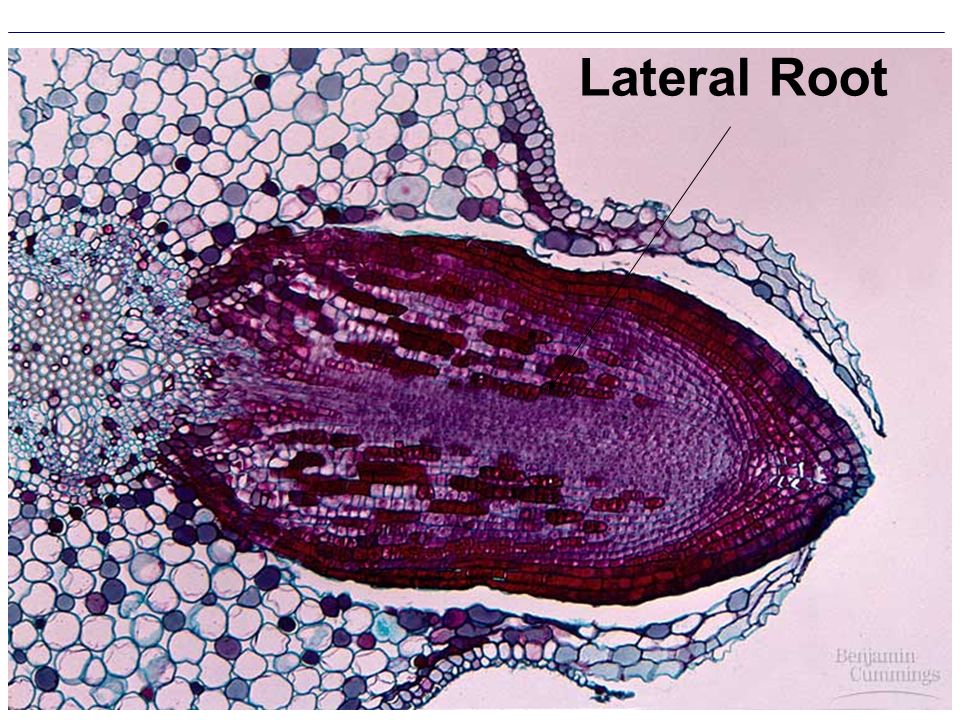
The lateral root originates from the pericycle and grows through the cortex and epidermis to the outside
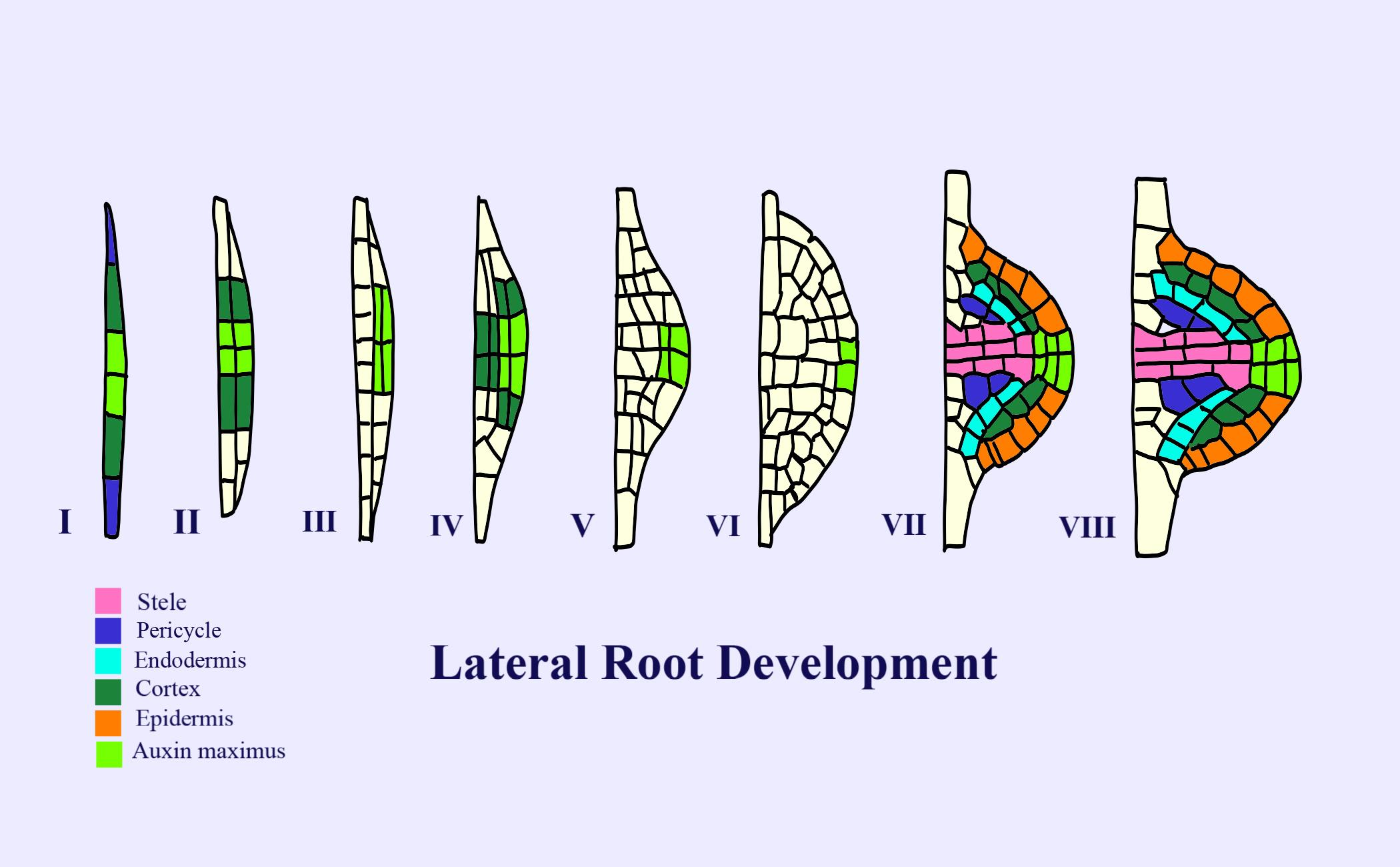
Additional information:
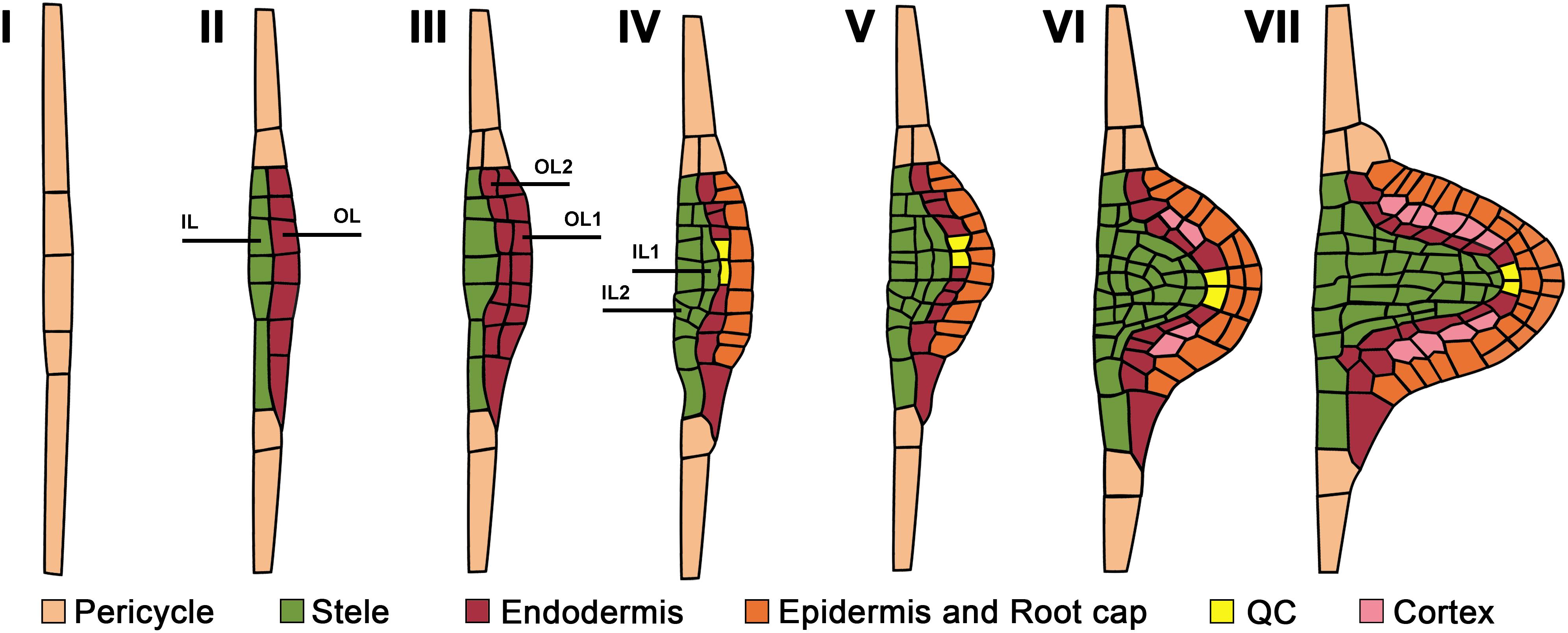
Process of formation of lateral roots:
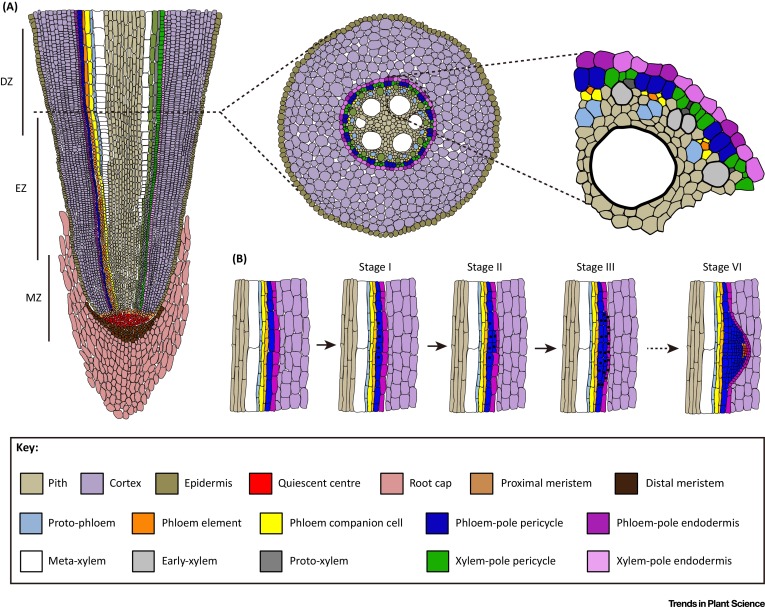
Stage I: It is the prior most morphologically identifiable stage and involves the asymmetric(不对称的) division of two cells of the pericycle, termed pericycle founder cells, which are adjacent to the protoxylem poles and from which the lateral roots are developed. These cells then undergo further development, causing radial expansion.
Stage II: The miniature central cells then divide parallel to the surface of the plant body in a series of transverse(横向的), asymmetric divisions such that the young primordium(原基) becomes visible as a projection with an inner layer and an outer layer.
Stages III and IV: Now the outer layer of cells divides so that the primordium is now made of three layers. In the fourth stage, the inner layer undergoes a similar division, such that four cell layers are visible.
Stages V to VIII: Development and further division of four layers eventually result in the emergence of the young lateral root from a parent tissue (the overlying tissue of the primary root) at stage eight.
图2 -12侧根的形成过程
二、侧根的形成及其在母根上的分布
侧根原基进一步发育,向着母根皮层的一侧生长,逐渐分化形成根冠、分生区和伸长区,最终形成侧根。由于生长点细胞继续分裂、增大和分化,将侧根原基分化产生的根冠向前推进,同时根冠分泌的物质也能溶解皮层和表皮细胞,这样侧根就在其生长过程中所产生机械压力的作用下,顺利无阻地依次穿越母根的内皮层、皮层和表皮,从而露出母根之外,进入土壤中,形成侧根。侧根的输导组织与母根的输导组织是相通的(图2 -12)。
侧根可以因生长激素或其他生长调节物质的刺激而形成,也可以因内源的抑制物质的抑制而使母根内侧根的分布和数量受到控制。侧根的发生,在根毛区就已经开始,但突破表皮,露出母根后,却在根毛区以后的部分。这样就使得侧根的产生不会破坏根毛而影响吸收功能,这是长期以来自然选择和植物适应环境的结果。
侧根在母根上的分布位置,在同一种植物中常常是稳定的,这与内部的中柱鞘细胞有一定关系,但并不是所有的中柱鞘细胞都能产生侧根,侧根只发生于中柱鞘的特定部位,与初生木质部和初生韧皮部的位置和束数有关。如初生木质部为二原型的根上,侧根发生在对着初生韧皮部或初生韧皮部与初生木质部之间。在三原型、四原型等的根上,侧根是正对着初生木质部发生的,在多原型的根上,侧根是对着韧皮部发生的(图2-13)。
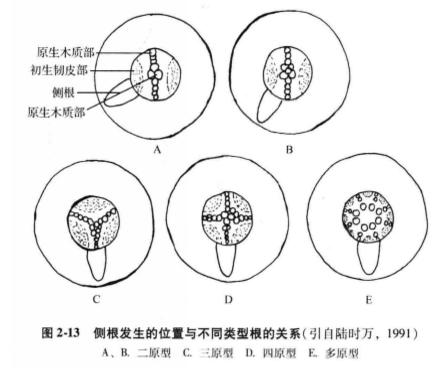
图2-13侧根发生的位置与不同类型根的关系(引内陆时万,1991)
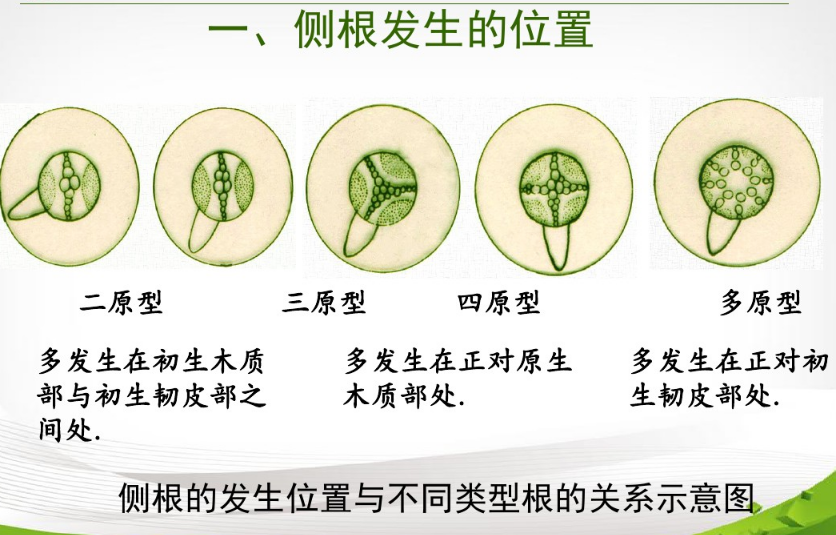
由于侧根的位置一定,因而在母根的表面上,侧根常较为规则地纵列成行。从母根纵向观察,不同植物的根中产生侧根原基的部位是不同的,一般在距离根冠1—2 cm的近根毛区的伸长区处发生,也有发生于分生区处的,如慈姑等水生植物。有的植物如玉米,又可在根毛区以上、中柱鞘和内皮层已具木质化次生壁的老根部位发生。侧根的密度会因植物物种和生长条件的不同而不同,如玉米常为8条/cm2、豆类是5条/cm2。粗度会随着侧根级数的增加而递减。
主根和侧根有着密切的联系,当主根切断后,能促进侧根的产生和生长。因此,在农、林、园艺实践中,常利因这一特性,在移栽苗水时常切断主根,以引起更多侧根的发生,保证植株根系的旺盛生长,从而使整个植株能更好地繁茂生长,有时也是为了便于以后的移栽。

