-
1 主页
-
2 资料
第七章 花的形态结构与发育
被子植物的种子萌发成幼苗后,首先进行根、茎、叶营养器官的生长,经过定时间的营养生长后转入生殖生长,即在植株的一定部位分化出花芽,经过开花、传粉受精后形成果实和种子。花、果实和种子被称为生殖器官。
营养生长和生殖生长是植物生长周期的两个不同阶段,两者之间相互依存、相互制约。营养生长是生殖生长的基础,生殖器官所需的营养物质,绝大部分由营养器官提供。只有根、茎、叶发育良好及所需的外界条件配合下,才能顺利地完成花芽分化,开花结实,但过旺的营养生长又会抑制生殖生长。许多植物进人生殖生长后仍同时进行营养生长,多年生植物常以年为周期交替进行。从营养生长转入生殖生长,是植物生长发育的重要转变。
第一节 花、花的概念
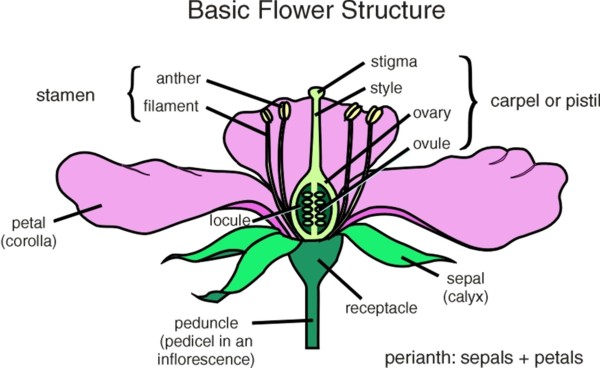
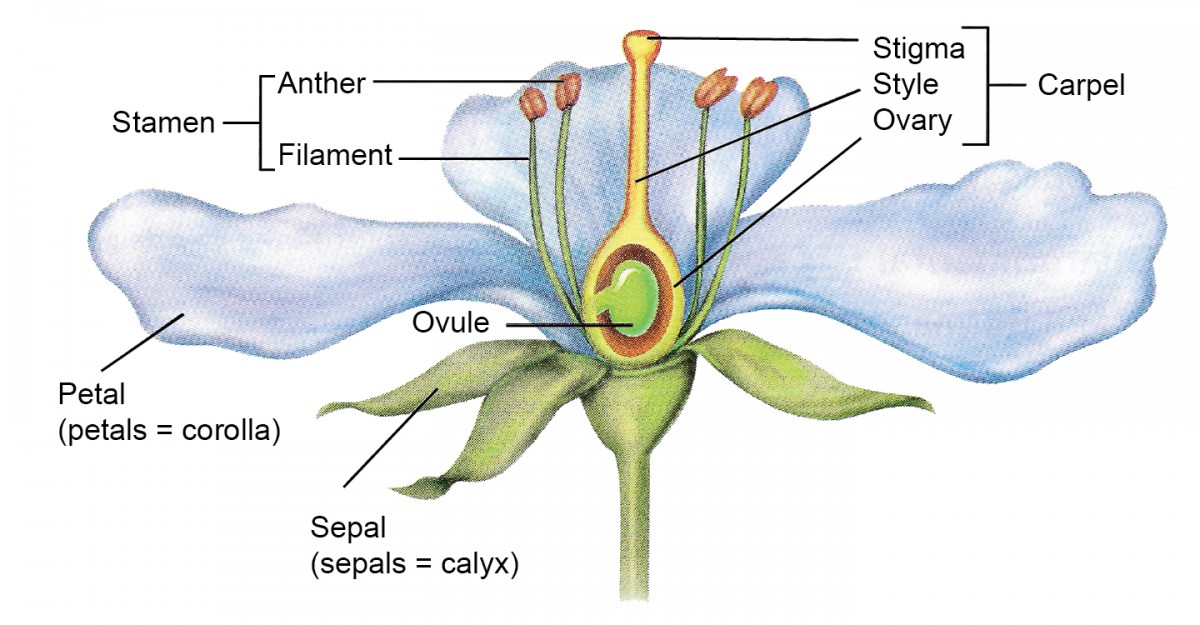
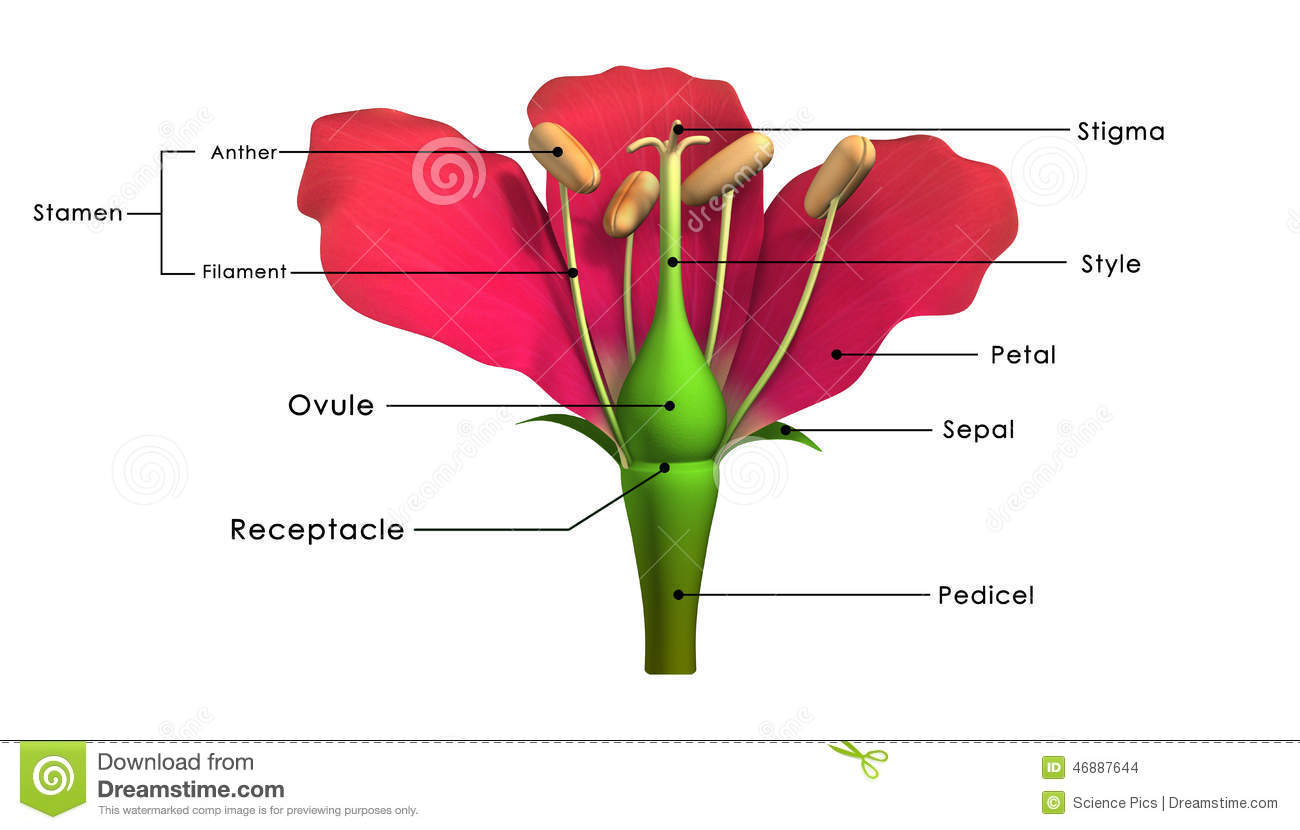
第一个为花下定义的人是德国的博物学家和哲学家歌德(Goethe,1749-1832),花是适合于繁殖的、节间缩短且不分枝的变态枝条。被子植物典型的花由花梗(pedicel)、花托(receptacle)、花萼(calyx)、花冠(corolla)、雄蕊群(androecium)和雌蕊群(gynoecium)组成(图7-1)。构成花萼、花冠、雄蕊群和雌蕊群的组成单位分别是萼片、花瓣、雄蕊和心皮,从形态上看这些组成单位具有叶的一般性质,是叶的变态,花梗是枝条的一部分,而花托是节间极度缩短的不分枝的变态茎。

花的形成在植物个体发育中标志着植物从营养生长转入生殖生长。被子植物的有性生殖(sexual reproduction)就是通过花的结构,产生雌雄两性配子一一卵和精子,再经过受精作用后来完成繁殖的。繁殖(propagation)是植物形成新个体的过程,是植物的重要生命现象之一。通过繁殖不仅延续后代,还可以产生生活力更强、适应性更广的后代,使种族得到延续和发展。植物的繁殖可以分为三种类型: 第一种是营养繁殖( vegetative reproduction),是通过植物营养体的一部分从母体分离开去( 有时不立即分离),进而直接形成一个独立生活的新个体的繁殖方法; 第二种是无性繁殖(asexual reproduction),是通过一类称为孢子的无性繁殖细胞,从母体分离后,直接发育成为新个体的繁殖方式; 第三种是有性生殖,是通过雌、雄两性生殖细胞(配子)彼此的融合过程,形成合子(受精卵),再由合子(受精卵)发育为新个体的繁殖方式。有性生殖产生的后代具有丰富的遗传变异性,是植物进化和物种多样性的基础。被子植物的有性生殖是植物界中最进化、最高级的繁殖方式。而被子植物的有性生殖是在花里进行的,精、卵细胞的形成、传粉及受精过程同样是在花里完成的。
二、花的形态结构
(一)花梗
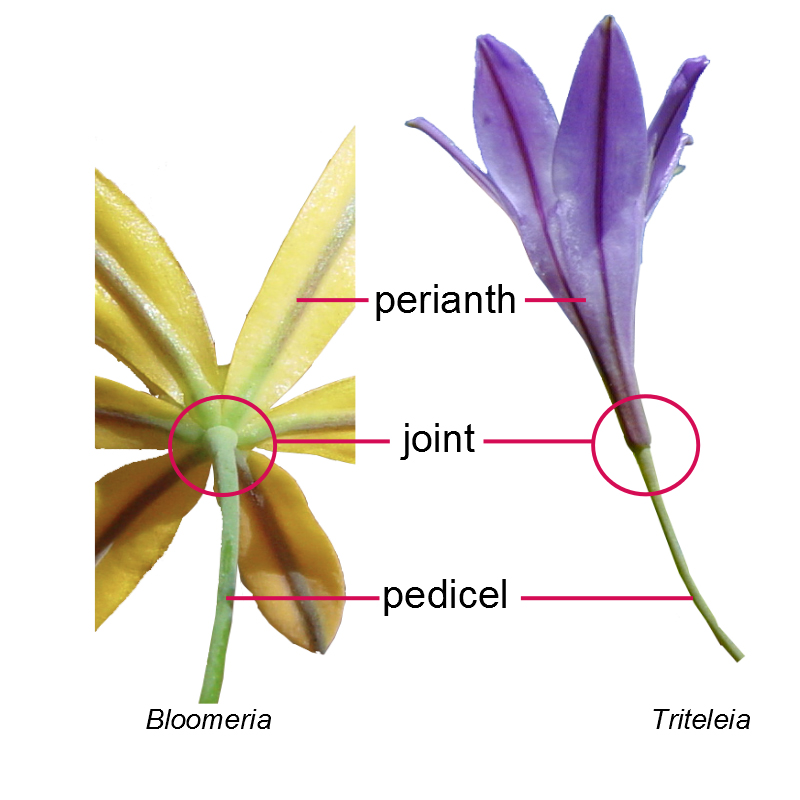
花梗也称花柄,是着生花的小枝,又是花与茎联系的通道,其基本结构与茎相似。花梗的长短因植物种类不同而不同,有的很长,如垂丝海棠; 有的很短或无花梗,如贴梗海棠。果实成熟时,花梗便成为果柄。

(二 )花托
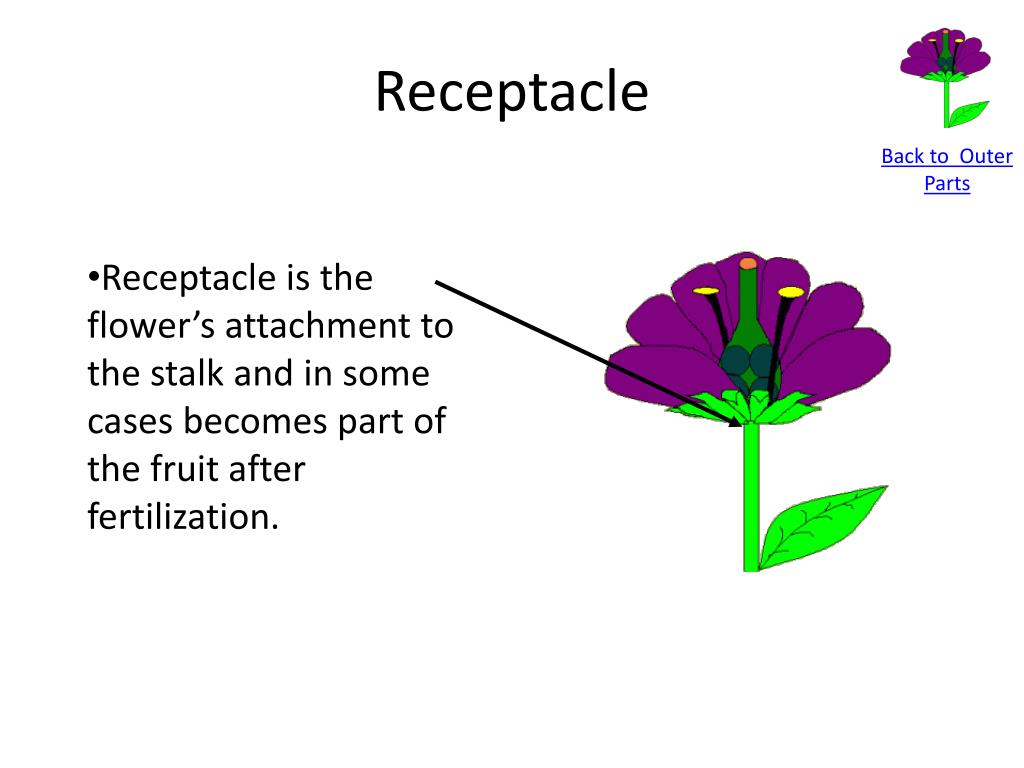
花托通常是花梗顶端膨大的部分,有密集的节,着生花的其他部分,起支持和输导的作用。不同植物花托的形状不同,有些植物的花托星圆柱状,如玉兰等; 有的呈圆锥形,如草莓等; 有的花托中央凹陷而呈杯状,如桃花等; 有的呈壶状,且与花萼、花冠、雄蕊的基部、雌蕊贴生成愈合,形成下位子房,如梨等; 有的在雌蕊基部或雄蕊与花冠之间,扩大形成扁平状或垫状的花盘(desk),如柑橘、葡萄等。
(三)花萼
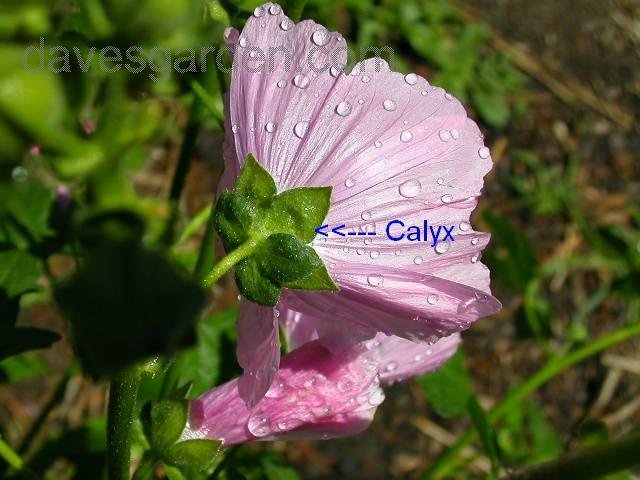
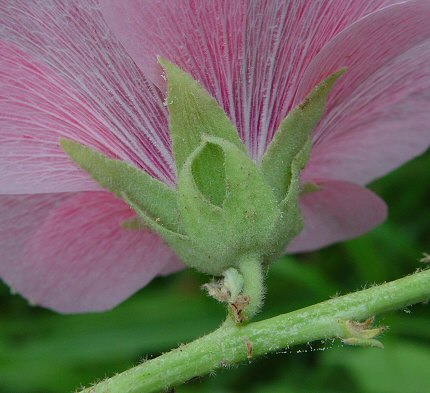
花萼着生在花托上,是花的最外一轮变态叶,由一定数目的萼片(sepal)组成。花萼通常呈绿色,在结构上类似叶,有丰富的绿色薄壁细胞,但无栅栏组织和海绵组织的分化。一朵花的萼片各自分离的称为离萼(chorisepalous),如油菜;萼片之间部分或全部联合的称为合萼(gamosepalous),如蚕豆。开花后花萼通常脱落,但也有些植物直到果实成熟,花萼依然存在,称为花萼宿存,如茄。花萼通常只有一轮,但有的植物在花萼外侧还有一轮,称为副萼(epicalyx),如棉花、蜀葵。
花萼和副萼有保护花蕾和进行光合作用的功能。有些植物的花萼颜色鲜艳,形似花冠,有吸引昆虫传粉的作用,如一串红等; 有些植物的萼片变为冠毛,有助于果实的传播,如浦公英等。
Sepals
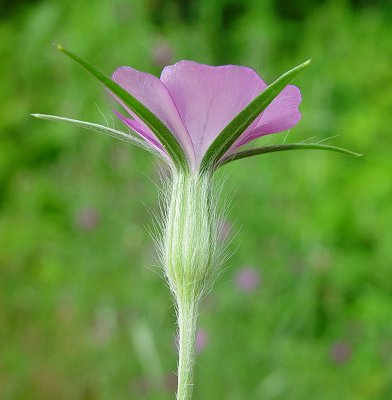
Sepals are small, leaf-shaped, green-coloured and outermost part of the flower. They are the vegetative part of a flower, which functions by protecting the rising buds and by supporting the petals when in bloom. The sepals are considered as the modified leaves.
The size and shape of the sepals vary with the flower species. They are either fused together or separated and are found in different numbers. The sepals of a single flower are collectively called the calyx.
Also refer: Parts of a Flower
Structure of Sepals
Sepals are green in colour and the vegetative part of a plant found only in flowering plants. They are the outermost layer of a flower, which enclose the flower bud and are collectively called the calyx. They are the leaf-like structure, which makes up a flower. The sepals mainly consist of parenchyma, secretory cells called laticifers, tannin cells and other specialized plants cell organelles. The colour of the sepals usually varies with the different plant species. Green coloured sepals comprise plastids called chloroplasts within their cells, along with the differentiated palisade and spongy mesophylls.
Function of Sepals
Provide support to the flowers.
Prevents the flower from drying out.
Protects the reproductive organs within the flower.
In some plants with no petals, sepals function as petals.
Safeguard the bud and flowers from harsh environmental conditions.
Sepals protect both flowers and fruits by producing chemicals that would ward off predators.
In some rare plant species, sepal serves as thorns and functions by protecting the flower.
They form a protective cover for a flower at its bud stage as they cover around it until they are ready to bloom.
In rare cases, sepal grows larger and protects the fruits from honey bees, birds and different kinds of insects.
(四)花冠
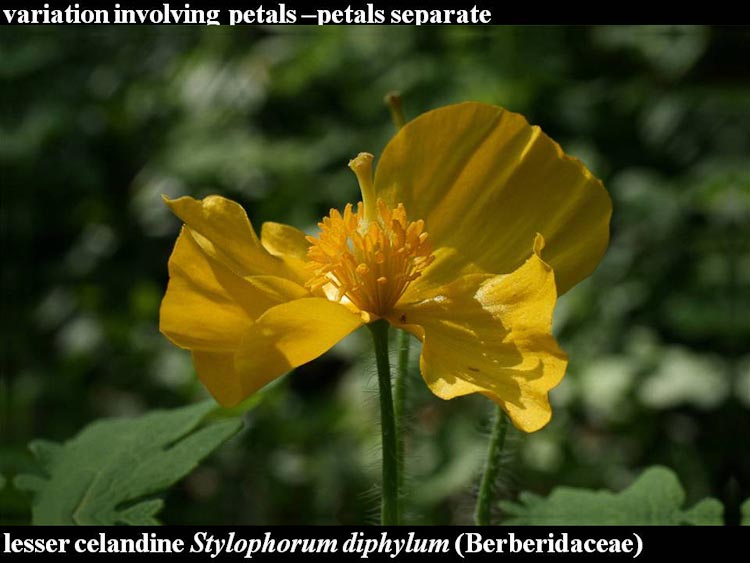
花冠位于花萼的内轮,由若干花瓣(petal)组成,排列为一轮或几轮。花瓣扁形态和结构与叶相似,常有颜色。与萼片离合一样,花瓣也有离瓣、合瓣之分。花瓣彼此分离的称离瓣(choripetale),如桃花; 花瓣彼此联合的称为合瓣花(synpetale),如丁香花。
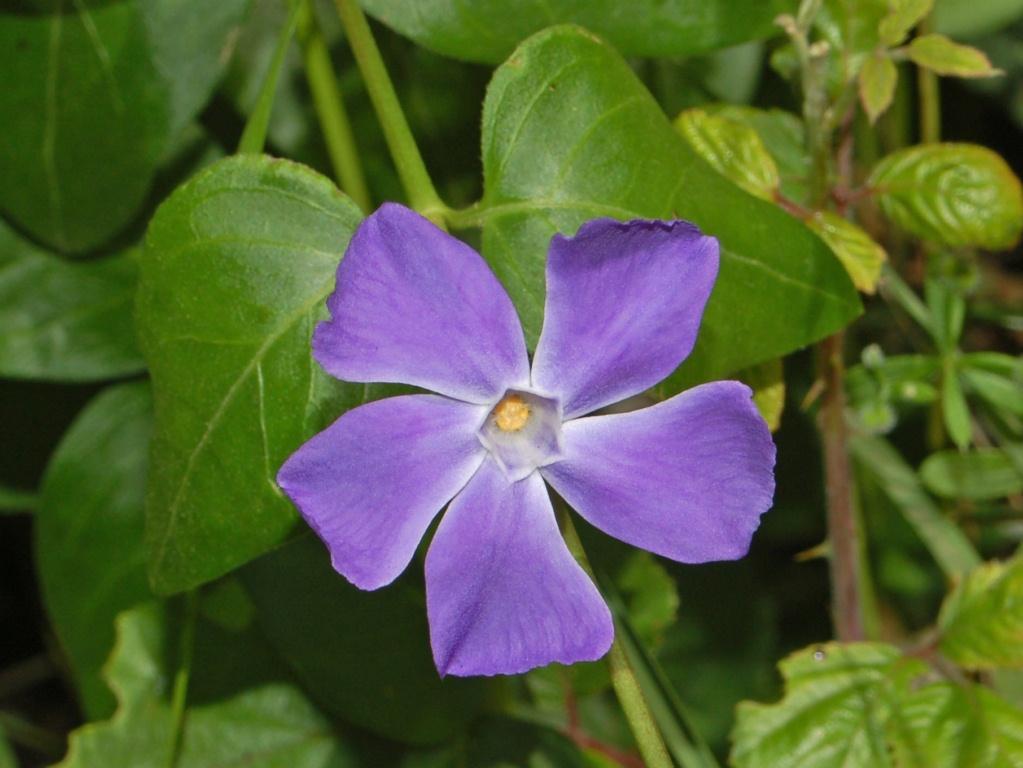
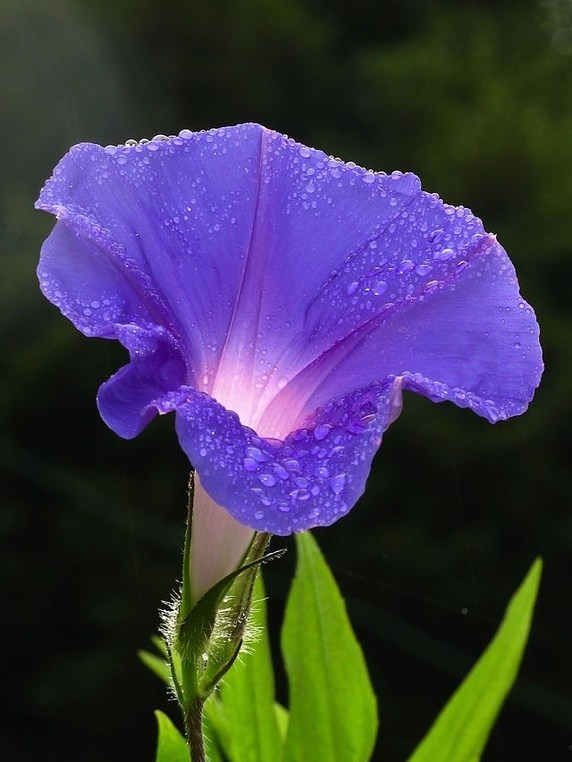
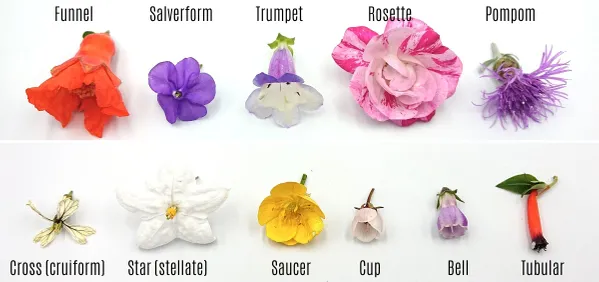
多数植物的花瓣由于细胞中含有花青或类胡萝卜素而颜色鲜艳,有些植物的花瓣中还有分泌结构,可释放挥发油类和分泌蜜汁,用来吸引昆虫,利于传粉,人类常用它提取精油; 花冠还具有保护内部雄蕊群和雌荔群的作用。
花萼和花冠合称为花被(perianth)。尤其是当花萼、花冠形态、色泽相似不易区分时,可统称为花被,如百合; 花萼、花冠都有的花叫两被花(dichlamydeousflower),如桃; 花萼与花冠没有明显区别或两者缺一的,多指只有花萼的,叫单被花(monochlamydeous flower),如桑; 既无花萼又无花冠的称无被花(achlamydeous flower ),如杨。
function?
Petals are modified leaves that surround the reproductive parts of flowers. They are often brightly colored or unusually shaped to attract pollinators. Together, all of the petals of a flower are called a corolla.
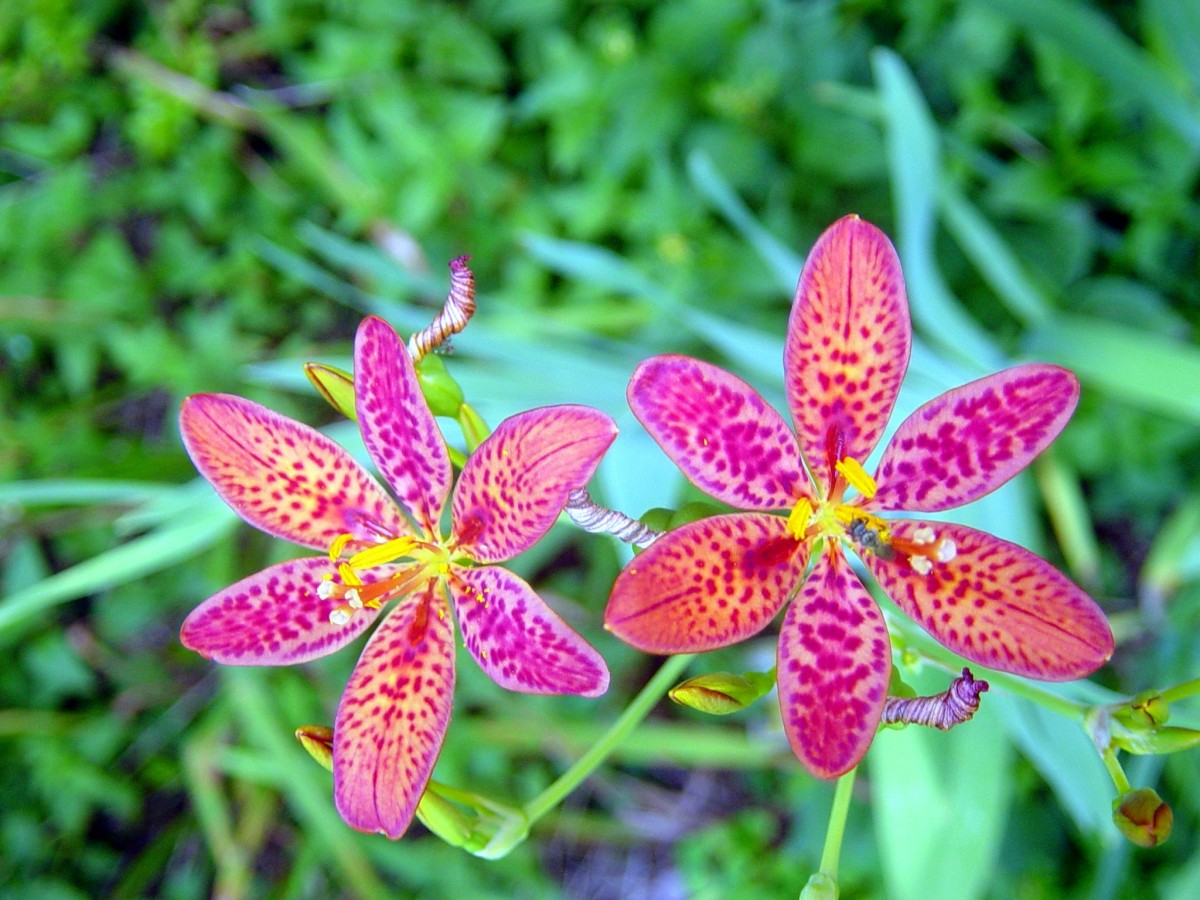
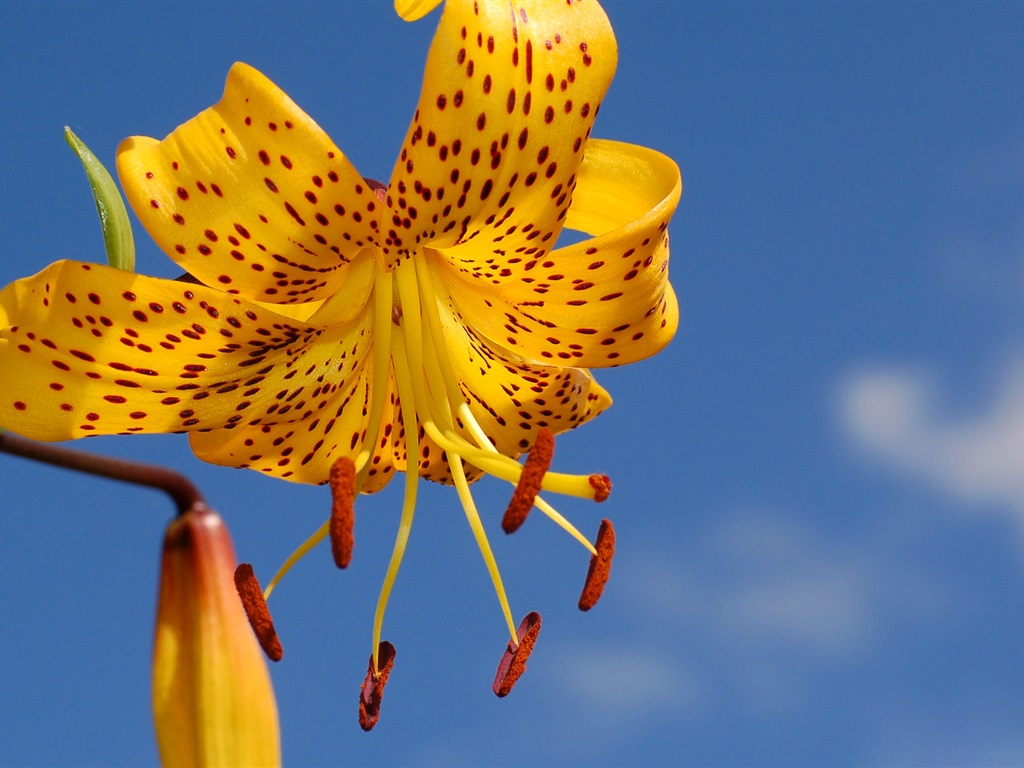
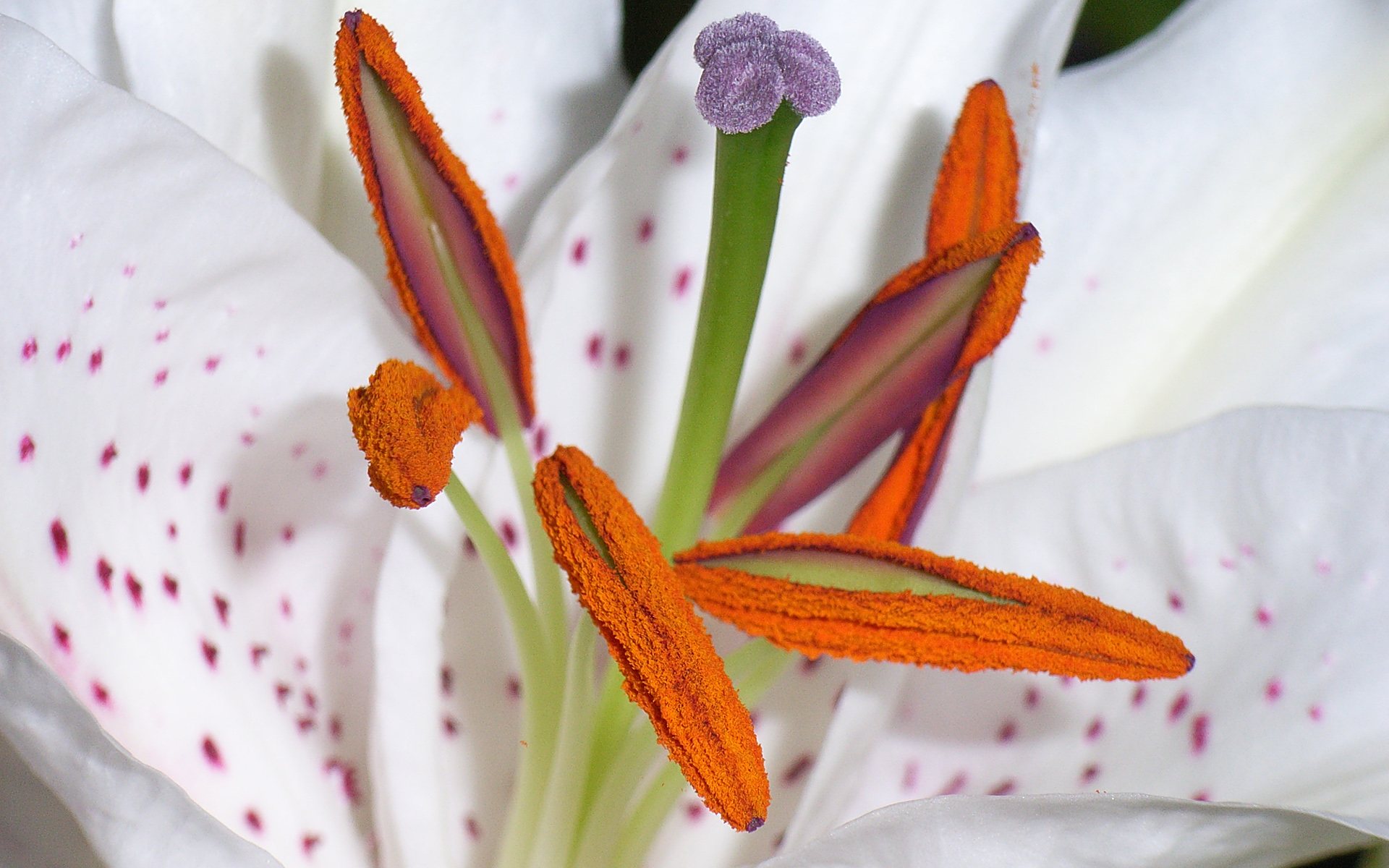
Take lily as an example. Lilies have a wide variety of corolla in different shapes: including trumpets, funnels(漏斗), cups, bells, bowls, and flat shapes. Some lilies have reflexed petals, meaning that each petal curves backward. Lily petals often have lines and dots on them. These markings actually serve as a map for insects, leading them to the nectar(甘蜜,琼浆玉液).
Sepals are the leafy parts that are underneath the petals. They can be green, or they can match the color of the petals. The sepals are what initially encase the immature flower bud and protect it. The flower sits on a receptacle and is attached to the stem via a piece of the pedicel.
(五)雄蕊群
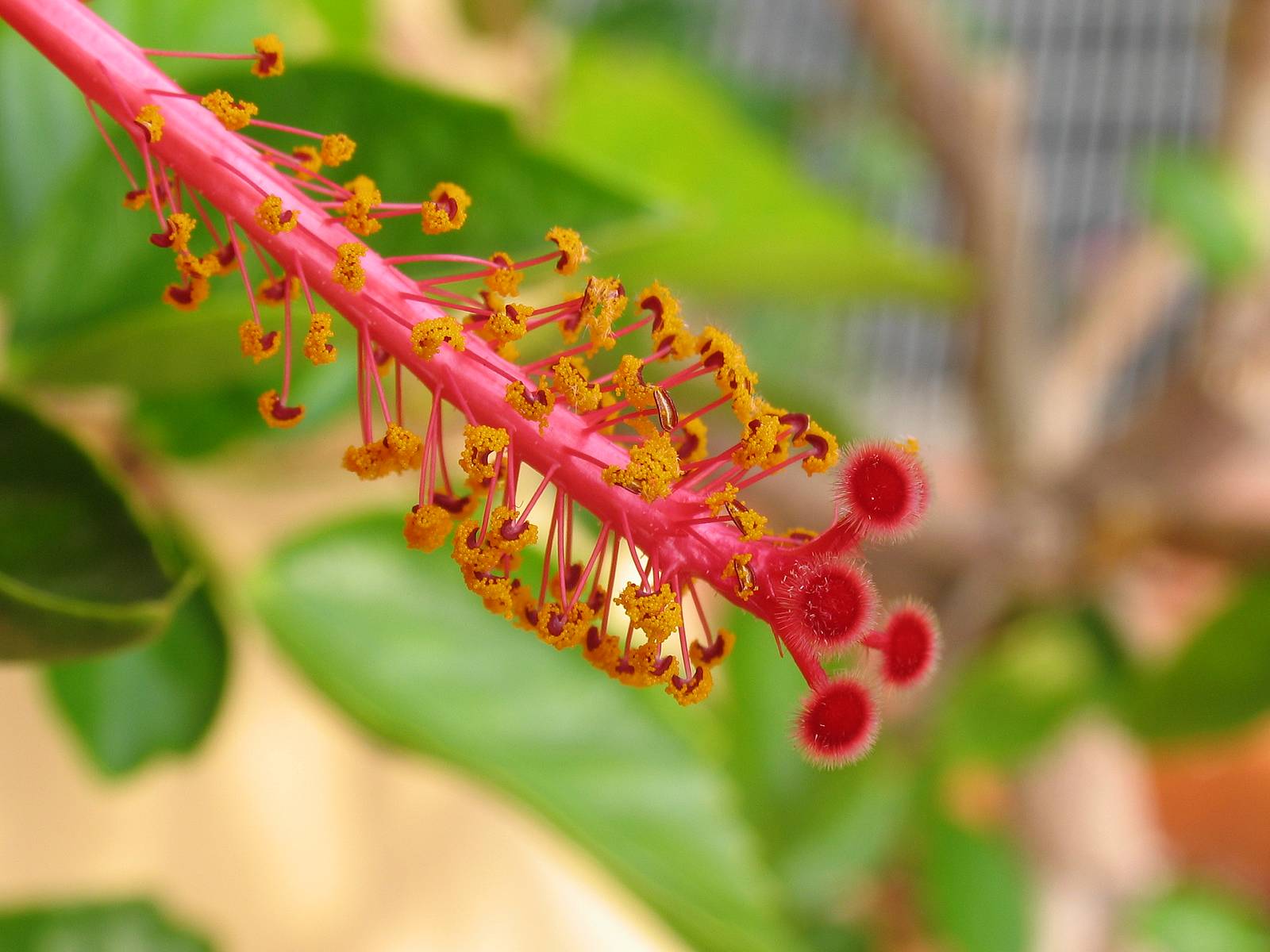
雄蕊群是一朵花中所有雄蕊(stamen)的总称。位于花冠的内侧,一般直接着生在花托上,也有的雄蕊基部与花冠愈合。雄蕊是花的重要组成部分之一,其数目常随植物种类不同而有变化,有些植物的雄蕊很多而没有定数,如桃; 有些植物的雄蕊少面数目一定,如油菜有6枚,小麦有3枚。
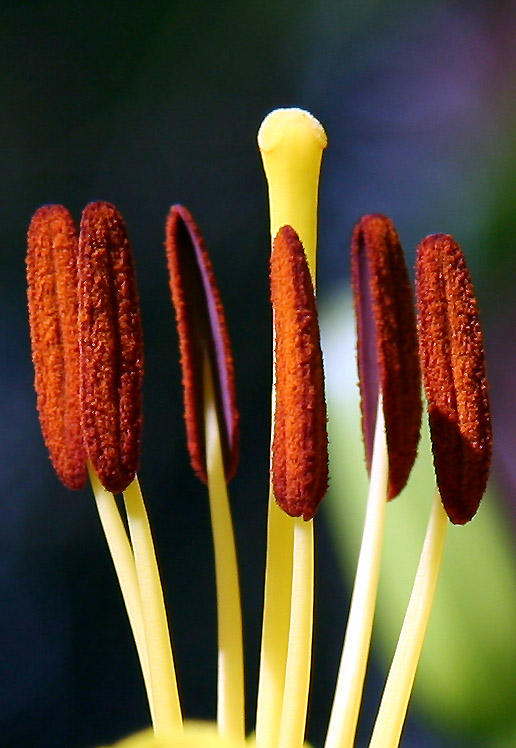
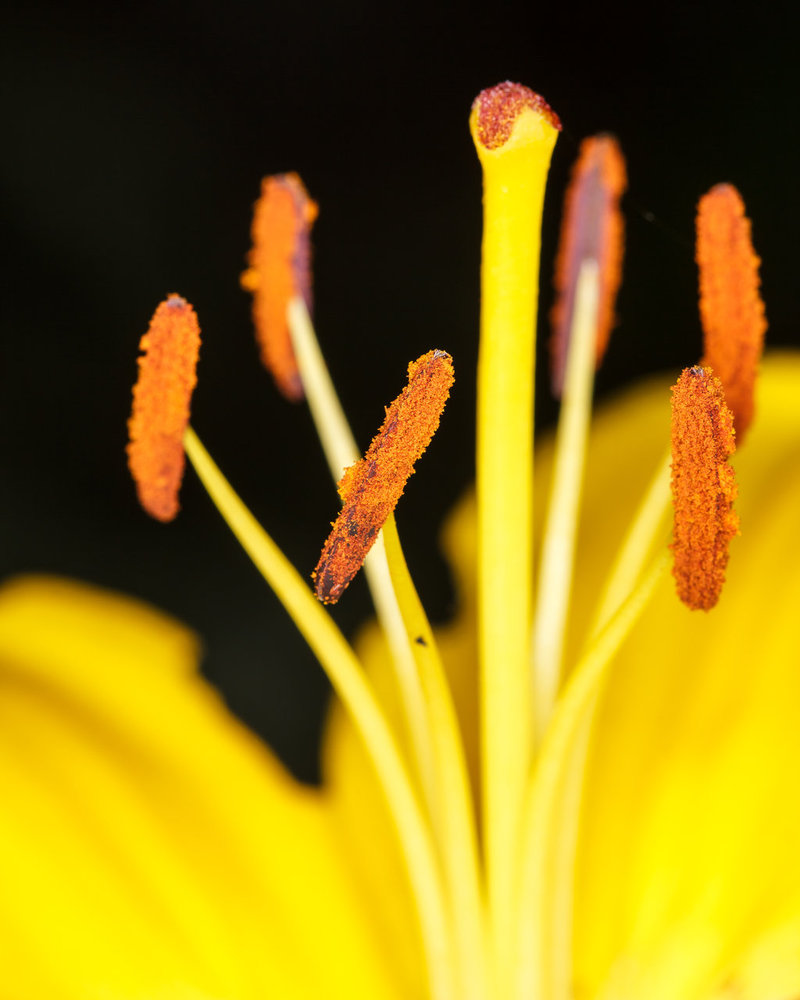

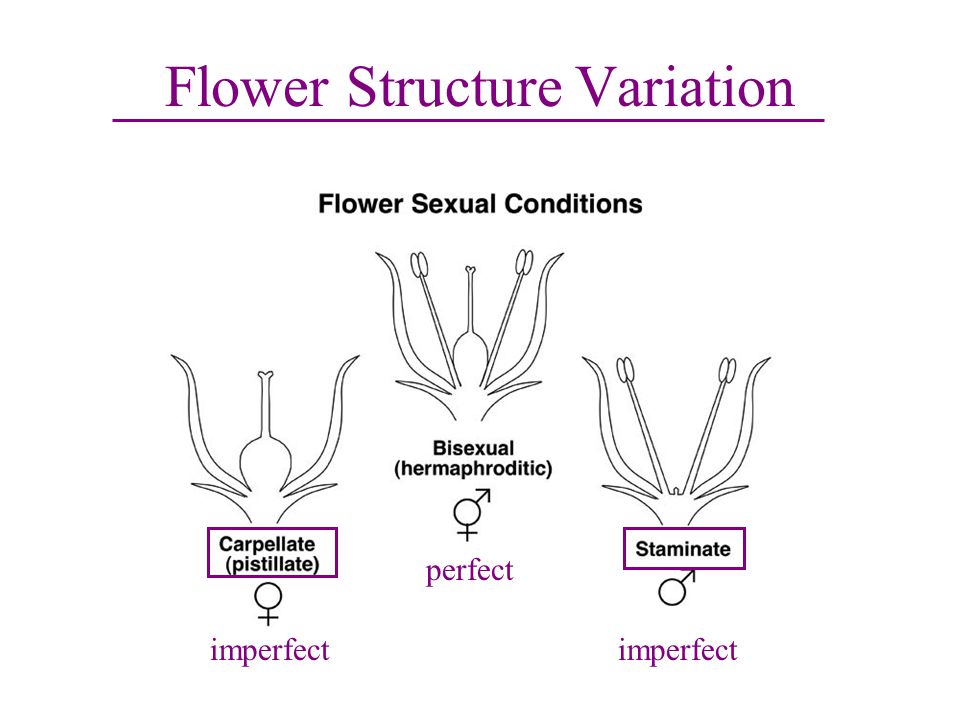
雄蕊由花丝(flament)和花药(anther)两部分组成。花丝通常细长,基部着生在花托上,或贴生在花冠上,另一端连着花药,将花药伸展在一定的空间位置,便于散发花粉。花药是花丝顶端膨大成的囊状物,是形成花粉粒的地方。
Stamen Arrangement, Cycly, Position, and Number
Stamen arrangement (Figure 9.23) is the placement of stamens relative to one another (see General Terminology). Two basic stamen arrangements are spiral, with stamens arranged in a spiral, and whorled, with stamens in one or more discrete whorls or series. Additional stamen arrangement types consider the relative lengths of stamens to one another: didymous, with stamens in two equal pairs; didynamous, with stamens in two unequal pairs (as in many Bignoniaceae, Lamiaceae, Scophulariaceae, etc.); and tetradynamous, with stamens in two groups of four long and two short (typical of the Brassicaceae).
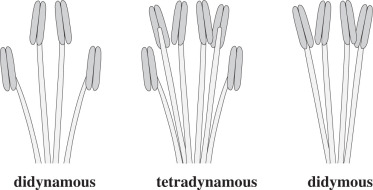
Figure 9.23. Stamen arrangement.
Stamen cycly (Figure 9.24) refers to the number of whorls or series of stamens present (applying only if the stamens are whorled to begin with). The two major types of stamen cycly are uniseriate, having a single whorl of stamens, and biseriate, with two whorls of stamens. If additional whorls are present, the terms triseriate, tetraseriate, etc., can be used.
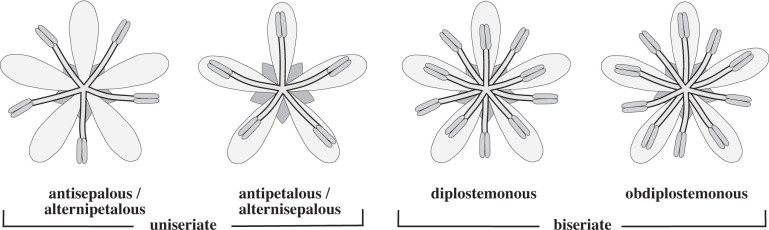 Figure 9.24. Stamen cycly (uniseriate or biseriate) and position.
Stamen position (Figure 9.23) is the placement of stamens relative to other, unlike floral parts, in particular to the sepals and petals. An antisepalous (also called antesepalous) stamen position is one in which the point of stamen attachment is in line with (opposite) the sepals, calyx lobes, or outer whorl of tepals; similarly, alternipetalous means having the stamens positioned between the petals or corolla lobes. Antisepalous and alternipetalous are usually synonymous because (in a biseriate perianth) petals/corolla lobes are almost always inserted between sepals/calyx lobes; however, one should describe only what is evident, such that either or both terms may be used. Antisepalous or alternipetalous stamens are very common in taxa with uniseriate stamens.
An antipetalous (also called antepetalous) stamen position is one in which the point of attachment is in line with (opposite) the petals, corolla lobes, or inner whorl of tepals; alternisepalous means that the stamens are positioned between the sepals or calyx lobes. Antipetalous and alternisepalous are usually synonymous (for the same reason cited earlier). An antipetalous/alternisepalous stamen position is relatively rare and may be diagnostic for specific groups, such as the Primulaceae and Rhamnaceae.
Other stamen position terms, that also take into account stamen cycly and number are: haplostemonous, stamens uniseriate, equal in number to the petals, and opposite the sepals (antisepalous); obhaplostemonous, stamens uniseriate, equal in number to the petals, and opposite the petals (antipetalous); diplostemonous, stamens biseriate, the outer whorl opposite the sepals and the inner whorl opposite petals; and obdiplostemonous, stamens biseriate, the outer whorl opposite the petals, the inner opposite sepals. Among taxa with a uniseriate stamen cycly, a haplostemonous position is much more common. Among those with a biseriate stamen cycly, a diplostemonous position is much more common; obdiplostemonous stamens are relatively rare, being diagnostic, e.g., for some Crassulaceae.
Stamen number is typically simply expressed as just that, a number. The term polystemonous may be used for an androecium with numerous stamens, usually many more than the number of petals
(六)雌蕊群
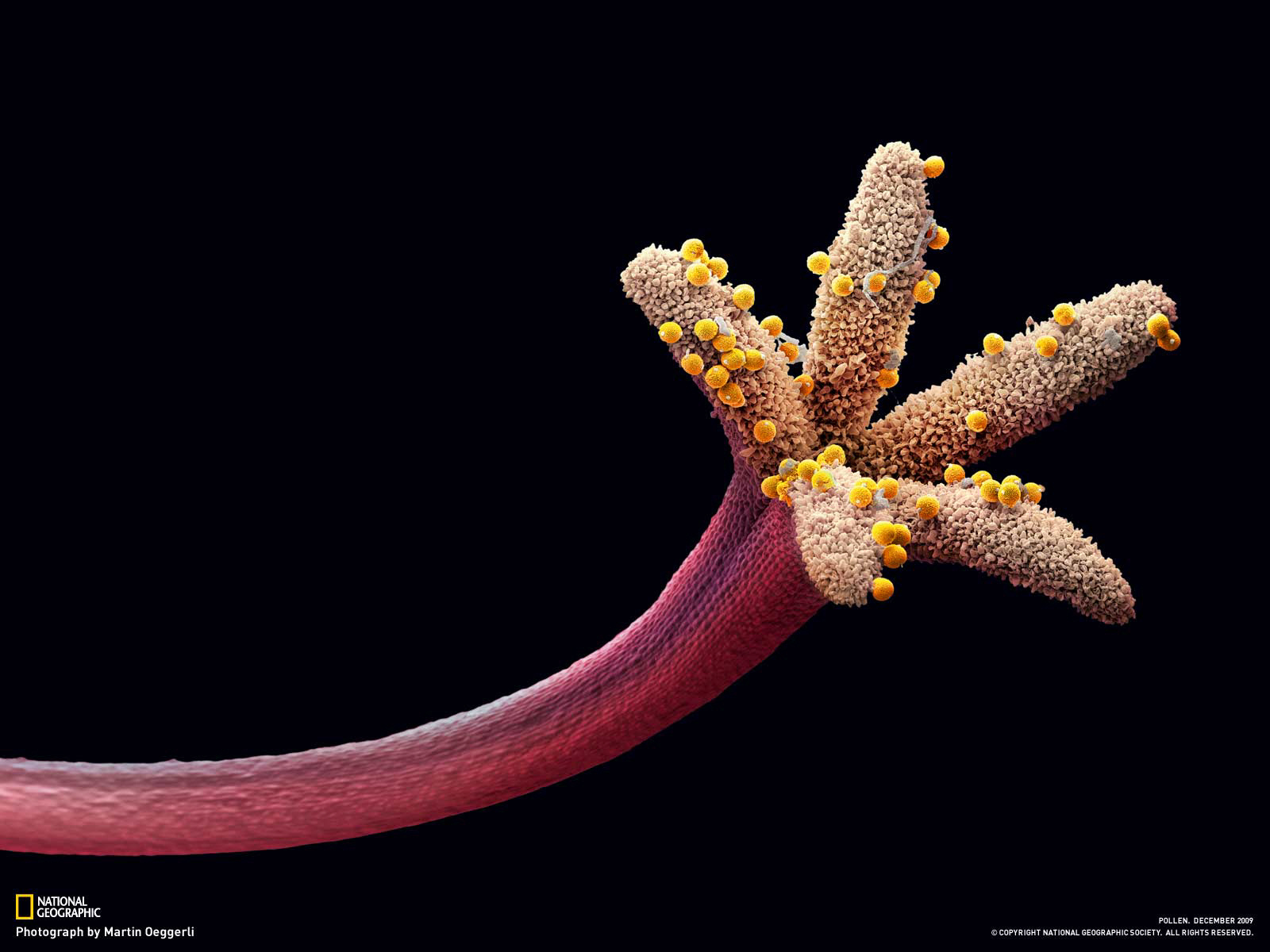
雌蕊群是一朵花中所有雌蕊(pisti)的总称,是花的另一重要组成部分。雌蕊位于花的中央,多数植物只有一枚雌蕊。
1.心皮
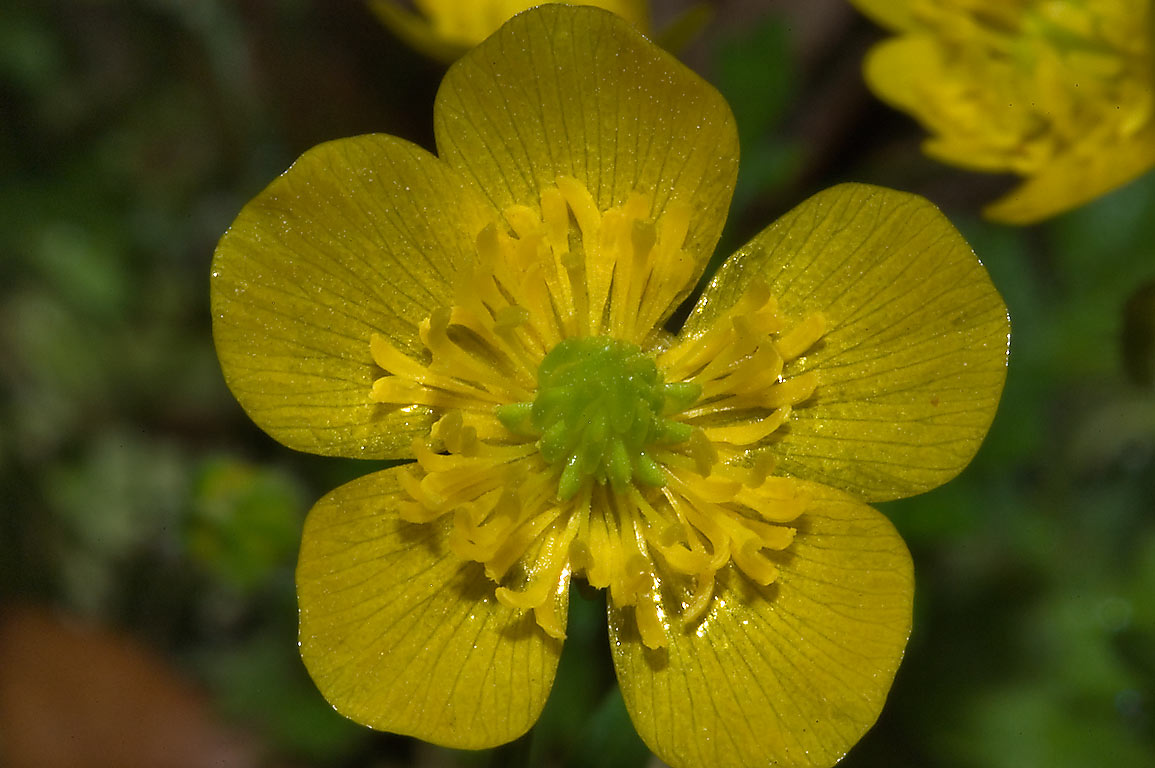
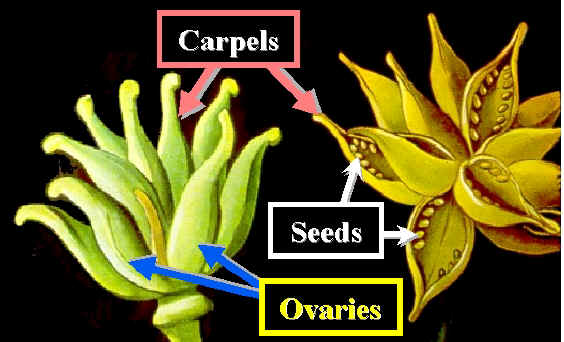
雌蕊是由一个心皮(carpel)卷合或数个心皮边缘互相连合发育而成的(图7-2)。
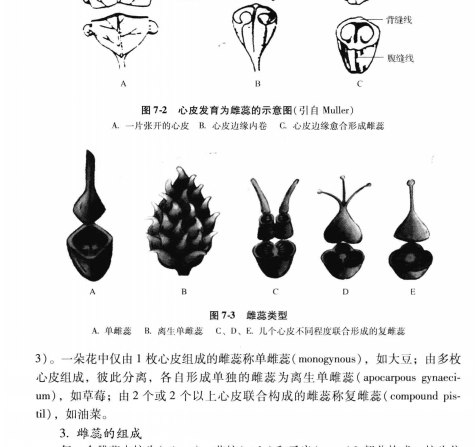


心皮为适应生殖的变态叶,是构成雌蕊的基本单位。心皮边缘愈合处为腹缝线(rentalsuture),心皮中央相当于叶片中脉的部位为背缝线(dorsal sulture)。在腹缝线和背缝线处各有维管束通过,分别为腹束(2 条)和背束(1条),胚珠通常着生在腹缝线上。
2.雌蕊的类型
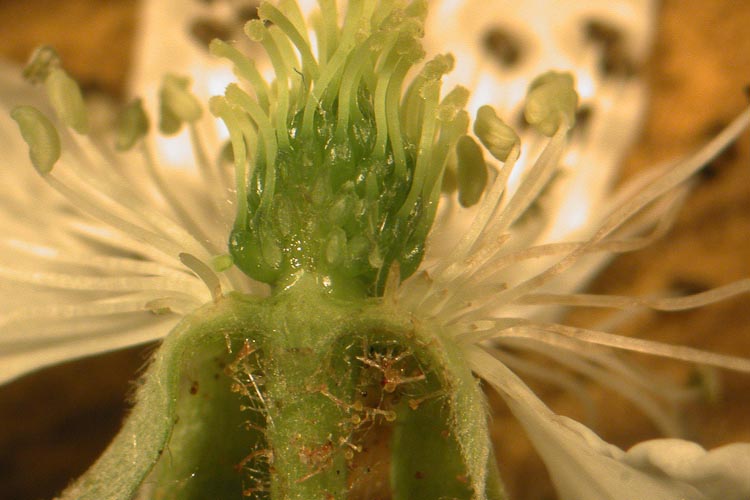
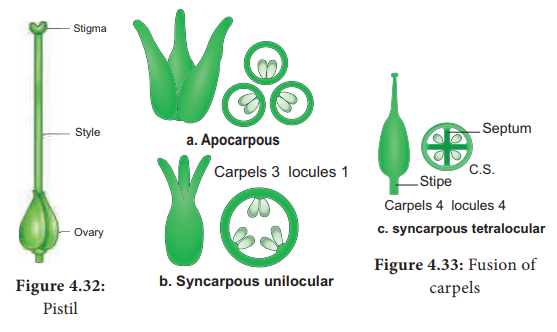
由于组成雌蕊的心皮数目和结合情况不同,形成了不同类型的雌蕊(图7-3)。一朵花中仅由1枚心皮组成的雌蕊称单雌蕊(如大豆; 由多枚monogynous),心皮组成,彼此分离,各自形成单独的雌蕊为离生单雌蕊(apocarpous gynaecium),如草莓; 由2 个或2 个以上心皮联合构成的雌蕊称复雌蕊(compoundpisil),如油菜。
3.雌蕊的组成
每一个雌蕊由柱头(stigma)、花柱(style)和子房(ovary)3部分构成。
柱头位于雌蕊的最顶端,多有一定的膨大或扩腿,是承受花粉的部位。花柱是连接柱头与子房的部分,其长短随植物的不同而不同,是花粉萌发后花粉管进入子房的通道。子房是雌蕊基部膨大的部分,着生在花托上,是孕有胚珠(ovule)的结构。
三、禾本科植物的花
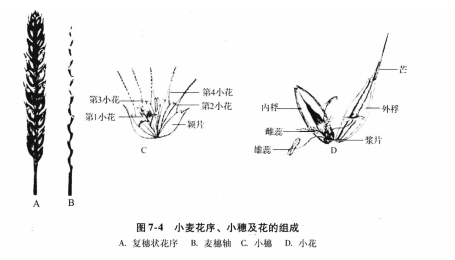
水稻、小麦等禾本科植物的花,与一般双子叶植物花的组成不同,常形成复穗状花序或复总状花序( 花序类型详见第+- -章)。小穗是构成禾本科植物花序的基本单位。小穗本身常为花序,小穗轴相当于花轴。现以小麦为例说明禾本科植物花的结构( 图7-4)。
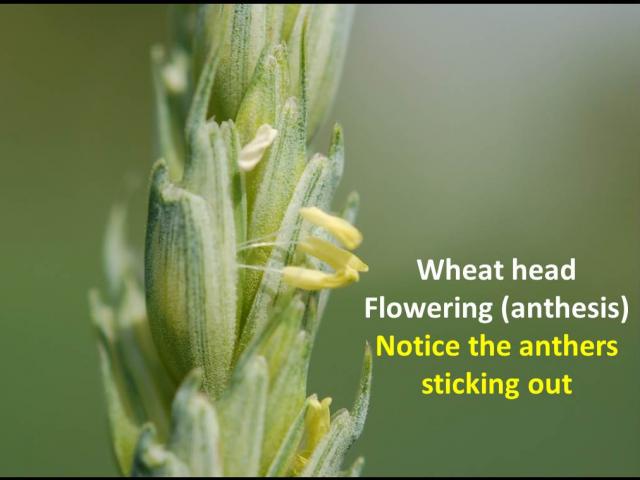
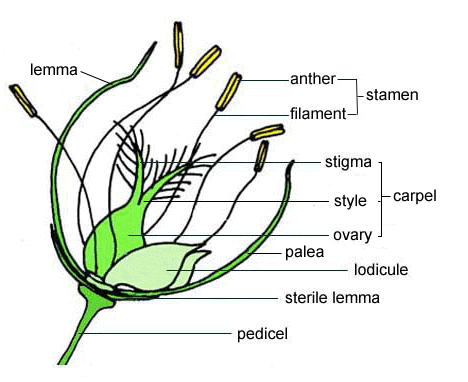
lemma:外稃 sterile lemma: 不育外稃 palea:内稃
lodicule:浆片 awn:芒
rachilla:小穗轴 glume:颖
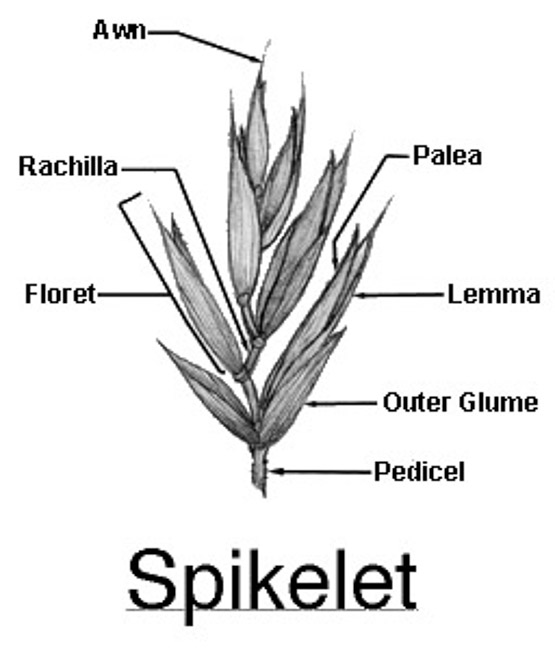
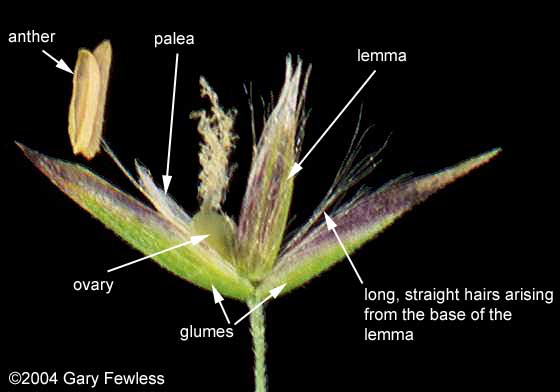
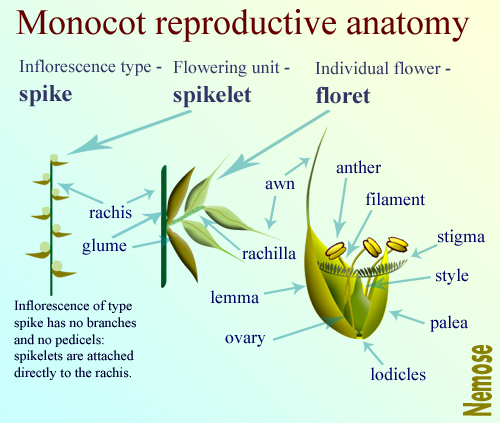
小麦的麦穗由许多小穗组成,每一小穗的基部有2 个较大的硬片,称为颖片(glume)。在颖片内包含有几朵小花,通常只有小穗基部2~-3朵小花结构正常能育,可以结实。每朵能育花又被2 个稃片包被,位于外侧的稃片形状较大,常具有显著的中脉,称为外稃(lemma); 在内侧的稃片形状较小,称为内稃(palea)。稃片内侧基部,有2 个较小的囊状突起,称为浆片(lodicule)。开花时,浆片吸水膨胀,使内、外稃撑开,花药和柱头露于花外,以利传粉。花的中央有3枚雄蕊和1枚雌蕊,雌蕊具2 个羽毛状柱头,可接受花粉,花柱不显著,子房1室。
雄性生殖单位首先发现于白花丹中,1981年Rusell等人应用定量三维研究方法观测了白花丹的成熟花粉粒。描述了2 个精细胞以一横向的具胞间连丝的壁而连接在一起,两精子也被营养细胞质膜包围,一精子通过细胞外突形成的长尾环绕着营养核,也部分地被营养核的裂片所包围,这种联系一直持续到花粉管生长,并明确指出所有雄性成员构成联合体。后来又陆续在其他的3-细胞花粉植物中发现(图7-23)。在此基础上Dumas等人1984年引入雄性生殖单位的概念,即2个精细胞与营养核在生殖过程中作为一个结构单位进行传送的现象,称为雄性生 殖 单 位( male germ unit,MGU )。
也有文献报道,在单子叶植物禾草类中,2 个精子互不连接,精子与营养核
四、花芽分化及其调控
(一)花芽分化
花和花序均由花芽发育而来,花芽分化是被子植物从营养生长转入生殖生长的重要标志。植物在营养生长的一定阶段,感受到了调节发育的刺激,使一些芽的分化发生了质的变化,茎顶端生长锥不再产生叶原基和腋芽原基,而分化为花或花序的各部分原基,由这些原基发育成花的各部分,这一过程称为花芽分化(flower bud differentiation )。
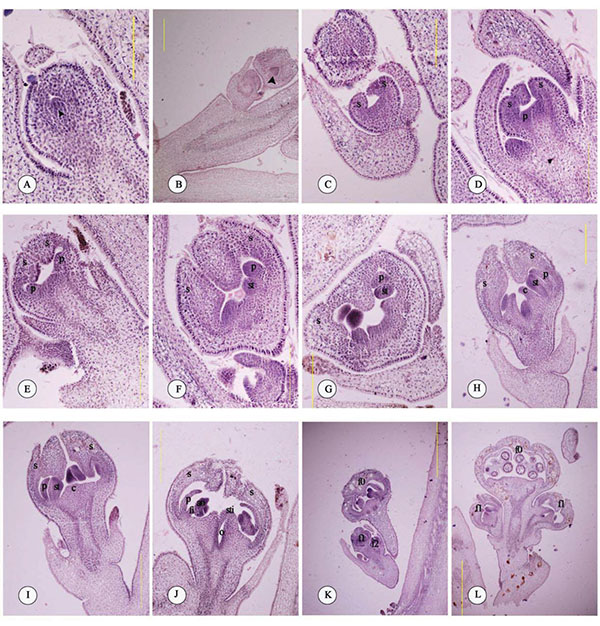
Anatomical changes in the flower bud during differentiation and development in ‘Jinsi No.4’ jujube.
A, Longitudinal section showing the period of pre-differentiation in early April.
B, Longitudinal section showing the initial stage.
C, Longitudinal section showing the period of sepal differentiation.
D-E, Longitudinal section showing the period of petal differentiation.
F-G, Longitudinal section showing the period of stamen differentiation with petal, sepal and stamen.
H-J, Longitudinal section showing the period carpel differentiation with petal, sepal, stigma, filament, anther and ovary.
K-L, Longitudinal section showing the inflorescence differentiation with f0, f1 and f2. an: anther; s: sepal; sti: stigma; p: petal; st: stamen; c: carpel; o: ovary. fi: filament. f0, f1 and f2 represent 0, 1 and 2 level flowers of inflorescence, respectively.
(二)花芽分化的过程及意义
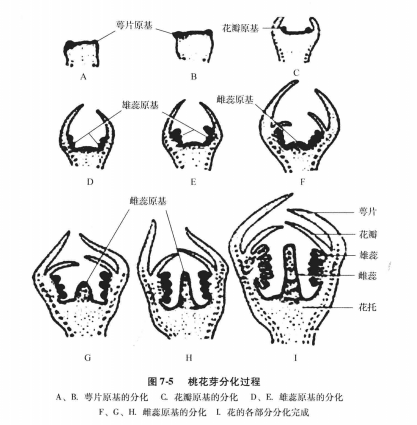
花芽分化过程中各部分原基的分化顺序,一般是由外向内进行的,依次为萼片原基、花瓣原基、雄蕊原基和雌蕊心皮原基。由于植物种类的不同,花的各部分原基的分化顺序也有各种变化,如石榴的雄蕊原基是最后分化的,龙眼则花熊原基是最后分化的。现以桃为例说明花芽分化的过程( 图7-5)。
花芽分化与外界条件有密切关系,各种植物在花芽分化前需要适宜的光照、温度、水分及充分的养分。因此,研究各种植物花芽或花序分化的形成特性,以及他们对环境条件的要求,在农业生产过程中采取一些揩施如施肥、修剪、灌溉、激素的应用和病虫害防治等,可达到促进或控制花或花序的分化,从而达到提商成花率和成果率,为丰产奠定基础。
(三)花器官发育的ABC模型
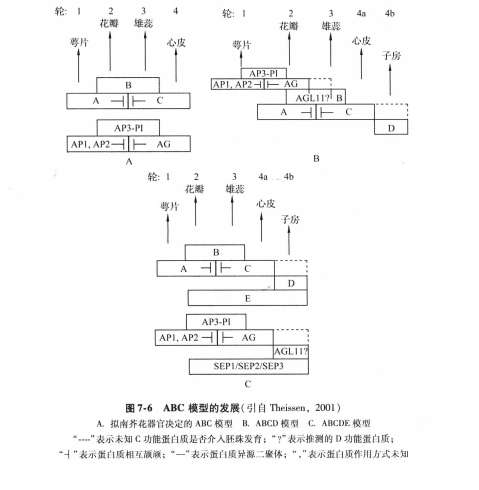
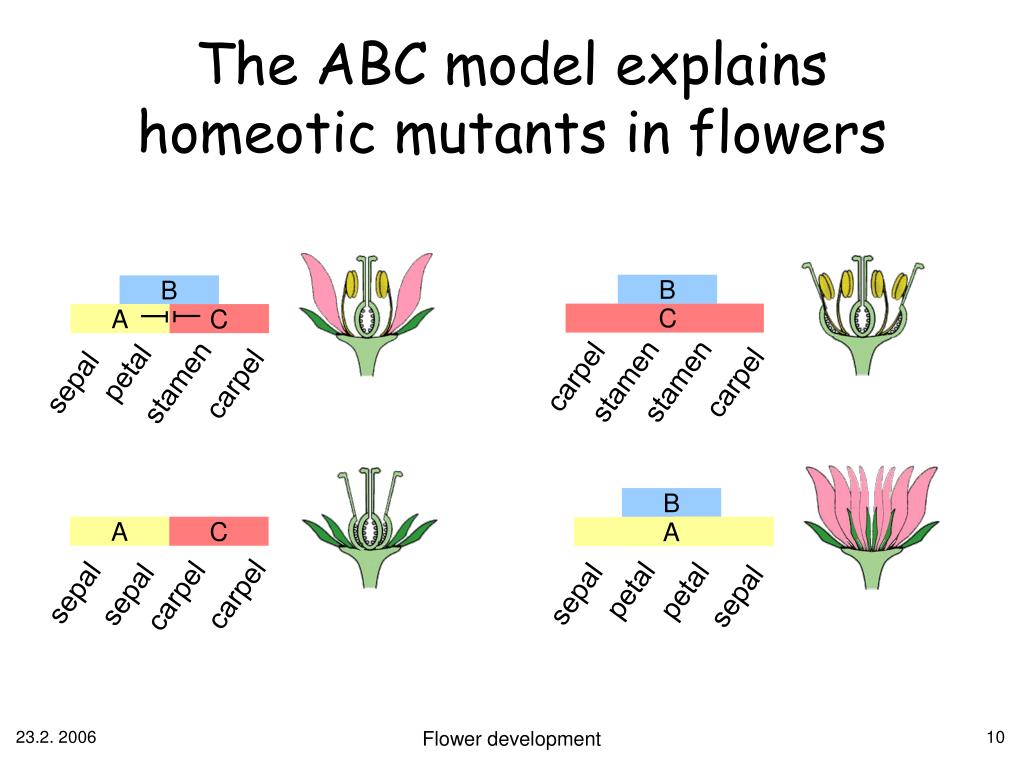
20世纪90年代,Coen等通过对主要模式植物拟南芥(Arabidopsisthaliana)和金魚草(Antirrhinunmajus)的研究,提出了基因控制花器宜发生的“ABC 模型”。认为花器官的发育受A、B、C3组基因的控制,A 基因单独表达决定粤片的形成,A 基因与B 基因同时表达决定花瓣的形成,B 基因与C 基因同时表达决定雄蕊的形成,而C 基因的表达决定心皮的发育( 图7-6A)。在这个模型中,A 基因与B 基因相互颉颅,当C 基因突变后,A 基因在整个花中表达,反之亦然。如果A.B.C3组基因中1组缺失,将导致花器官错位发育。
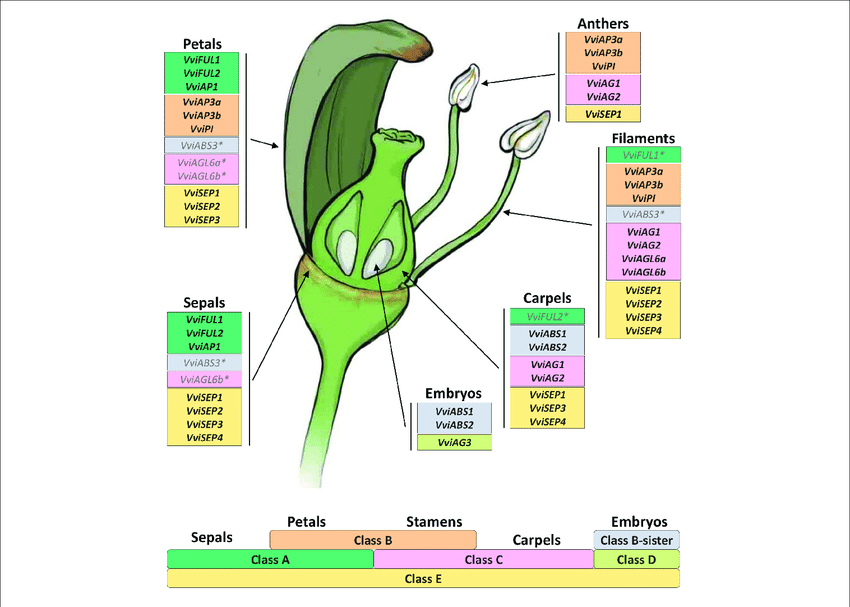
ABC模型具有简单性和对称性,可以解释各种花器官的形成原因,预测基因缺失时花原基的发育状况,还可以推测多个基因突变时花的表型,因此该模型的建立是植物发育生物学研究方面的一个重要突破。但随着研究的深入和花同源异型基因数量的增加,出现了许多该模型无法解释的现象。2001年,Theissen 等在研究调控胚珠发育的基因中,从矮牵牛突变体中克隆了FBPII,它专-地在胚株原基、珠被和珠柄中表达。这样胚珠被认为是花的第5轮器官,其控制基因命名为D功能基因,经典的ABC模型发展为ABCD模型(图7-6B)。后来人们又发现一类基因既发挥B功能也发挥C 功能,被命名为E 功能基因,这样ABCD模型又进步发展为ABCDE 模型( 图7-6C),200 '年,Ertbar 等研究发现E 在s 轮花器官的特征决定中都有功能,人们对ABCDE模型进- -步修正。现在ABCDE 模型可以这样解释花器官的特征决定,5轮花器官受到A.B、C、D、E5组基因的控制,A 和E决定弯片的形成,A.B.E同时决定花瓣的形成,B.C、E同时决定雄器的形成,C 和E决定心皮的发育,C.D、E决定胚珠的发育。
(缺第九页)
随着近年来植物分子系统发生学的深人研究,对很多被子植物的花器官发育机制也有了进- 一步的了解,并在经典ABC模型的基础上衍生出多种花器官发育模型,如边界衰减模型( 目前在莲花和睡莲中的研究都支持这一模型)和边界滑动模型(近年来对百合、郁金香和非洲爱情花的研究结果都支持这种模型)。开展花部性状发育及其多样性的分子机制研究,对于揭示被子植物花部式样的演化,进而探讨被子植物的系统发育具有重要意义。

