-
1 主页
-
2 视频
2.1木兰科Magnoliaceae
单叶互生,全缘,稀有分裂,羽状脉;托叶大,脱落后在枝上留下环状痕迹。花单生,大而艳丽;花被片6~12,每轮3片;花托隆起成圆锥状,雄蕊着生于花托下部,花药2室,纵裂;雌蕊离生心皮着生于花托上部,边缘胎座,胚珠1~6。聚合蓇葖果或翅果。
15属约260种,中国产11属约140种,主要分布于云南、广西、广东、海南等省区。
分属检索表
1.叶常不裂;花药药室内向或侧向开裂;聚合蓇葖果……………………………………2
1.叶常4~6裂;花药药室外向开裂;聚合坚果………………………………鹅掌楸属
2.花顶生,雌蕊群无柄或具短柄(聚合果与雄蕊群之间无间隔)………………………3
2.花腋生,雌蕊群具显著的柄(聚合果与雄蕊群之间有长的柄状间隔)………含笑属
3.每心皮具4~14胚珠;聚合果常为球形或近球形………………………………木莲属
3.每心皮具2胚珠;聚合果常为长圆柱形……………………………………………木兰属
2.1.1木兰属Magnolia L.
常绿或落叶,乔木或灌木。叶全缘。花顶生,雌蕊无柄。蓇葖果,背缝线开裂。种子具红色假种皮,珠柄丝状。
90种,分布东南亚、北美至中美。中国有30余种。
分种检索表
1.花先叶开放;聚合果常弯弓,有部分小果不育,瞢英近球形或扁圆,无喙…………2
1.花后叶开放,花被片近等大;聚合果整齐,蓇葖全部发育,先端具喙…………………3
2.叶宽倒卵形,宽6~cm,先端有突出的小尖头;花被片白色……………………白玉兰
2.灌木;叶椭圆状倒卵形,先端尖或渐尖;花被片红色或紫色,外轮花被片较窄小,萼片状…………………………………紫玉兰
3.老叶下面密被锈褐色毛,叶柄不具托叶痕……………………………………………广玉兰
3.老叶下面无毛或被柔毛,但决非褐色绒毛,叶柄内侧有托叶痕…………………………4
4.叶小,长9~325px,膜质………………………………………………………………天女花
4.叶大,长375px以上,革质或近革质…………………………………………………………5
5.叶常绿;托叶痕几达叶柄顶端…………………………………………………………山玉兰
5.落叶树;托叶痕为叶柄的2/3……………………………………………………………厚朴
1.紫玉兰Magnolia lilifra Desr.
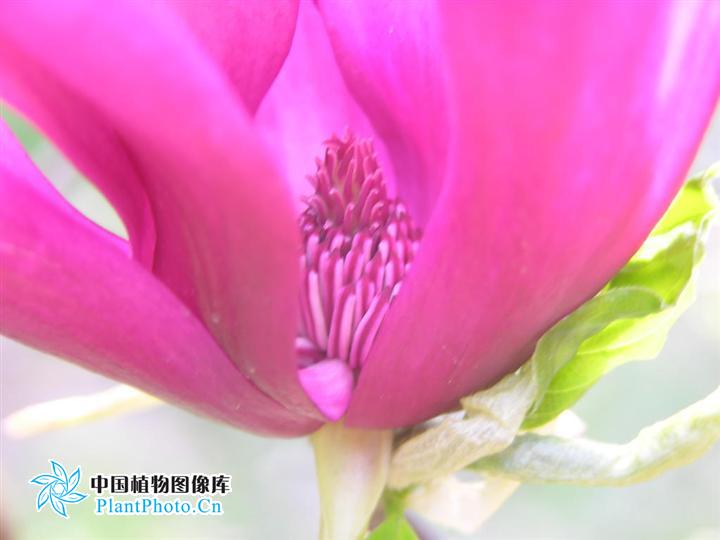
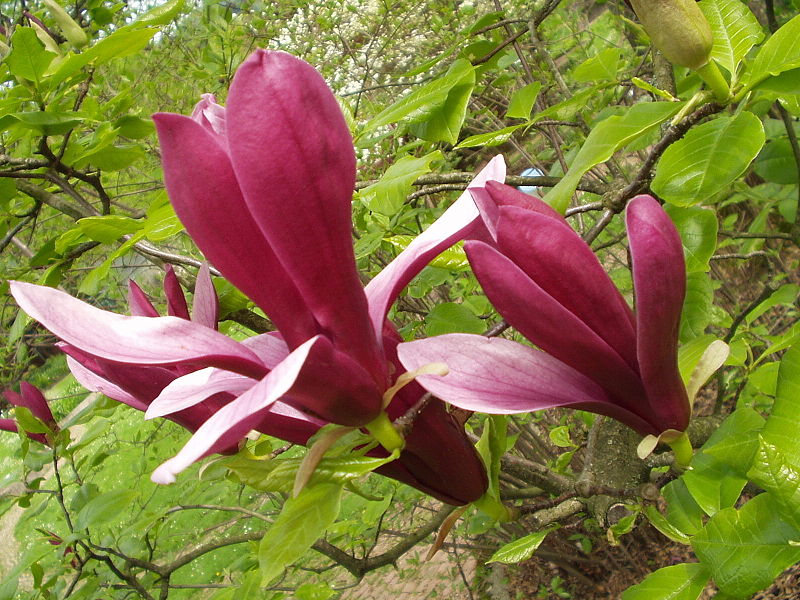
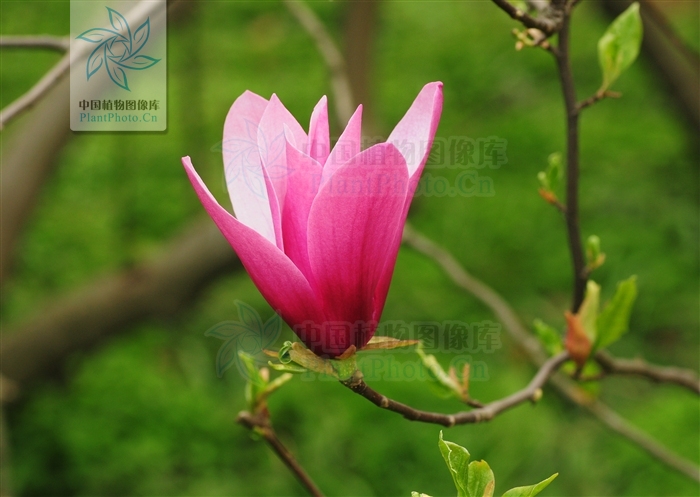
【形态】:落叶灌木,高3~5m,常丛生。芽具灰褐色细毛;小枝紫褐色。叶倒卵形或椭圆状卵形,长10~450px,宽4~cm,顶端急或渐尖,基部楔形,背面沿脉有柔毛。花先叶开放或与叶同放,大型;萼片3,披针形,淡紫褐色,长2~75px;花瓣6,长圆状倒卵形,长8~cm,外面紫或紫红色,内面白色;花丝和心皮紫红色;花柱顶端尖,微弯。聚合果长圆形,长7~cm,淡褐色。花期4~5月。
【分布】:原产我国湖北、四川、云南,现长江流域各省广为栽培。北京小气候条件适宜处可露地种植。
【习性】:喜光,较耐寒。
【繁殖】:扦插、压条,分株或播种繁殖。
【用途】:紫玉兰的花“外料料似凝紫,内英英而积雪”,花大而艳,是传统的名贵春季花木。可配置在庭园的窗前和门厅两旁,丛植草坪边缘,或与常绿乔、灌木配置。与木兰科其他观花树木配置组成玉兰园。
Magnolia liliiflora
Common Name(s): Lily Magnolia
Description
The lily magnolia is best grown in organically rich, neutral to slightly acidic, medium moisture, well-drained soils in full sun to part shade. It appreciates a root-zone mulch to help retain soil moisture. It also appreciates a location protected from strong winds, but avoid warm southern exposures which may promote premature bud opening in spring. The fleshy root system is easily damaged during transplanting, so it is best to select a landscape location carefully and leave this magnolia undisturbed once planted. Prune as needed immediately after flowering. It usually requires little pruning other than the removal of dead or damaged branches. Its bark is light gray to brown.
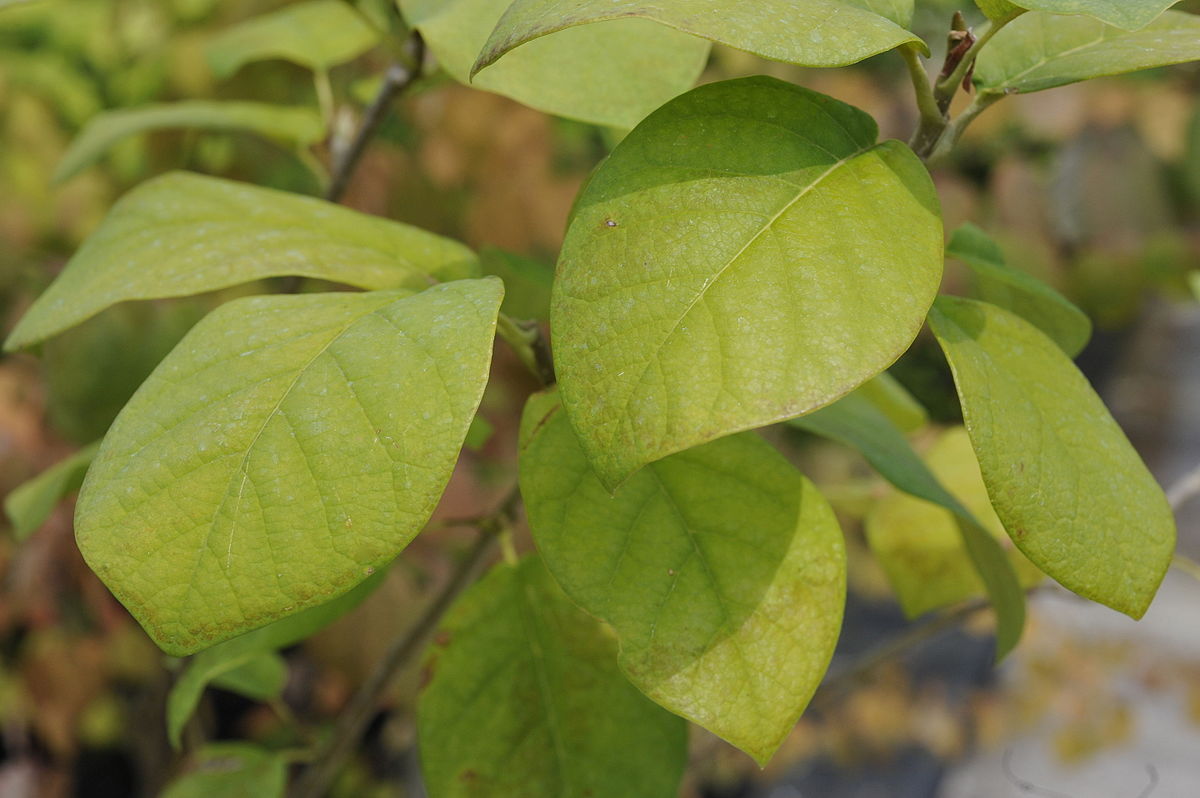
‘Susan’ is a cross between M. liliiflora ‘Nigra’ and M. stellata ‘Rosea’. It is part of the Little Girl series (‘Ann’, ‘Betty’, ‘Jane’, ‘Judy’, ‘Pinkie’, ‘Randy’, ‘Ricki’ and ‘Susan’) of hybrid magnolias that were developed at the National Arboretum in the mid-1950s by Francis DeVos and William Kosar. Plants in this series flower about 2-4 weeks later than M. stellata and M. x soulangiana, thus reducing the risk of damage to flowers from late spring frosts. ‘Susan’ is primarily noted for its compact shrubby habit, fragrant fuchsia flowers and late bloom (mid-April to early May). It is a slow-growing, deciduous shrub or small tree that typically rises over time to 8-12’ tall. Goblet-shaped flowers, each with 6 slightly twisted tepals, bloom shortly before the foliage begins to appear. Flowers (to 5” wide) are purple-red or fuchsia, with paler tones inside. Flowers may sporadically repeat bloom in mid-summer. Ovate medium green leaves (to 6” long). Leaves turn yellow-bronze in fall.




2.白玉兰Magnolia denudata Desr.
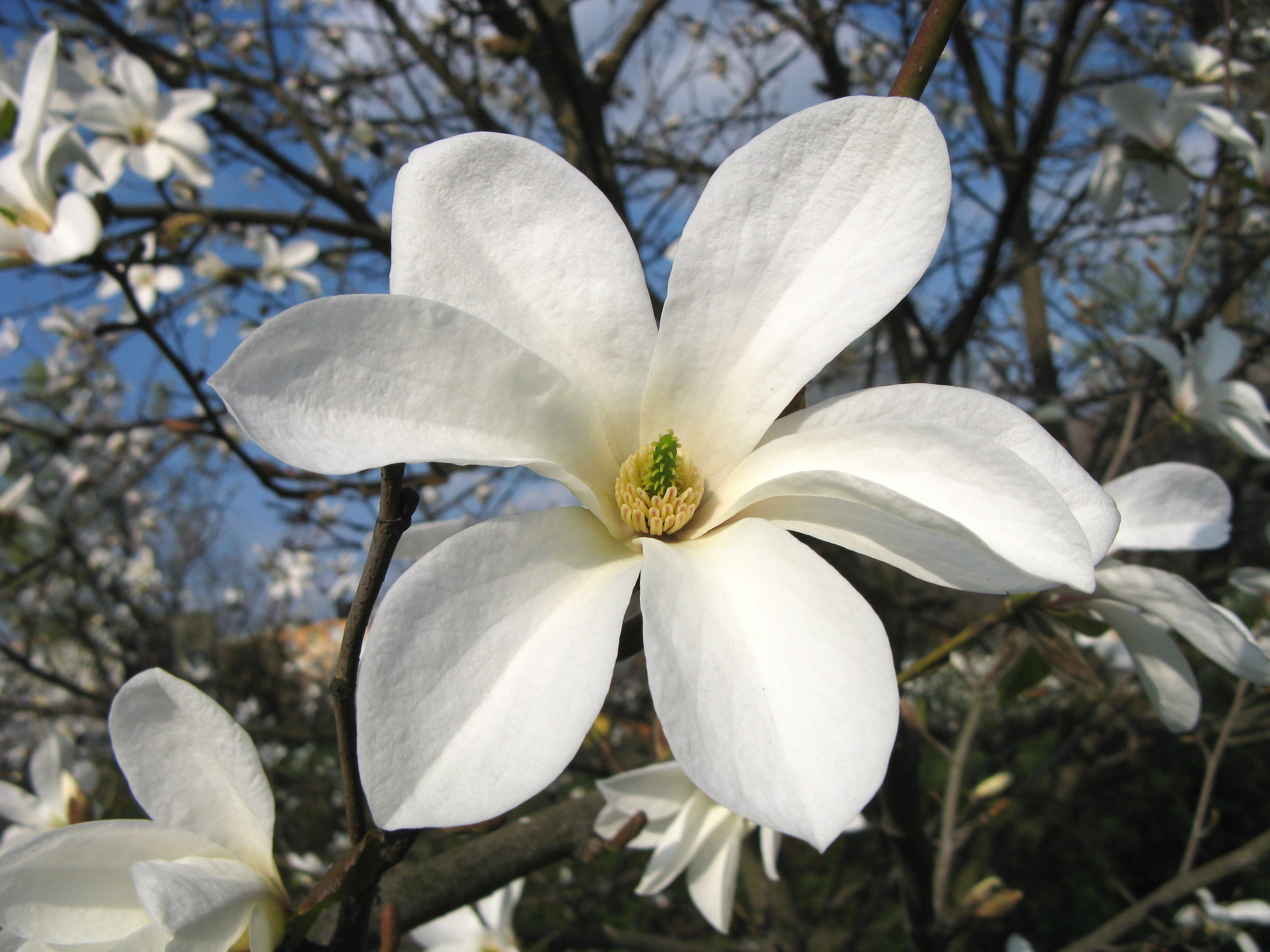
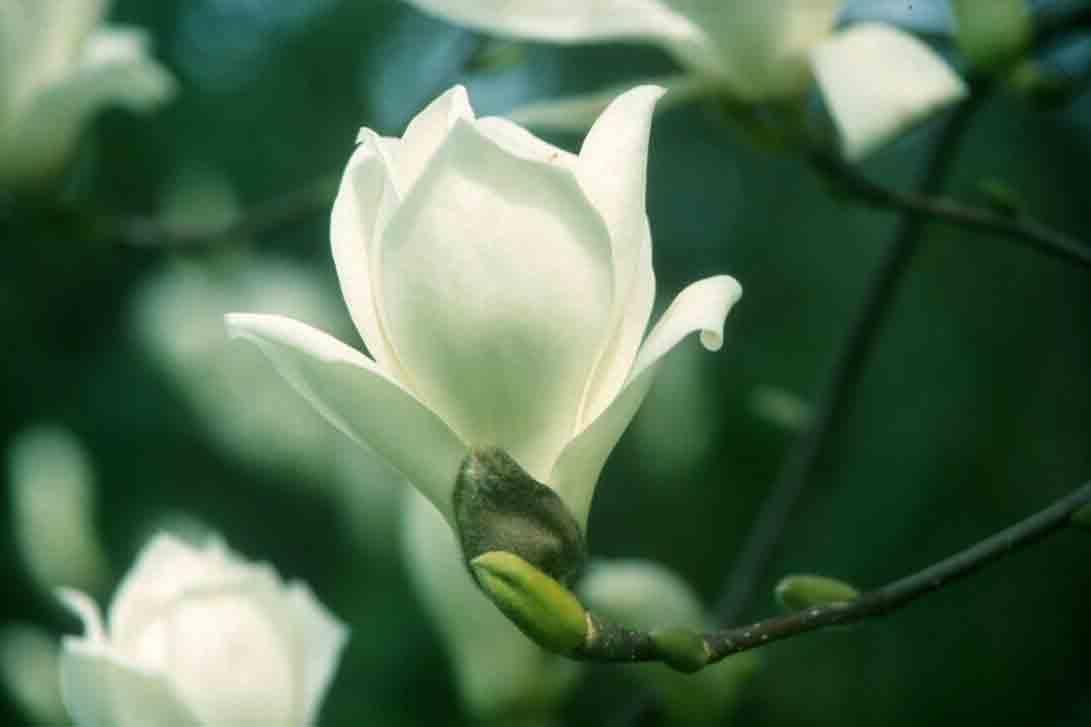
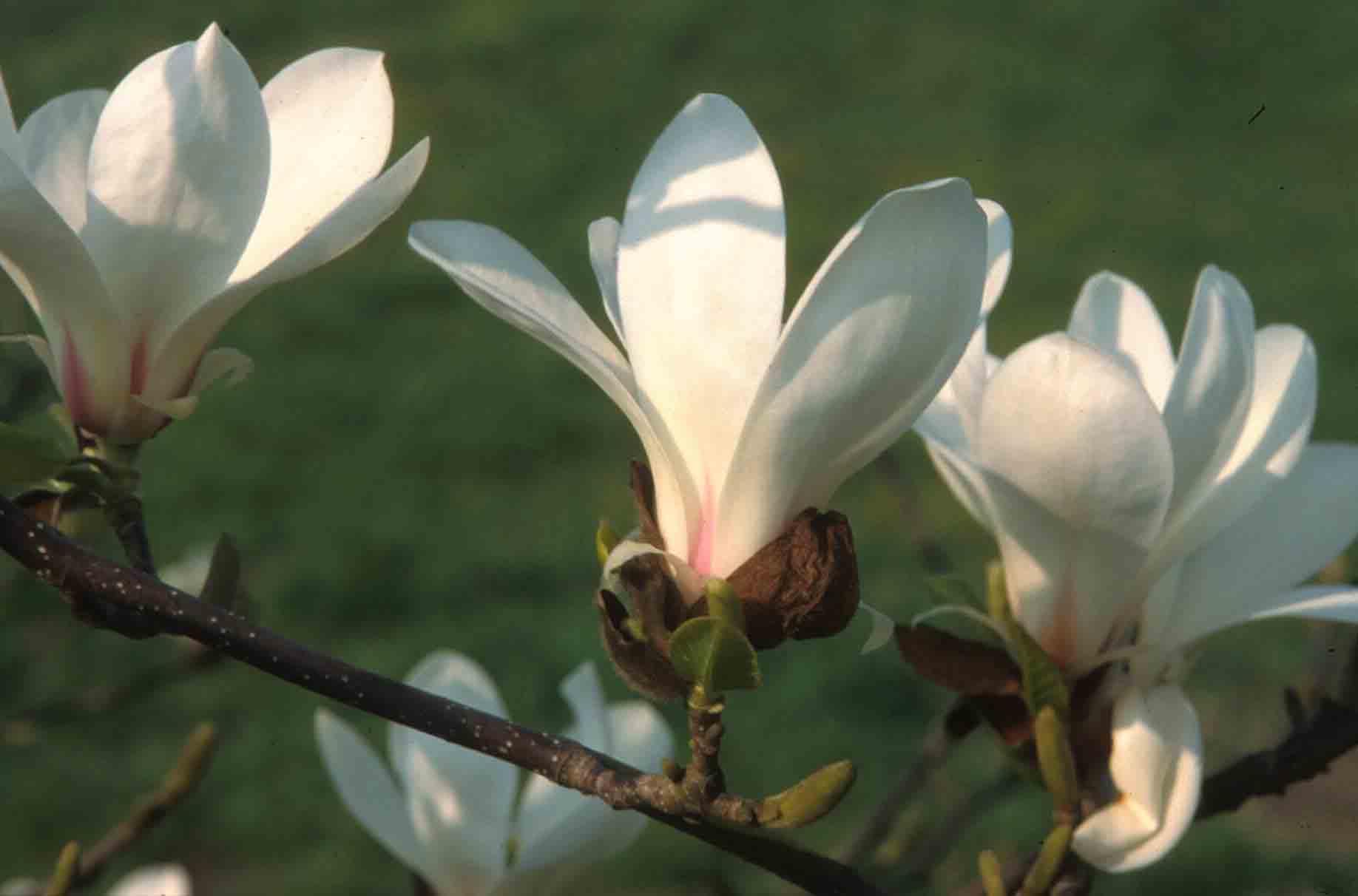
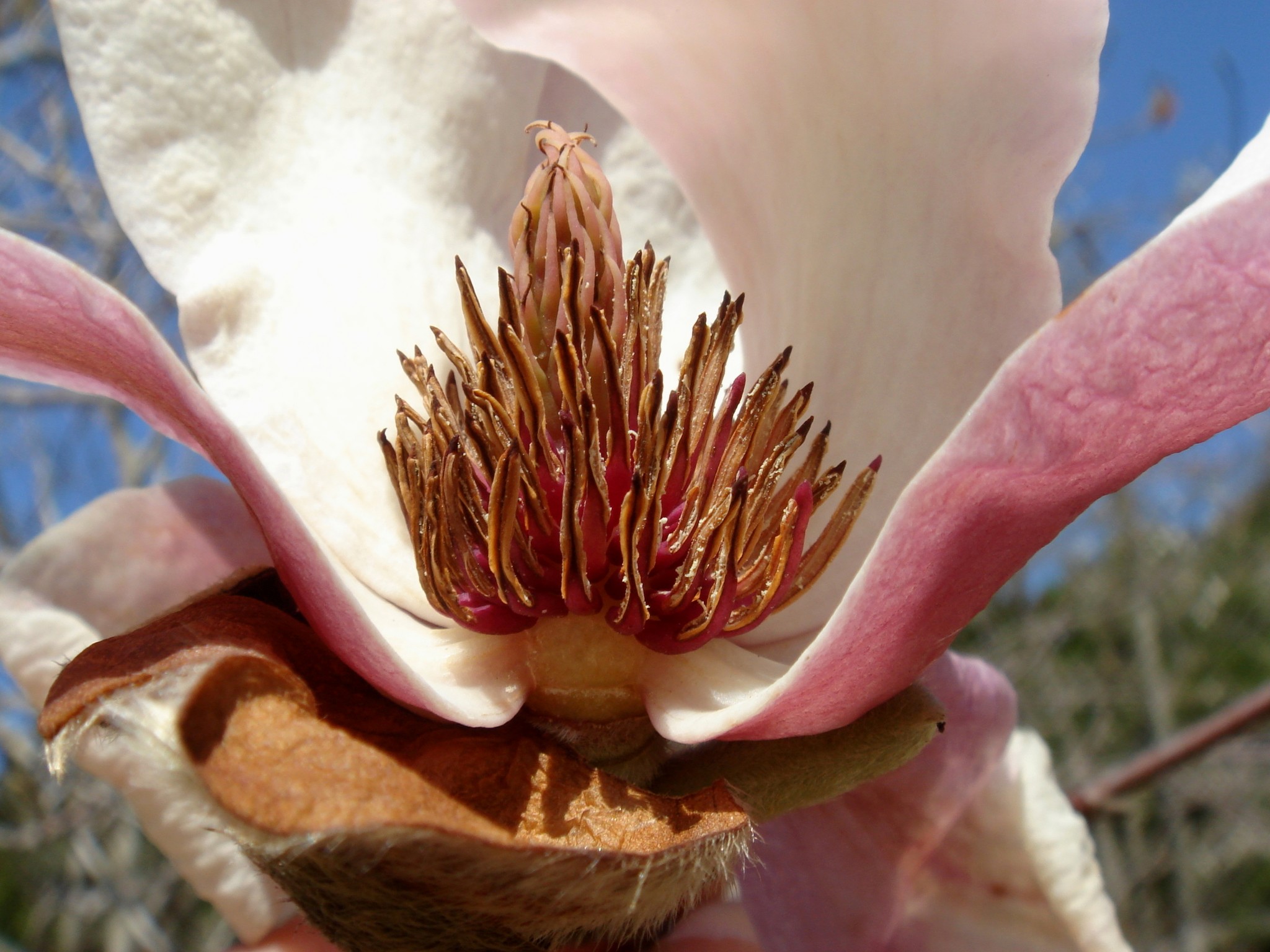
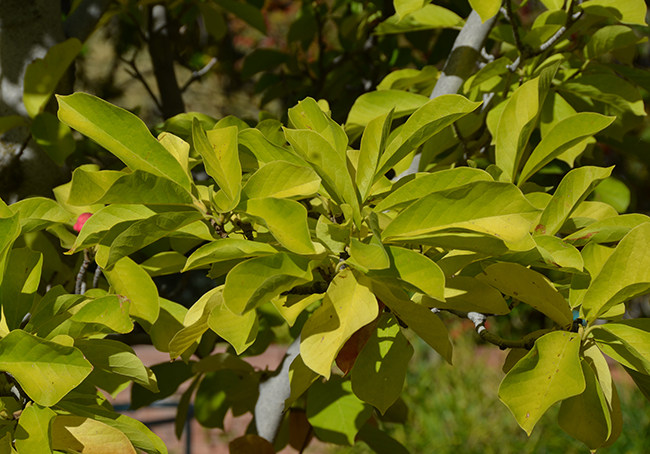
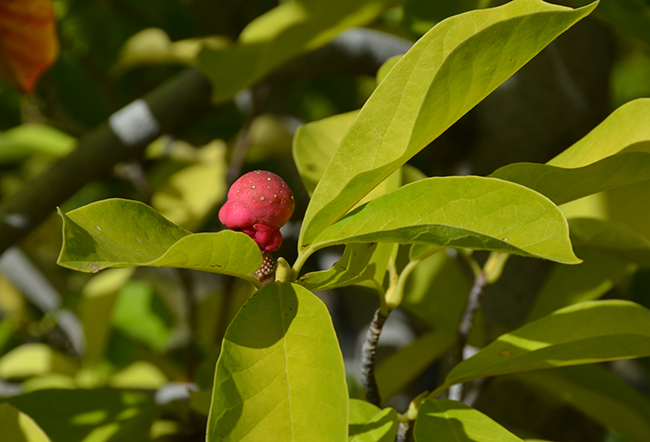
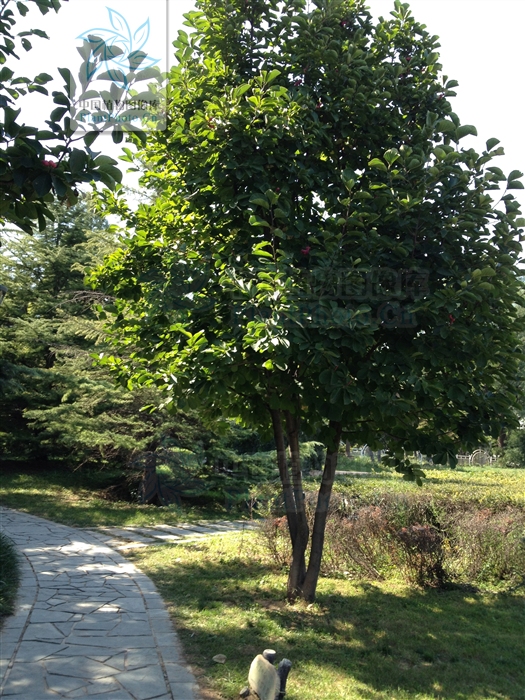
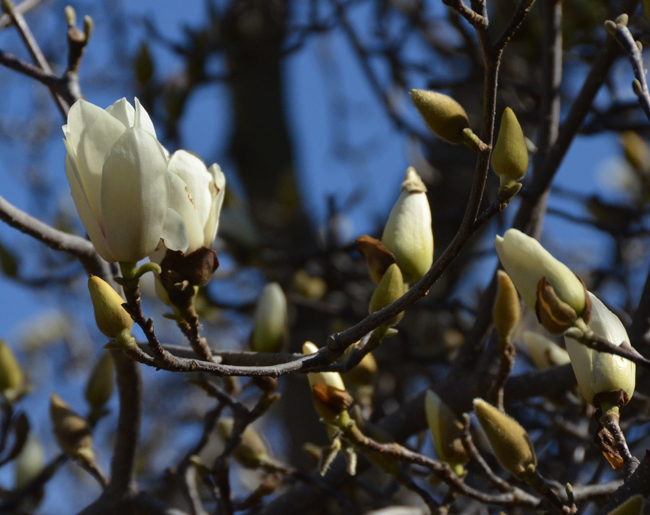
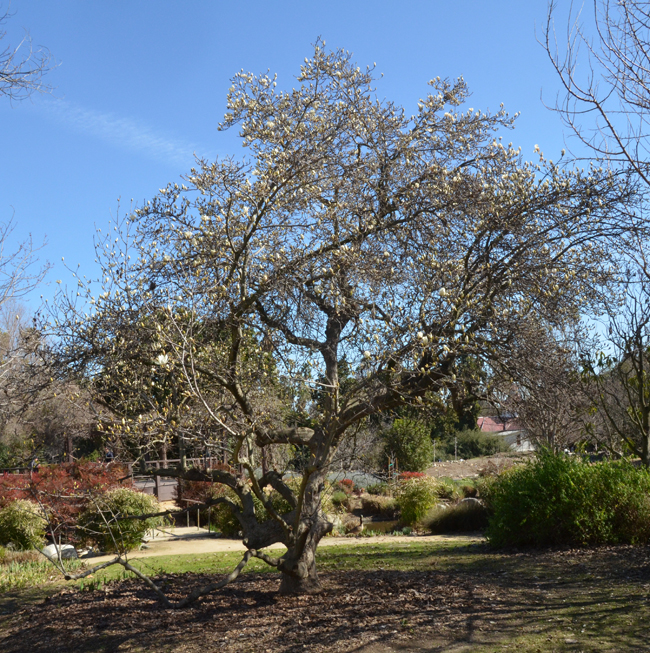
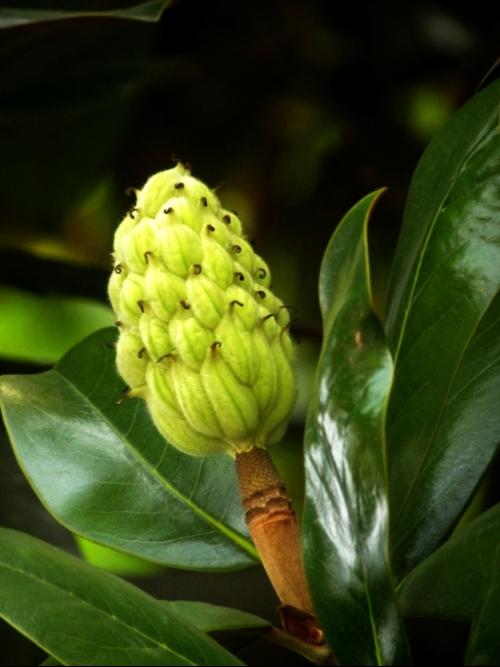
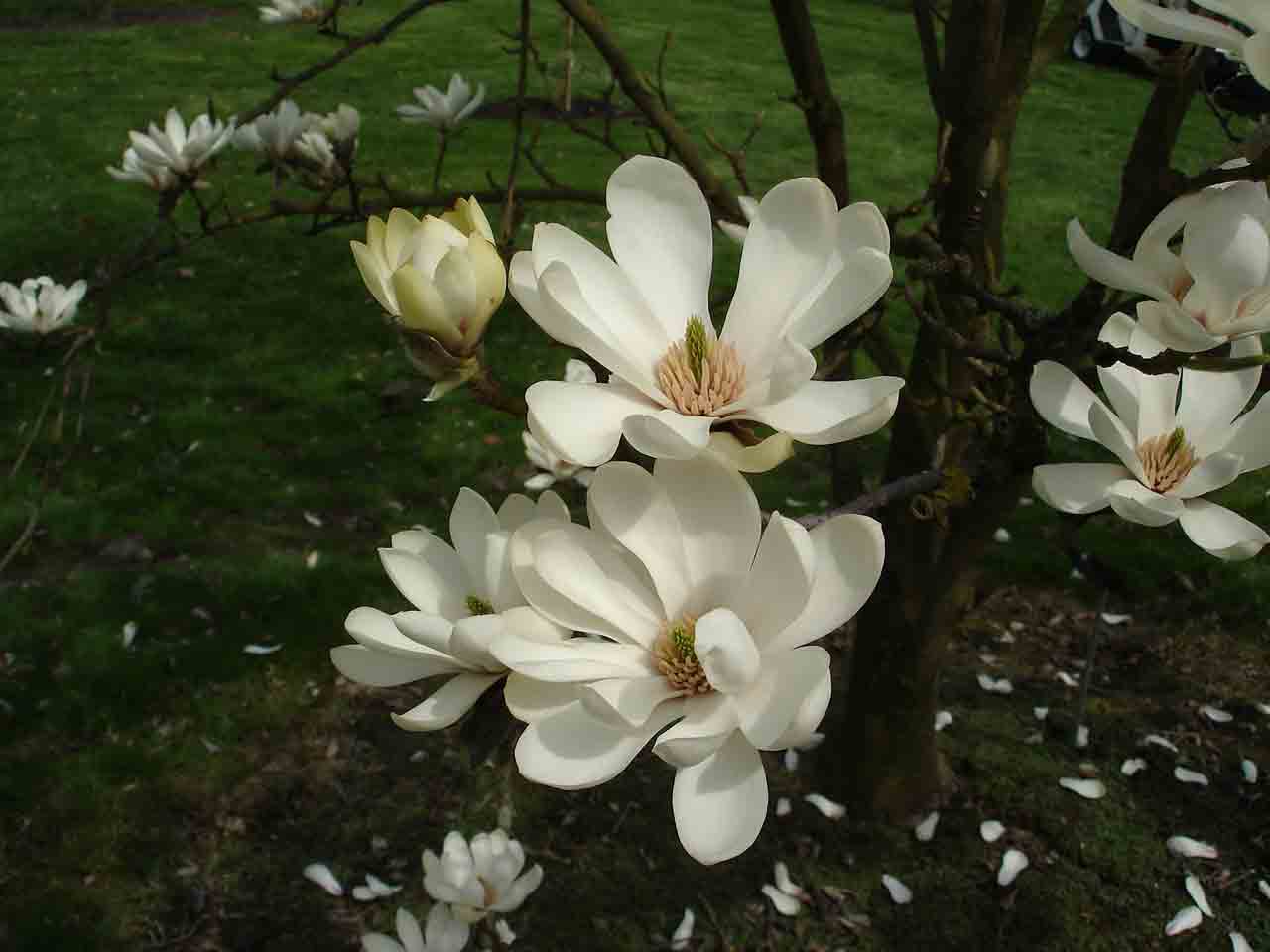
【形态】:落叶乔木,高可达25m,树冠卵形。小枝淡灰褐色;冬芽大,密生灰绿色或灰绿黄色长绒毛。叶互生,宽倒卵形至倒卵形,先端圆宽,具短突尖,中部以下渐狭楔形,全缘。3月先叶开大型花,花顶生直立,钟状,白色,有清香。聚合果呈不规则圆柱形,9月果熟。种皮鲜红色。
【品种】:二乔玉兰Magnolia X soulangeana(Lindl.)Soul.Bod.,花先叶开放,外面淡紫色,内面白色;萼片3片,似花瓣状,长度与花瓣近等长,有时绿色。
【分布】:产于中国中部山野中,现国内外庭园常见栽培。为我国著名的传统观赏花卉,已有2500多年的栽培历史。上海市市花。
【习性】:喜光,稍耐阴,具较强的抗寒性。不耐盐碱,土壤贫瘠时生长不良,畏涝忌湿。对二氧化硫、氯和氟化氢等有毒气体有较强的抗性。寿命长,可达千年以上。
【繁殖】:可用播种、扦插、压条及嫁接等法繁殖。
【用途】:白玉兰先花后叶,花洁白、美丽且清香,早春开花时犹如雪涛云海,蔚为壮观。古时常在住宅的厅前院后配置,名为“玉兰堂”。亦可在庭园路边、草坪角隅、亭台前后或漏窗内外、洞f1N旁等处种植,孤植、对植、丛植或群植均可。
Magnolia denudata
Common Name(s): Yulan Magnolia
Description
Yulan Magnolia is an attractive early flowering tree that prefers to be planted in the full sun light or shade with evenly moist soil high in organic matter. Responds to early warm weather and may be damaged by frost, especially the early flowers. It has fleshy roots. Its form is upright with tight habit when young, but becomes more open with age. It will grow in heavy clay and tolerates air pollution well.
Magnolia denudata, the lilytree or Yulan magnolia, is native to central and eastern China. It has been cultivated in Chinese Buddhist temple gardens since 600 AD. Its flowers were regarded as a symbol of purity in the Tang Dynasty and it was planted in the grounds of the Emperor's palace. It is the official city flower of Shanghai.



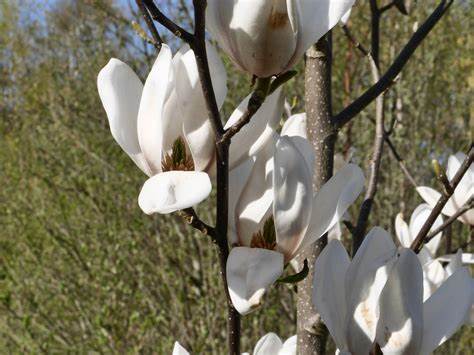
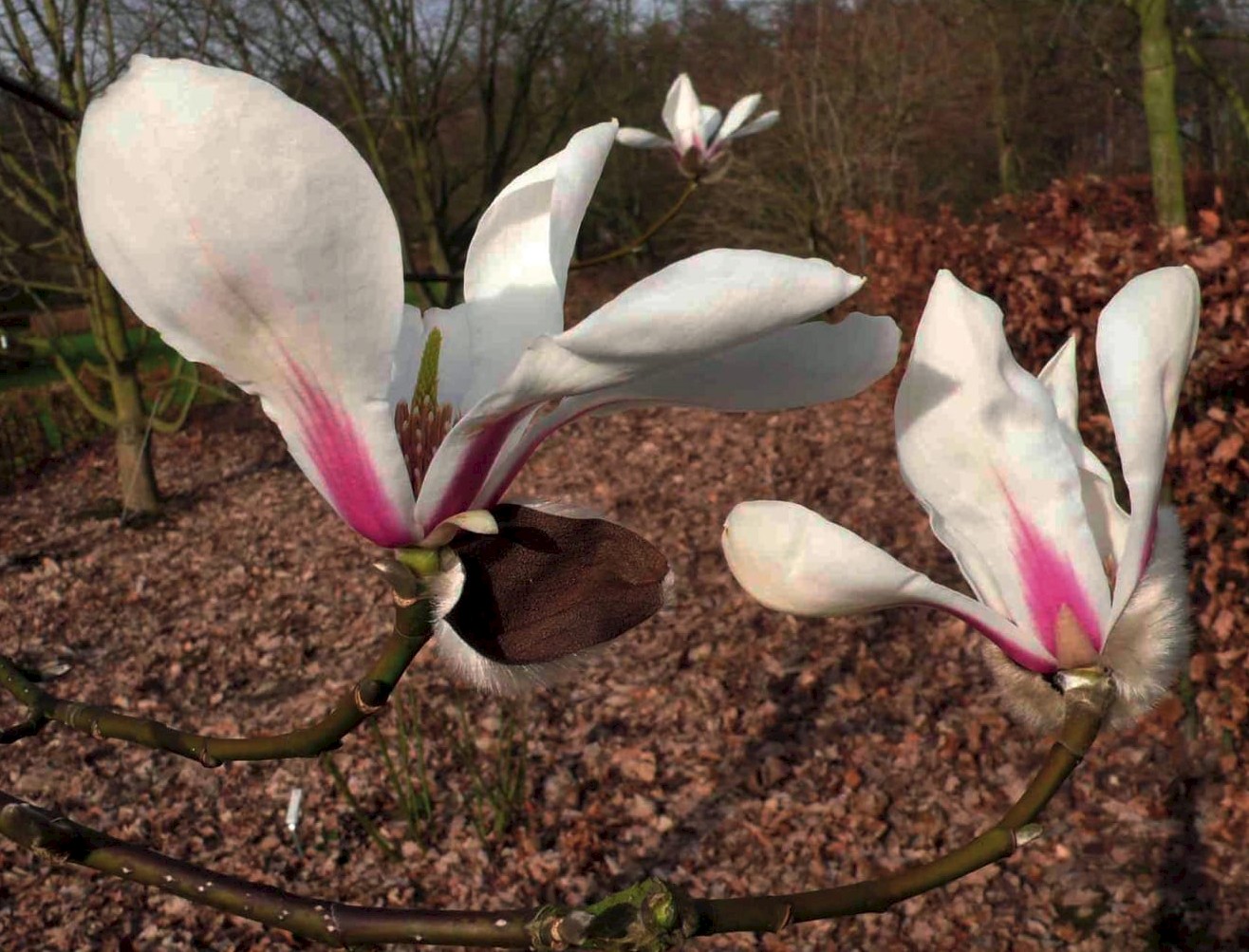
3.日本毛木兰Magnolia biondii Pamp.(望春玉兰)
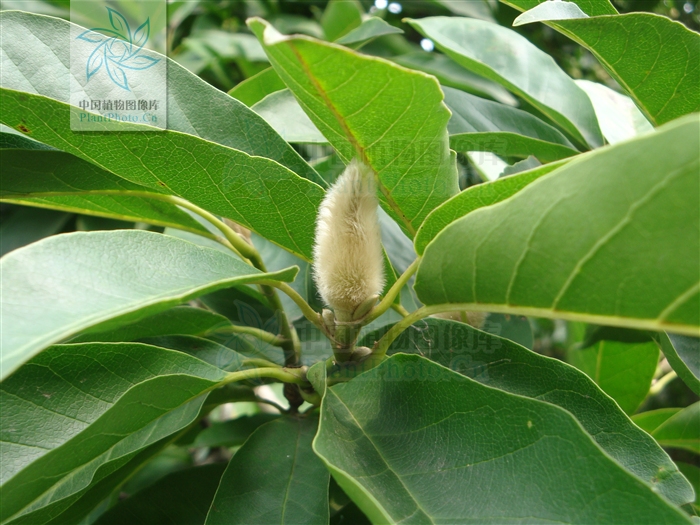
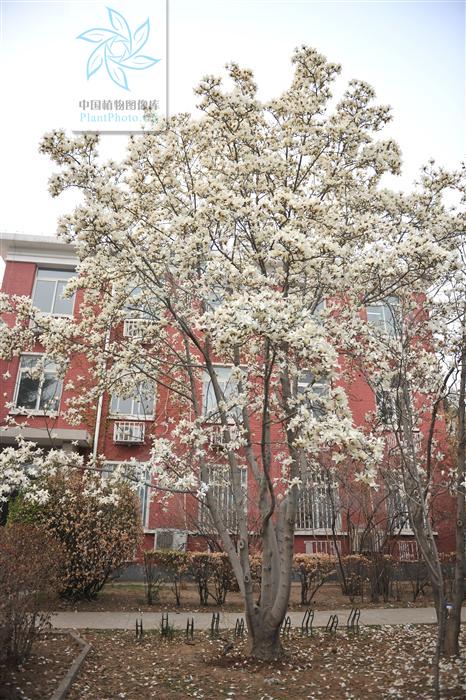
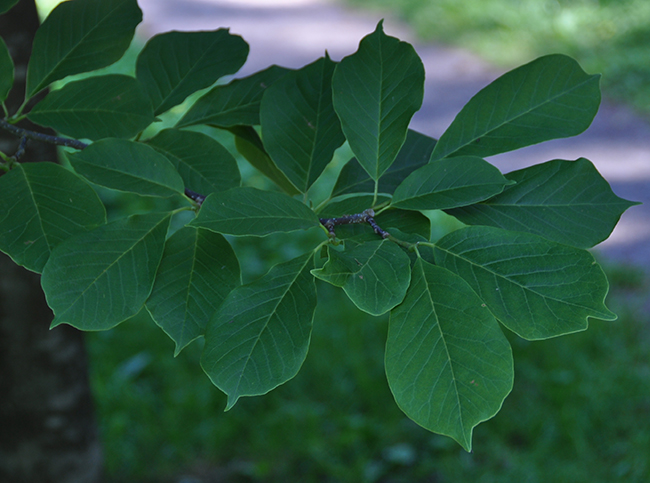
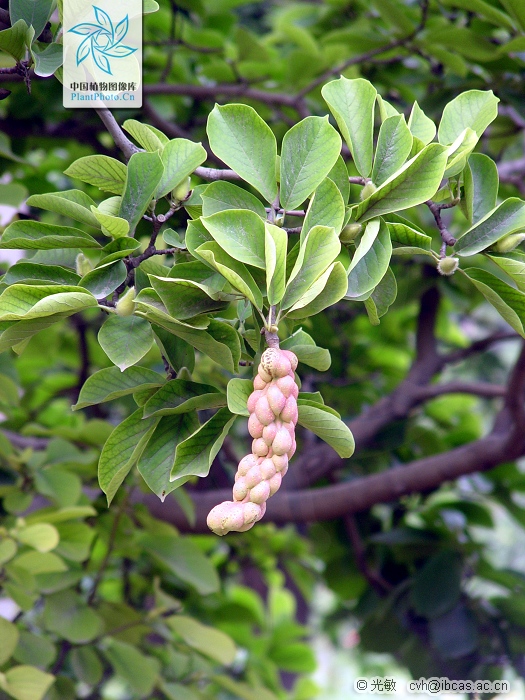
【形态】:灌木,高约4m。幼枝及芽密被短柔毛。叶柄长4~375px,疏被毛;叶片倒卵形或长圆状倒卵形,长4~250px,宽3~150px,基部楔形,先端钝或钝尖,表面暗绿色,无毛,背面淡绿色,无毛或沿叶脉疏生短柔毛,革质。花先叶开放,花蕾紫色,花白色或淡紫红色,芳香;花被片15~22,近等长,长倒披针形或长圆形,外面被紫色条纹,花后稍反曲;心皮无毛。聚合果扭转。花期5月,果期9月。’
【分布】:原产日本。我国南京、上海、杭州等地均有栽培。
【习性】:喜阳光充足环境,耐寒性较强,不耐干旱,略耐阴,较喜肥,在深厚肥沃和排水良好的土壤中生长较好。
【繁殖】:主要用播种和嫁接繁殖。
【用途】:株姿优美,小枝曲折,先花后叶,花朵茂密、粉色又带芳香,为早春少见的观赏花木,宜在小型庭院窗前、假山石边、池畔和水旁栽植,在园林中既可孤植,也可丛栽,盆栽时特别适宜点缀古典式庭院和加工成盆景观赏。
Common name: Chinese willow-leaf magnolia
Family: Magnoliaceae (magnolia family)
Synonym: Yulania biondii
Distribution: China
IUCN Red list: Least concern
Hardiness: USDA Zone 5
Life form: Deciduous tree
Comments: The northernmost magnolia growing in its native habitat of China. The deciduous, narrow foliage is preceded in spring by many small white fragrant flowers. Mature height is expected to reach 55'. The Chinese name for this plant means "hope of spring" alluding to its early flowering. Still extremely rare in cultivation. Plant in rich, loamy soil in full sun.
Magnolia biondii, or Biondi's magnolia, is a deciduous tree that flowers in late winter to early spring before leaf growth. Its early flowering nature gives it the name of the Hope for Spring Flower. Magnolia biondiiis a member of the family Magnoliaceae, which consists of more than 210 species. It is widely found in Northern China. It produces small white flowers every few years. Leave buds and petals of the plant are used to alleviate nasal obstruction and coughing in some parts of China.


4.天女花Magnolia Parvifra Siebet Zucc.
注:天女花改正为天女花属天女花(Oyama sieboldii)
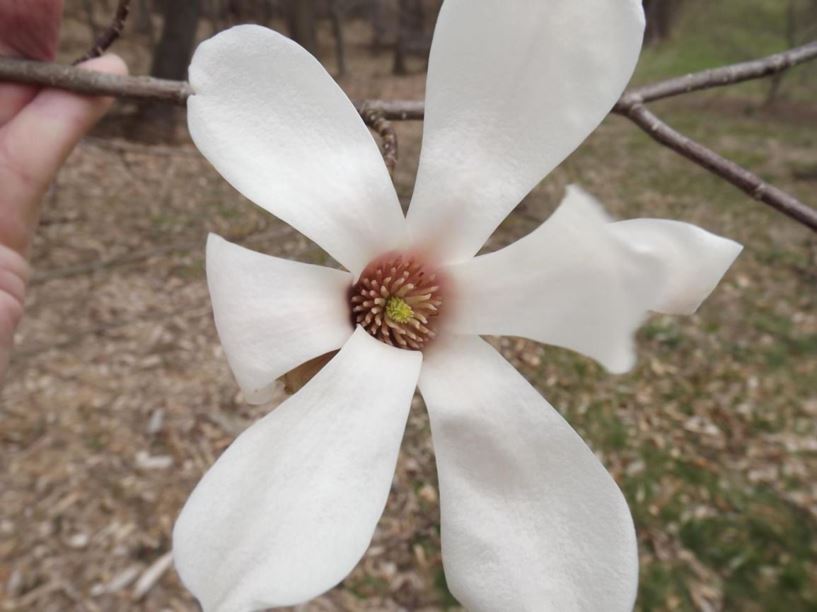
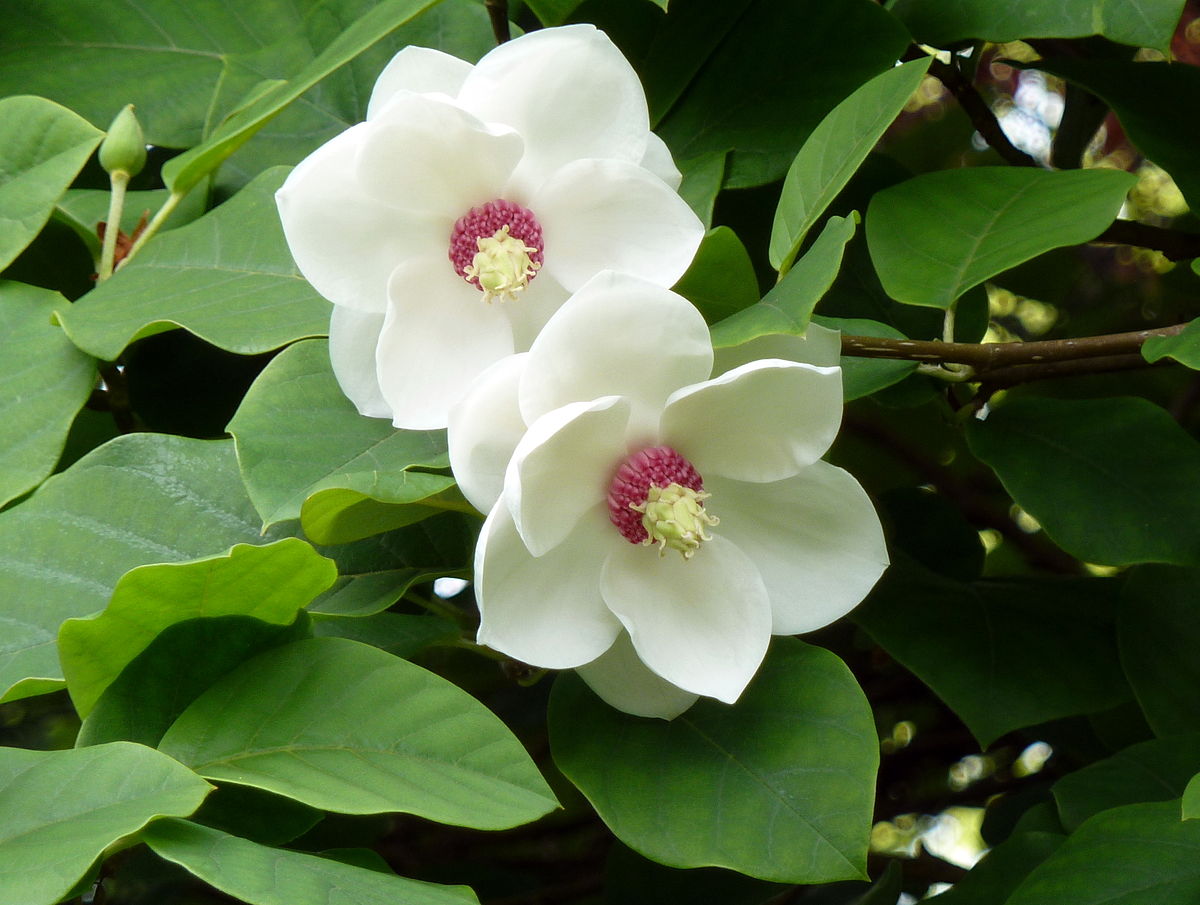
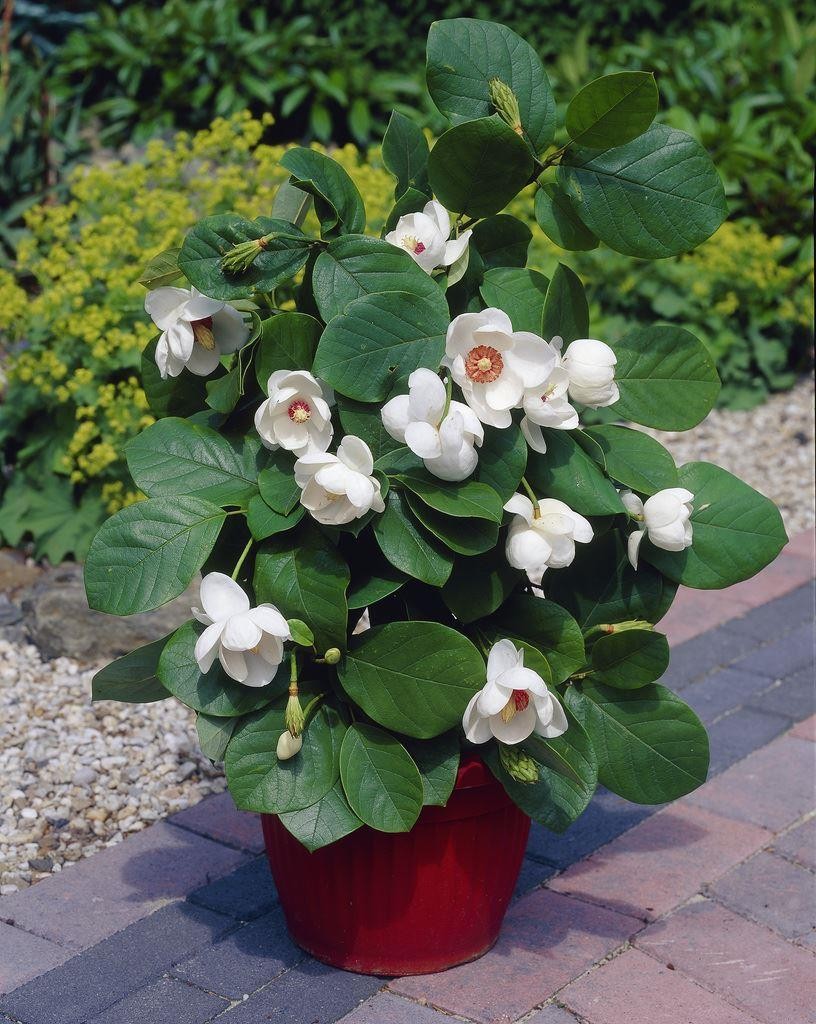
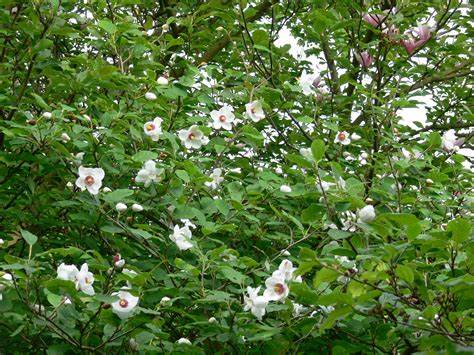
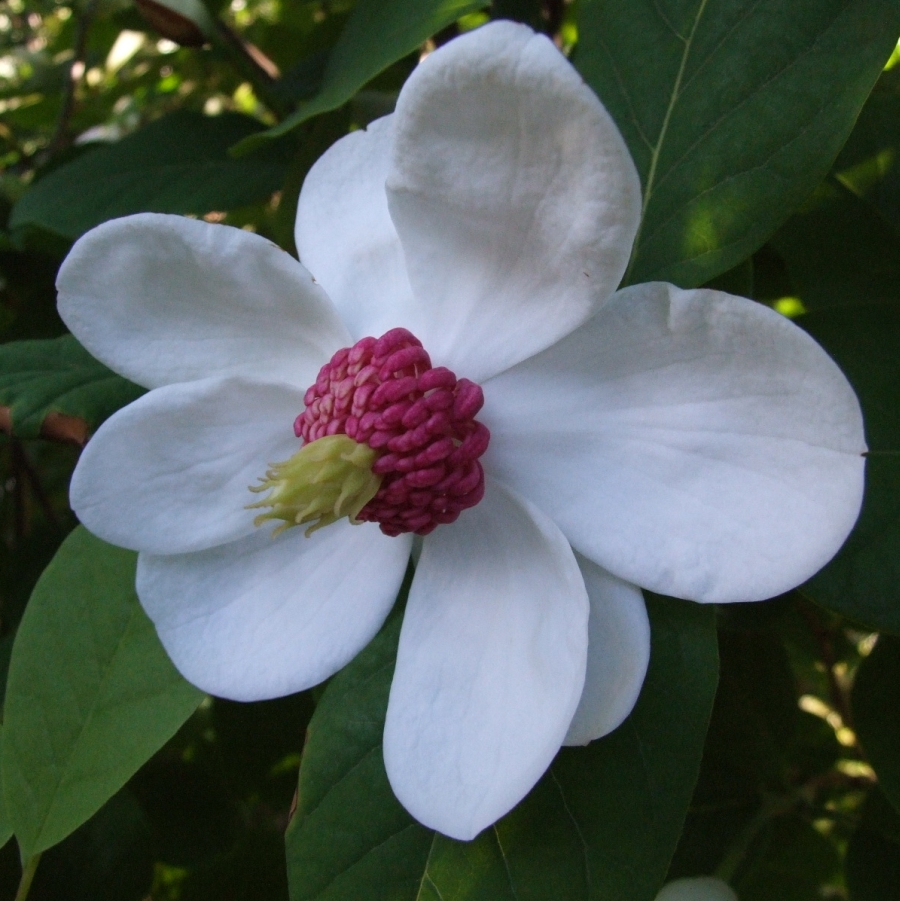
【形态】:落叶小乔木,高达10m。叶宽椭圆形或倒卵状长圆形,长6~375px,叶膜质,宽倒卵形或倒卵形,表面绿色,背面苍白色,被白粉和短柔毛,侧脉6~8对。花单生枝顶,花柄颇长,先叶后花,花瓣白色,略呈杯状,盛开时随风飘荡,芳香扑鼻,宛如天女散花,故名天女花。花期6月~7月中旬,果熟期9月。
【分布】:产于我国辽宁及日本。
【习性】:喜凉爽、湿润的环境和深厚、肥沃的土壤。适生于阴坡和湿润山谷。畏高温、干旱和碱性土壤。
【繁殖】:用播种繁殖。
【用途】:株形美观,枝叶茂盛,花色美丽,具长花梗,随风招展,犹如天女散花。为著名的庭园观赏树种。花可入药。
Magnolia sieboldii, or Siebold's magnolia, also known as Korean mountain magnolia and Oyama magnolia, is a species of Magnolia native to east Asia in China, Japan, and Korea. It is named after the German doctor Philipp Franz von Siebold.
Culture
Best grown in moist, fertile, slightly acidic, organically rich, well-drained loams in part shade. In cool summer climates, it may be grown in full sun with consistent moisture. In hot summer climates, the foliage may scorch in full sun. Intolerant of poor soils. Site in locations protected from strong winds (to protect foliage) and from cold winter temperatures (winter hardy to USDA zone 6), but avoid southern exposures close to houses where the buds may be induced to open too early in spring. May be grown in protected areas with morning sun on the northern side of houses. Nodding flowers can be best appreciated if plants are sited in upland areas (e.g., on a slope or top of wall). Plants appreciate consistent and regular moisture throughout the year, and are generally intolerant of soil extremes (dry or wet). Mulch root zone.
Noteworthy Characteristics
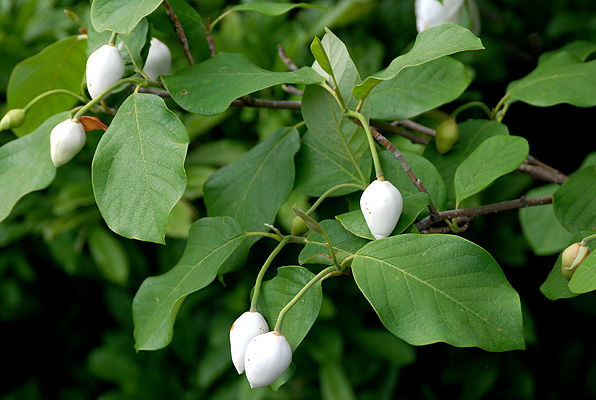
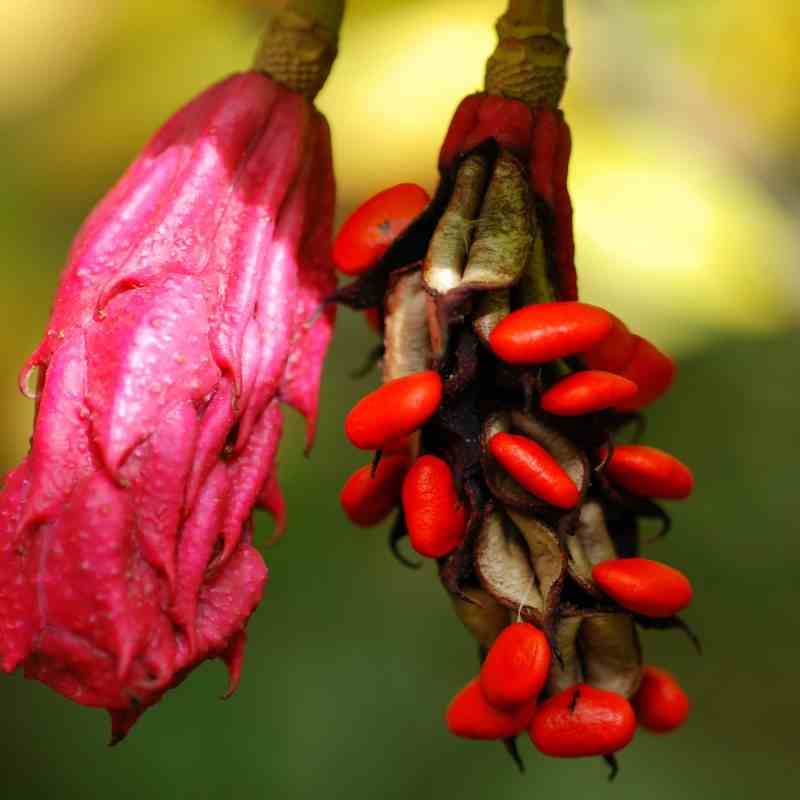
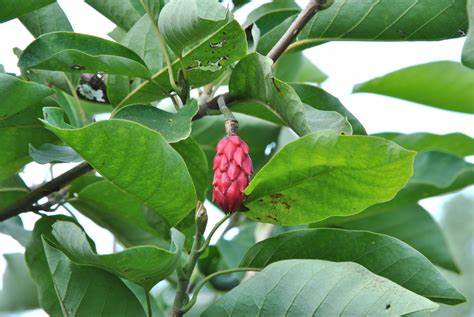
Magnolia sieboldii, commonly called Oyama magnolia, is a vase-shaped, somewhat coarse-textured, deciduous shrub or small tree that is native to understory forested areas in Japan, southeastern China and Korea. It typically matures over time to 10-15' tall and as wide. Nodding fragrant white flowers (to 4" wide) with crimson stamens bloom from late May to July (about 6 weeks). Flowers are followed by showy pink oval fruits (to 3" long) which split open in fall to reveal orange to red seeds. Broad elliptic to oblong green leaves (3-6" long) turn golden yellow in fall.
Genus name honors Pierre Magnol, French botanist (1638-1715).
Specific epithet honors Philipp Franz von Siebold (1796-1866), German physician and plant collector.

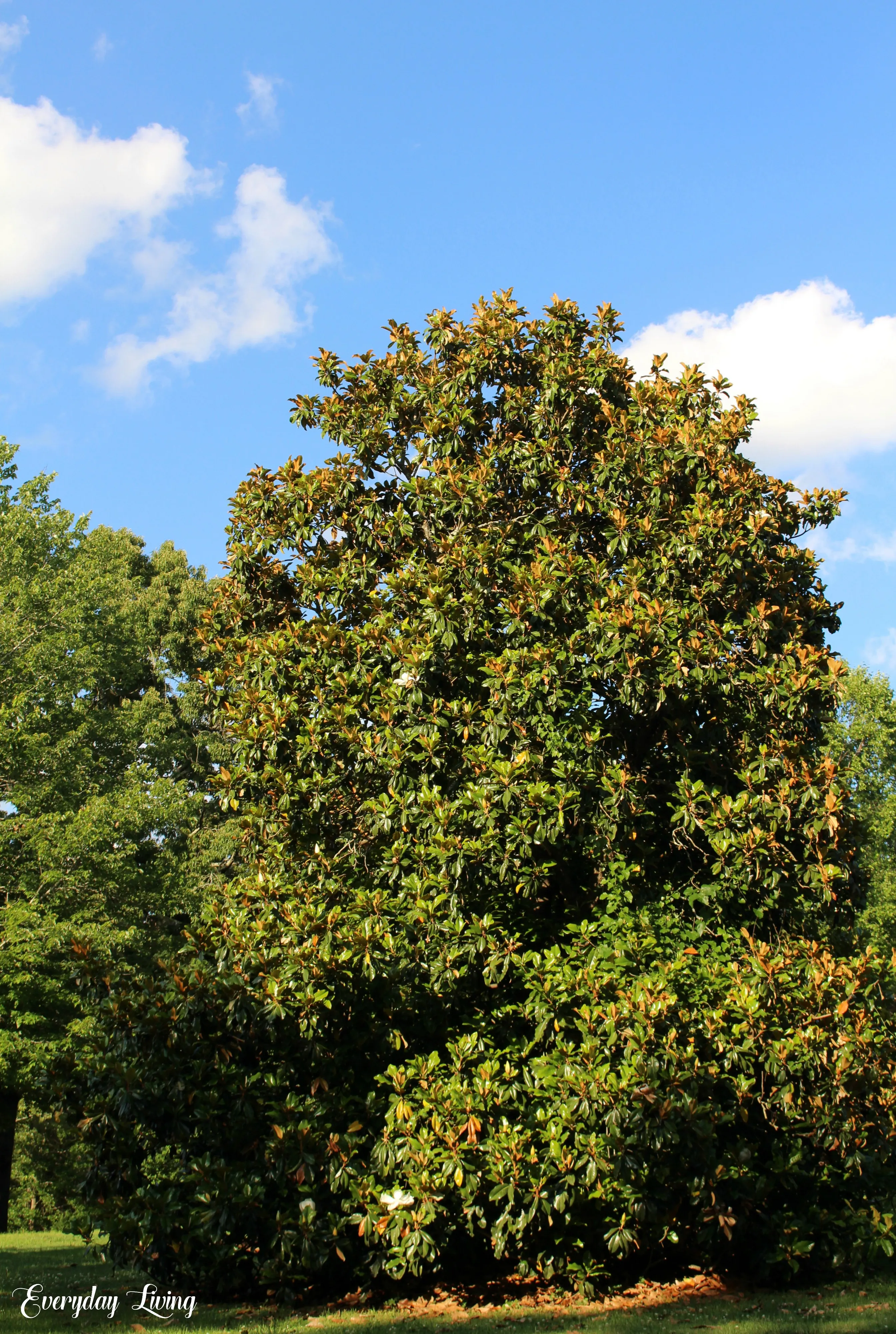
5.广玉兰Magnolia grandifra L.
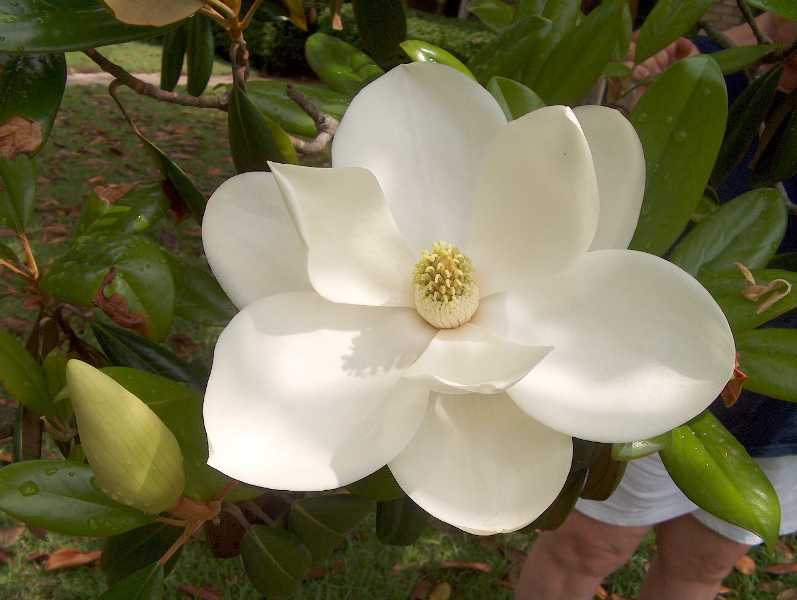
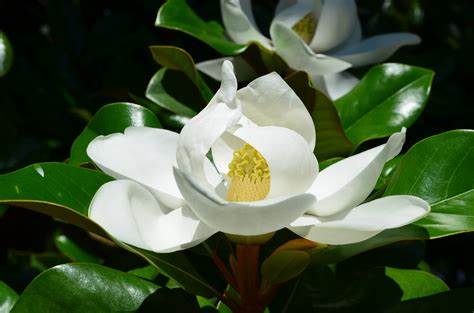
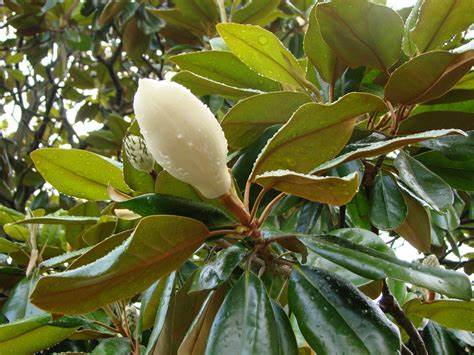
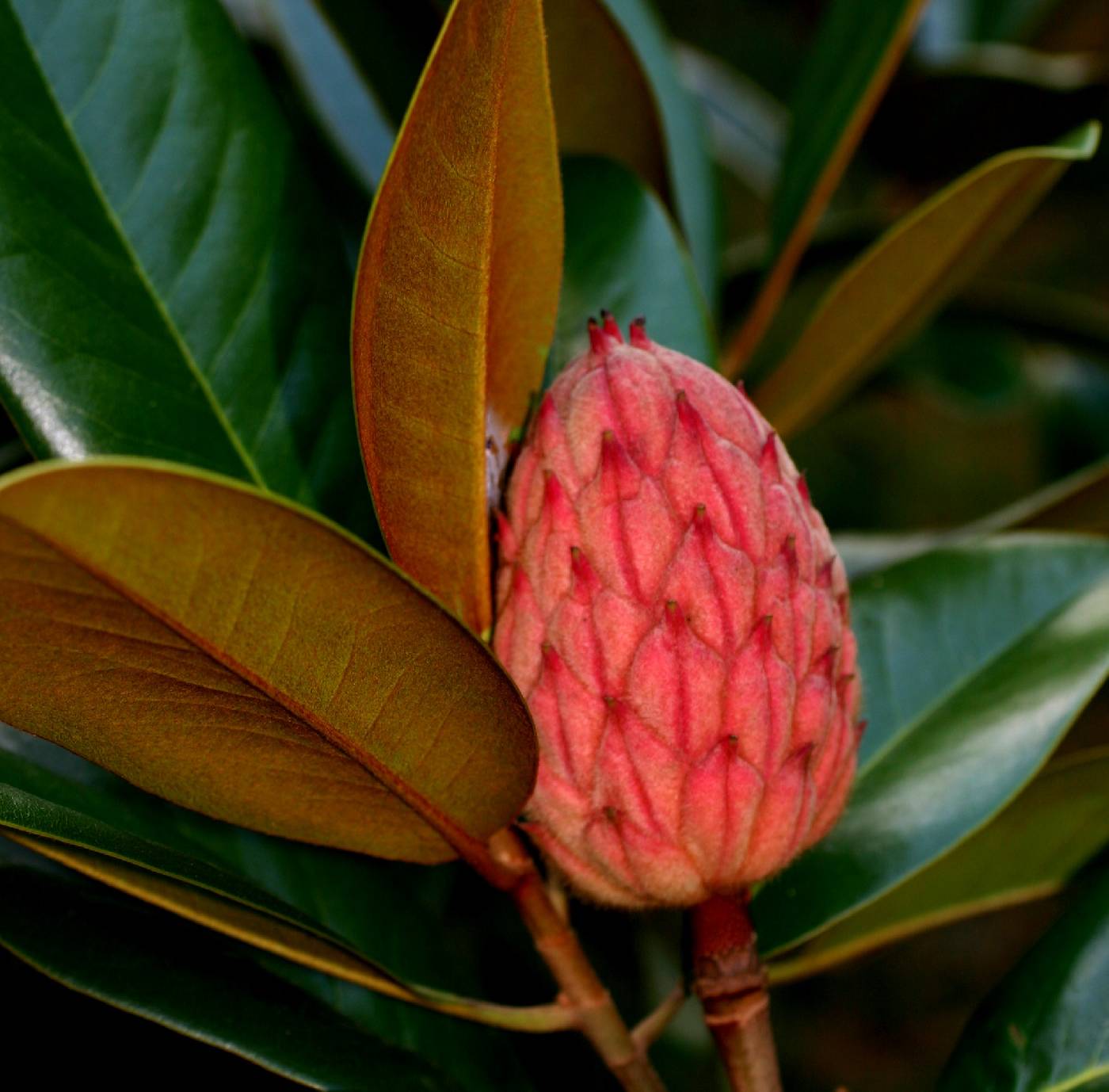
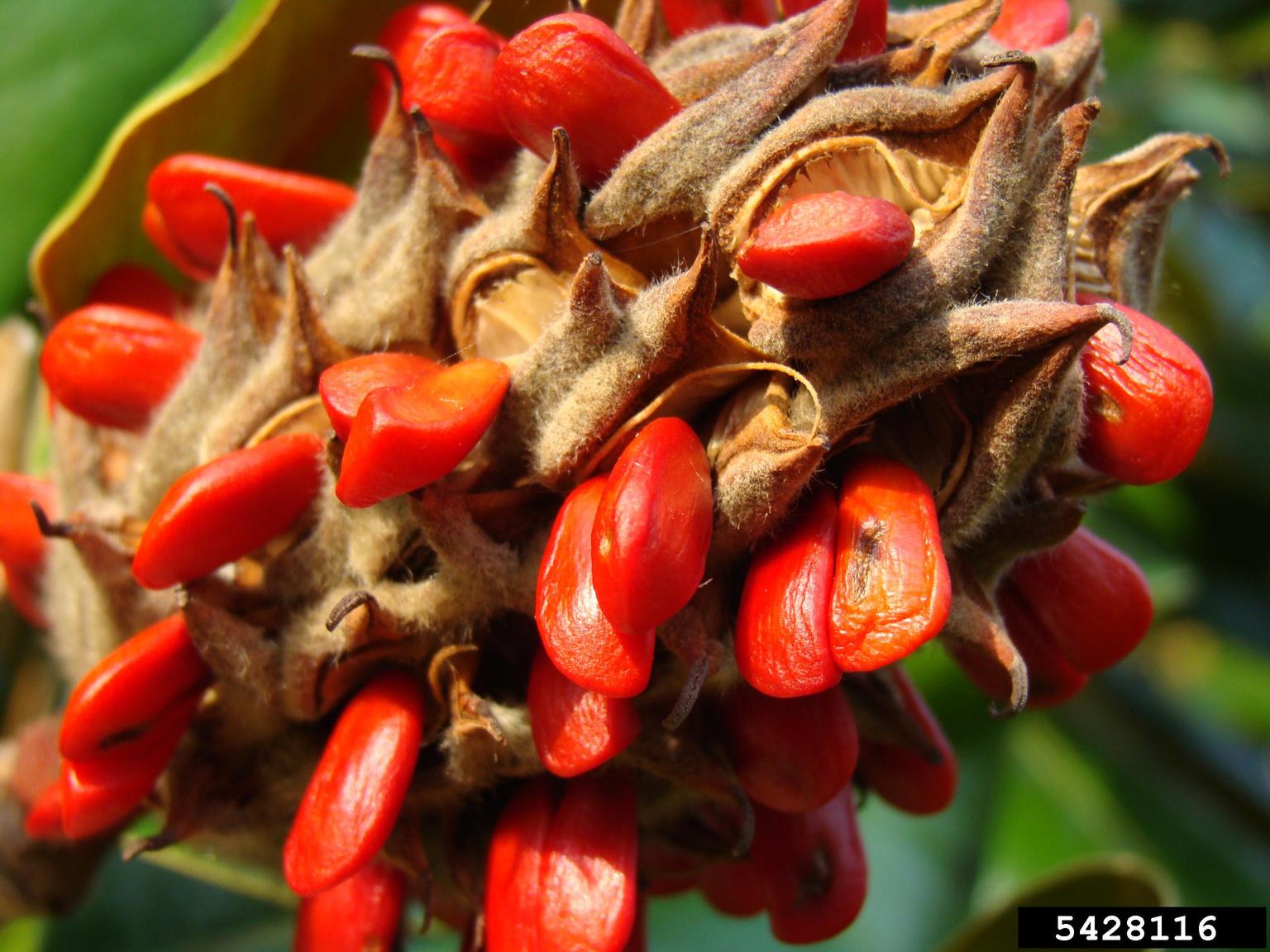
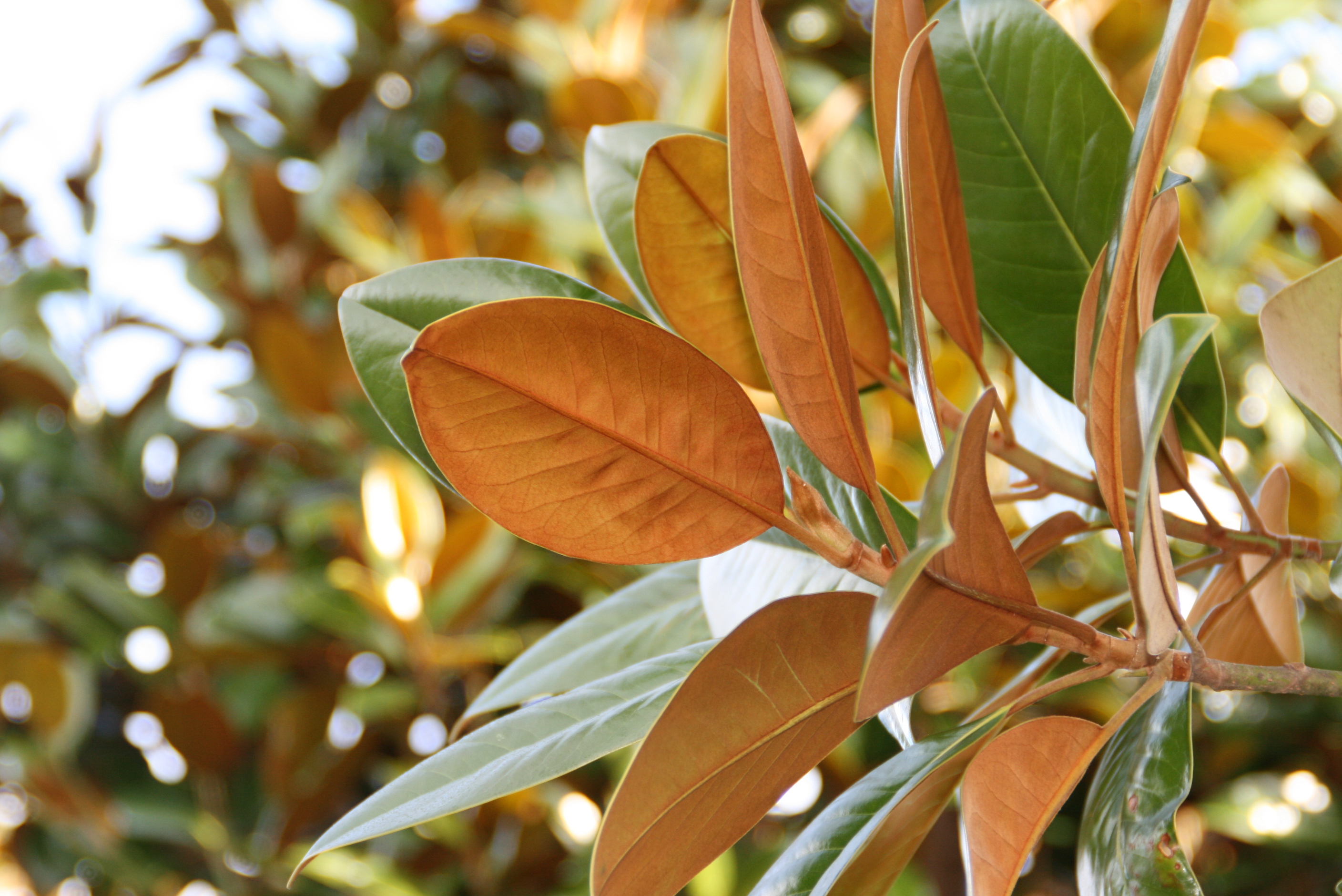
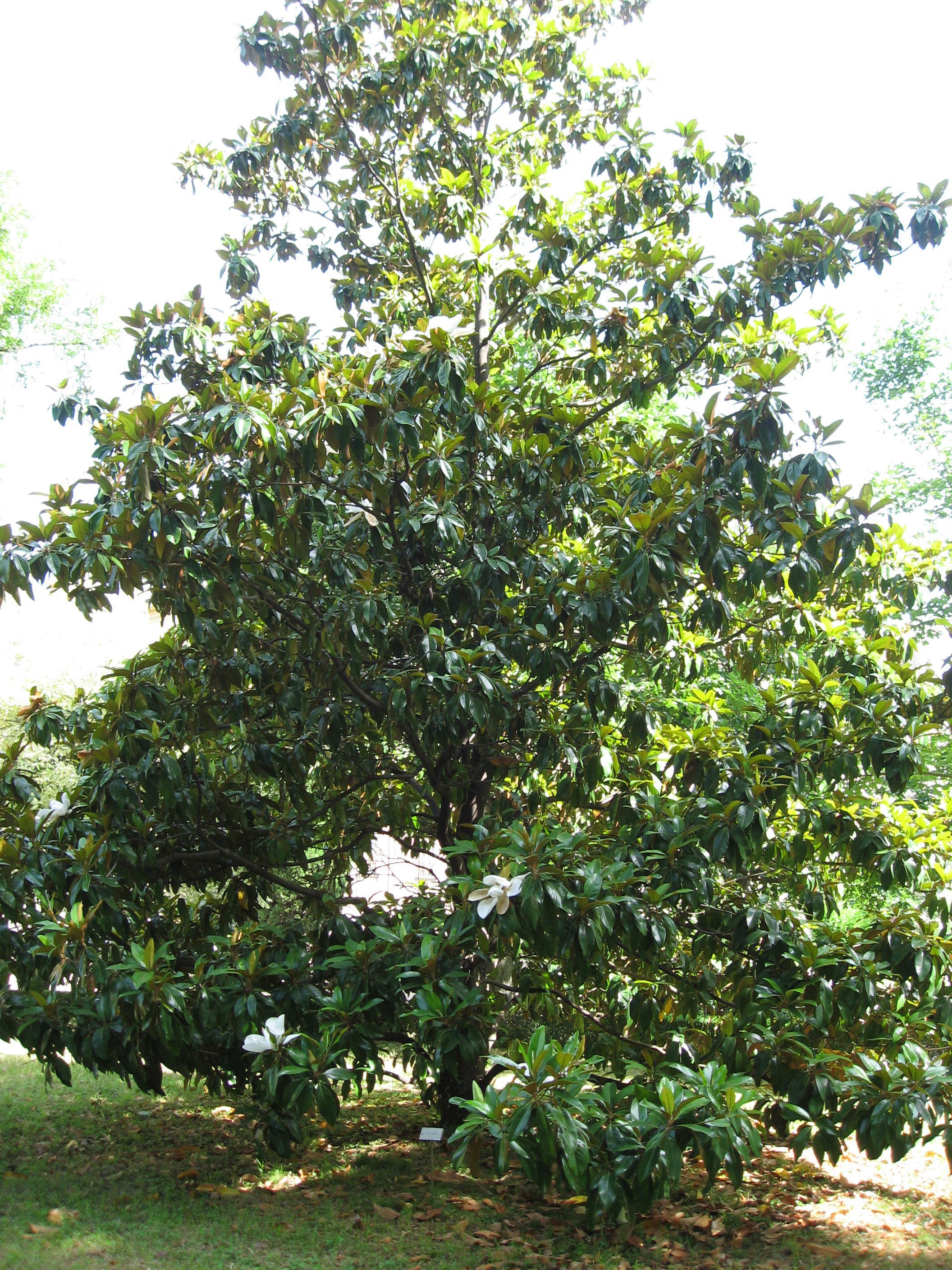
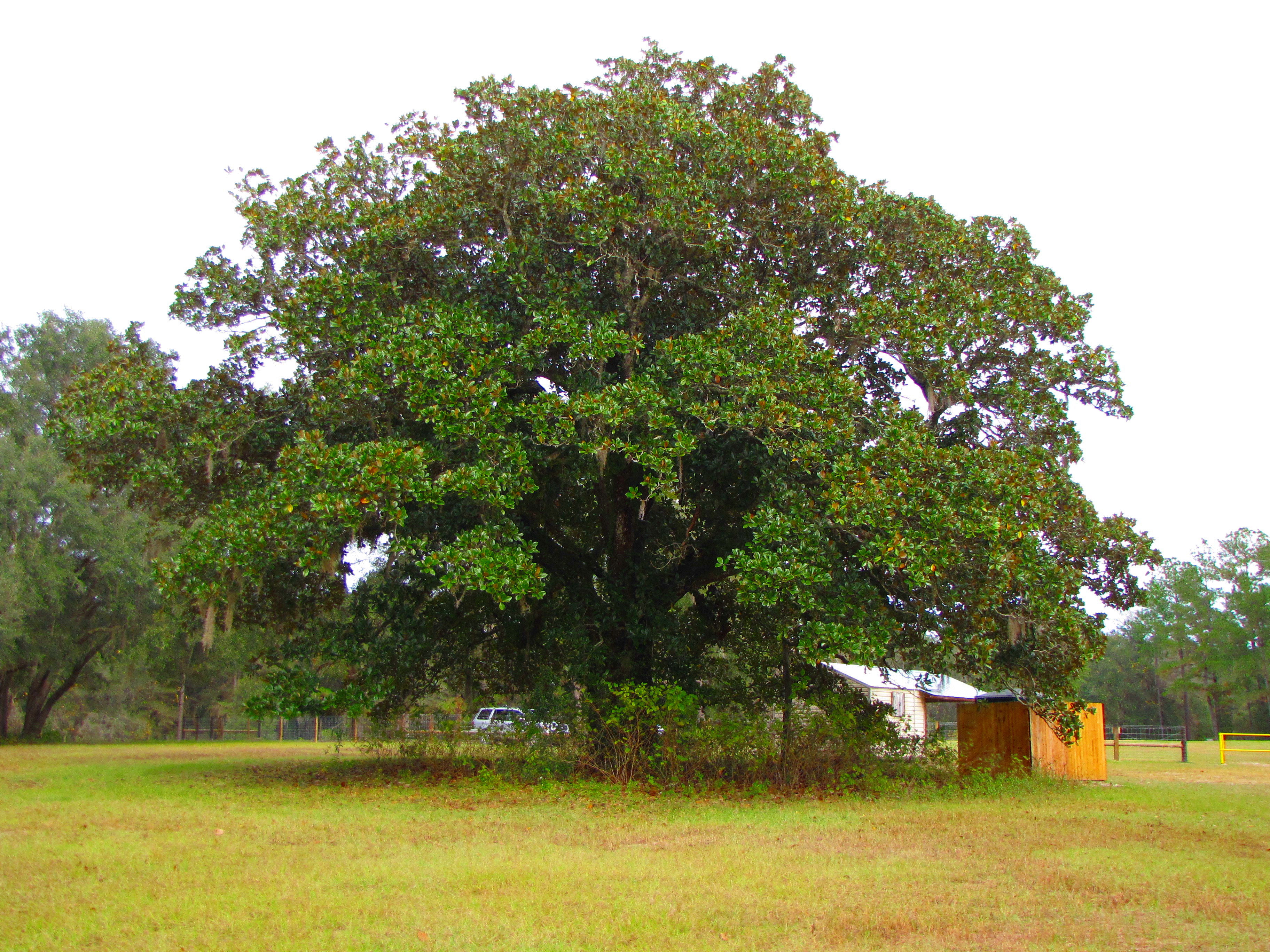
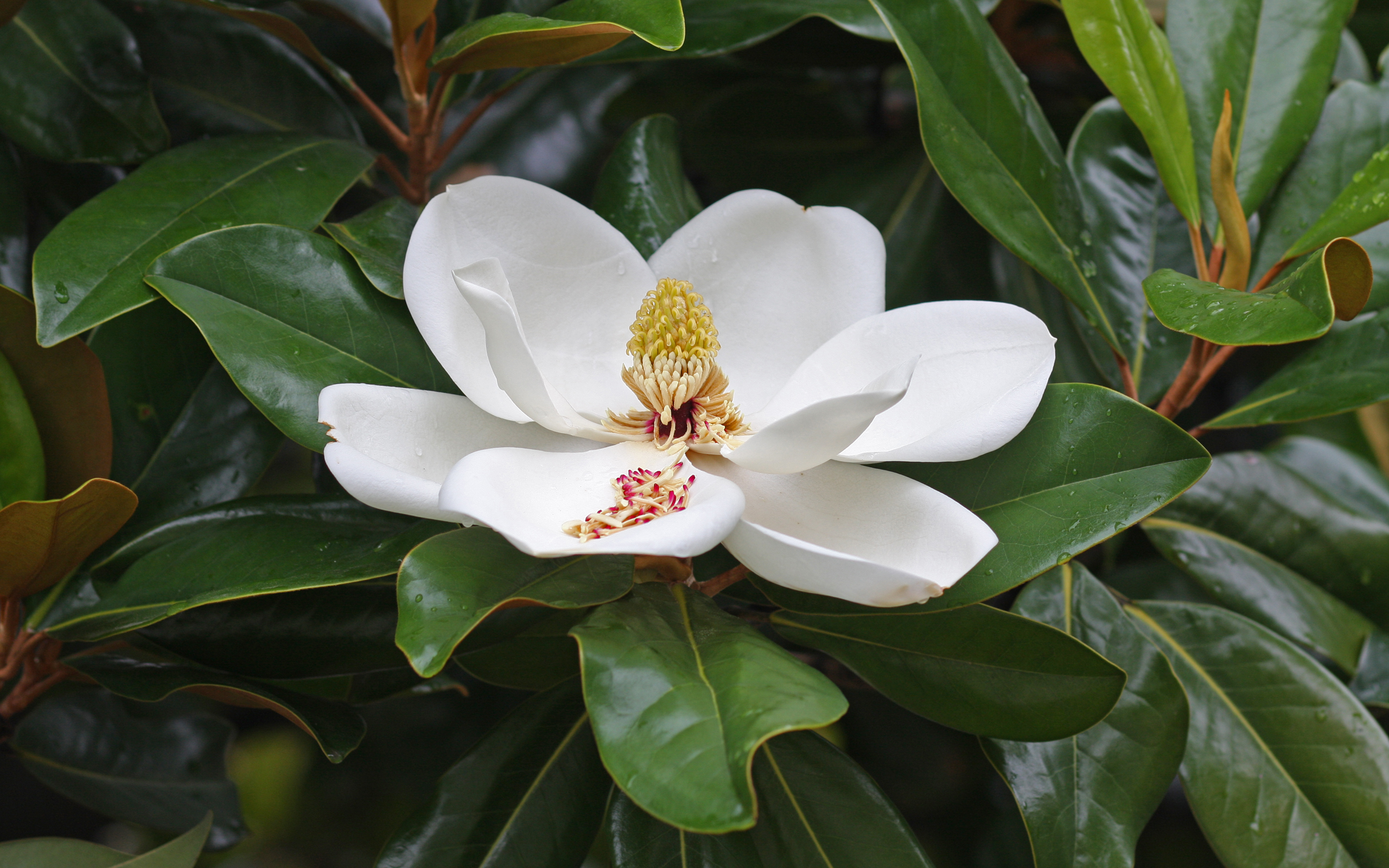
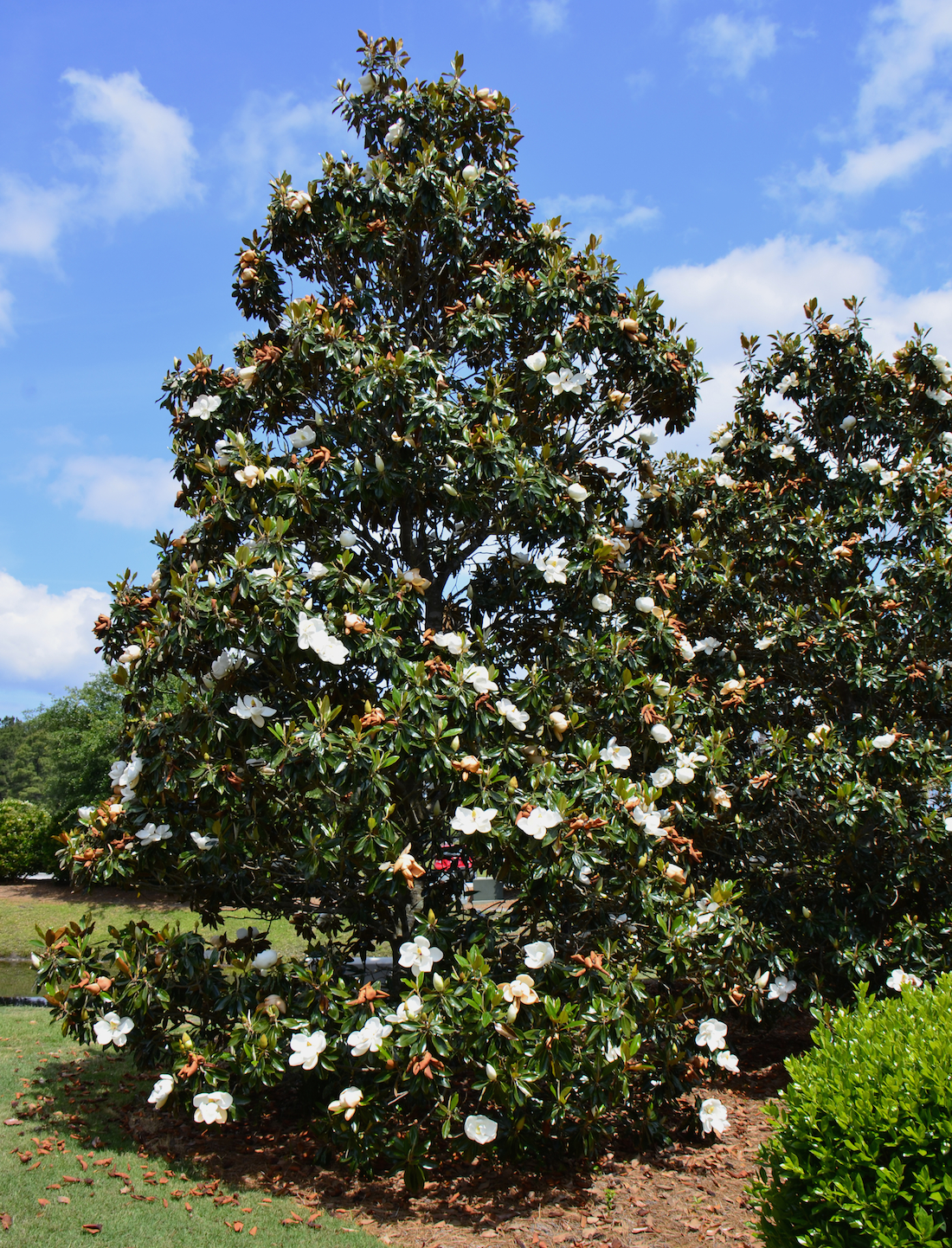
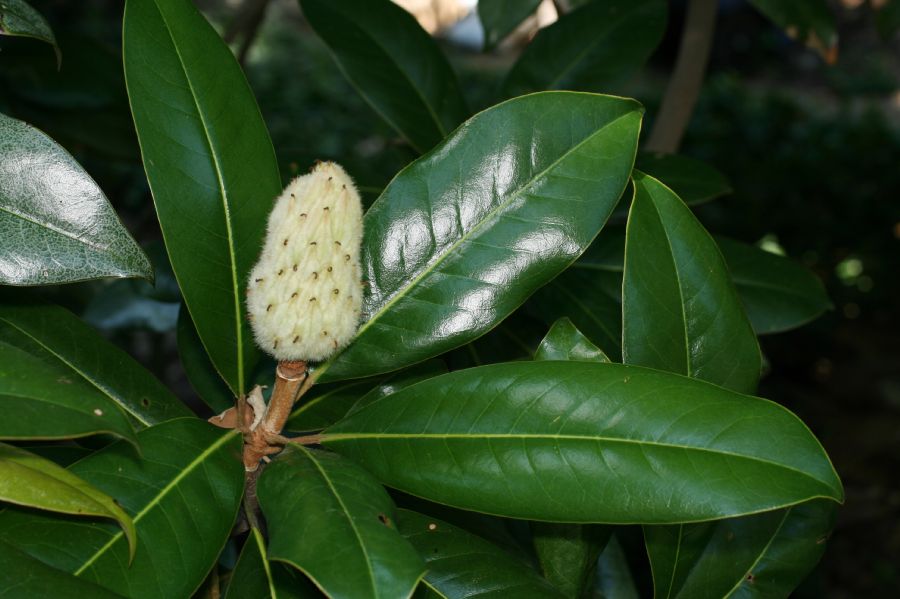
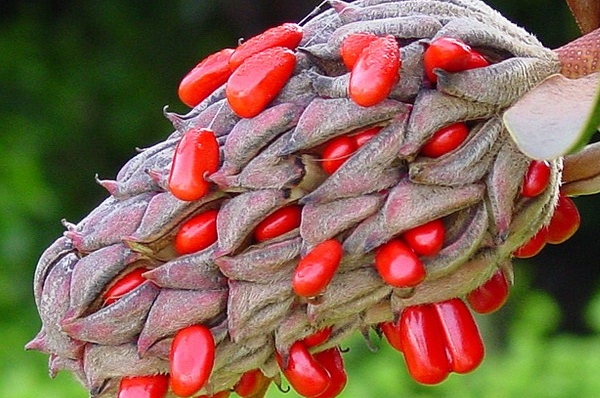
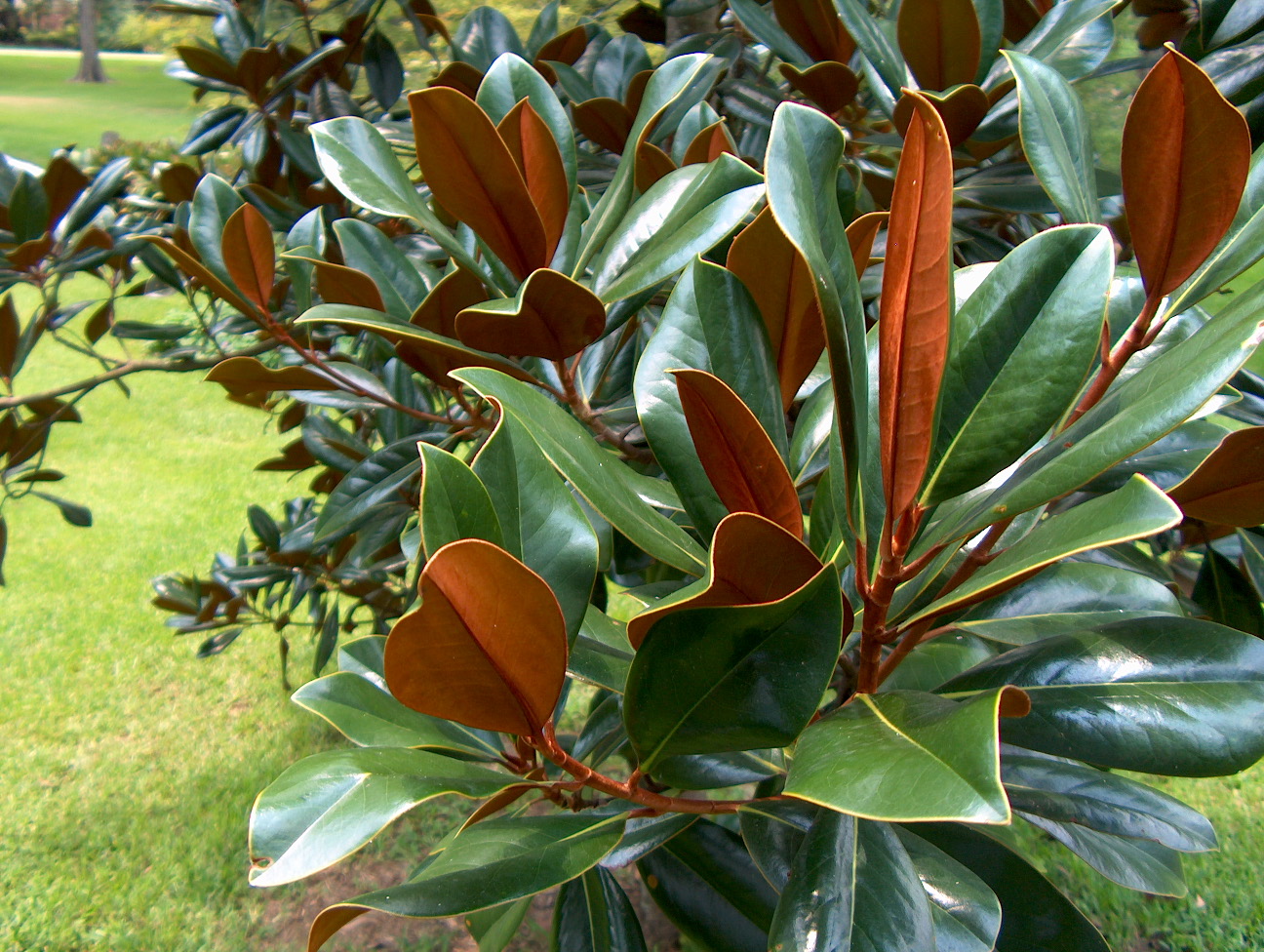
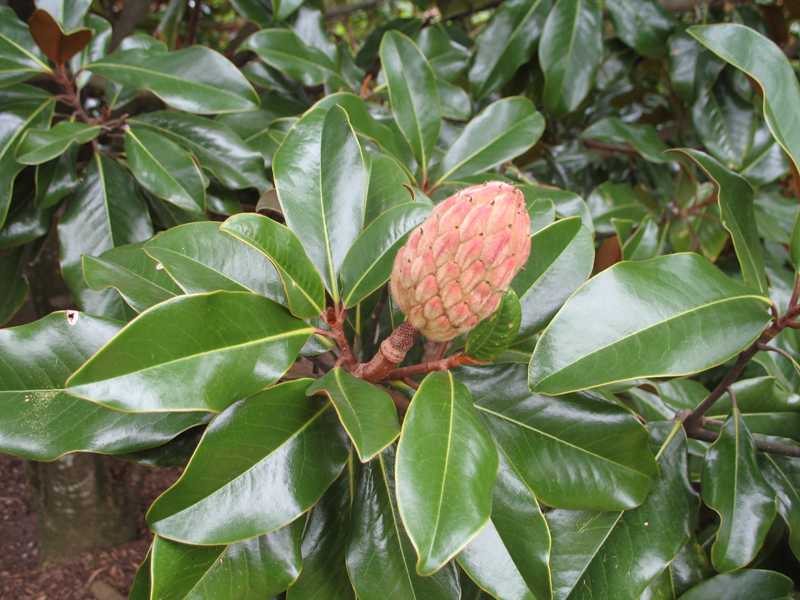
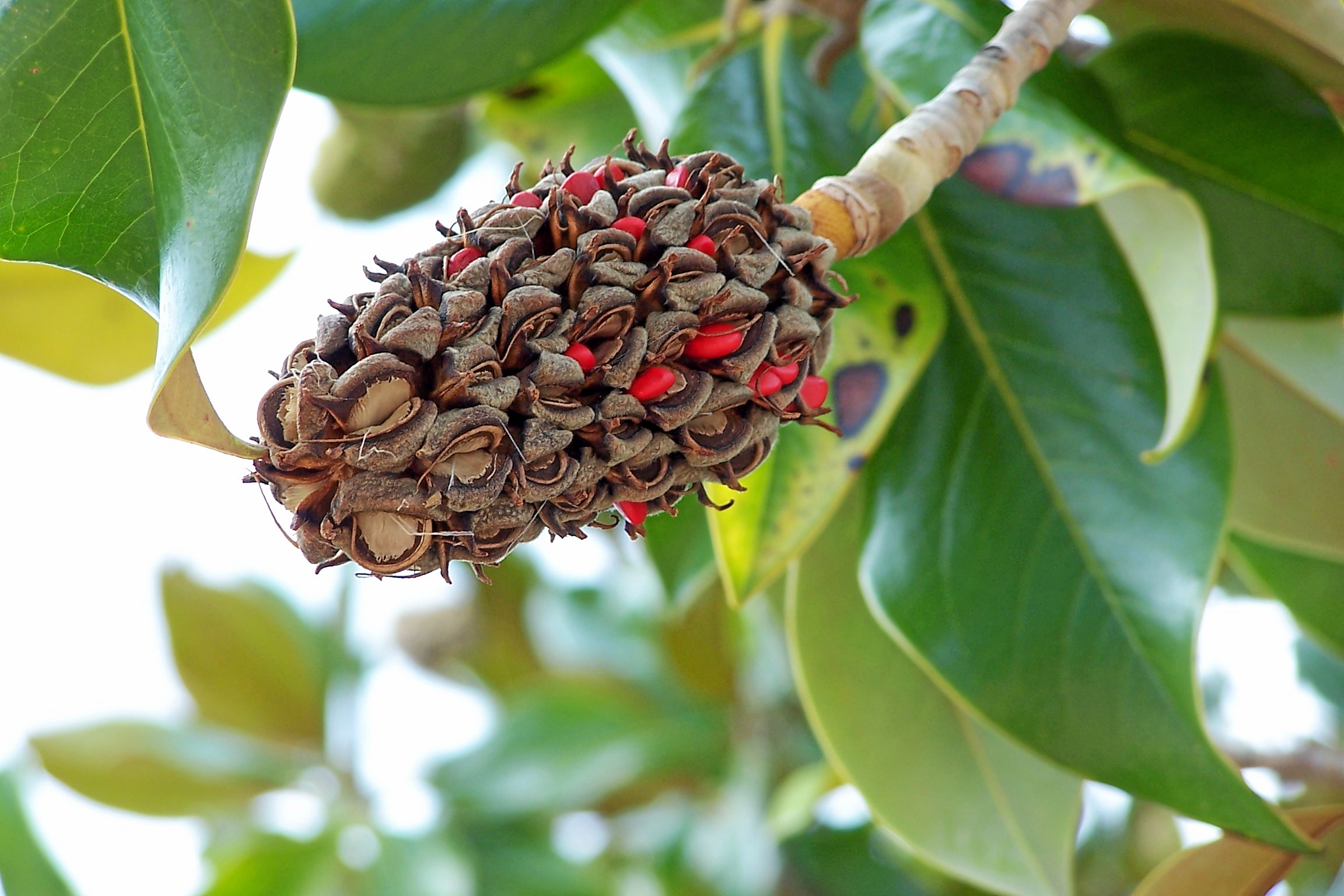
【形态】:常绿乔木,树冠阔圆锥形,高达16m。树皮暗灰色,不裂。小枝、叶下面及叶柄密被褐色短绒毛。单叶,互生,厚革质,椭圆形或长圆状椭圆形,先端钝圆,上面深绿而有光泽,背被锈色绒毛,叶缘略反卷。花白色,芳香,径15~500px,花被片12,厚肉质,倒卵形。花期5~6月,果期10月。
【变种】:披针叶广玉兰var.1anceolataAit.,叶长椭圆状披针形,叶背毛稀少。
【分布】:原产美洲,我国长江以南多栽培。
【习性】:喜光,喜温暖湿润气候及肥沃土壤,不耐碱土。对多种有毒气体及烟尘抗性强,很少有病害。
【繁殖】:嫁接,以玉兰和木笔为砧,亦可播种。
【用途】:树形高大,树姿雄伟壮丽,枝叶浓密,叶大质厚而有光泽,花大而芳香,初夏开放,为优良的环保庭院树,在厂矿、庭园、公园、游乐园、墓地均可采用。大树可孤植草坪中,或列植于通道两旁。中小型者,可群植于花台上。北京大觉寺、颐和园、碧云寺等处均配植于古建筑间。与西式建筑尤为协调,故在西式庭园中较为适用。
Magnolia grandiflora, commonly known as the southern magnolia or bull bay, is a tree of the family Magnoliaceae native to the southeastern United States, from Virginia to central Florida, and west to East Texas. Reaching 27.5 m in height, it is a large, striking evergreen tree, with large dark green leaves up to 20 cm long and 12 cm wide, and large, white, fragrant flowers up to 30 cm in diameter.
Magnolia grandiflora
Common Name(s): Bull BayLarge Tree MagnoliaSouthern Magnolia
Previously known as: Magnolia angustifoliaMagnolia ellipticaMagnolia foetida
Description
Magnolia grandiflora, or Southern Magnolia, is a large, broadleaf evergreen, medium-sized tree that is noted for its attractive dark green leaves and its large, extremely fragrant flowers. It is the only evergreen magnolia and typically grows to 60 to 80 feet tall with a pyramidal to rounded crown, a spread of 20 to 40 feet wide, and a trunk diameter of 3 feet. Magnolias are one of the oldest known tree species in the world (based on data from USNA). This is a magnificent tree for planting as a specimen in the South in large areas, but can also be planted in small residential or commercial sites. It needs plenty of space to grow. Lower branches can be pruned out to appear more tree-like. Nothing will grow underneath the tree, and it requires a mulch to prevent erosion problems. Giant flowers are borne in the summer months and are extremely ornamental. Fruits are used as dried centerpieces intermixed with gymnosperm branches. It prefers rich soil with partial shade. It tolerates high moisture levels, but is intolerant to overly wet or swampy soils and prolonged flooding. It is native to the bottomlands and moist wooded areas in the central and southeastern coastal plains from North Carolina to Florida and Texas. Its presence in natural stands is evidence of better drained alluvial terraces.
It is regarded as pest and disease free and is widely planted as an ornamental or landscape tree across the southeast. Its dense shade and shallow roots make it difficult to grow anything underneath. It is shade tolerant and, in nature, is usually an understory tree. However, when grown as an ornamental, it maintains heavily leaved limbs almost to the ground.






6.山玉兰Magnolia delavayi Franch.
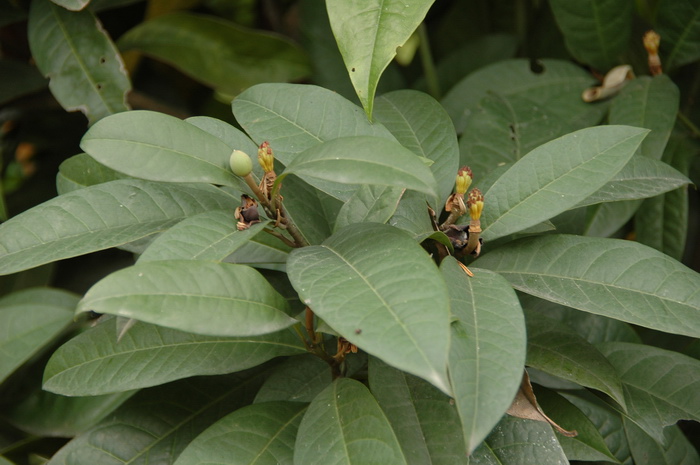
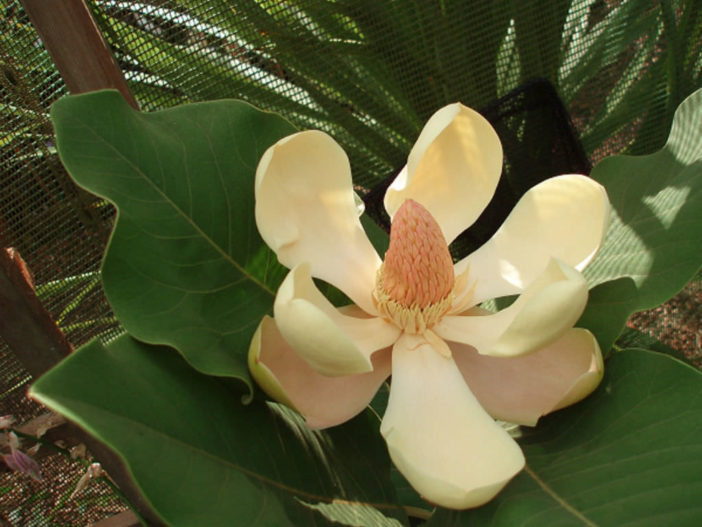
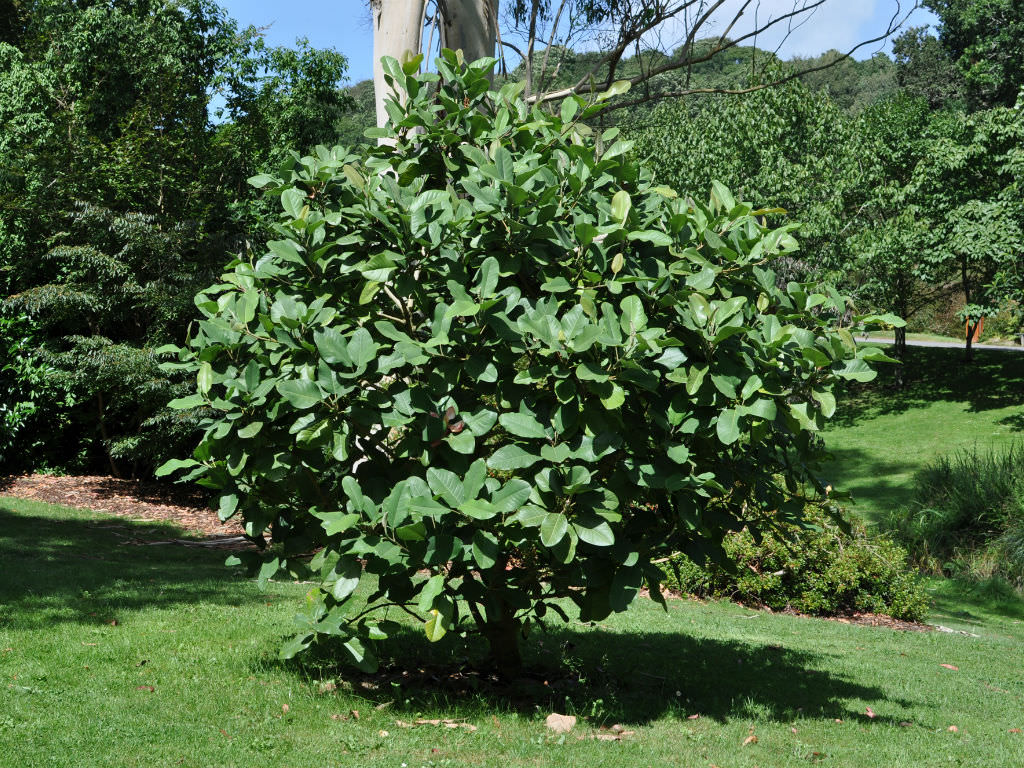
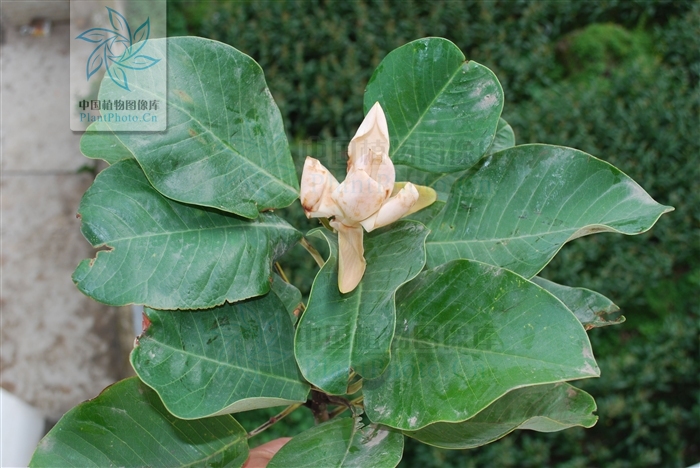
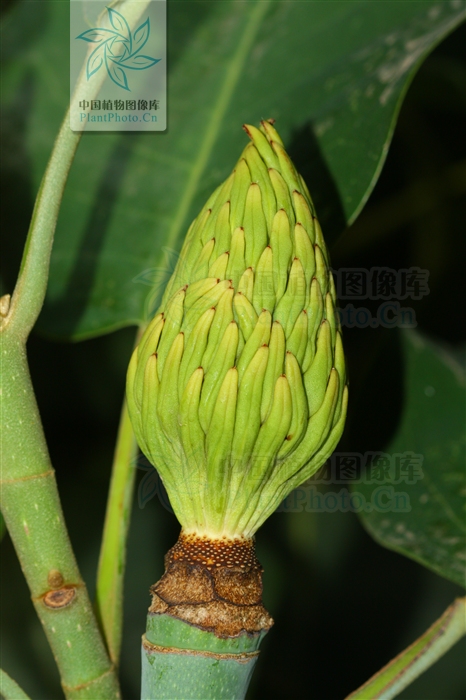
【形态】:落叶乔木。树皮灰绿色,粗糙,开裂。小枝有密毛,具点状皮孔。叶革质,椭圆状卵形或长卵形,先端圆钝,基部圆形,表面暗绿色,背面被白粉和疏毛。花大,单生于枝顶,乳白色,花瓣肥厚,有芳香,其气味如同佛寺中能嗅到的气味(仿佛焚檀香木的气味)。聚合果卵状圆柱形,蓇葖木质。花期5~6月,果期月。
【分布】:产云南、贵州和四川。
【习性】:喜夏日凉爽、冬天温暖的气候。适生于土层深厚、排水良好而肥沃的壤土。根系发达,萌蘖力强。
【繁殖】:播种,埋土压条或空中压条,扦插等。
【用途】:叶色浓绿,花大芳香,是适合于亚热带栽培的珍贵观赏树种。云南昆明常植于庙宇进口处,颇为壮观。长江流域以南各地,可在公园草坪孤植或在建筑物周围列植。树皮可入药。
Magnolia delavayi is a species of flowering plant in the genus Magnolia. It is known by the common names of Chinese evergreen magnolia or Delavay's magnolia. It was named after Father Delavay, French Catholic missionary in China, who collected it.
TREE CHARACTERISTICS
Tree shape: Rounded
Foliage type: Evergreen
Maximum tree height: 30 feet
Canopy width: 30 feet
Growth rate: ~24 in/year
Leaf arrangement and form: Alternate, Simple
Leaf/leaflet shape: Oval
Leaf color: Bluish Green or Silver or Gray Green
Flowers: Showy, Fragrant
Flower color: White.
Flower type: Has male and female reproductive parts in each flower (perfect)
Flowering time: Summer
Fruit: Very Large Brown Follicle
Fruiting time: Fall
Fruit value: Wildlife use it
Bark: Dark Gray, Blocky, Furrowed
Litter: Dry Fruit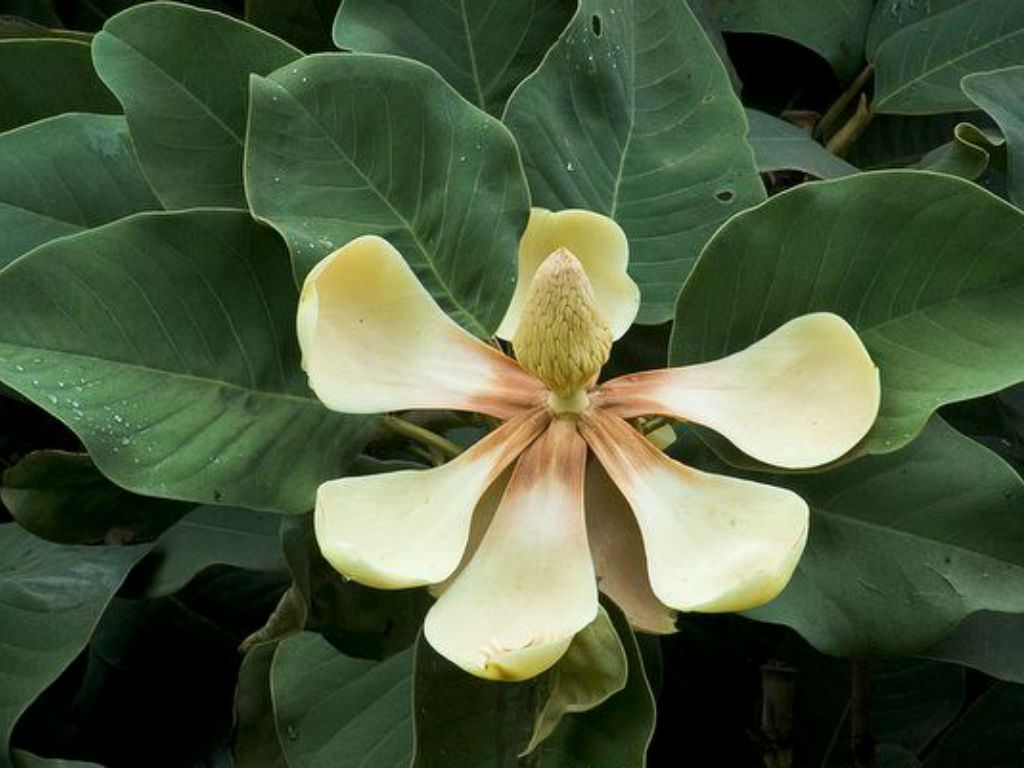
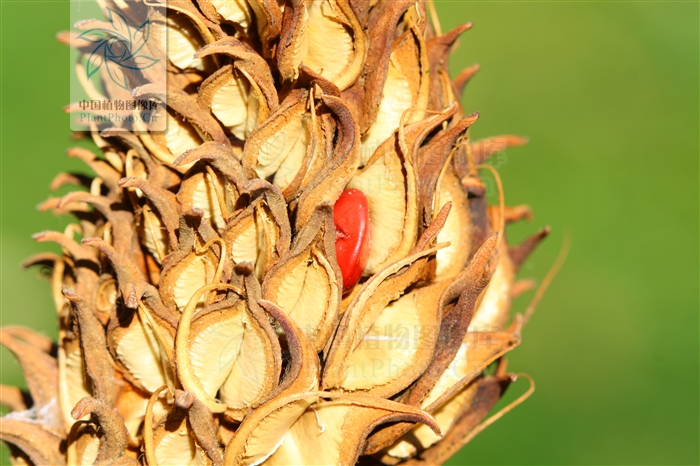


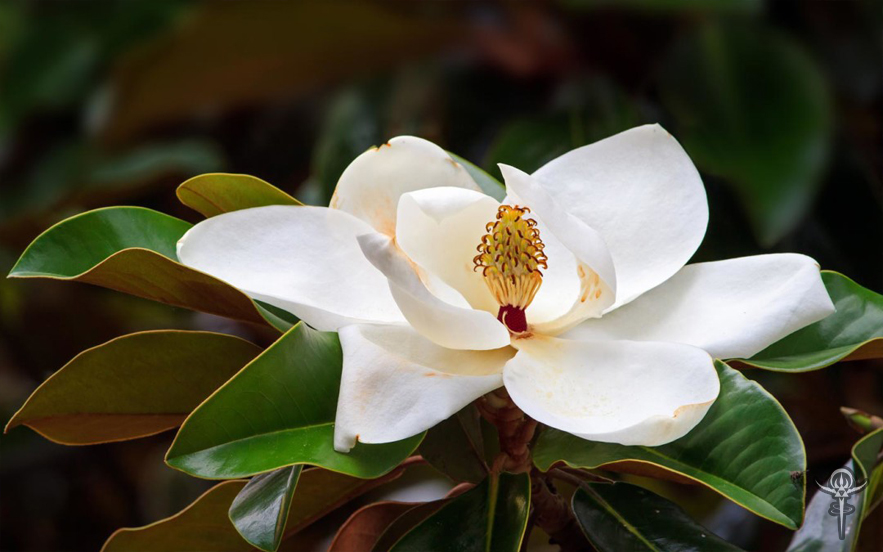
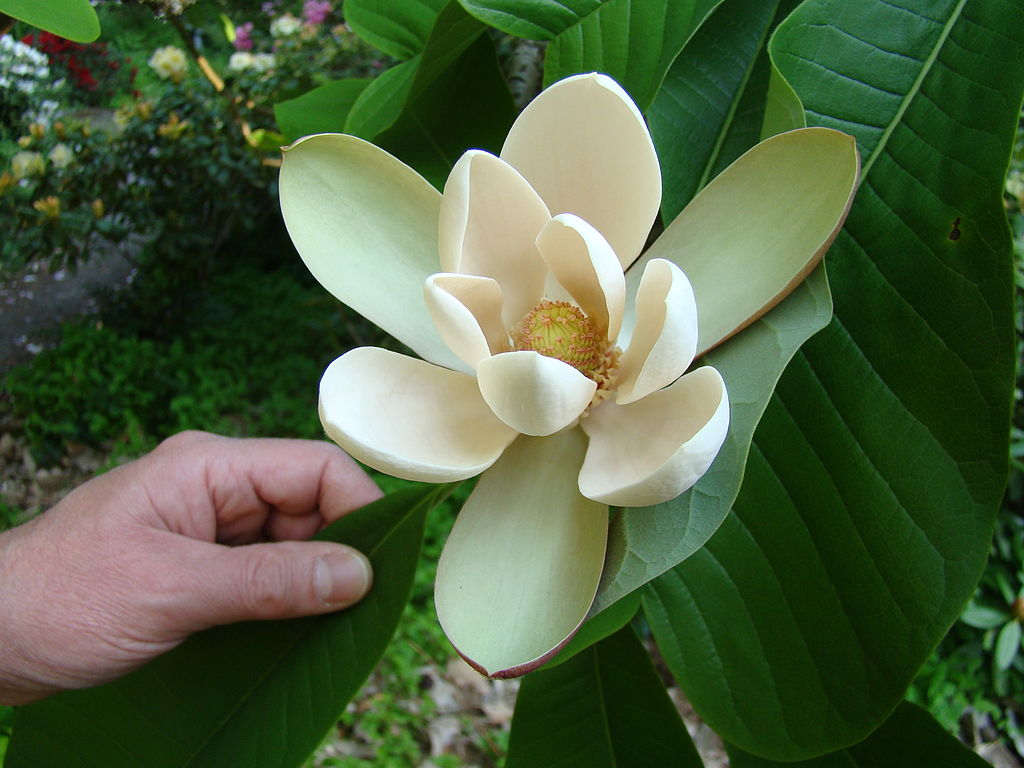
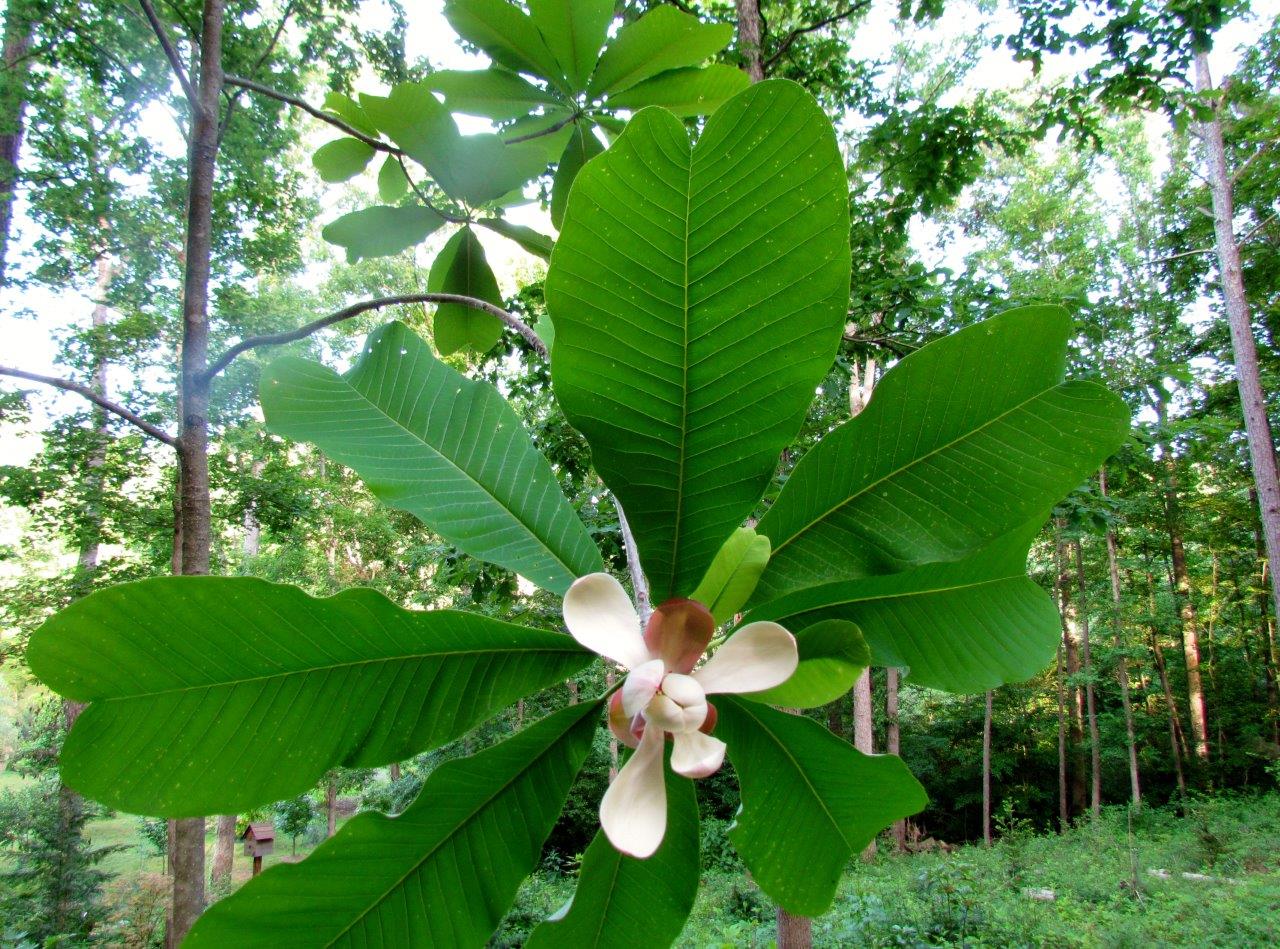
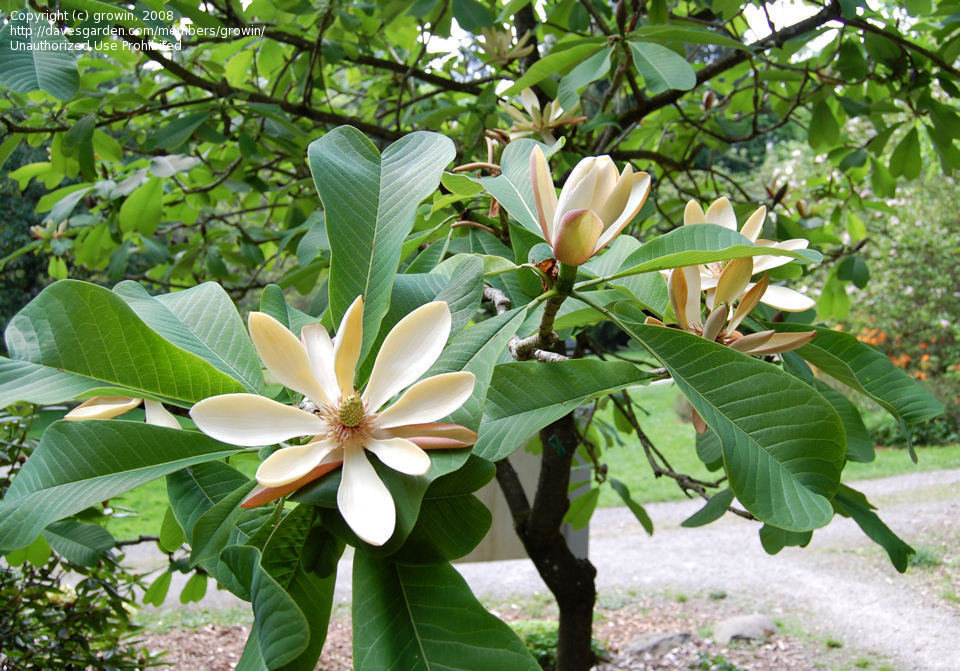
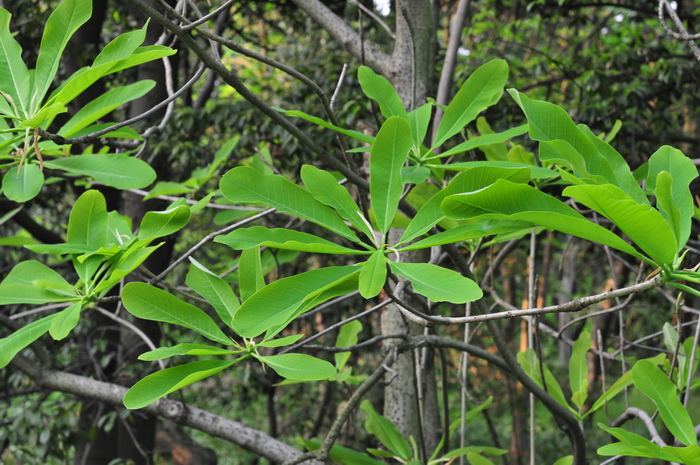
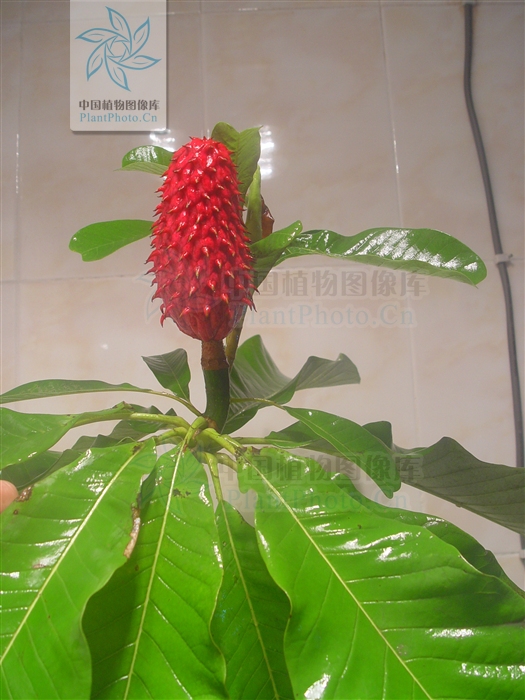
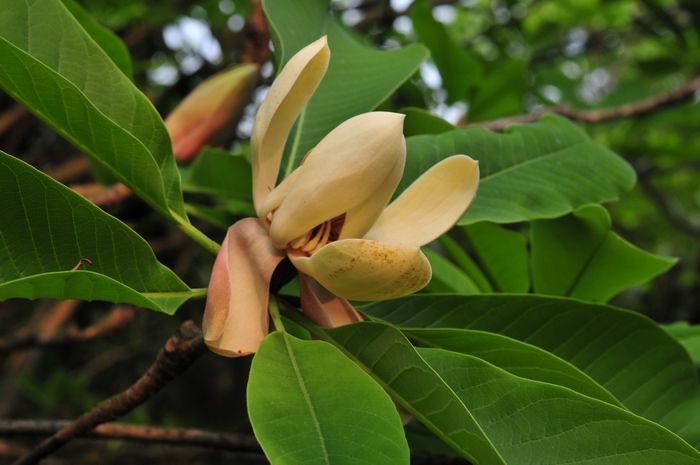
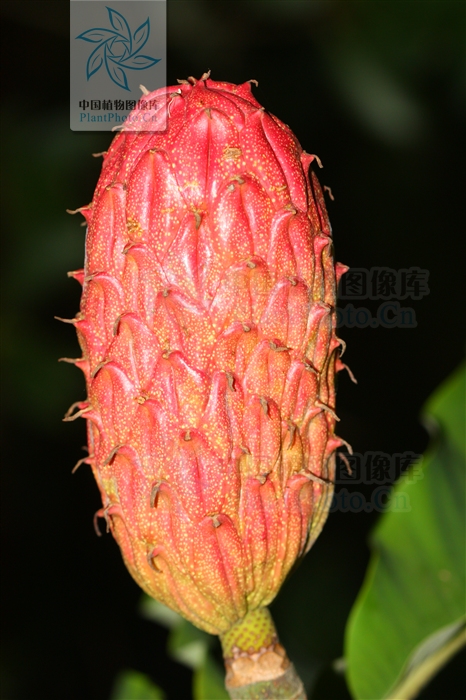
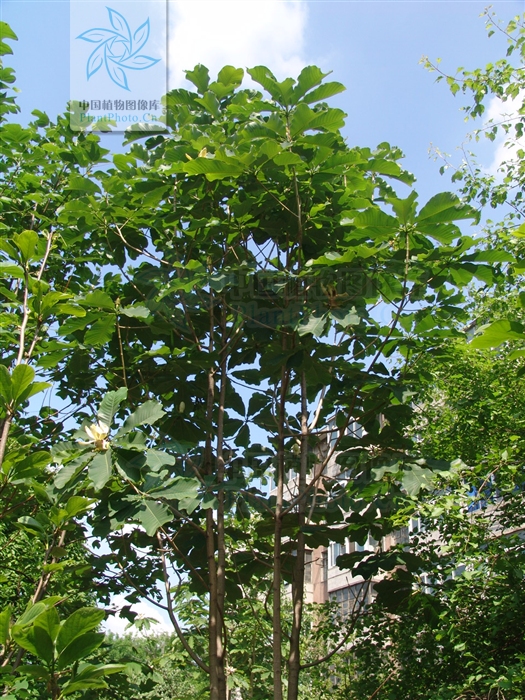
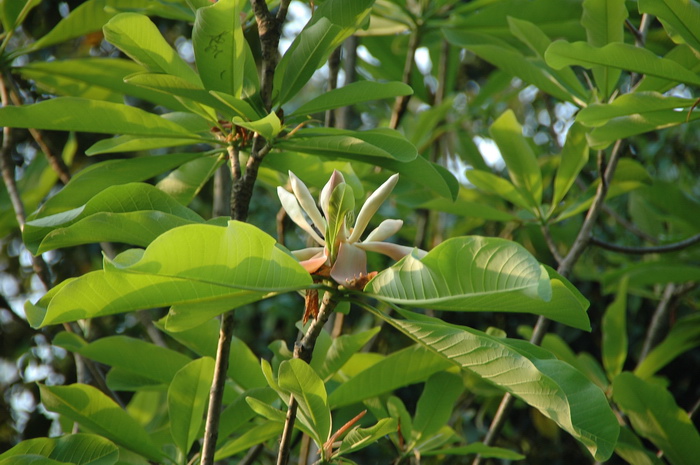
7.厚朴Magnolia officinalis Rehd.etWils.
厚朴属厚朴:Houpoea officinalis
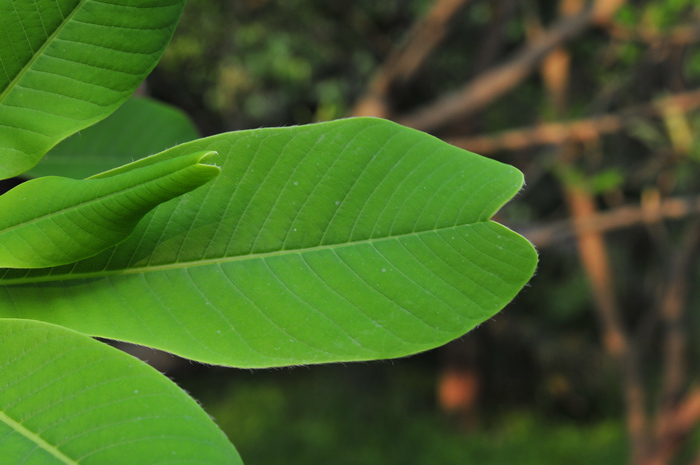
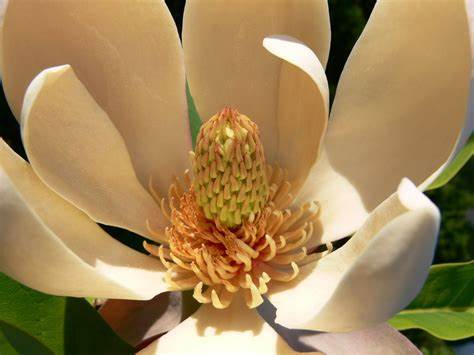
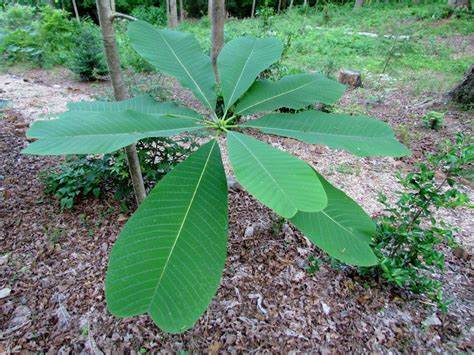
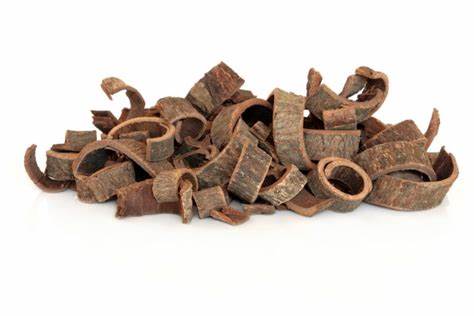
【形态】:落叶乔木。树皮厚,紫褐色,有辛辣味。幼枝淡黄色,有细毛,顶芽大,窄卵状圆锥形,长4~5cm,密被淡黄褐色绢毛。叶革质,倒卵形或倒卵状椭圆形,长20~1125px,宽12~625px,下面有白霜,幼时密被灰色毛。花叶同放,白色芳香;花被片厚肉质;花丝红色。聚合蓇葖果长椭圆状卵圆形,木质,顶有外弯椽;种子倒卵圆形,有鲜红色外种皮。
【变种】:凹叶厚朴var.BibaLaw,叶先端凹缺,成2钝圆的浅裂片,聚合果基部较窄。
【分布】:我国特有的珍贵树种,在北亚热带地区分布较广,分布于长江流域和陕西、甘肃南部。
【习性】:性喜光,但能耐侧方庇荫,喜湿温、排水良好的酸性土壤。
【繁殖】:可用播种法繁殖,亦可用分蘖法繁殖。
【用途】:叶大荫浓,花大而美丽,可作庭荫树、观赏树、行道树栽培。
Magnolia officinalis is a species of Magnolia native to the mountains and valleys of China at altitudes of 300–1500 m.
2.1.2木莲属ManglietiaBI.
常绿乔木。叶互生,全缘。花两性,顶生;花被片9~12,3片1轮;雄蕊多数,花药内向开裂;雌蕊群无柄,心皮多数,螺旋排列于延长的花托上,每心皮有胚珠4~14颗,成熟时背裂为2果瓣。.
30余种,产印度、马来西亚,我国至少有20余种,大部产西南部和南部。
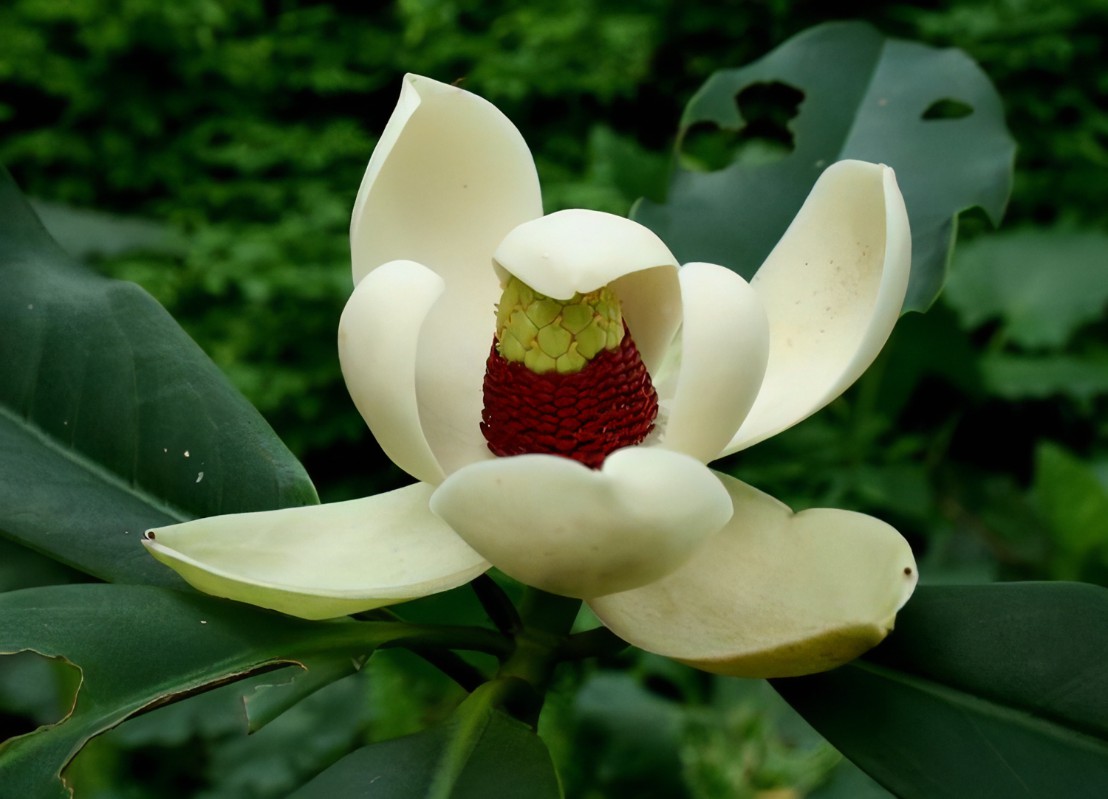
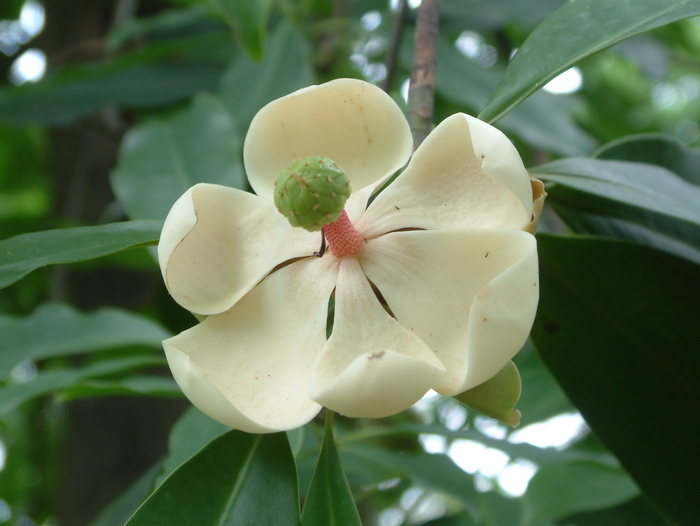
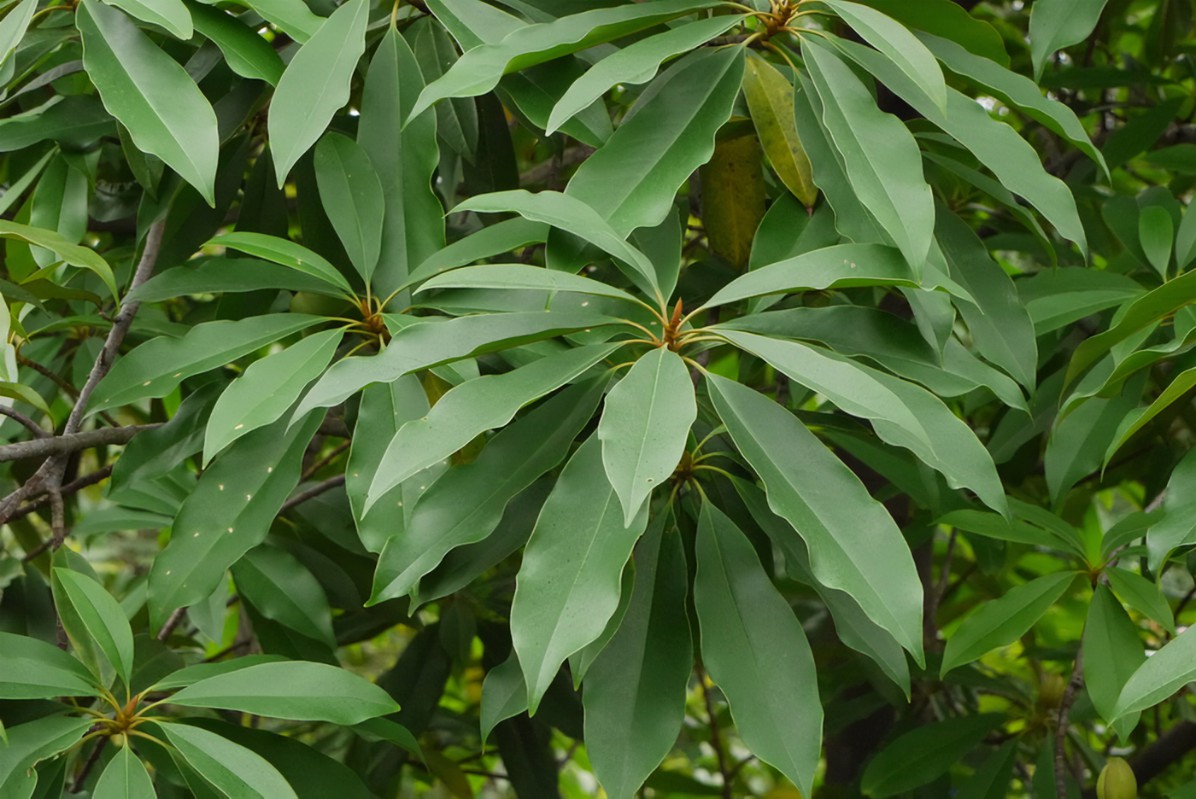
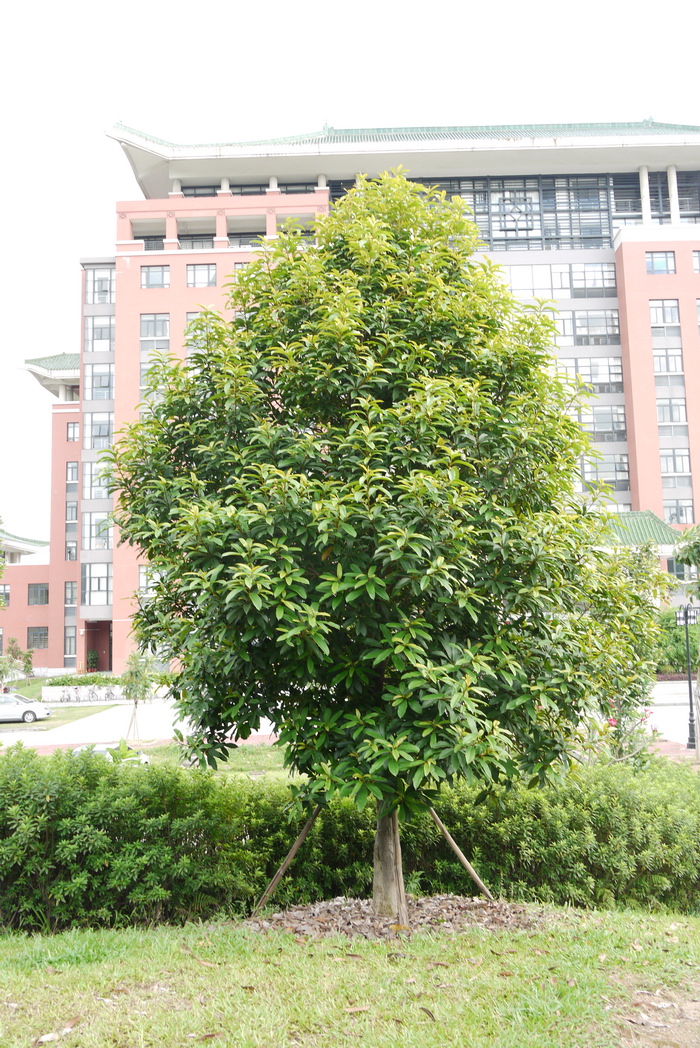
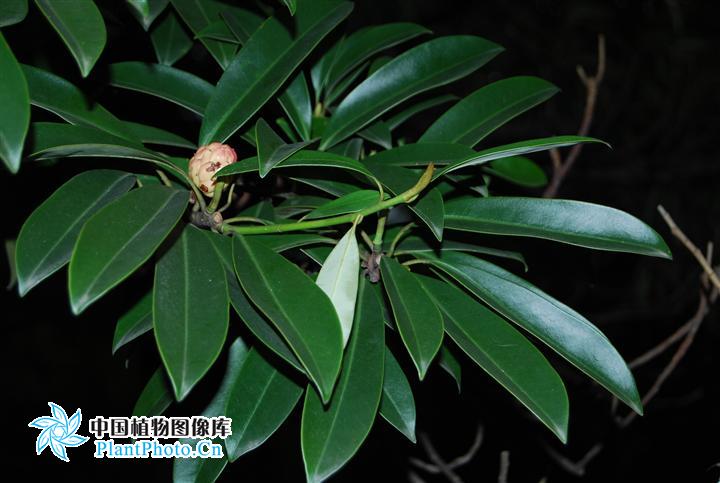
木莲Manglietiafordiana(Hemsl.)Oliv.
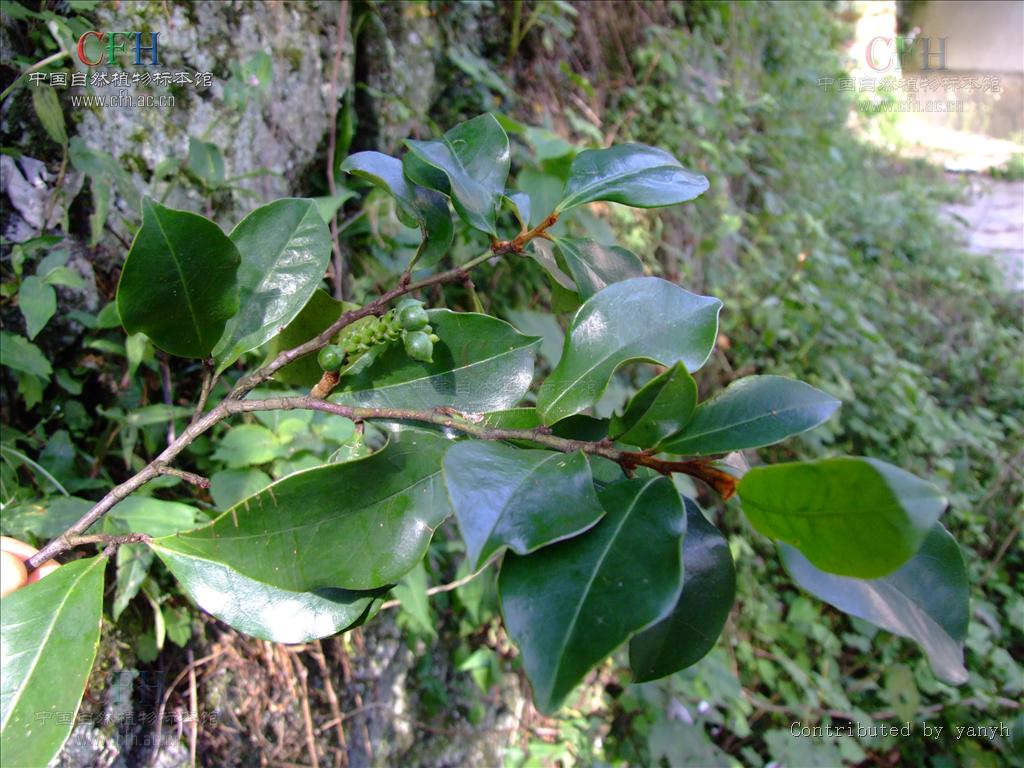
【形态】:常绿乔木,高达20m,树冠椭圆形至半球形。树皮灰褐色,平滑,皮孔明显。幼枝及芽有红褐色短毛,有皮孔和环状纹。叶互生,窄倒卵形或倒披针形,先端急尖或短渐尖,基部楔形。叶全缘,绿色有光泽,厚革质,背面苍绿色或有白粉。单生枝顶,白色,肉质,似莲花而具清香。聚合果红色,卵圆形。花期5月,果期9月。
【分布】:产长江以南。长江中下游各省有栽培,常生长在酸性土上。
【习性】:中性偏阴树种,幼年喜阴,大树可忍受全光,但在侧方庇荫处生长最佳,喜温暖湿润气候及肥沃的酸性土壤,不耐寒。
【繁殖】:播种育苗为主,扦插、嫁接辅之。
【用途】:树干通直高大,树冠混圆,枝叶并茂,绿荫如盖,典雅清秀,初夏盛开玉色花朵,秀丽动人,聚合果深红色,具有较高的观赏价值。于草坪、庭园或名胜古迹处孤植、群植,能起到绿荫庇夏,寒冬如春的功效。
Manglietia was the name of a genus of flowering plants in the family Magnoliaceae, with about 40 Asian species listed. The genus is now considered a synonym of the well-known and similar Magnolia. They are trees with leathery leaves and green or red flowers.
Formerly known as Manglietia yuyuanensis, this species (along with all of the others in its genus), has been moved into the genus Magnolia based on molecular evidence.
Though originally posted as Magnolia fordiana var. yuyuanensis, the comments below caused me to re-examine the name and label at the Garden. Since the labeled varietal name had not been published and is therefore invalid, I’ve changed it to the broader species name.

2.1.3含笑属MicheliaL.
灌木或乔木。花腋生;雌蕊群有明显的柄,每室通常含胚珠2颗以上。约50余种,分布于亚洲热带、亚热带及温带。我国32种,产西南至东部,南部尤盛。
分种检索表
1.托叶部分与叶柄连生,叶柄内侧有托叶痕…………………………………………………2
1.托叶与叶柄离生,叶柄无托叶痕;枝、叶无毛,芽、幼枝、叶下面有白粉……深山含笑
2.乔木;叶柄长25px以上,叶卵状长圆形;各部基本无毛或有疏柔毛………………白兰花
2.灌木或小乔木;叶柄长2~4mm;小枝、叶柄、花梗有褐色绒毛……………………含笑
1.含笑Michelia figo(ur.) Spreng.
含笑花(Magnolia figo)
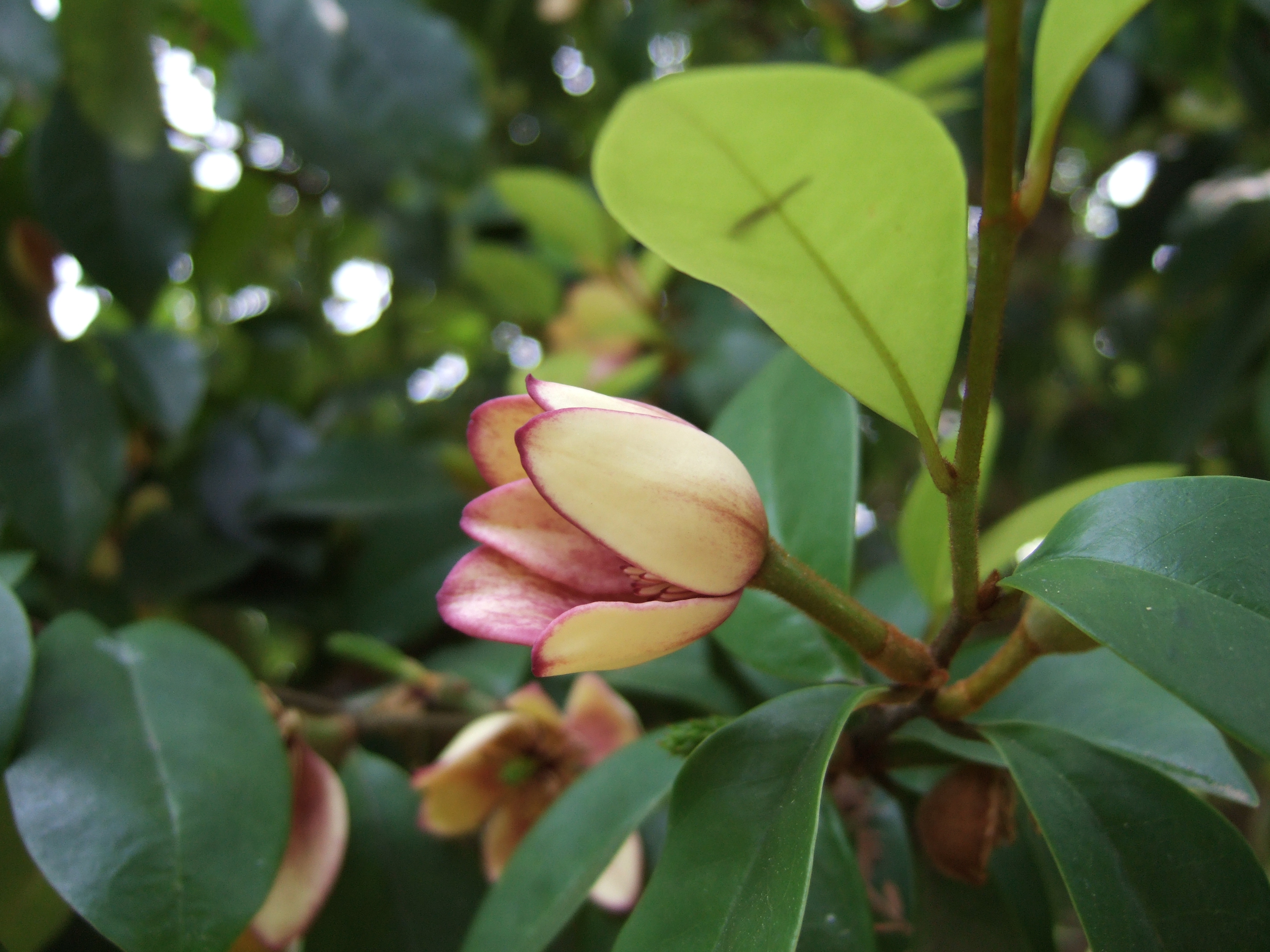
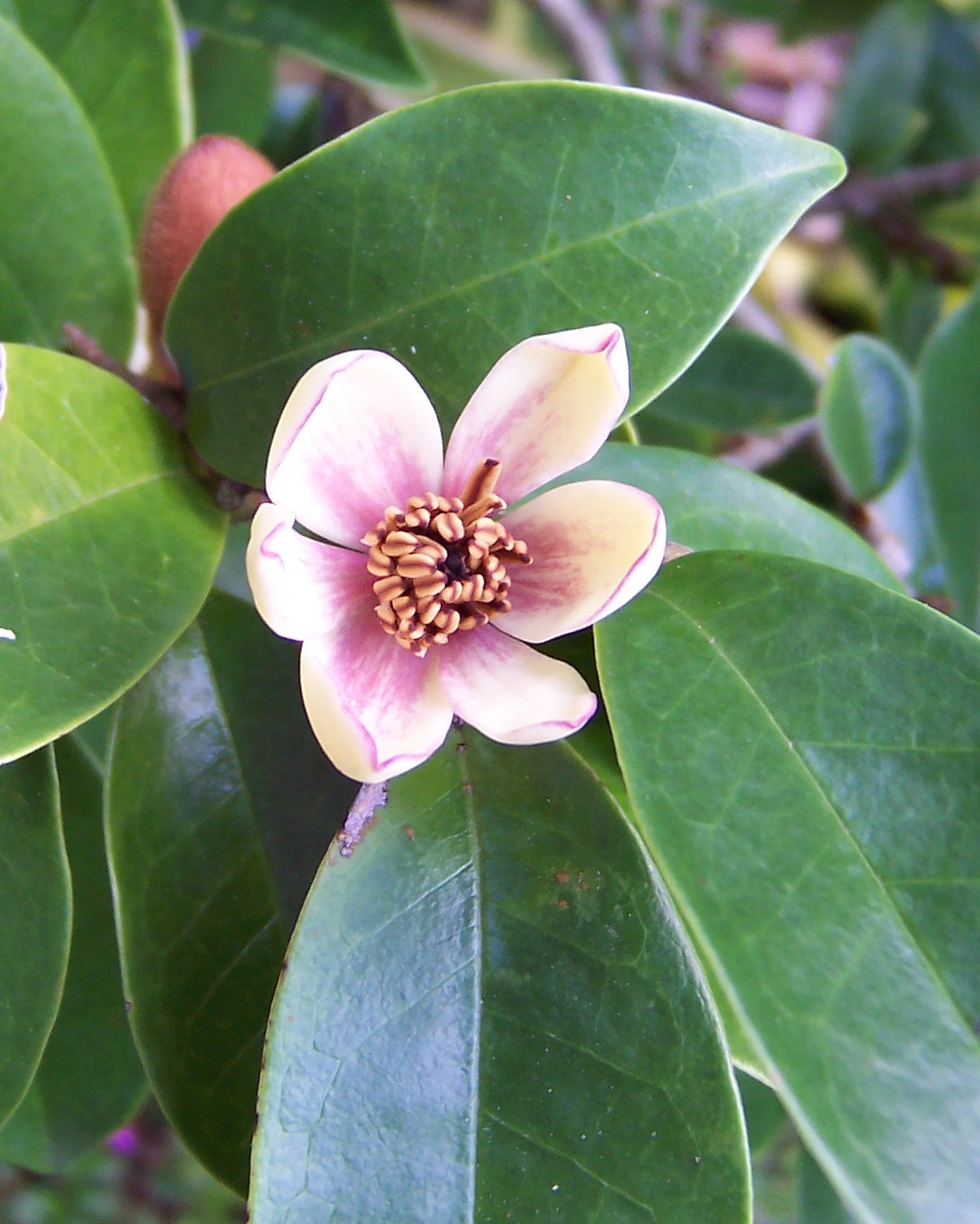
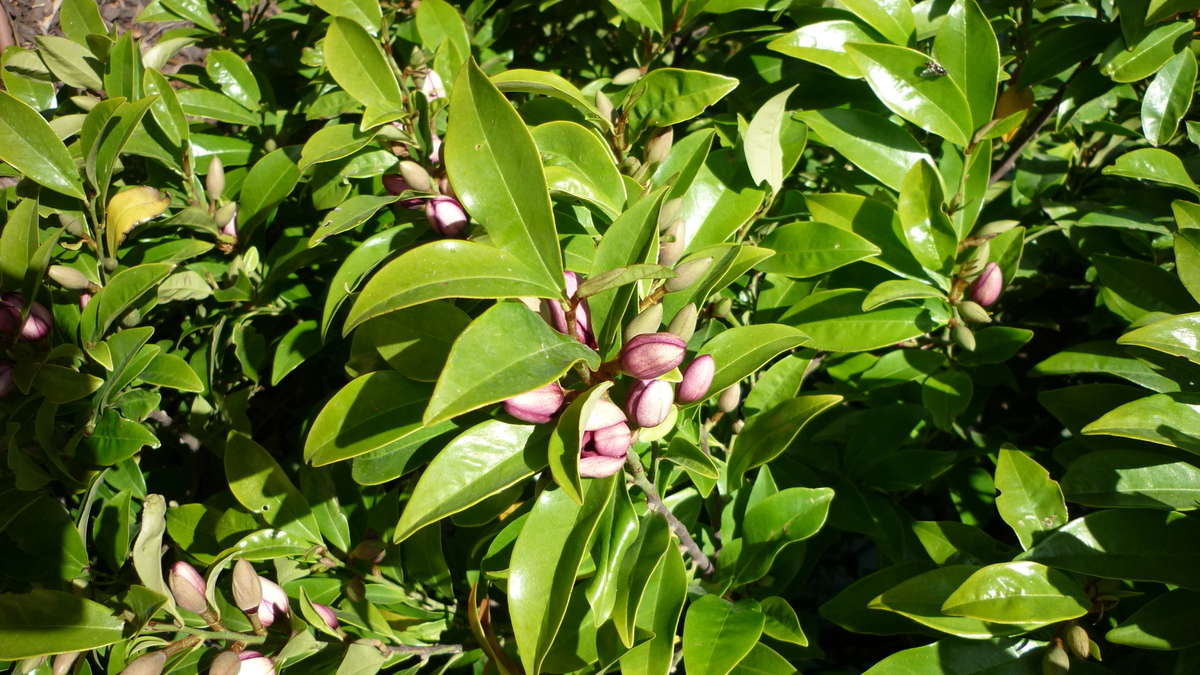
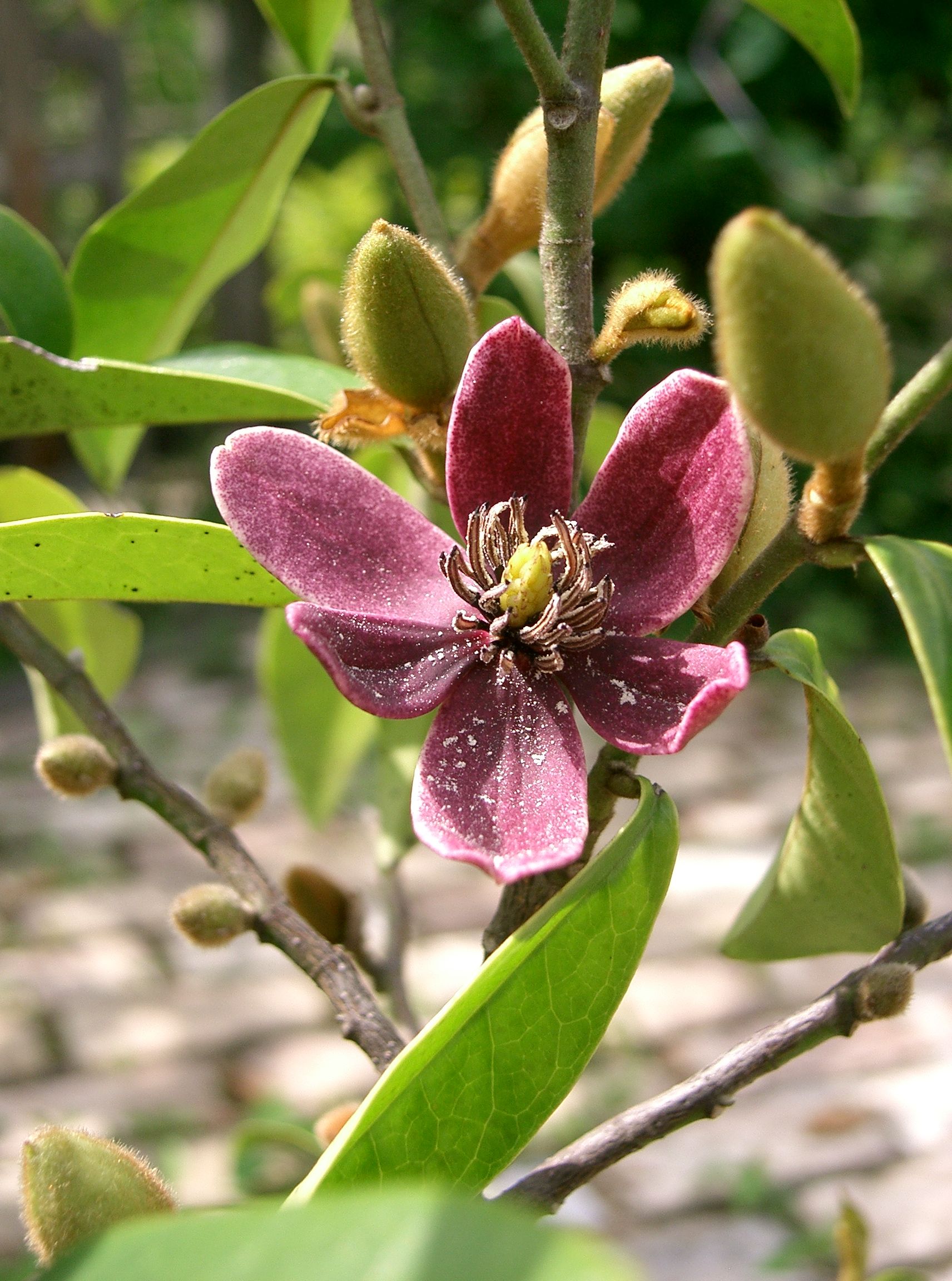
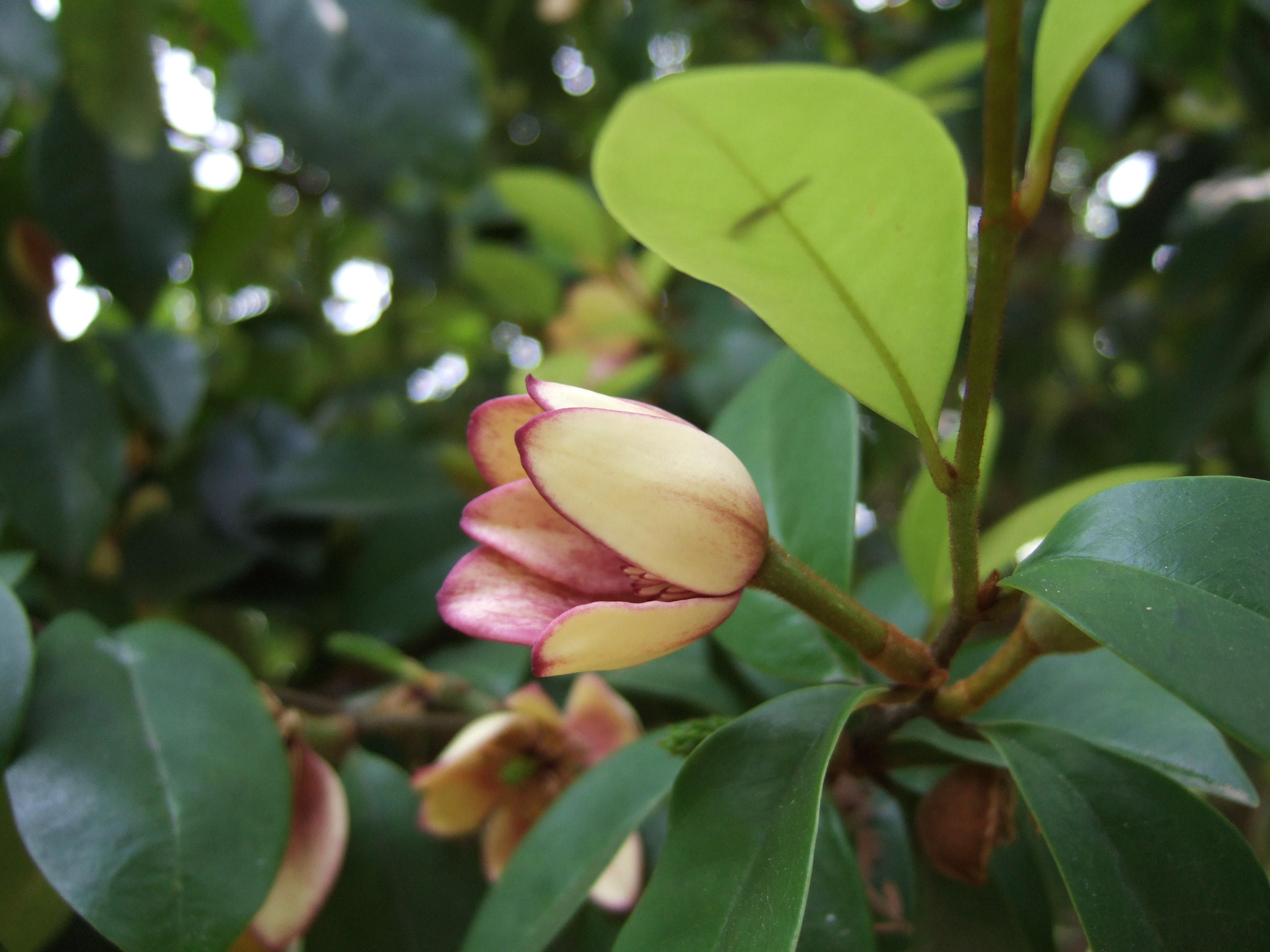
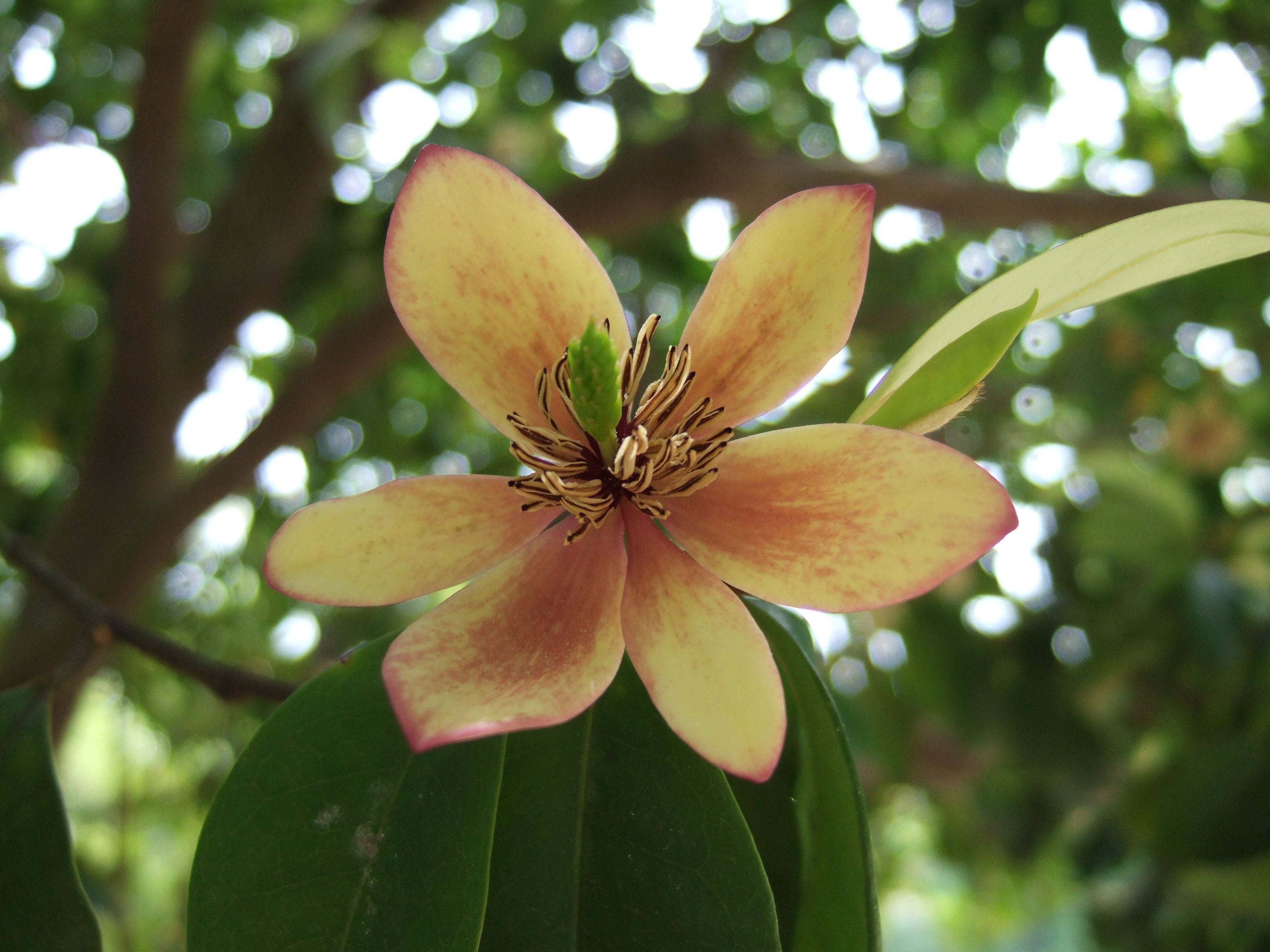
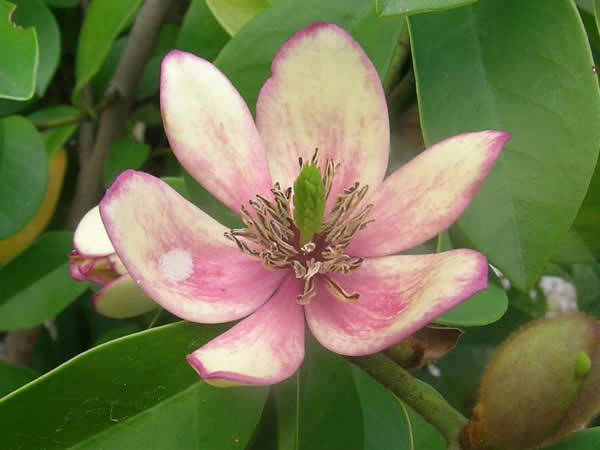
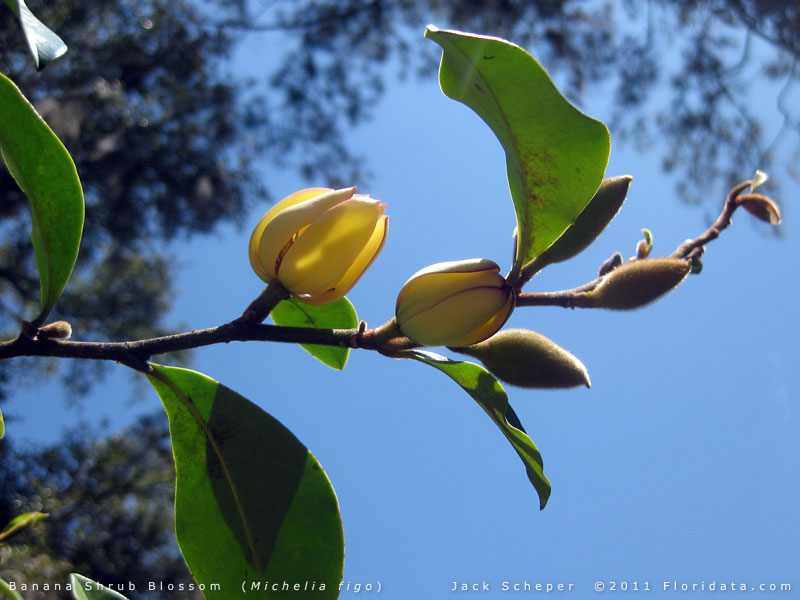
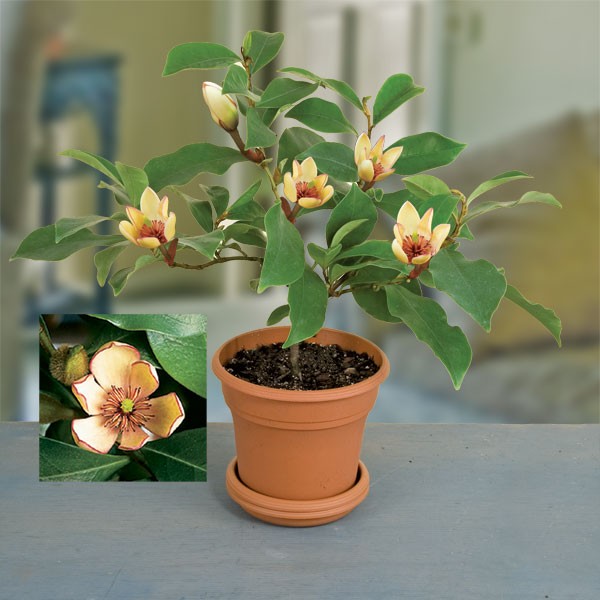
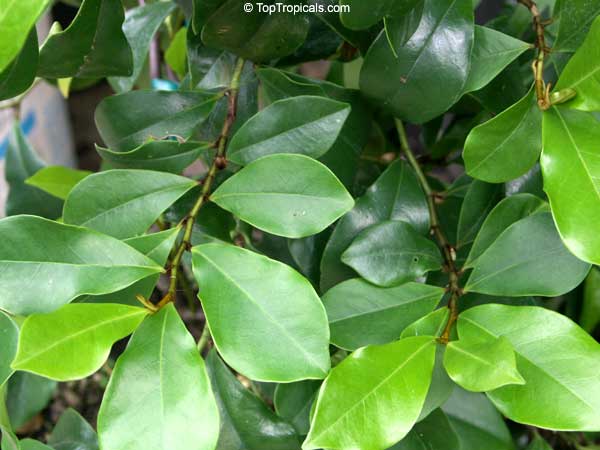
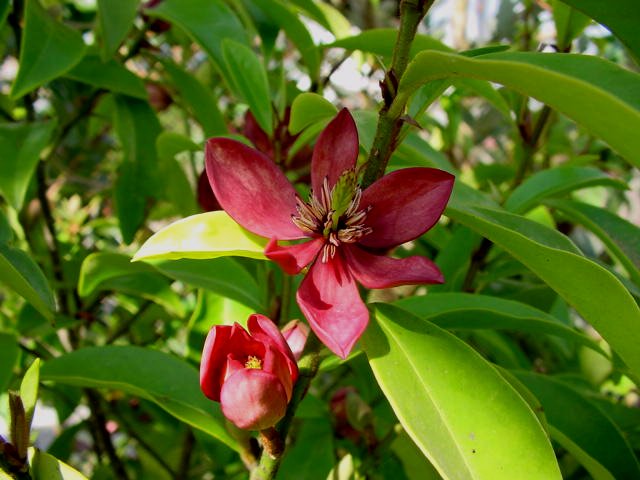
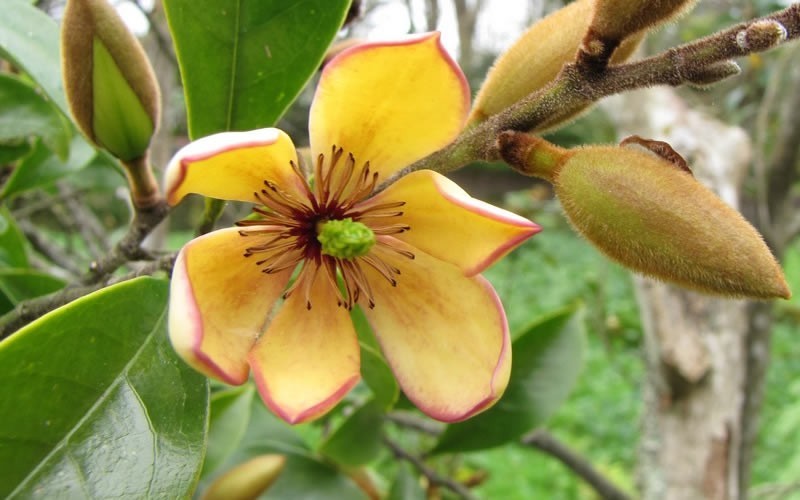
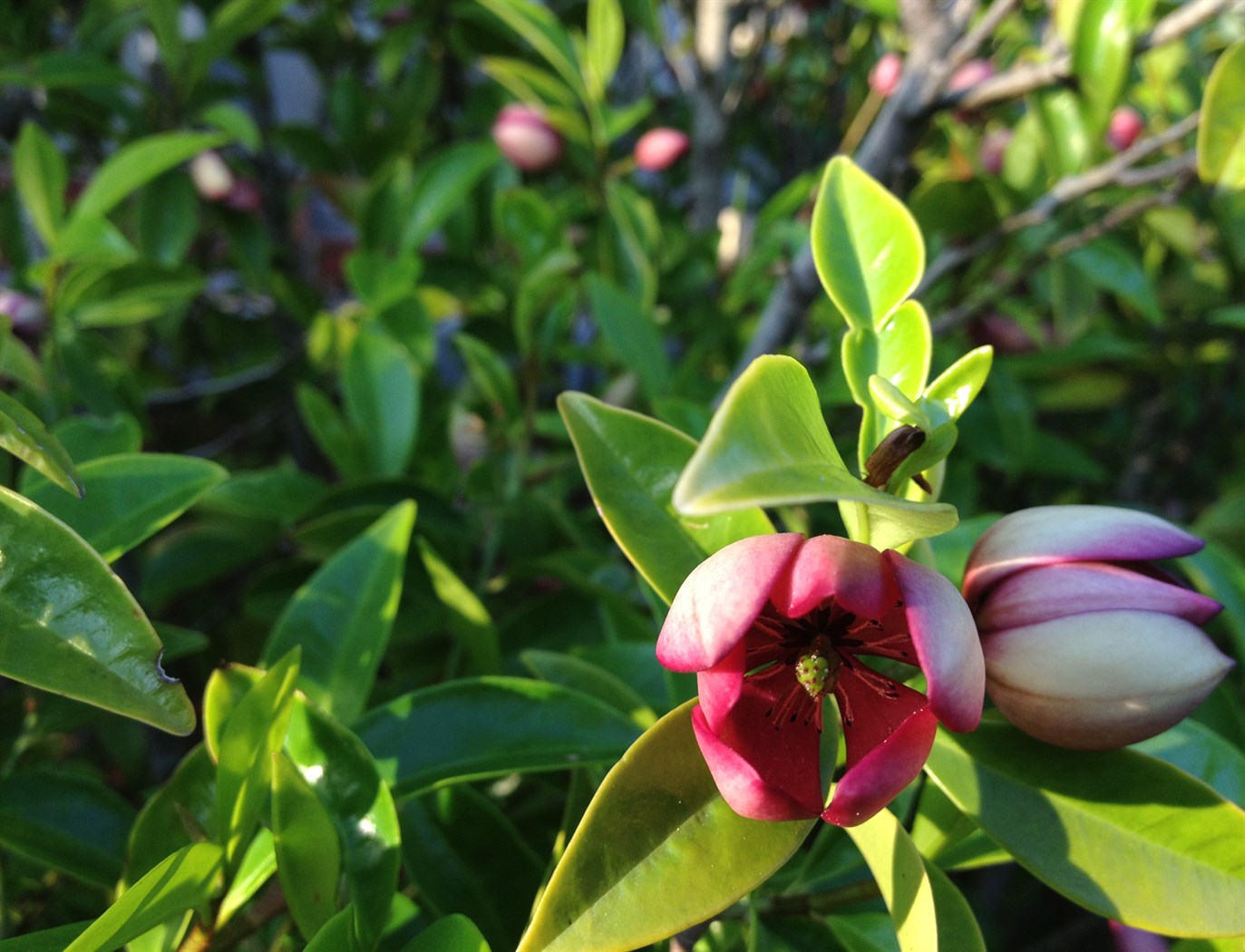
【形态】:常绿灌木或小灌木,高达3~5m,由紧密的分枝组成圆形树冠。树皮灰褐色,小枝有环状托叶痕。嫩枝、芽、叶、柄、花梗均密生锈色绒毛。单叶互生,革质,椭圆形或倒卵形,先端渐尖或尾尖,基部楔形,全缘,叶面有光泽,叶背中脉上有黄褐色毛,叶背淡绿色。花单生于叶腋,4~5月开花,花乳黄色,瓣缘常具紫色,有香蕉型芳香。
【分布】:原产华南广东、福建等亚热带地区。现在从华南至长江流域各省均有栽培。
【习性】:喜阴,喜温暖、湿润环境,不甚耐寒。不耐干燥贫瘠,喜排水良好、肥沃深厚的微酸性土壤,在碱性土中生长不良,易发生黄化病。
【繁殖】:以扦插为主,也可用播种、分株、压条等方法繁殖。
【用途】:自然长成圆形,枝密叶茂,四季常青。本种为名贵芳香花木,可陈设于室内或阳台、庭院等较大空间内。亦可适于在小游园、花园、公园或街道上成丛种植,可配植于草坪边缘或稀疏林丛之下,使游人在休息之中常得芳香气味的享受。
Magnolia figo is an evergreen tree in the magnolia genus. It grows to 3–4 metres tall. It is native to China. Initially described as by Portuguese missionary and naturalist João de Loureiro as Liriodendron figo, it was reclassified as Michelia figo by German botanist Curt Polycarp Joachim Sprengel. In 2006, a cladistic(进化枝的) analysis of the genus Michelia found them to lie within the genus Magnolia, with the name now being Magnolia figo.
Magnolia figo
Common Name(s): Banana Shrub
Previously known as: Michelia figo
Description
This lovely evergreen shrub in the Magnolia family grows up to 15' tall and is upright oval to rounded. This plant blooms in mid to late spring and has fragrant flowers that smell like ripe cantaloupe or banana. Some cultivars have up to 4" flowers. This plant must be planted in a protected location. It tolerates full sun (turns yellow-green in winter), and prefers well-drained, fertile, acidic, sandy loam in organic matter and sitting in partial shade. It grows in USDA zones 7-10, but does best in zones 8-10. This plant can be severely pruned and is slightly salt tolerant. This plant has no significant pest or disease problems.
Quick ID Hints:
Brown pubescence under leaves and on buds
Cup-shaped, ivory flower smells like ripe bananas
Evergreen shrub with magnolia-like leaves
Axillary (腋窝的)flower buds at 30 degrees to stem

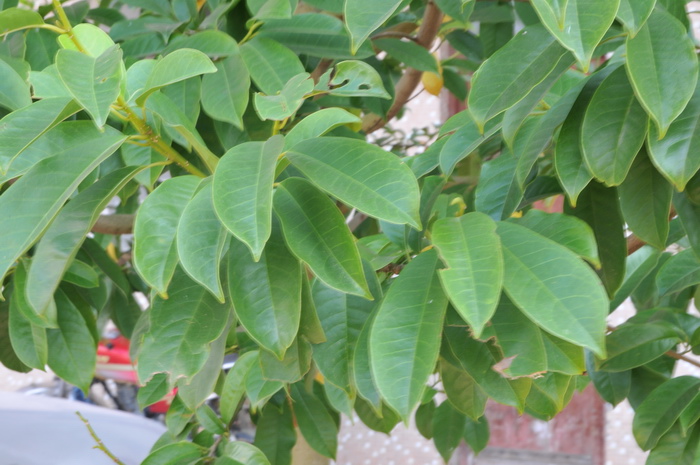
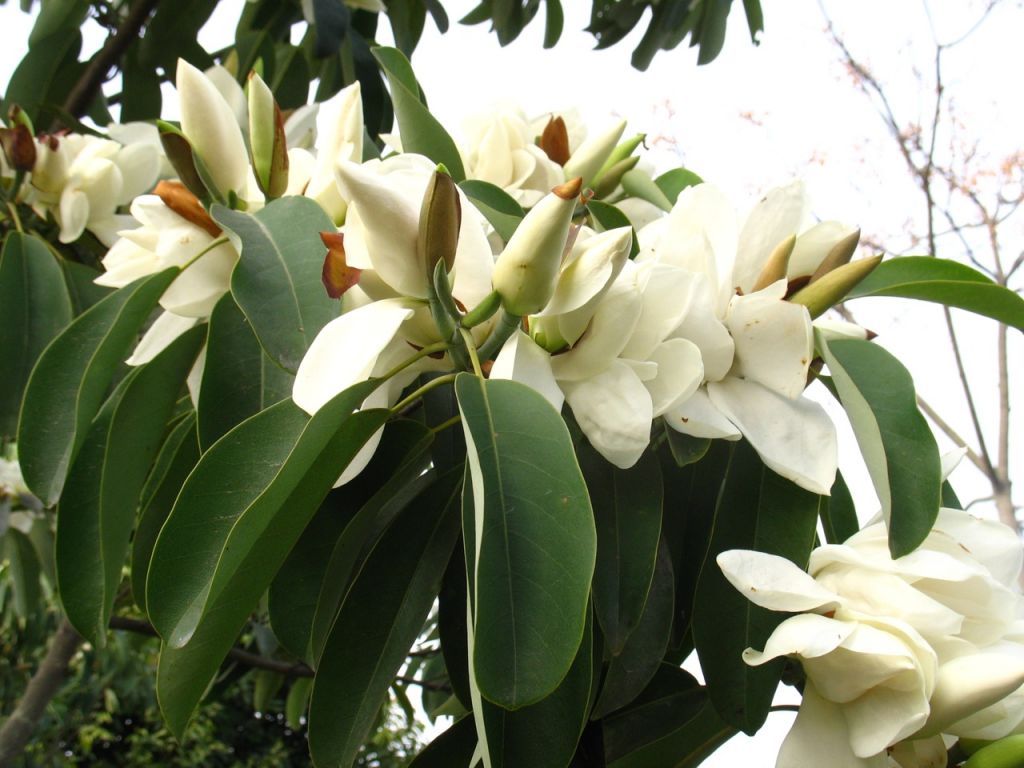
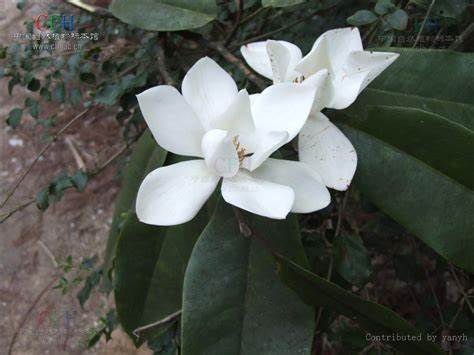
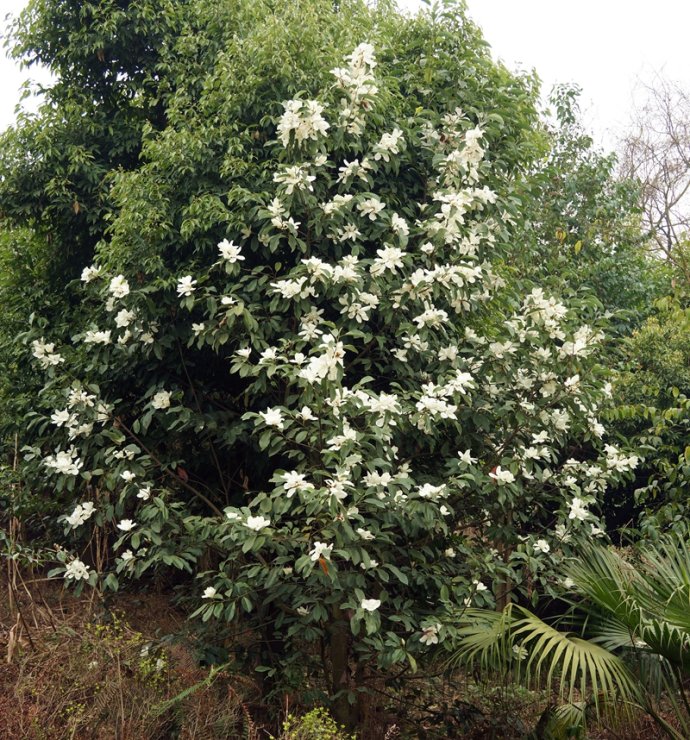
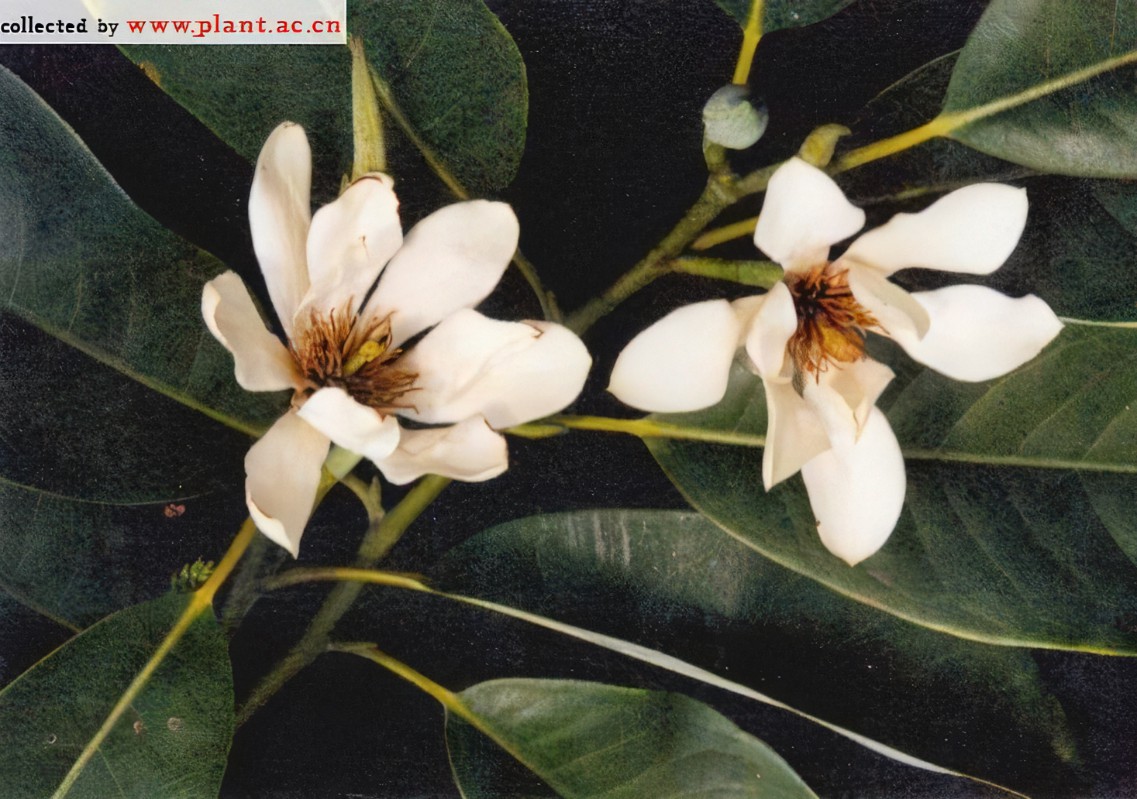
2.深山含笑Michelia maudiae Dunn.
Magnolia maudiae
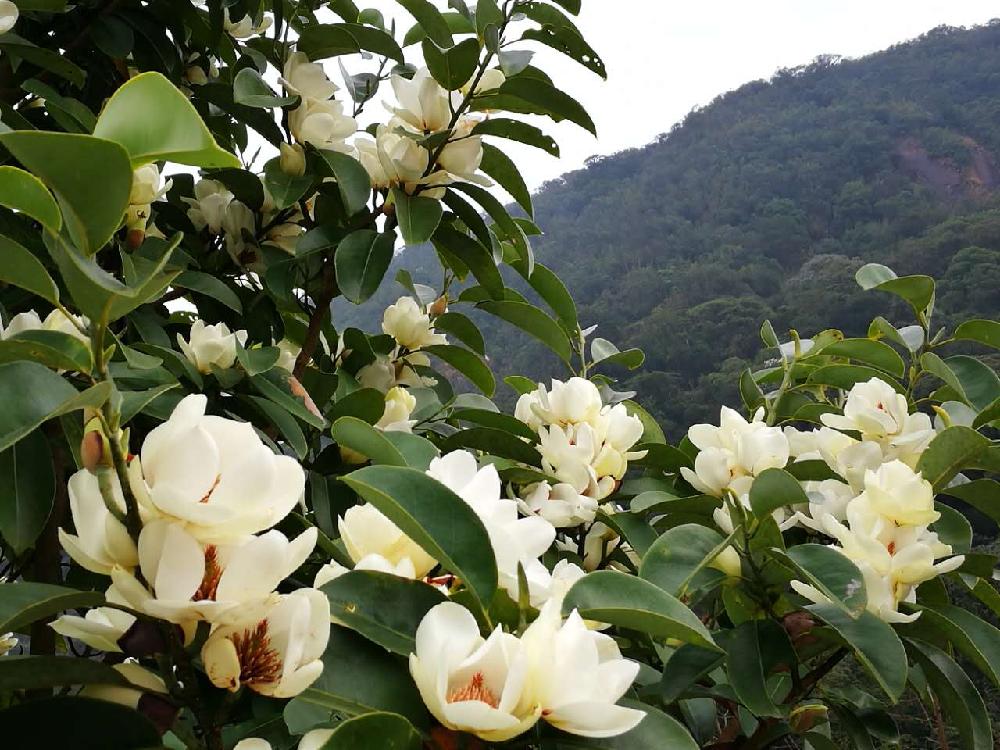
【形态】:常绿乔木,高20m。树皮浅灰或灰褐色,平滑不裂。芽、幼枝、叶背均被白粉。叶互生,革质,全缘,深绿色,叶背淡绿色,长椭圆形,先端急尖。早春开花,单生于枝梢叶腋,花白色,有芳香,直径10~300px。果期9~10月,聚合果7~375px;种子红色。
【分布】:产于长江流域。
【习性】:喜温暖、湿润环境,有一定耐寒能力。喜光,幼时较耐阴。自然更新能力强,生长快,适应性广,对二氧化硫的抗性较强。根系发达,萌芽力强,病虫害少。
【繁殖】:种子繁殖,扦插、压条或以木兰为砧木用靠接法繁殖。
【用途】:其枝叶茂密,冬季翠绿不凋,树形美观。是早春优良观花树种,也是优良的园林和四旁绿化树种。
Michelia is a historical genus of flowering plants belonging to the Magnolia family. The genus included about 50 species of evergreen trees and shrubs, native to tropical and subtropical south and southeast Asia, including southern China. Today it is regarded as a synonym of Magnolia.
Magnolia maudiae
Previously known as: Michelia chingiiMichelia maudiae
Description:
Michelia is a magnolia tree with blue-green smooth leaves and large extremely fragrant flowers. Plant near a patio(露台、天井) or walkway so you can enjoy the scent especially in the mornings and early evening.
A rare form of Michelia seldomly offered for sale. Native to Southern China, it forms a small round headed tree with attractive grey-green foliage. In spring it produces sweetly perfumed pure white flowers. Prefers good drainage and a humus rich soil. Sun to semi-shade. Hardy. Evergreen.
Plant Care:
Very easy care tree, Minimal pruning should be required other than minor shaping and crown raising. Plant in a moist but well drained soil. Feed once a year with Texture Plants Michelia and Magnolia planting food.

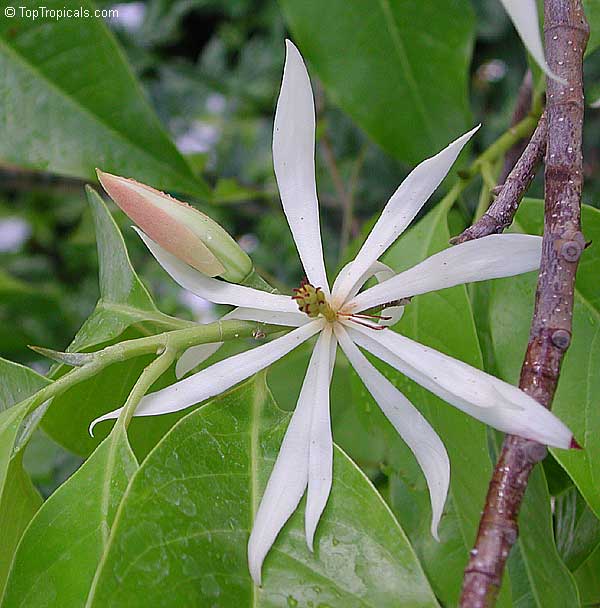
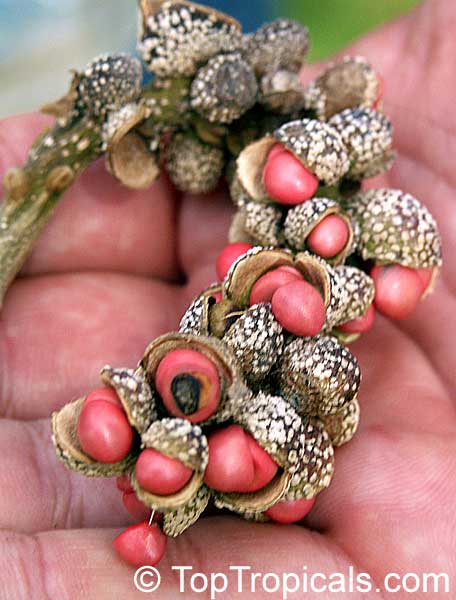
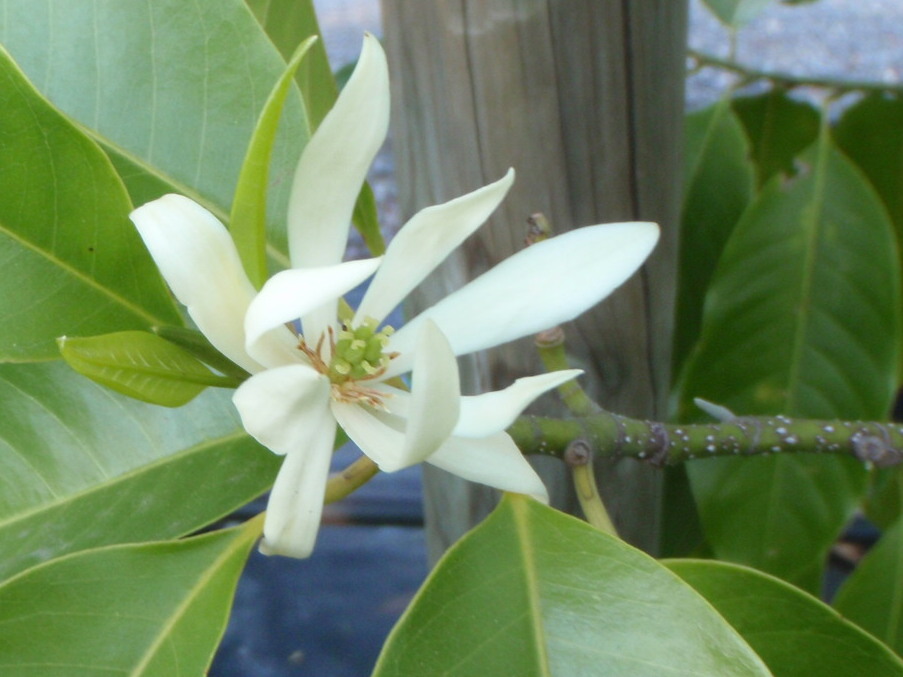
3.白兰Michelia × alba DC.
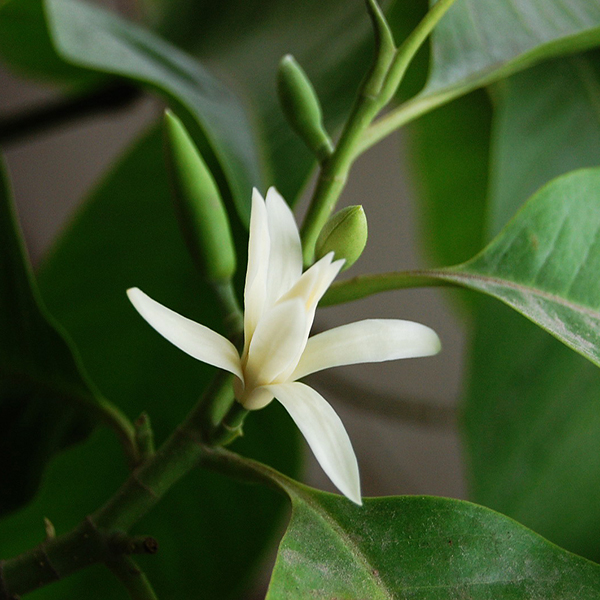
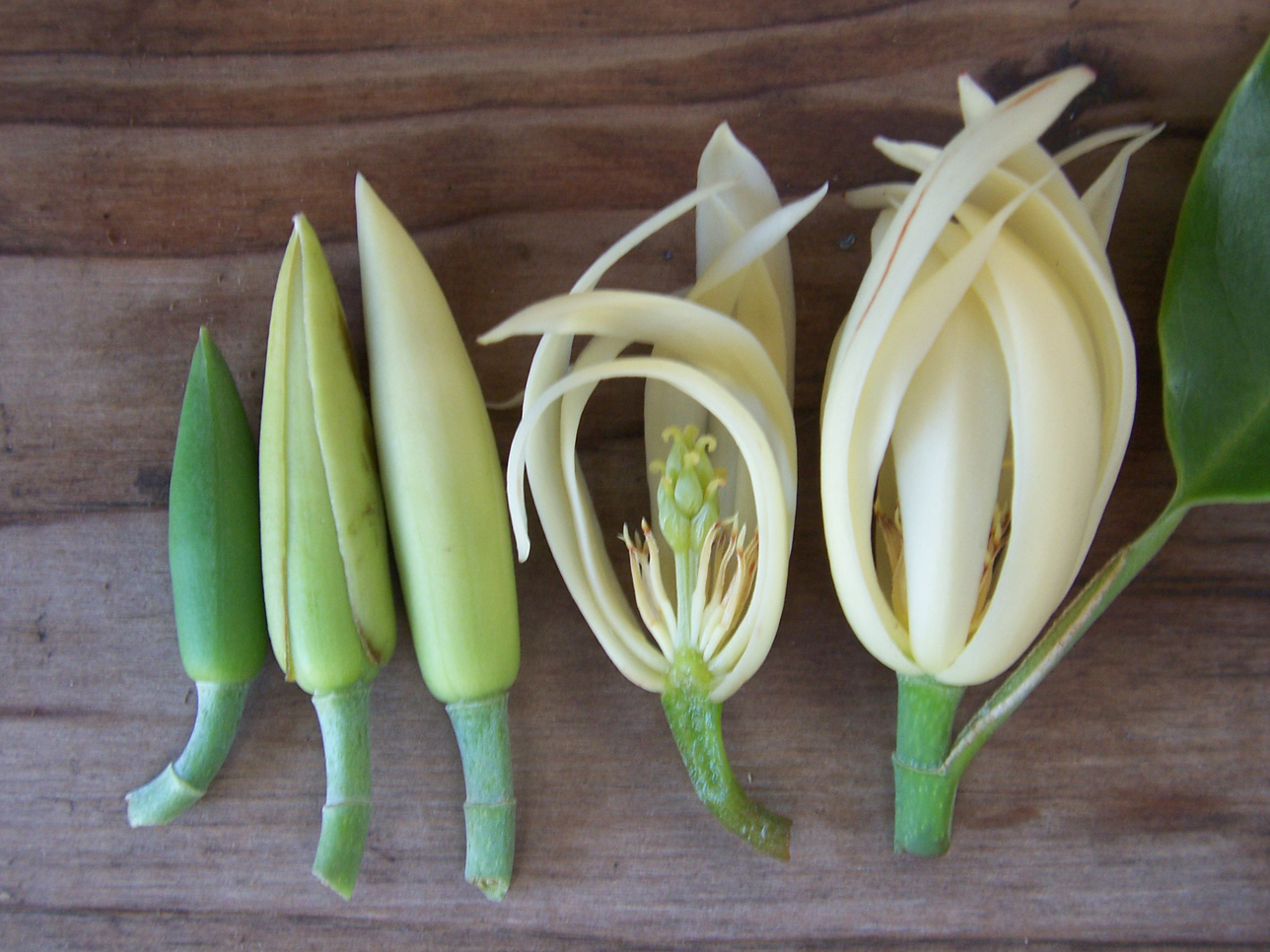
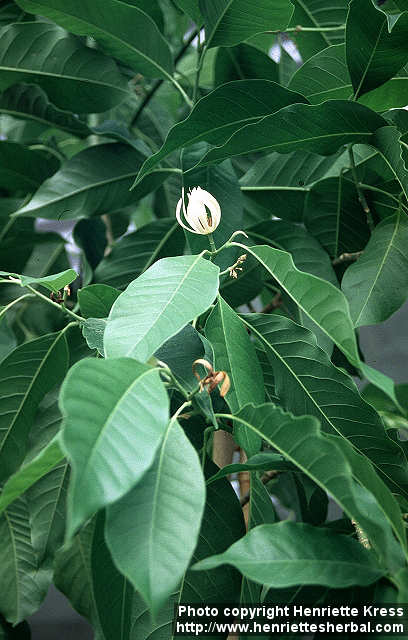
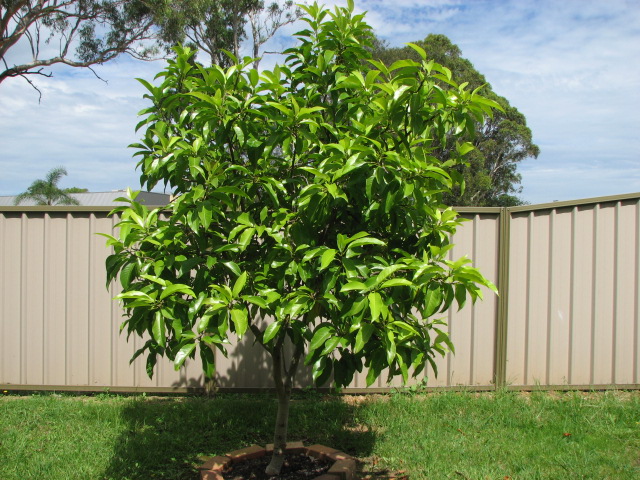
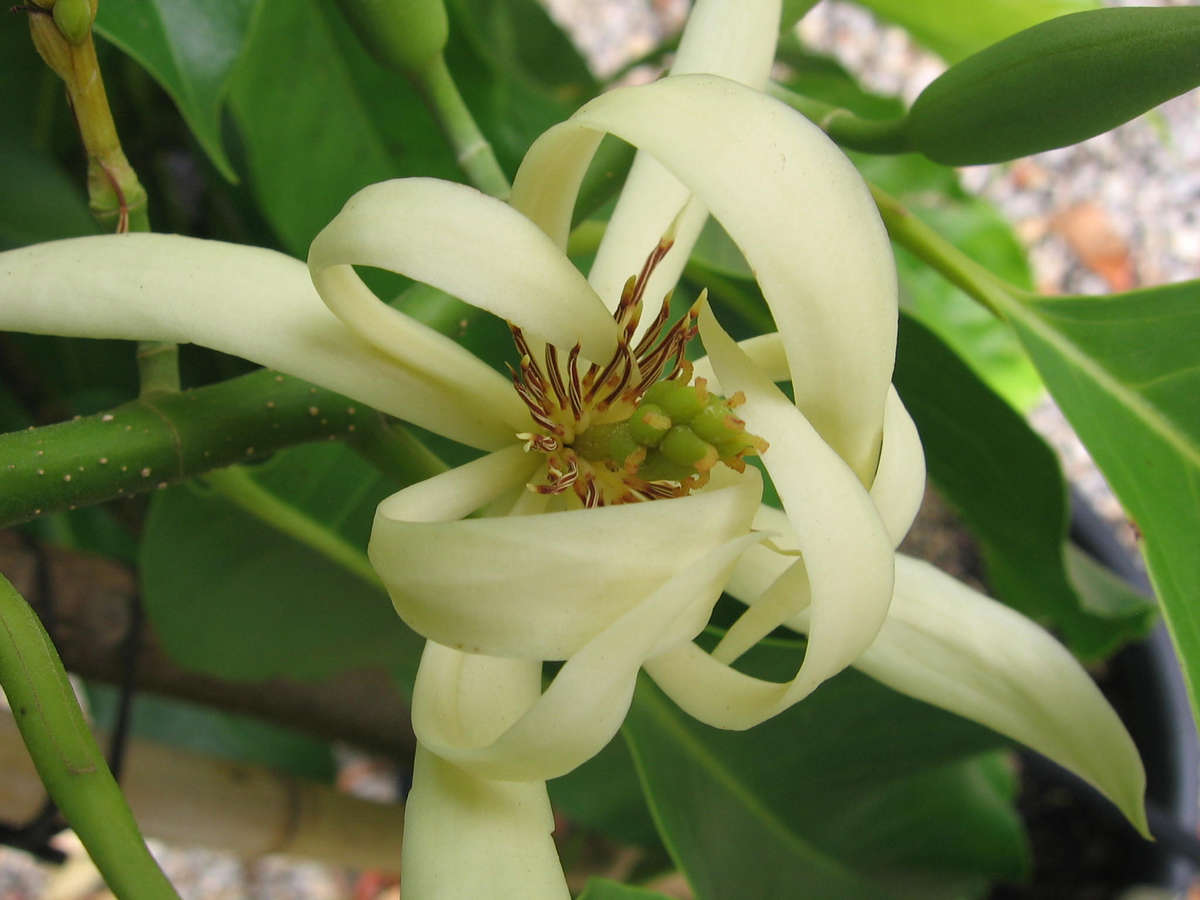
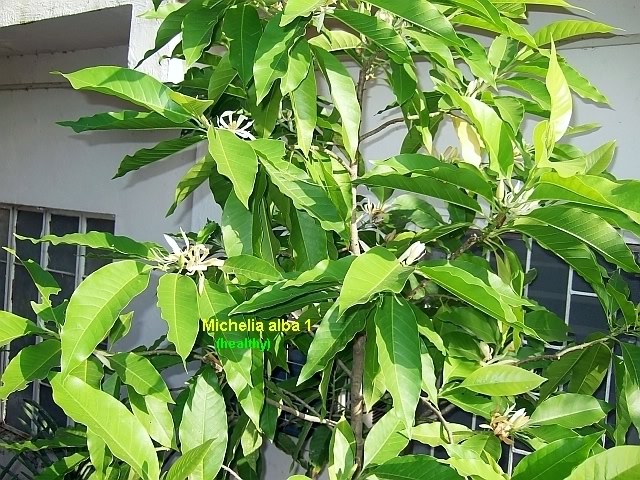
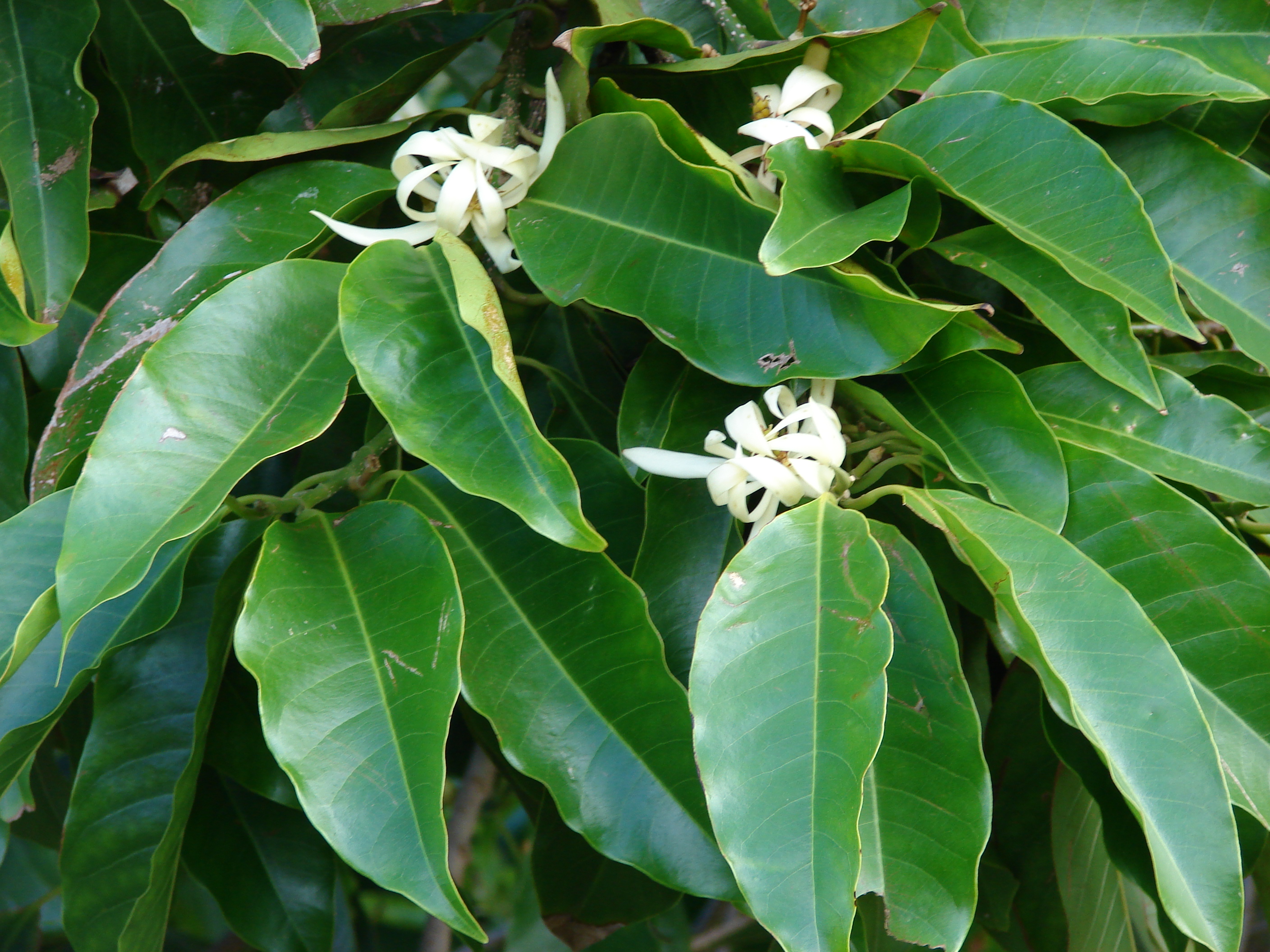
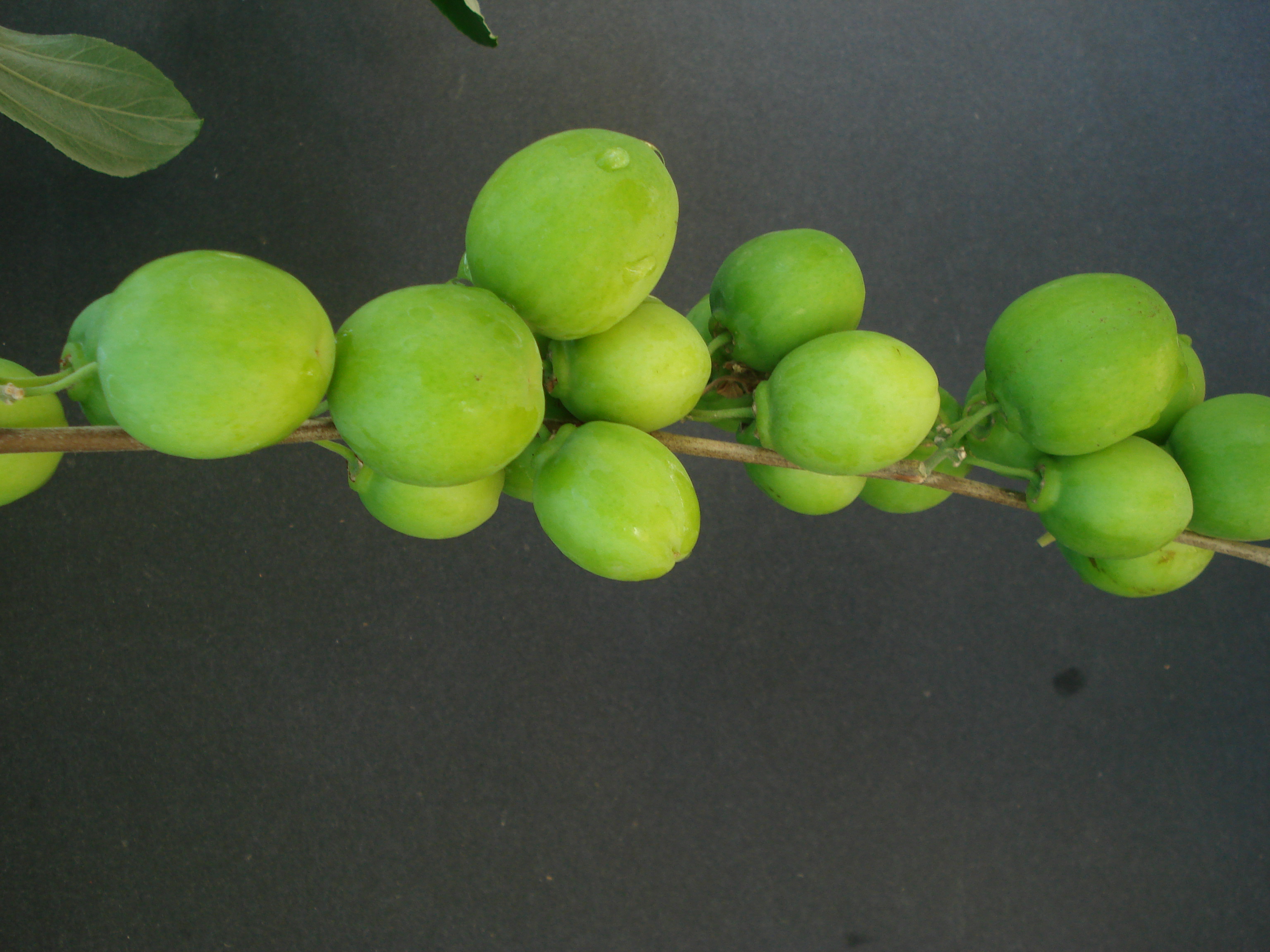
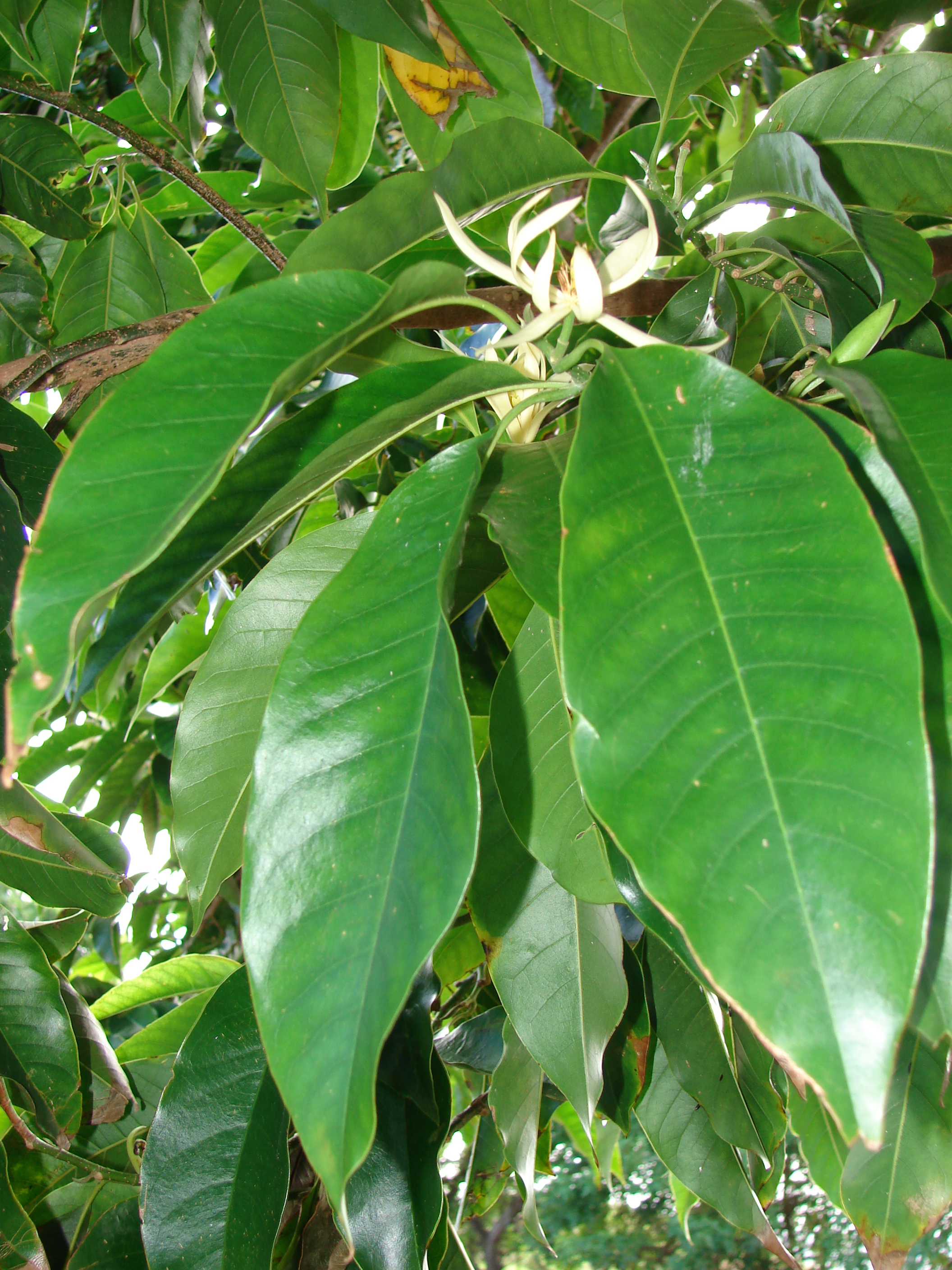
【形态】:落叶乔木,高达20m,盆栽通常高3~4m,常绿,叶片长圆,单叶互生,青绿色,革质有光泽,长椭圆形。其花蕾好像毛笔的笔头,瓣有8枚,自如皑雪,生于叶腋之问;花白色或略带黄色,花瓣肥厚,长披针形,有浓香,花期长,6~月开花不断。
【分布】:原产喜马拉雅地区。现华南有栽培,北京及黄河流域以南均有盆栽。
【习性】:喜光不耐阴,喜温暖湿润和通风良好的环境。不耐干又不耐湿。喜富含腐殖质、排水良好、疏松肥沃、微酸性的砂质土壤。肉质根,怕积水,冬季温度不低于5℃。
【繁殖】:常用压条和嫁接繁殖,很少采用扦插、播也有小型植株。树皮灰白,幼枝种繁殖。
【用途】:株形直立有分枝,落落大方。在南方可露地庭院栽培,是南方园林中的骨干树种,可作庭荫树,行道树栽植。北方盆栽,可布置庭院、厅堂、会议室,中小型植株可陈设于客厅、书房。因其惧怕烟熏,应放在空气流通处。除了可以花叶齐观,作为一种香料植物,白兰花还可以兼做香料和药用。
Magnolia × alba, also known as the white champaca, white sandalwood, or white jade orchid tree, is a flowering plant of hybrid origin that is commonly cultivated in Southeast Asia and tropical regions of East Asia. Although the exact origin is uncertain, it is considered to be a hybrid of Magnolia champaca and Magnolia montana.
Magnolia ×alba is probably the result of a cross between M. champaca(黄兰含笑) and M. montana (Blume) Figlar (Chen & Nooteboom 1993). It does not occur in the wild, but is cultivated in the Chinese provinces of Fujian, Guangdong, Guangxi, Hainan and Yunnan, and throughout subtropical and tropical southeast Asia.
Along with its yellow flowered parent M. champaca, Magnolia × alba is prized above all else for its fragrance, and its flowers are widely used in Asia for ceremonial gifts and temple offerings as well as for household and personal decoration. Its popularity has travelled with Asian immigrants to the United States where it is grown as a street and yard tree in coastal California as far North as the Bay Area (Ritter 2012). It is, however, a large tropical tree and distinctly tender. In Europe it is only known as a glasshouse plant and will probably stay that way.



2.1.4鹅掌楸属LiriodendronL.
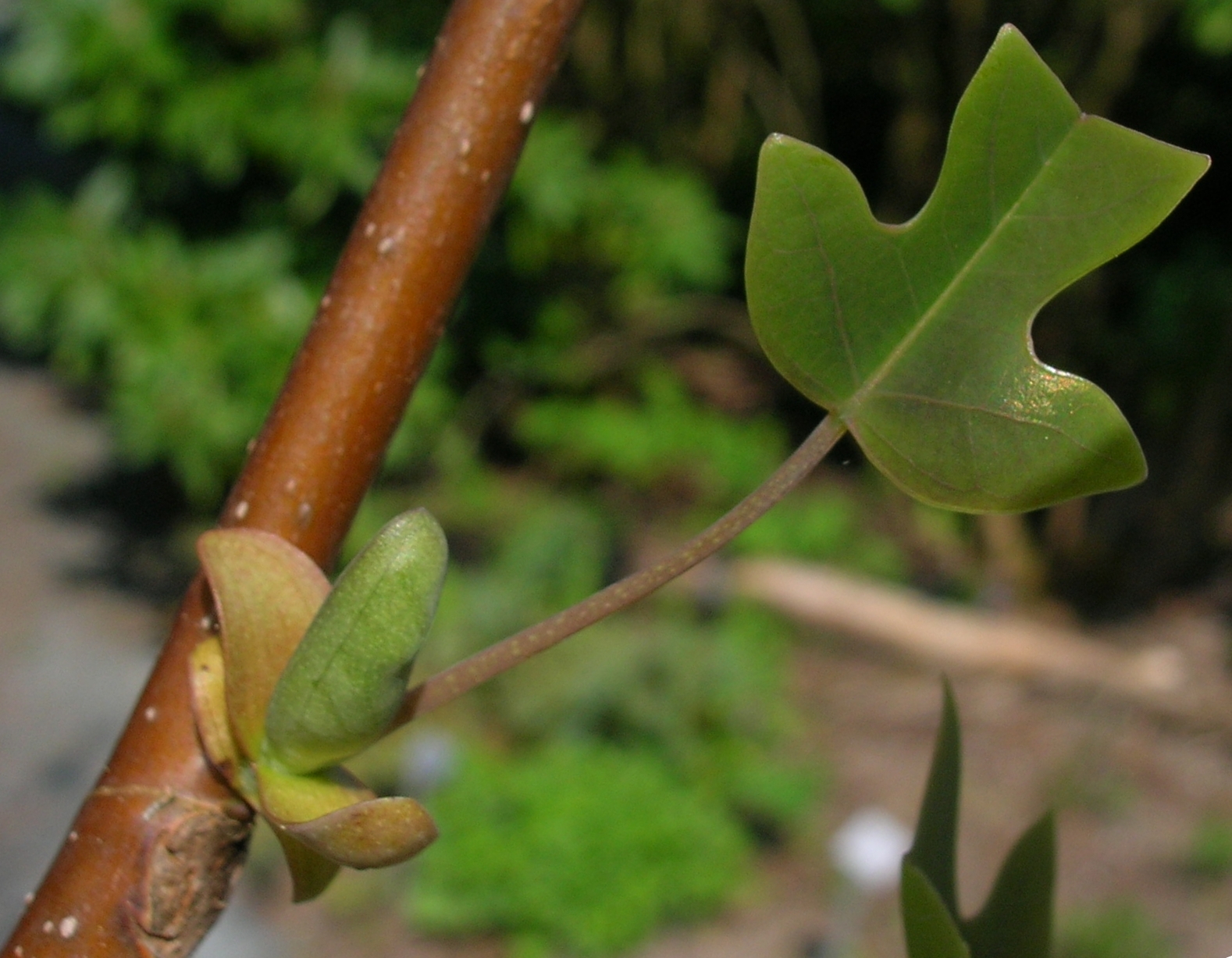
落叶乔木。叶分裂,顶端截形或宽凹缺,两侧有裂片,具长叶柄;托叶与叶柄离生。花大,单花顶生,萼片3,花瓣6。聚合翅果,翅果不开裂,成熟时自中轴脱落。
2种,中国产1种,美国南部产1种。新生代时期有10余种。
分种检索表
1.叶两侧常1深裂;老叶背面具乳头状白粉点;花丝长12.5px………………………鹅掌楸
1.叶两侧1~3浅裂;老叶背面无白粉;花丝长1~30px………………………美国鹅掌楸
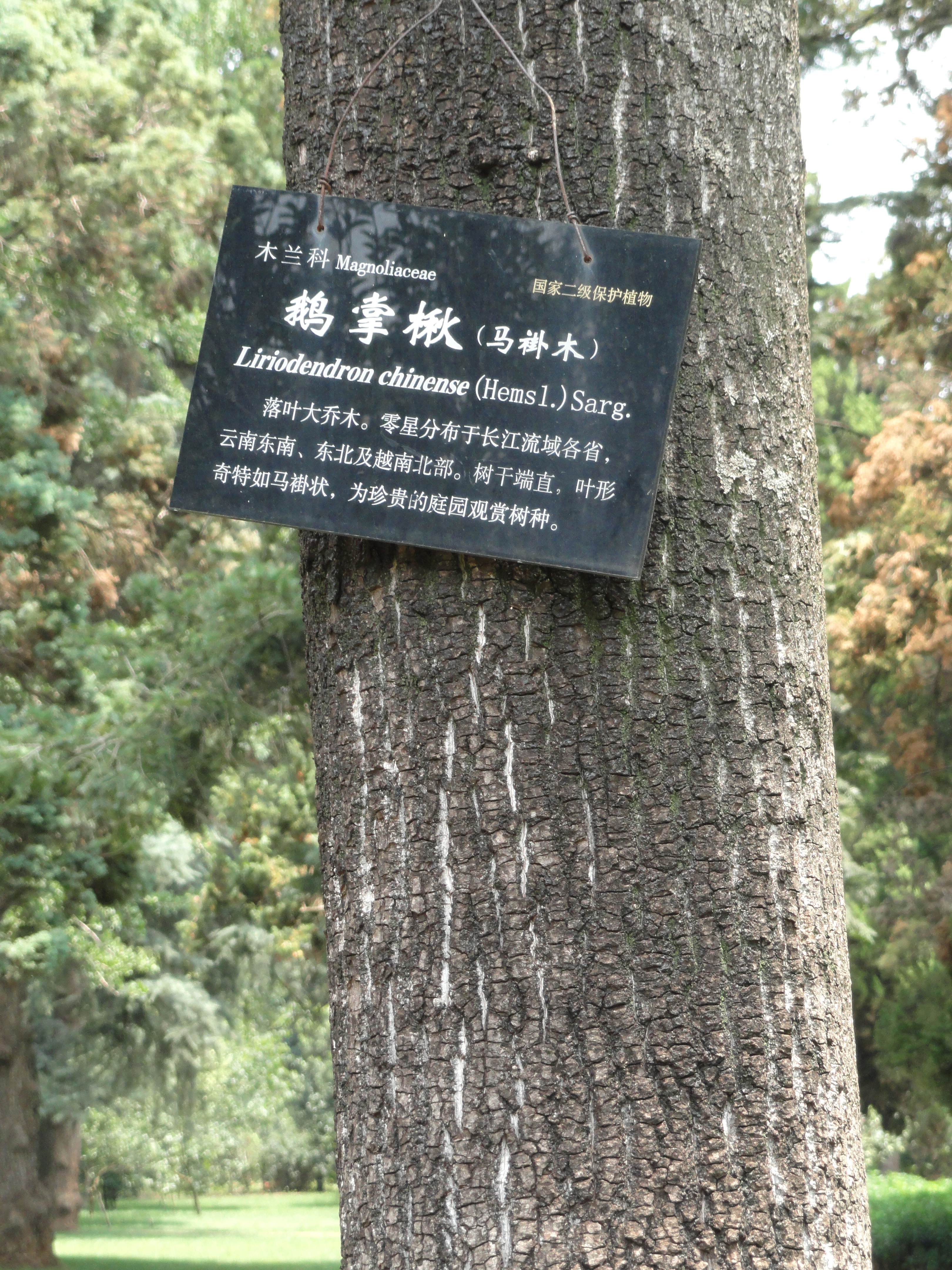
1.鹅掌楸LiriodendronchinenseSarg.
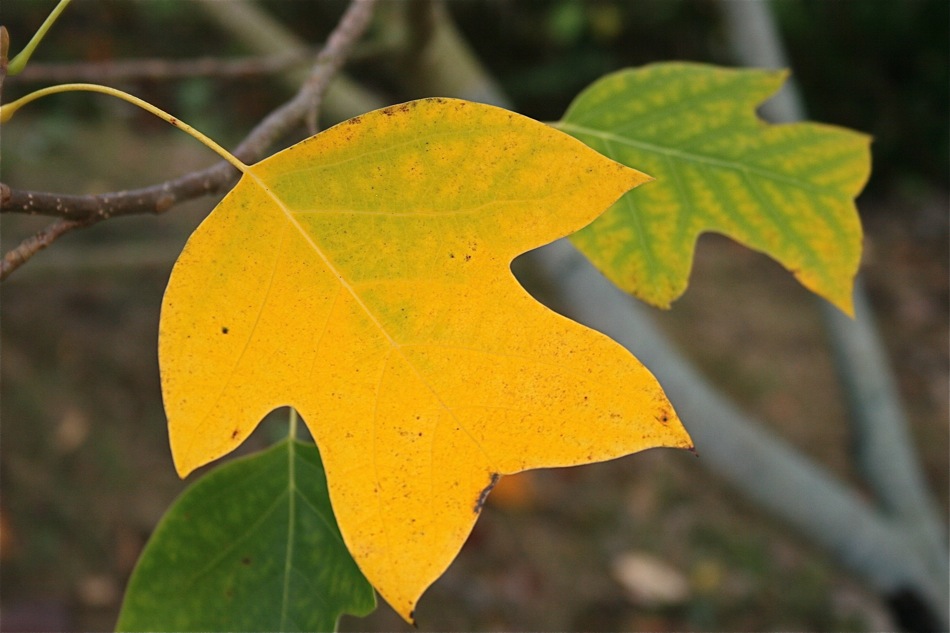
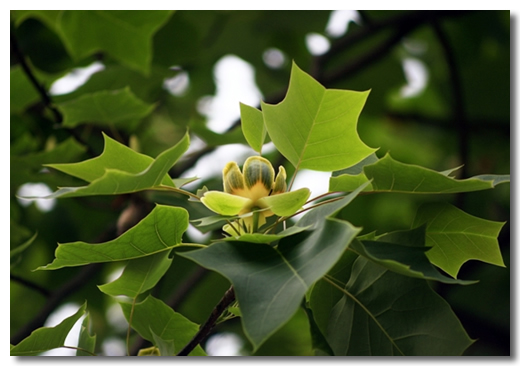
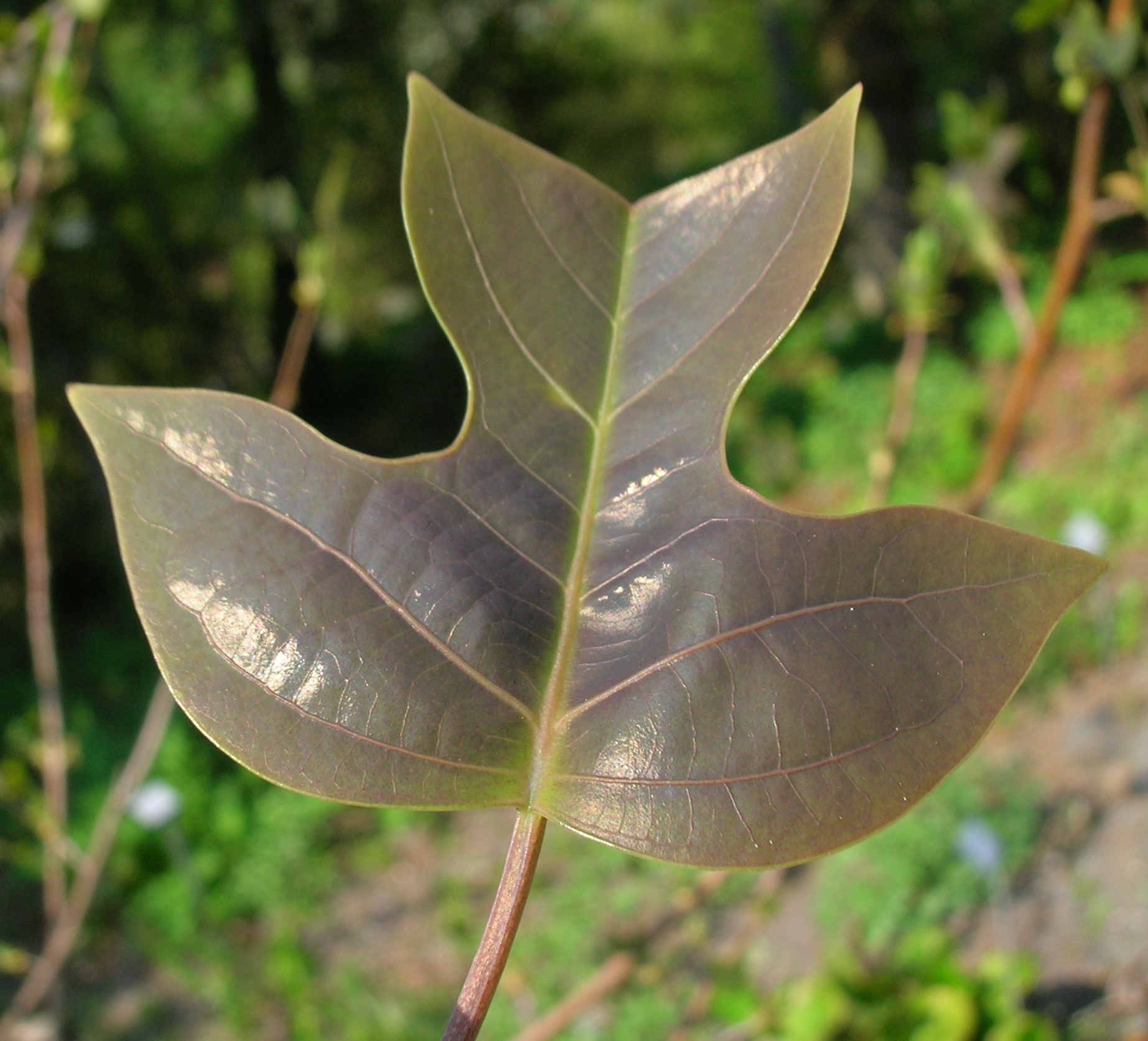
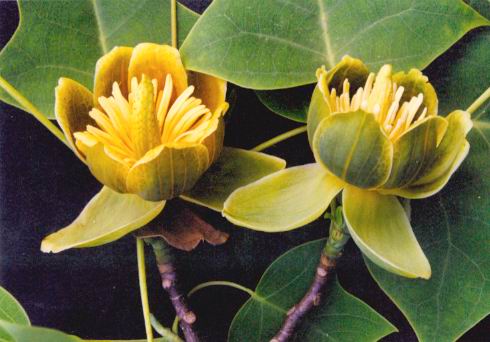
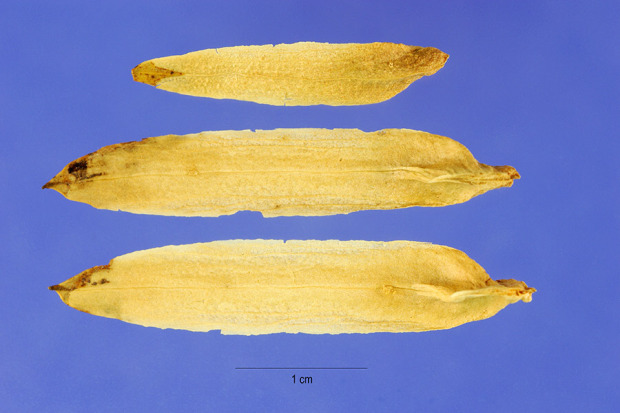
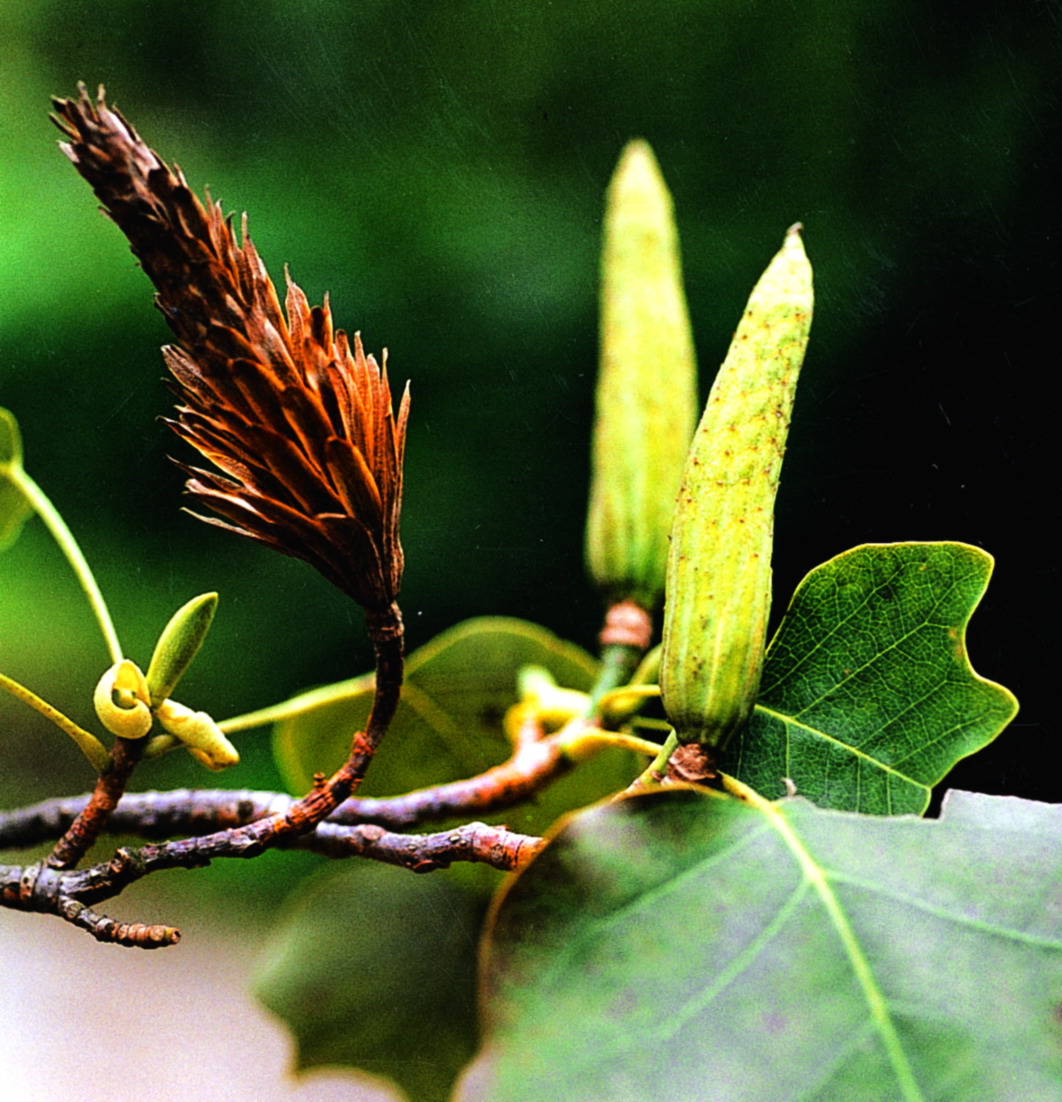
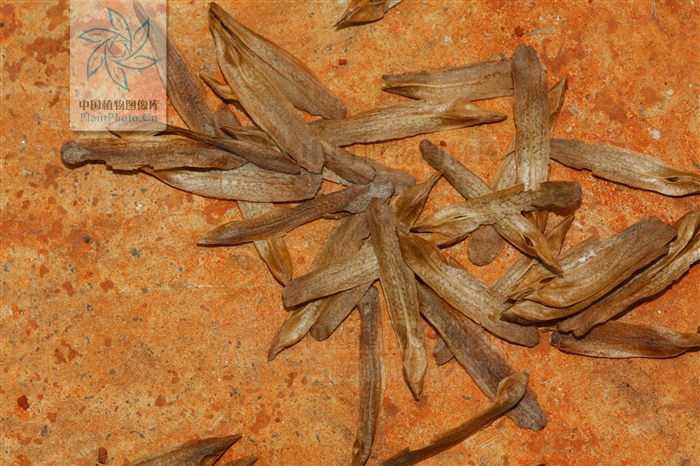
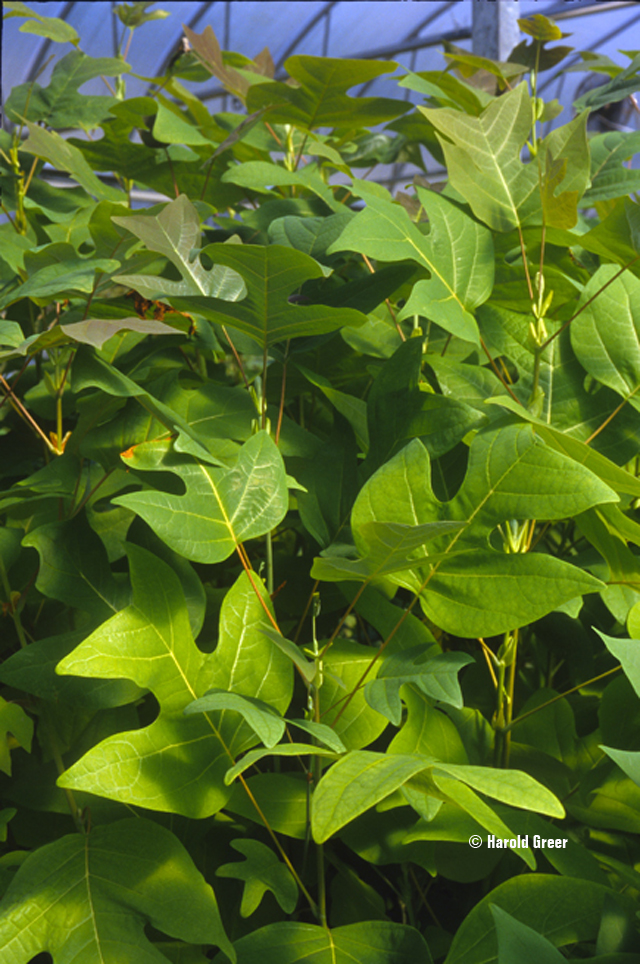
【形态】:落叶乔木,高达40m,胸径1m以上。树冠阔卵形。树皮灰色,浅纵裂。小枝灰褐色。叶互生,似马褂状,长12~375px,具长柄,近基部有1对侧裂片,上部平截,叶背苍白色,有乳头状白粉点。花杯状,黄绿色,外面绿色较多而内方黄色较多;花被片9,清香。聚合果纺锤形,翅状小坚果钝尖。花期5~6月,果熟期10~11月。
【分布】:主要生长在长江流域以南。
【习性】:中性偏阴。喜温暖湿润气候,可耐一15℃的低温。在湿润、深厚、肥沃疏松的酸|生和微酸眭土上生长良好,不耐干旱贫瘠,忌积水。树干大枝易受雪压、日灼危害。对二氧化硫有一定抗性。生长较快,寿命较长。
【繁殖】:播种,扦插繁殖。
【用途】:叶形奇特,秋叶金黄,树形端正挺拔,是珍贵的庭荫树和很有发展前途的行道树。可丛植草坪,列植园路,或与常绿针、阔叶树混交成风景林效果都好。也可在居民新村、街头绿地配置各种花灌木点缀秋景。
Liriodendron chinense is Asia's native species in the genus Liriodendron. This native of central and southern China grows in the provinces of Anhui, Guangxi, Jiangsu, Fujian, Guizhou, Hubei, Hunan, Jiangxi, Shaanxi, Zhejiang, Sichuan and Yunnan, and also locally in northern Vietnam. Protected populations occur in the Tianmushan National Reserve, Huangshan, Wuyi Shan, and Badagongshan Nature Reserve.
Liriodendron chinense
Common Name(s): Chinese Tulip Tree
Description
Best grown in moist, organically rich, well-drained loams in full sun. Tolerates part shade. May not be reliably winter hardy in the northern parts of USDA Zone 6.
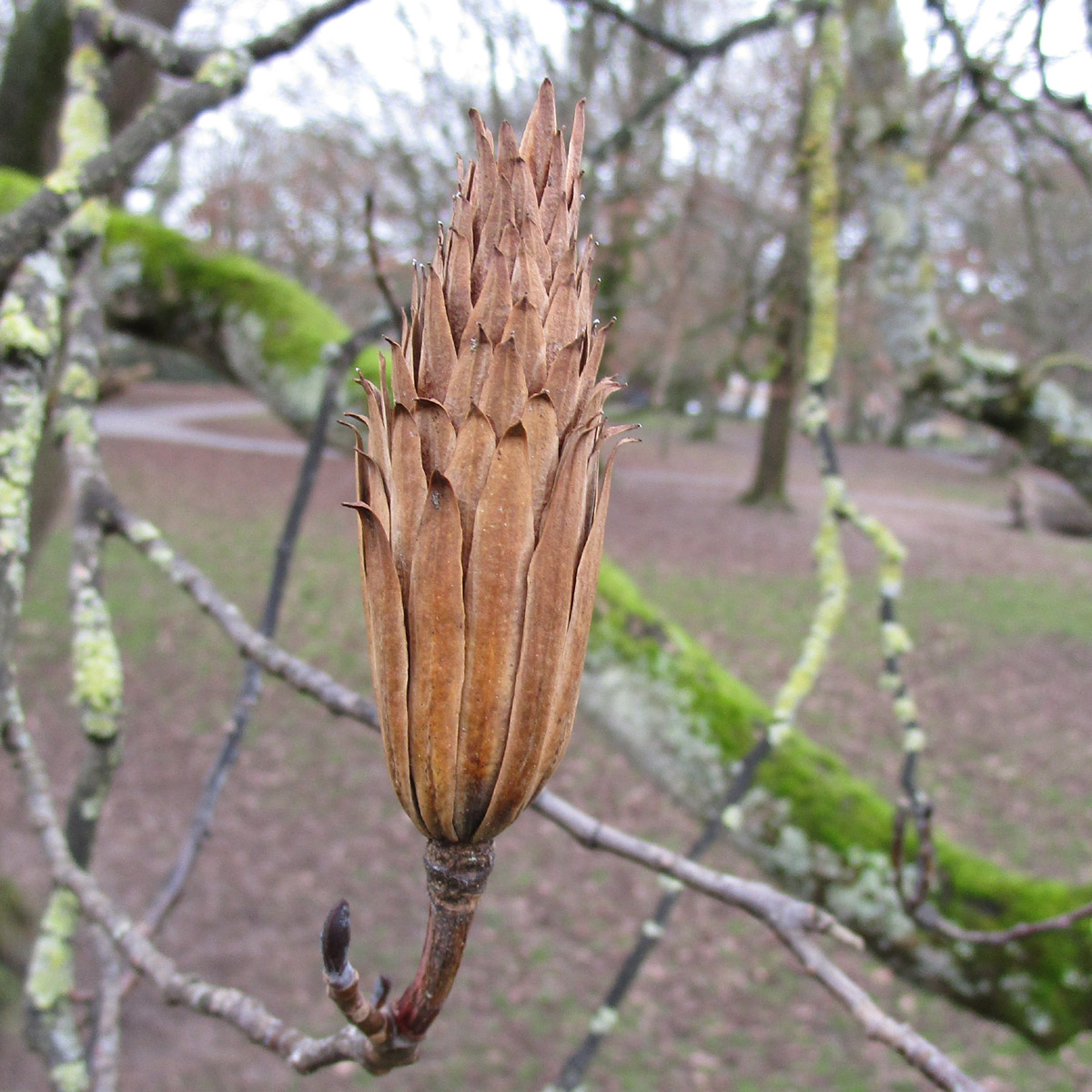
Liriodendron chinense, commonly called Chinese tulip tree, is a fast-growing, columnar tree that typically grows to 50-70’ tall. It is named for its cup-shaped, tulip-like flowers (same family as magnolias) that bloom in late spring to early summer. This tree is very similar to Liriodendron tulipifera (native to eastern North America), except it is denser, slightly smaller, has smaller flowers without orange banding, has more deeply lobed leaves and is not as cold hardy. Cup-shaped flowers (to 1.5” long) are olive green with yellow at the base. Flowers begin blooming in May. Flowers can go unnoticed on large trees because the flowers appear after the leaves are fully developed. Sometimes the flowers are first noticed when the attractive petals begin to fall to the ground. Flowers are followed by dry, scaly, oblong, cone-shaped, brown fruit clusters, each bearing numerous winged seeds. Clusters disintegrate when ripe. Lobed bright green leaves turn golden yellow in fall.
No serious insect or disease problems. Watch for aphids, leaf miners, scale, mealybugs, and borers. Potential diseases include verticillium wilt, mold, powdery mildew, and canker. Large aphid infestations result in honeydew secretions on the leaves that provide the growing medium for sooty mold. Trees are fast-growing and somewhat weak wooded, making them susceptible to limb breakage in high winds or from ice/snow. Shallow root system limits the types of plants that may be grown within the drip line.


2.北美鹅掌楸Liriodendron tulipifera L.
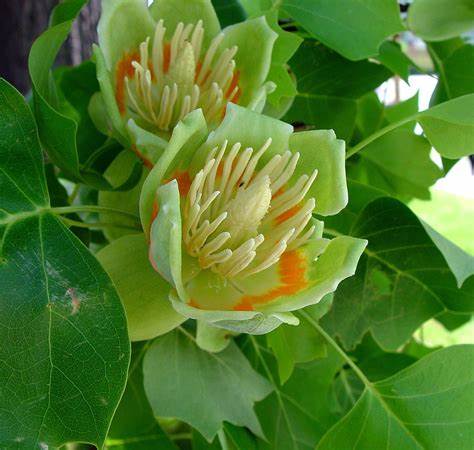
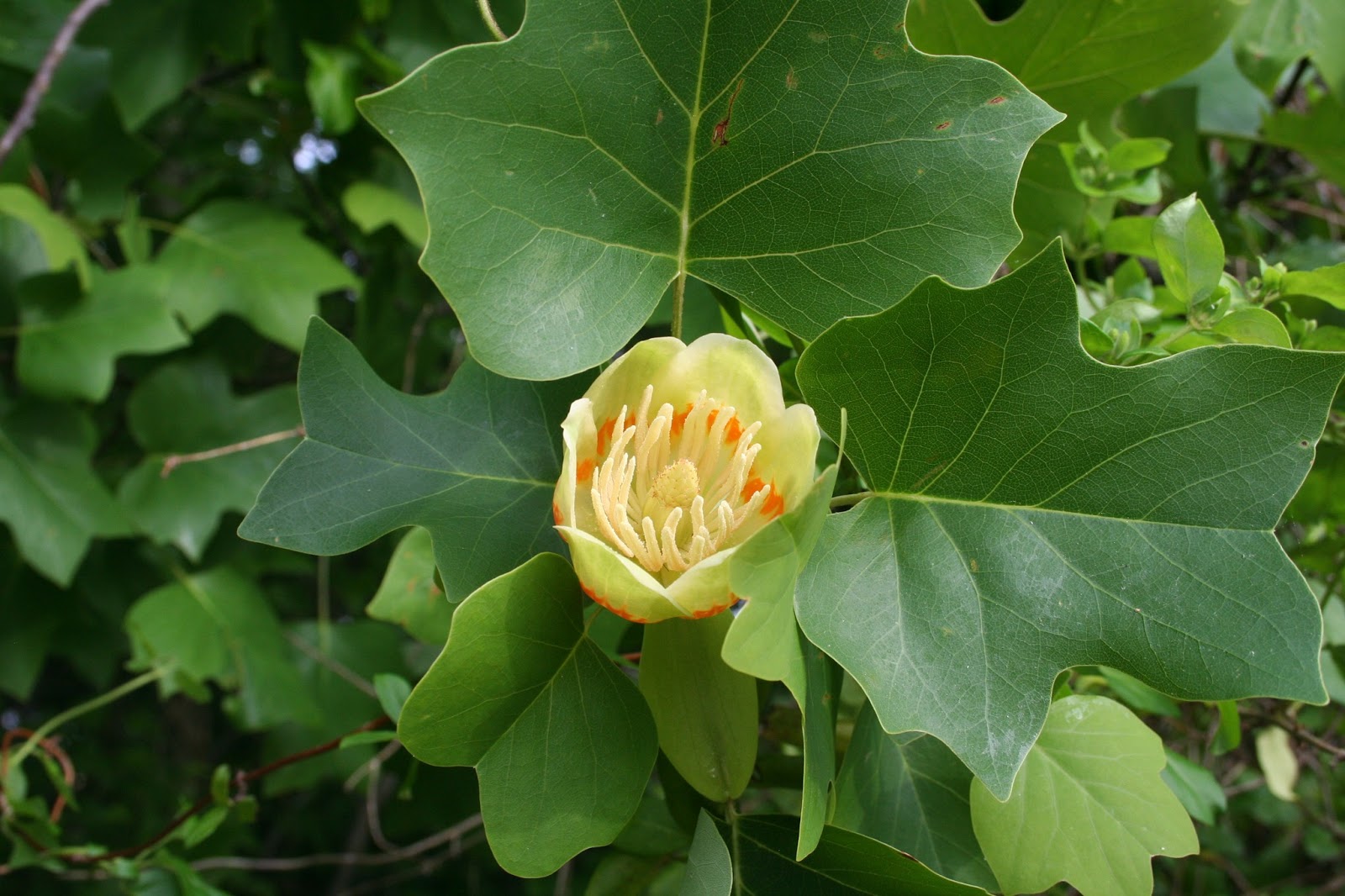
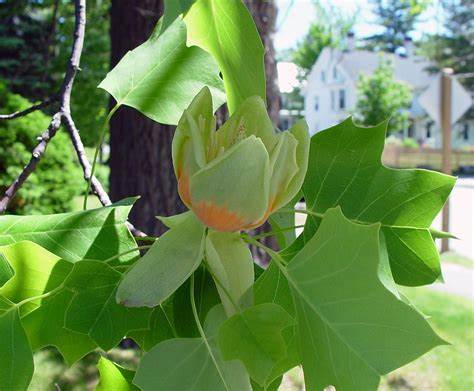
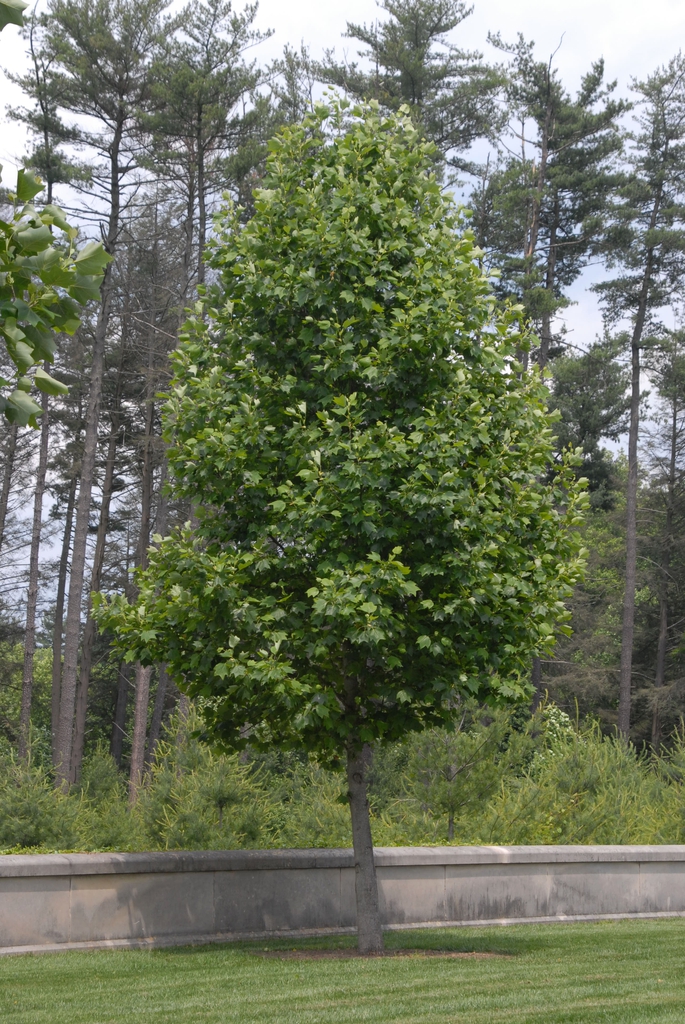
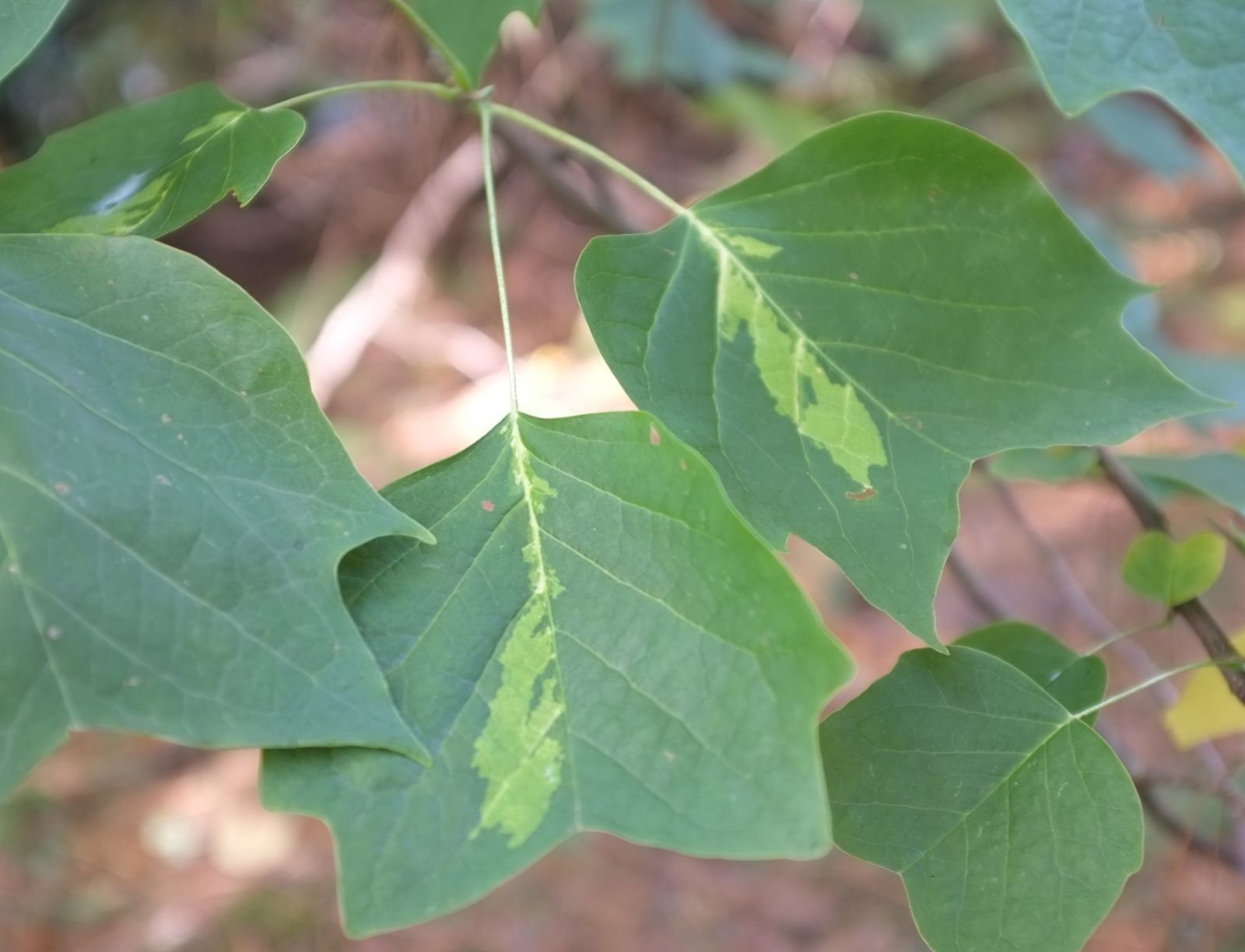
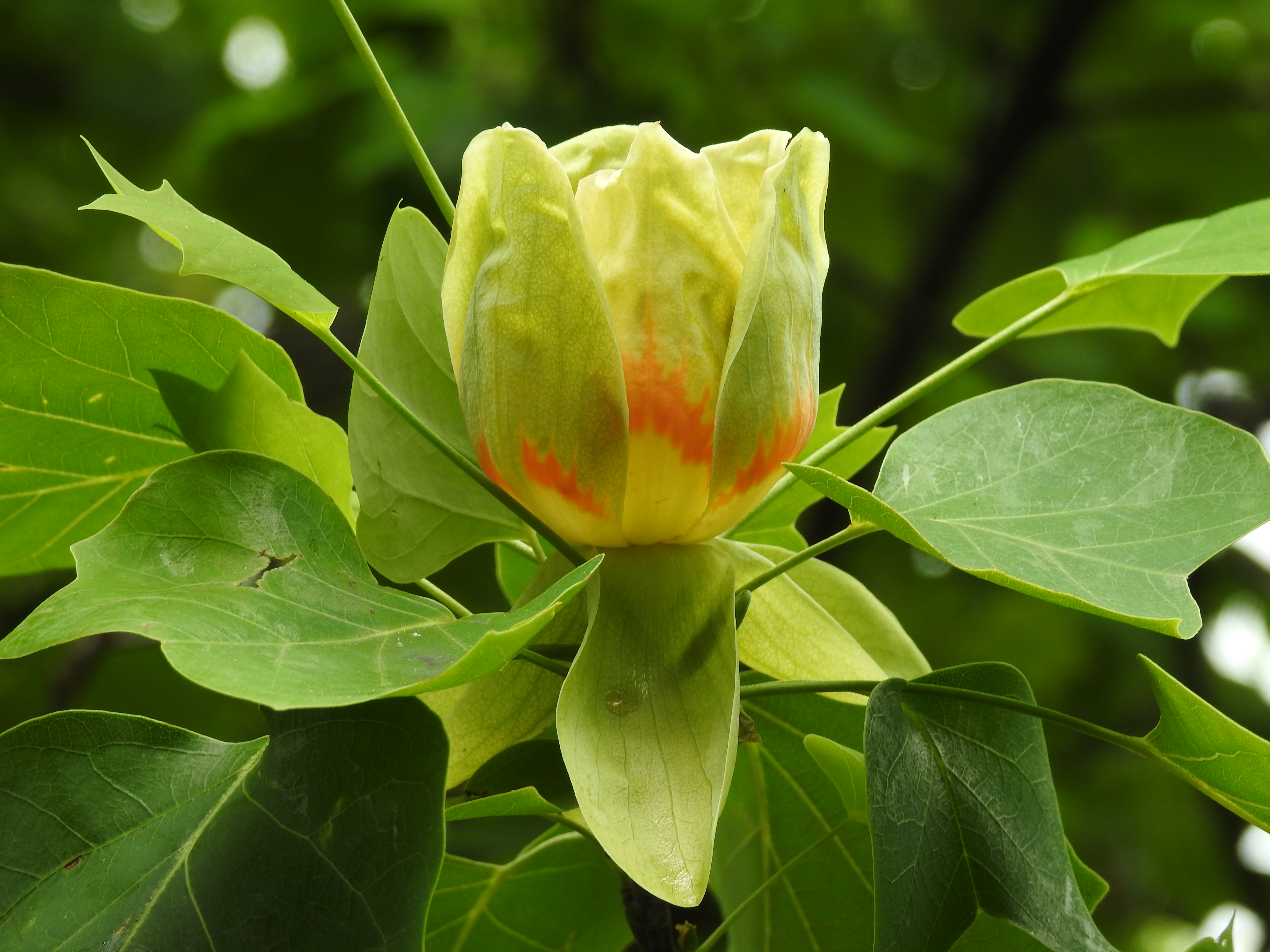
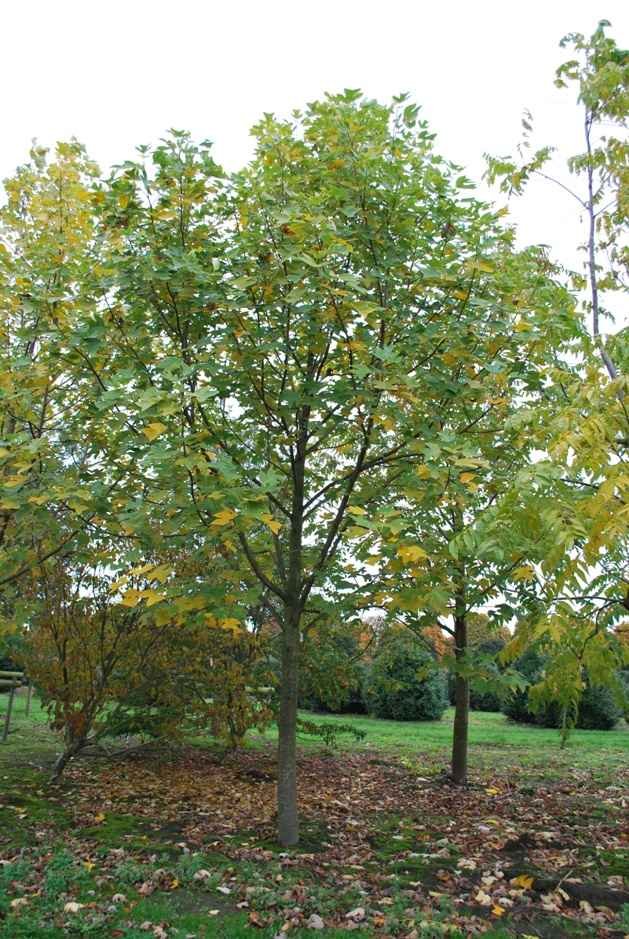
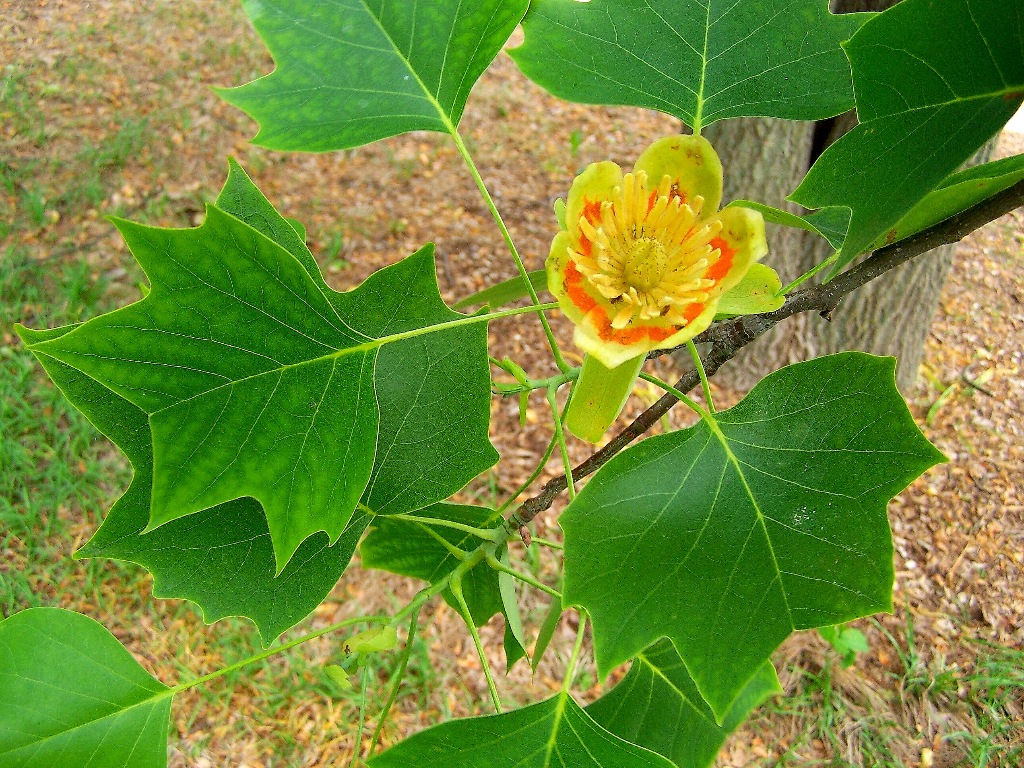
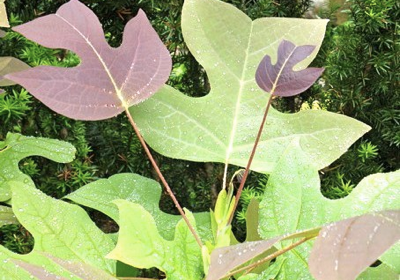
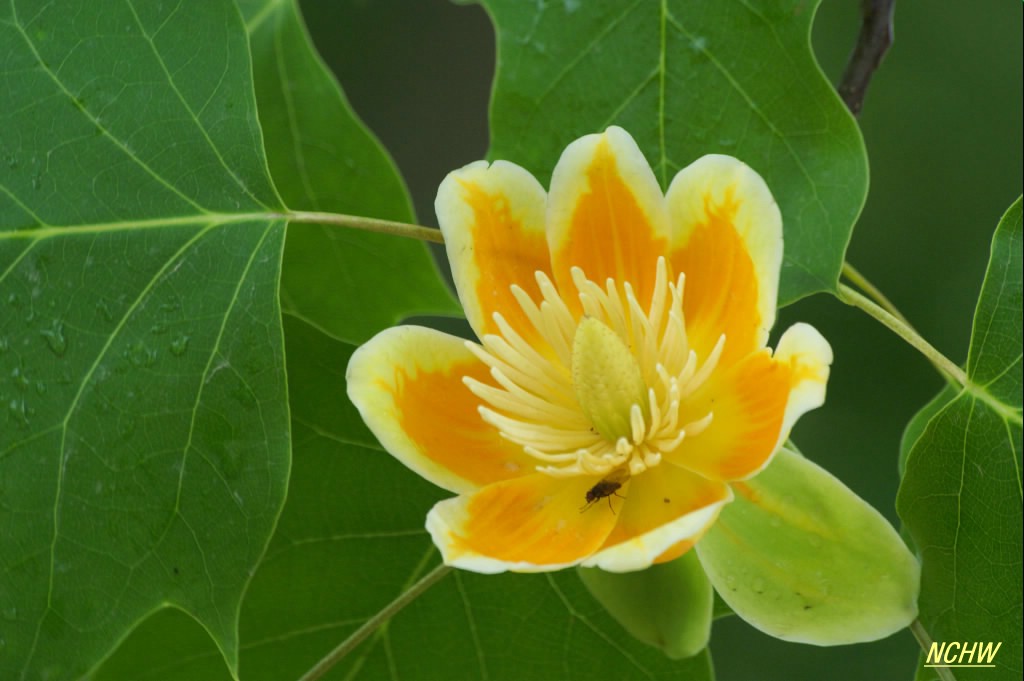
【形态】:落叶大乔木,株高60m,胸径3m,树冠广圆锥状。干皮光滑,小枝褐色。叶鹅掌形,或称马褂状,两侧各有1~3浅裂,先端近截形。花浅黄绿色,郁金香状,在内方近基部有显著的佛焰状橙黄色斑。
【品种】:杂种鹅掌楸L.tulipiferaXI.chinense,
花浅黄绿色,郁金香状。叶两侧各有1~3浅裂,先端近截形。
【分布】:原产北美,华东地区有栽培。
【习性】:以深厚、肥沃、排水良好的酸性和微酸性土壤为宜,喜温暖湿润和阳光充足的环境。耐寒,耐半阴,不耐干旱和水湿,冬季能耐一17℃低温。
【繁殖】:常用播种、扦插、压条繁殖。
【用途】:树形端正雄伟,叶形奇特典雅,花大而美丽,为世界珍贵树种之一。其黄色花朵形似杯状的郁金香,故欧洲人称之为“郁金香树”,是城市中极佳的行道树、庭荫树。无论丛植、列植或片植于草坪、公园入口处,均有独特的景观效果,对有害气体的抗性较强,也是工矿区绿化的优良树种之一。
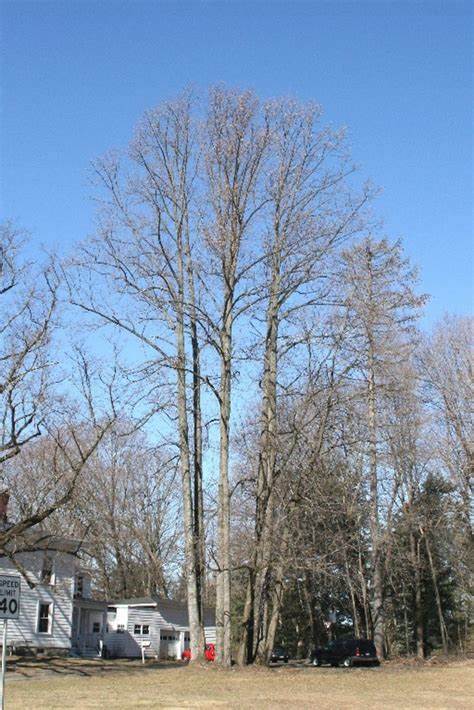
Liriodendron tulipifera—known as the tulip tree, American tulip tree, tulipwood, tuliptree, tulip poplar, whitewood, fiddletree, and yellow-poplar—is the North American representative of the two-species genus Liriodendron, and the tallest eastern hardwood. It is native to eastern North America from Southern Ontario and possibly southern Quebec to Illinois eastward to southwestern Massachusetts and Rhode Island, and south to central Florida and Louisiana. It can grow to more than 50 m in virgin cove forests of the Appalachian Mountains, often with no limbs until it reaches 25–30 m in height, making it a very valuable timber tree. The tallest individual at the present time is one called the Fork Ridge Tulip Tree at a secret location in the Smokey Mountains of North Carolina. Repeated measurements by laser and tape-drop have shown it to be 191' 10" in height. It is the tallest tree in eastern North America.
Description:
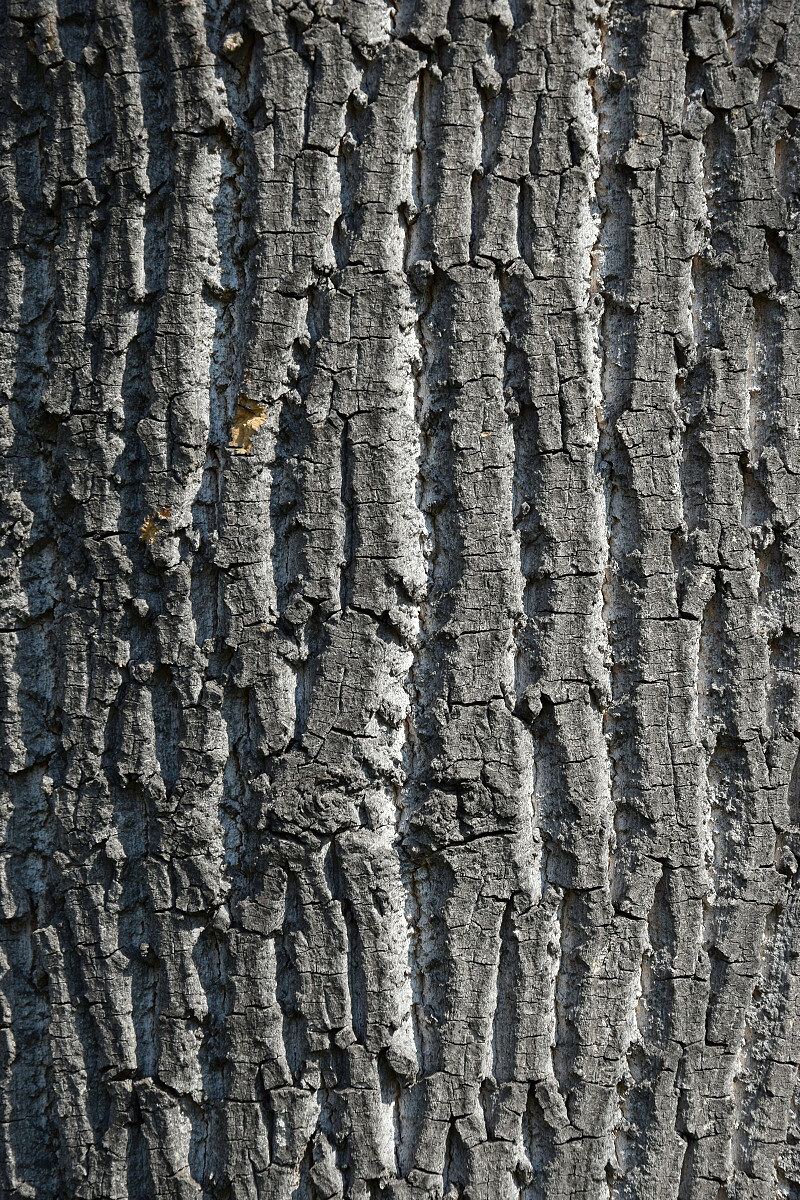
Liriodendron tulipifera, or Yellow Poplar, is a deciduous tree that may grow 90 to 120 feet tall and takes its name from its greenish-yellow heartwood and attractive tulip-like flowers. The tree has alternate, palmately veined, 4-lobed leaves with a smooth margin. The bark is smooth and dark green on young trees. As the tree ages, wide, white furrows that separate flat ridges develop. In late spring, 2.5-inch flowers with yellow-green petals and an orange corolla mature. The tree produces an aggregate of overlapping samaras which separate at maturity in the late fall. The trunks of mature trees may reach 4 to 6 feet in diameter, usually rising column-like with an absence of lower branches; the greenish-yellow heartwood does not develop until the tree reaches about 2 feet in diameter. It has been known to reach 200 feet in height with a trunk diameter of 8 to 10 feet. The crown is compact, pyramidal, and often tapers sharply at the top.