-
1
-
2 教学
蓼科POLYGONACEAE
1、草本稀灌木或小乔木。
2、茎直立,平卧、攀援或缠绕,通常具膨大的节,稀膝曲,具沟槽或条棱,有时中空。
3、叶为单叶,互生,稀对生或轮生,边缘通常全缘,有时分裂,具叶柄或近无柄;托叶通常联合成鞘状(托叶鞘),膜质,褐色或白色,顶端偏斜、截形或2裂,宿存或脱落。
4、花序穗状、总状、头状或圆锥状,顶生或腋生;花较小,两性,稀单性,雌雄异株或雌雄同株,辐射对称;花梗通常具关节;花被3-5深裂,覆瓦状或花被片6成2轮,宿存,内花被片有时增大,背部具翅、刺或小瘤;雄蕊6-9,稀较少或较多,花丝离生或基部贴生,花药背着,2室,纵裂;花盘环状,腺状或缺, 子房上位,1室,心皮通常3,稀2-4, 合生,花柱2-3,稀4, 离生或下部合生,柱头头状、盾状或画笔状,胚珠1, 直生,极少倒生。
5、瘦果卵形或椭圆形,具3棱或双凸镜状,极少具4棱,有时具翅或刺,包于宿存花被内或外露;胚直立或弯曲,通常偏于一侧,胚乳丰富,粉末状。
约50属,1150种,世界性分布,但主产于北温带,少数分布于热带,我国有13属,235种,37变种,产于全国各地。
本科有多种经济植物,大黄是我国传统的中药材,何首乌是沿用已久的中药,拳参、草血竭、赤胫散、金荞麦是民间常用的中草药,荞麦、苦荞麦是粮食作物,蓼蓝可作染料,有些种类是蜜源、观赏植物。\
The Polygonaceae are a family of flowering plants known informally as the knotweed family or smartweed—buckwheat荞麦 family in the United States. The name is based on the genus Polygonum, and was first used by Antoine Laurent de Jussieu in 1789 in his book, Genera Plantarum. The name may refer to the many swollen nodes the stems of some species have, being derived from Greek, poly meaning 'many' and gony meaning 'knee' or 'joint'. Alternatively, it may have a different derivation, meaning 'many seeds'.
一.荞麦属Fagopyrum Mill.
一年生或多年生草本,稀半灌木。茎直立,无毛或具短柔毛。叶三角形、心形、宽卵形、箭形或线形;托叶鞘膜质,偏斜,顶端急尖或截形。花两性,花序总状或伞房状;花被5深裂,果时不增大;雄蕊8, 排成2轮,外轮5, 内轮3;花柱3, 柱头头状,花盘腺体状。瘦果具3棱,比宿存花被长。
本属约有15种,广布于亚洲及欧洲。我国有10种1变种;有2种为栽培种。南北各省区均有。
本属中的荞麦、苦荞麦为粮食作物,金荞麦的块根供药用,清热解毒,排脓去瘀。
1.苦荞麦Fagopyrum tataricum (L.)
一年生草本。茎直立,高30-70厘米,分枝,绿色或微逞紫色,有细纵棱,一侧具乳头状突起,叶宽三角形,长2-7厘米,两面沿叶脉具乳头状突起,下部叶具长叶柄,上部叶较小具短柄;托叶鞘偏斜,膜质,黄褐色,长约5毫米。花序总状,顶生或腋生,花排列稀疏;苞片卵形,长2-3毫米,每苞内具2-4花,花梗中部具关节;花被5深裂,白色或淡红色,花被片椭圆形,长约2毫米;雄蕊8, 比花被短;花柱3,短,柱头头状。瘦果长卵形,长5-6毫米,具3棱及3条纵沟,上部棱角锐利,下部圆钝有时具波状齿,黑褐色,无光泽,比宿存花被长。花期6-9月,果期8-10月。
我国东北、华北、西北、西南山区有栽培,有时为野生。生田边、路旁、山坡、河谷,海拔500-3900米。分布于亚洲、欧洲及美洲。
种子供食用或作饲料。根供药用,理气止痛,健脾利湿。
Fagopyrum tataricum, also known as Tartary buckwheat, green buckwheat, ku qiao, Tatar buckwheat, or bitter buckwheat, is a domesticated food plant in the genus Fagopyrum in the family Polygonaceae. With another species in the same genus, common buckwheat, it is often counted as a cereal, but unlike the true cereals the buckwheats are not members of the grass family. Thus, they are not related to wheat.
The Profile of Fagopyrum tataricum Cultivation
Fagopyrum tataricum originated in the southwest of China, Asia, where it has a long history of cultivation. Nowadays, China is a country with large-scale cultivation of F. tataricum, which ranks number one in the world for cultivated area and production, with 200,000–300,000 hm2 of annual cultivated area and 300,000–400,000 t of total production. The major production provinces of F. tataricum in China include Yunnan, Sichuan, Guizhou, and Chongqing, which are located in the southwest of China. But F. tataricum cultivars and/or wild F. tataricum were also distributed in other provinces, such as Gansu, Guangxi, Hebei, Hubei, Hunan, Qinghai, Shaanxi, Shanxi, Tibet, Sinkiang, Jilin, Liaoning, and Heilongjiang. Among the countries in Asia, Nepal, Bhutan, Pakistan, India, Afghanistan, Burma, and other South Asian countries there is also a long history of cultivating F. tataricum, which includes both cultivars and wild species. Moreover, Kazakhstan, Kyrgyzstan, Mongolia, Tajikistan, and Russia also have small-scale cultivation of F. tataricum. In recent years, F. tataricum has also been introduced to Japan, South Korea, and some countries in Europe and North America for cultivation.
Although F. tataricum can grow at altitudes of 400–4400 m, it is usually planted in the frigid alpine areas and the highland regions with altitudes of 1500–3000 m, due to its remarkable adaptability. F. tataricum belongs to the short-day crop, whose reproductive growth can be accelerated by short-light induction to complete the lifecycle in shorter time. Its growing days are about 60–110 days with a normal per-hectare yield of 900–2250 kg and a maximum per-hectare yield of 4500 kg.
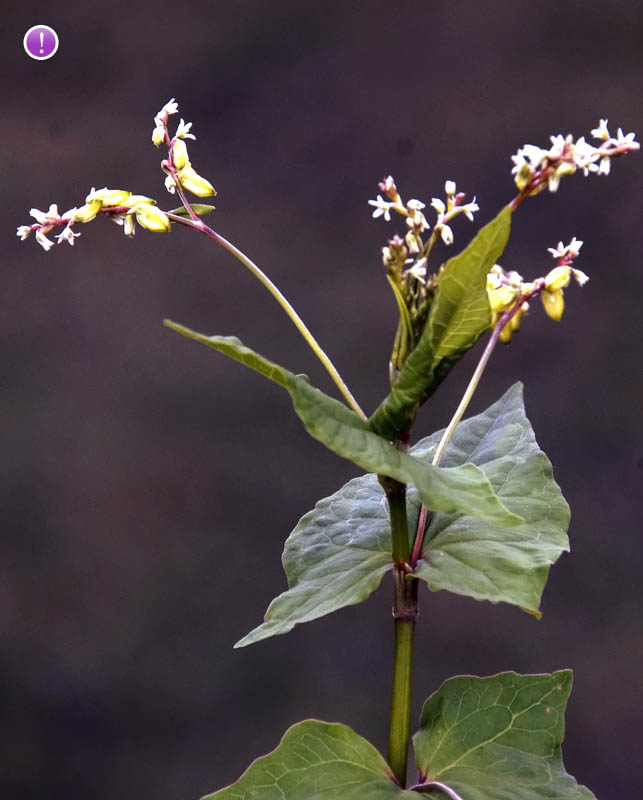
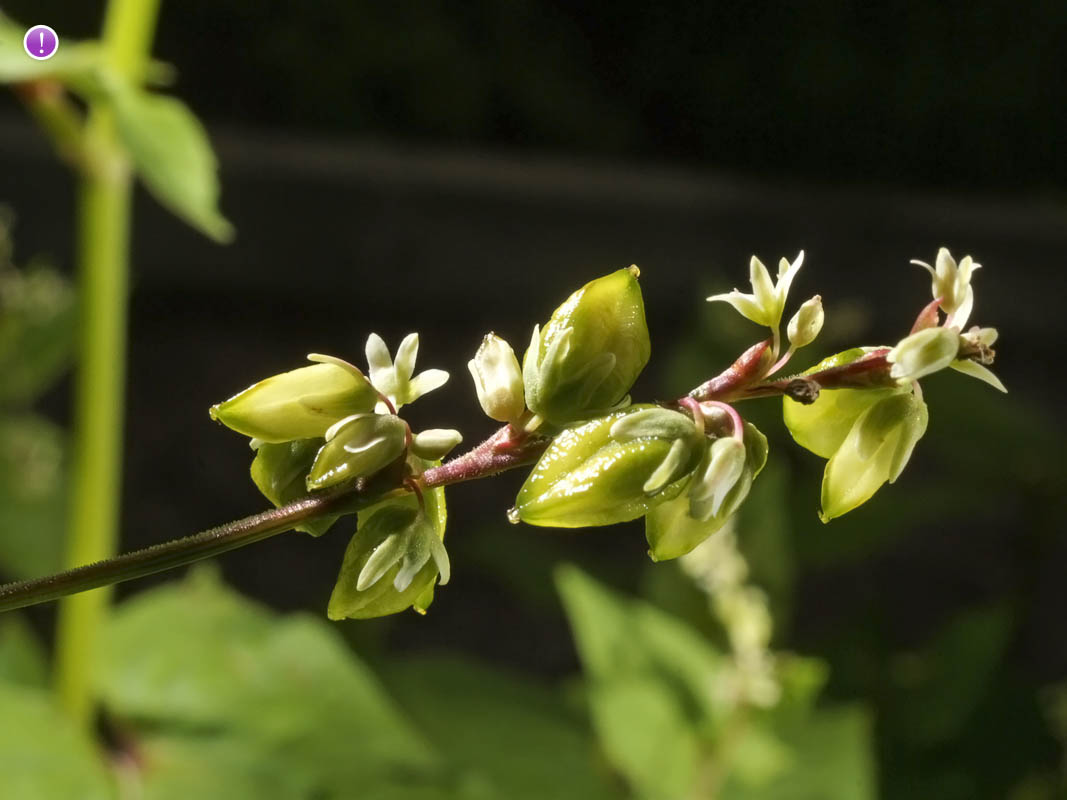
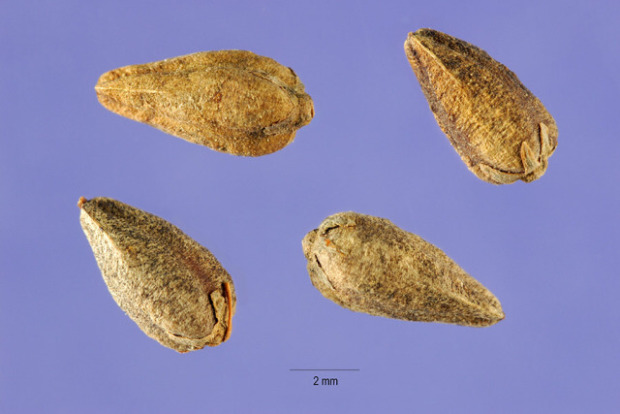
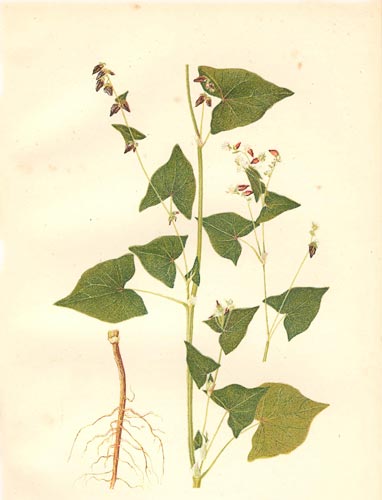
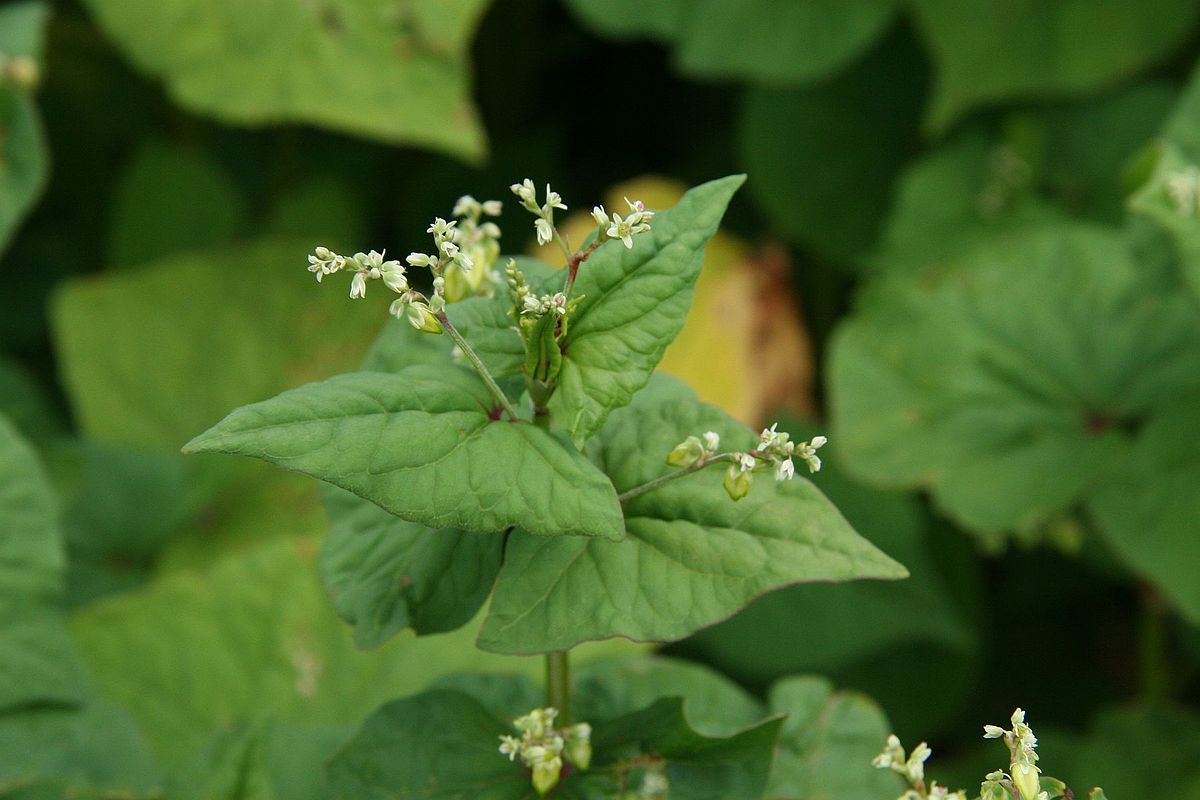
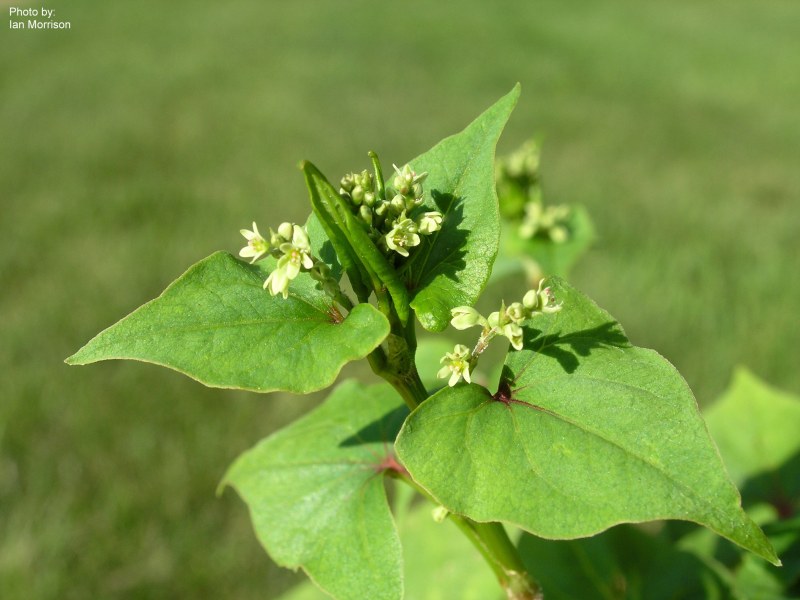
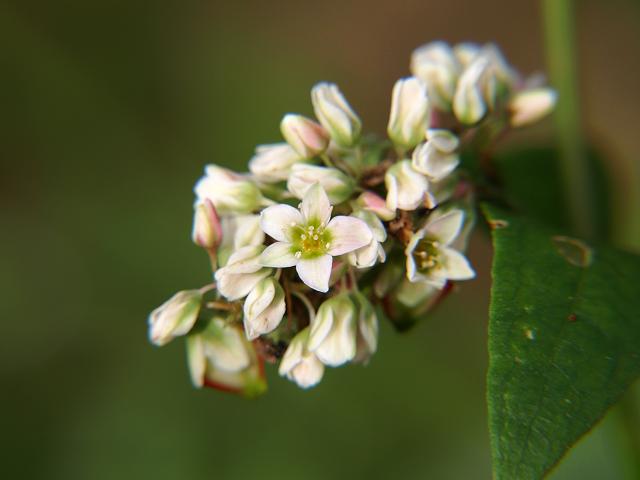
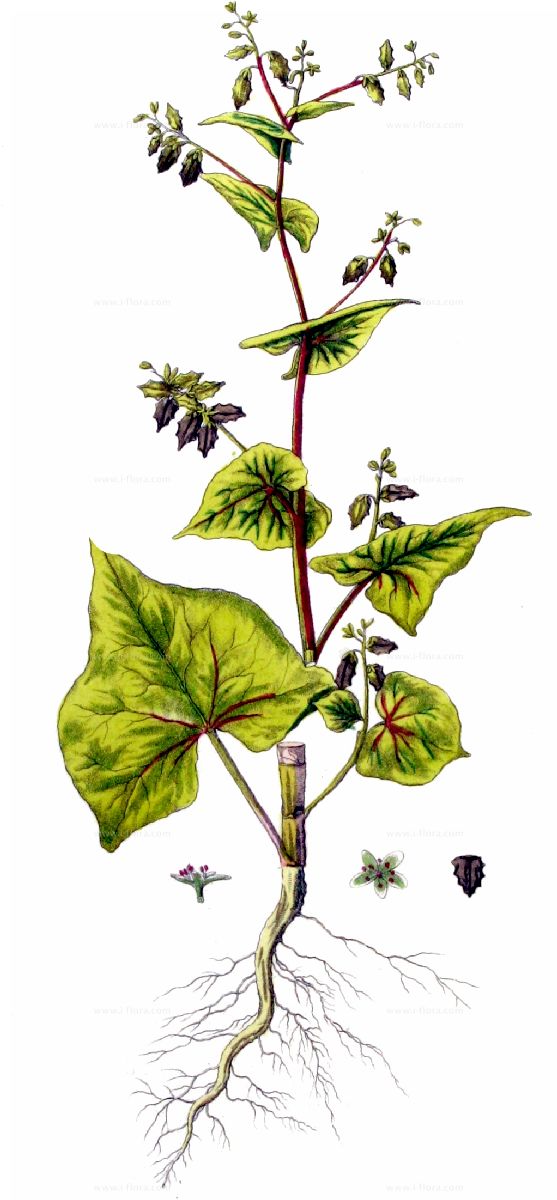
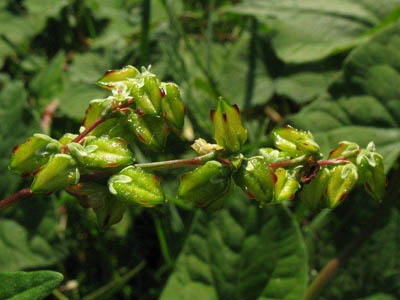
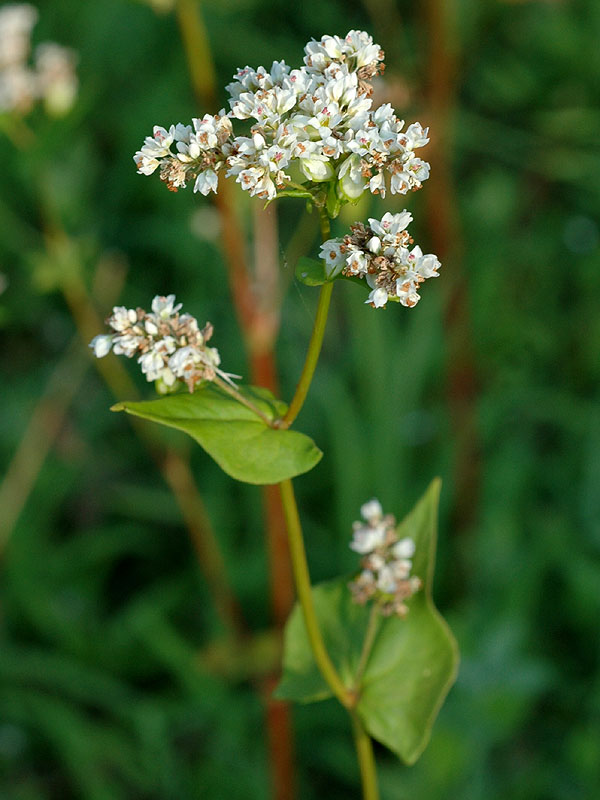
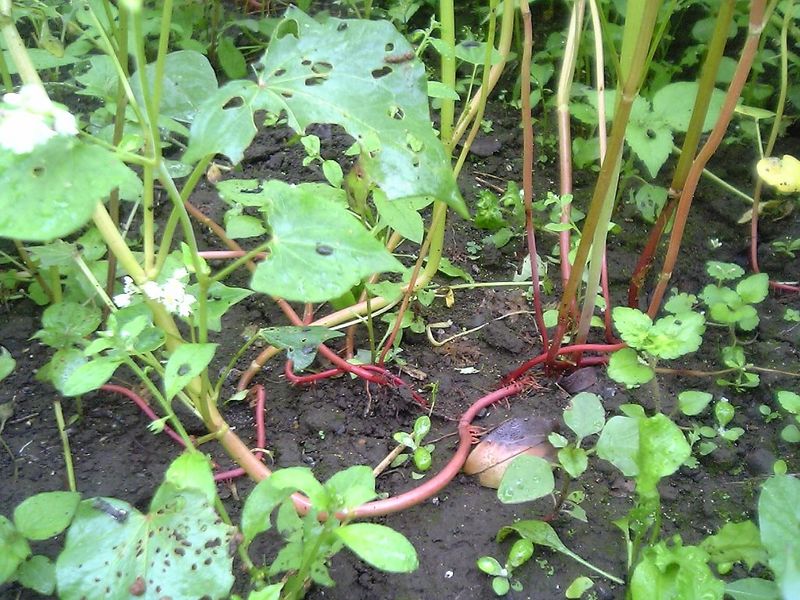
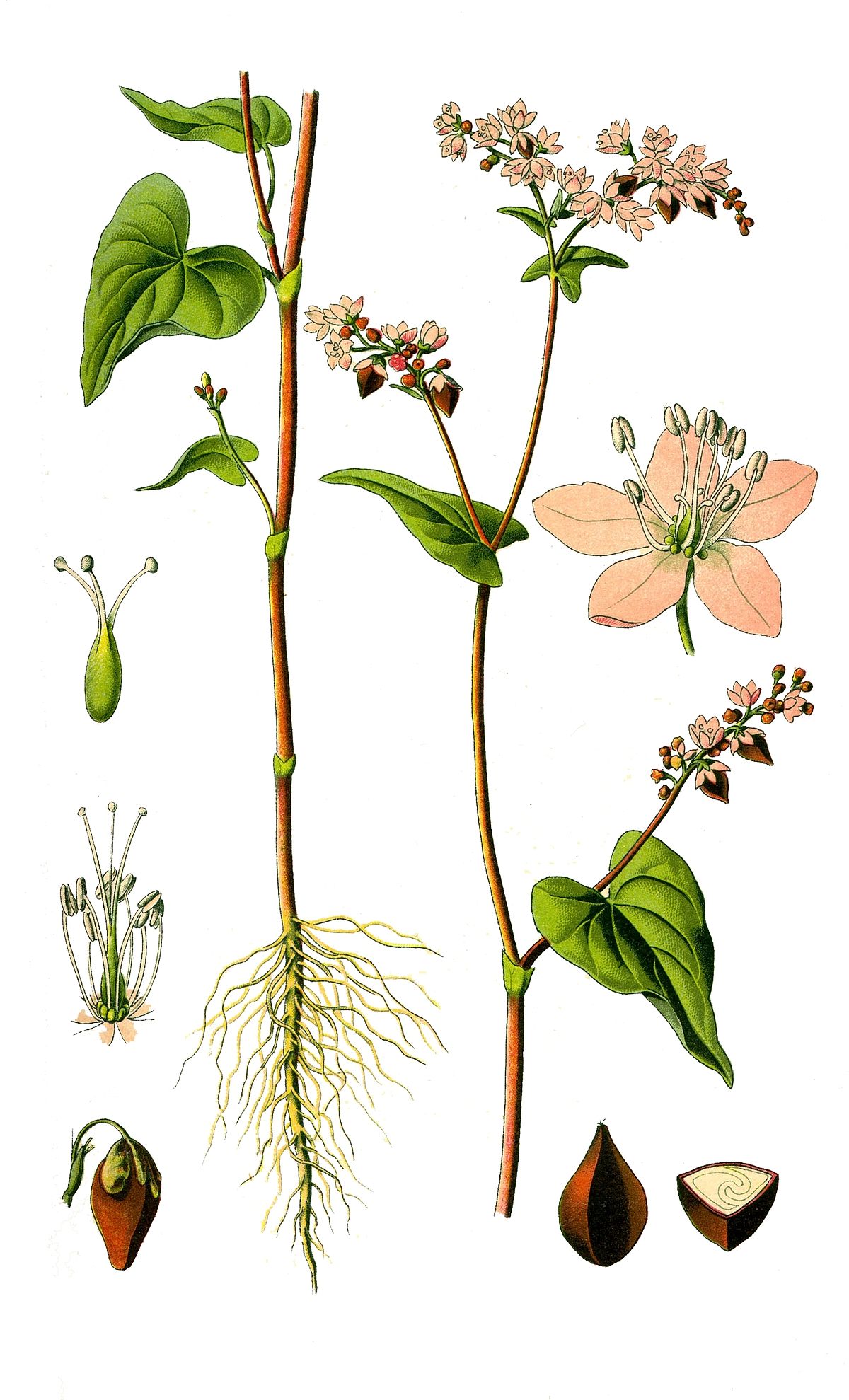
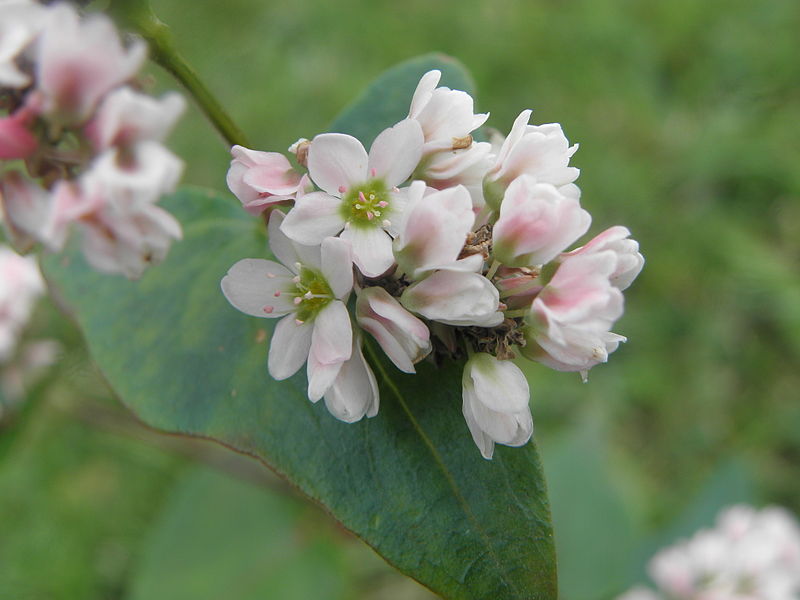
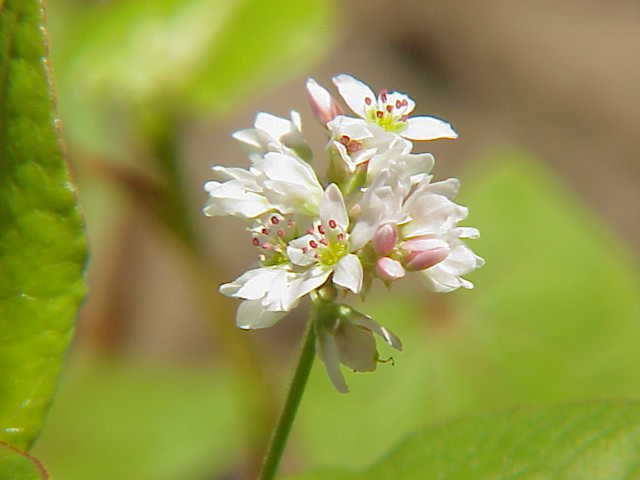
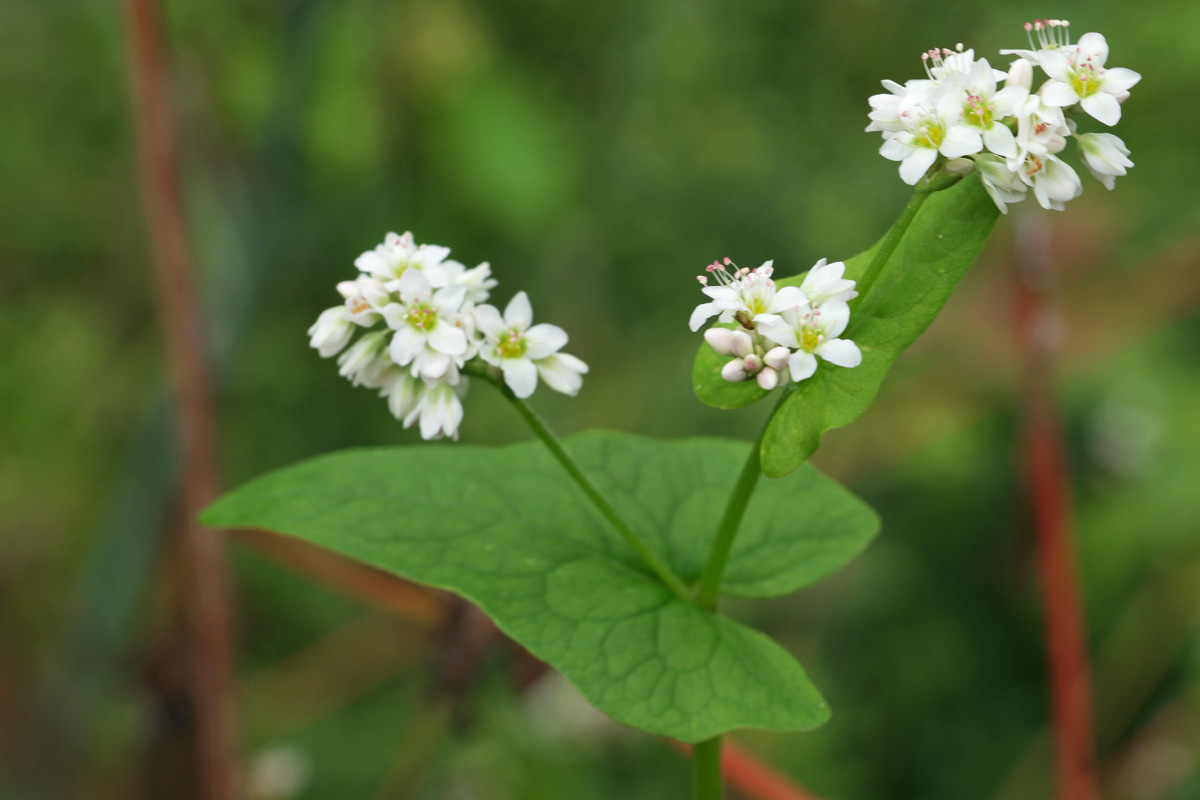
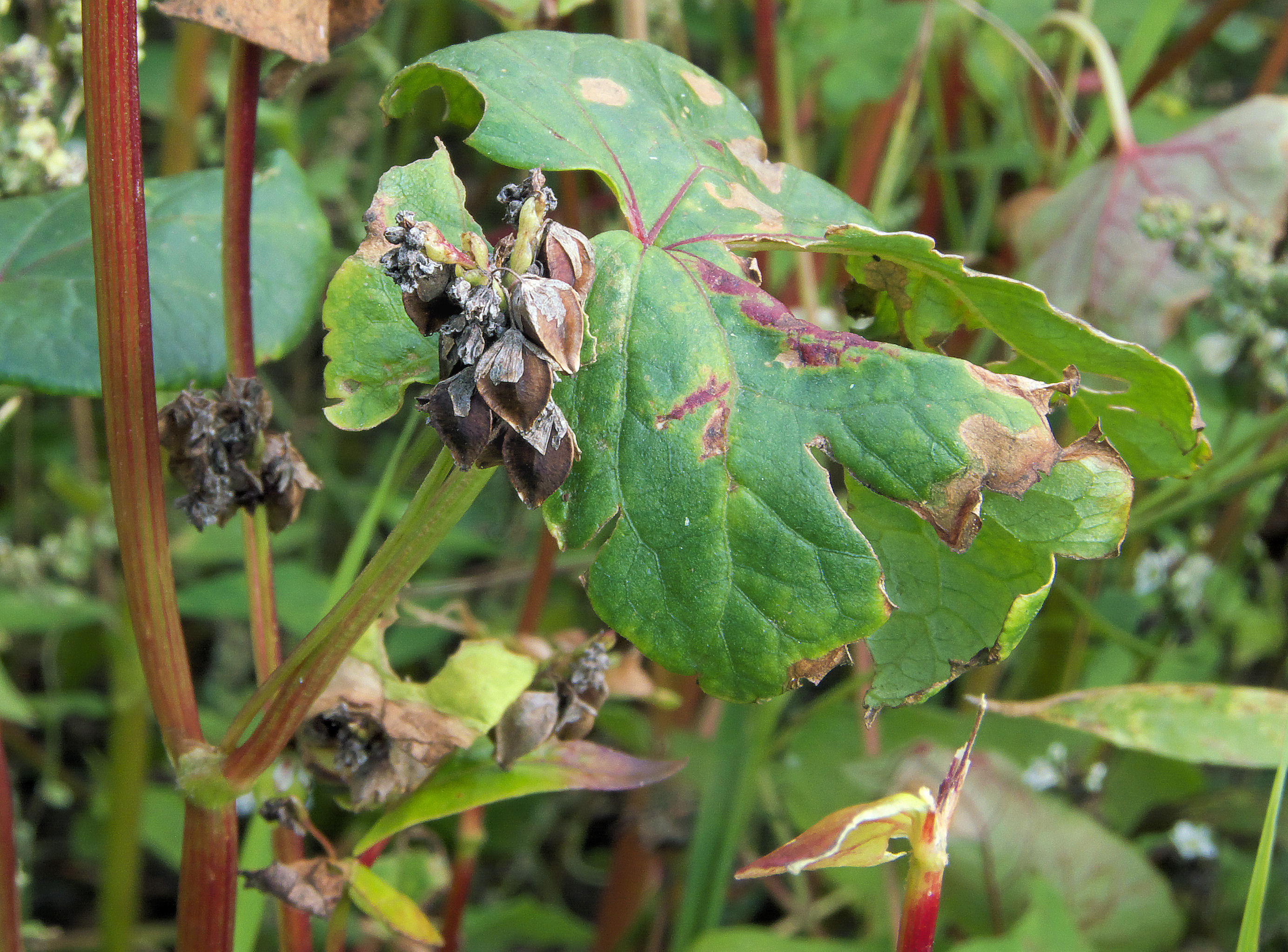
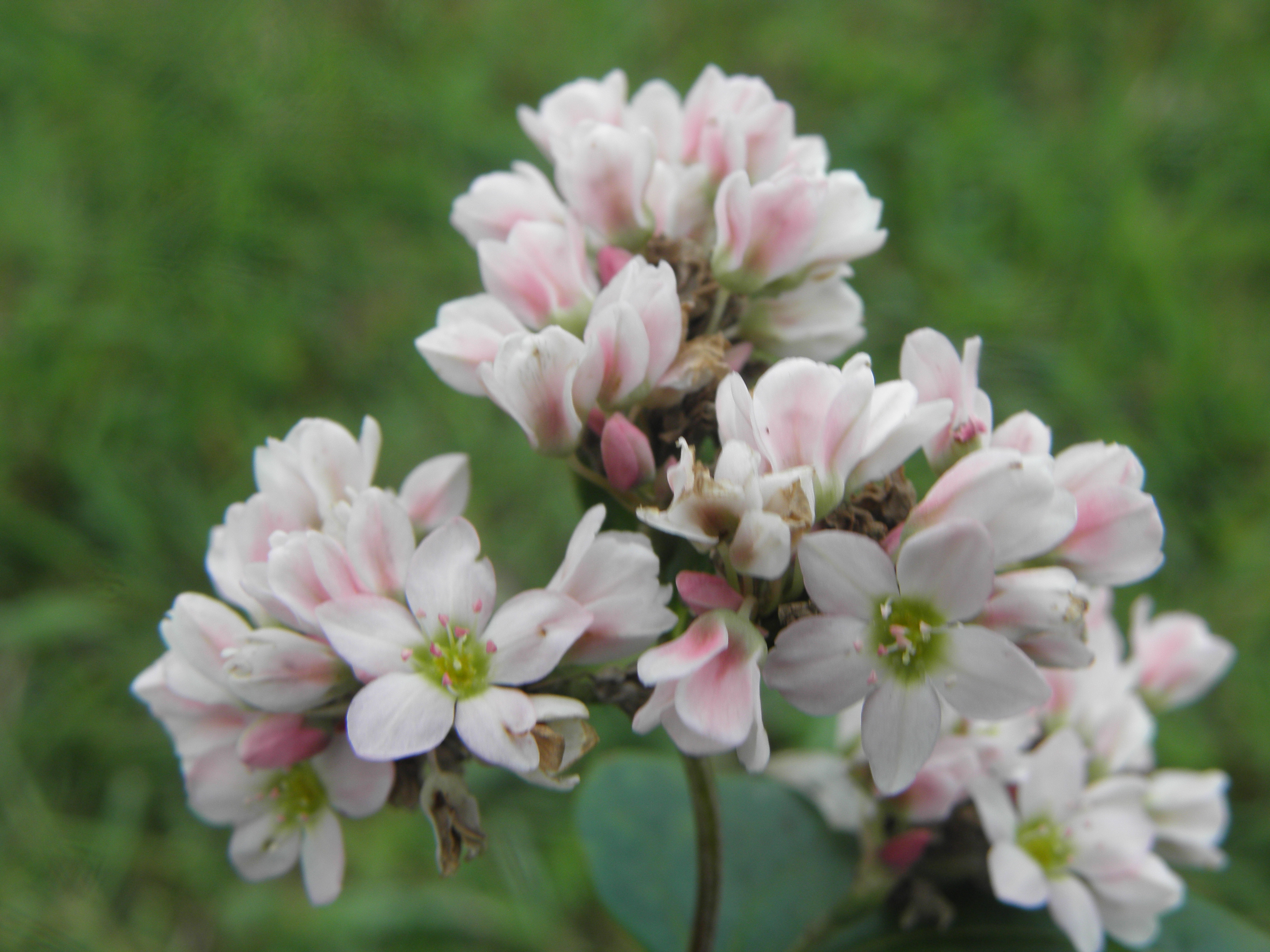
2.荞麦(本草纲目)甜荞 Fagopyrum esculentum Moench,
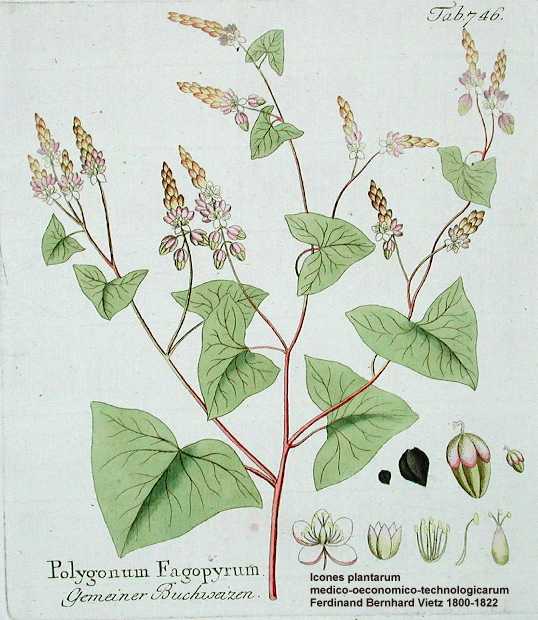
一年生草本。茎直立,高30-90厘米,上部分枝,绿色或红色,具纵棱,无毛或于一侧沿纵棱具乳头状突起。
叶三角形或卵状三角形,长2.5-7厘米,宽2-5厘米,顶端渐尖,基部心形,两面沿叶脉具乳头状突起;下部叶具长叶柄,上部较小近无梗;托叶鞘膜质,短筒状,长约5毫米,顶端偏斜,无缘毛,易破裂脱落。
花序总状或伞房状,顶生或腋生,花序梗一侧具小突起;苞片卵形,长约2.5毫米,绿色,边缘膜质,每苞内具3-5花;花梗比苞片长,无关节,花被5深裂,白色或淡红色,花被片椭圆形,长3-4毫米;雄蕊8,比花被短,花药淡红色;花柱3,柱头头状。
瘦果卵形,具3锐棱,顶端渐尖,长5-6毫米,暗褐色,无光泽,比宿存花被长。花期5-9月,果期6-10月。
我国各地有栽培,有时逸为野生。生荒地、路边。亚洲、欧洲有栽培。
种子含丰富淀粉,供食用;为蜜源植物;全草入药,治高血压、视网膜出血、肺出血。
The genus Fagopyrum is in the flowering plant family Polygonaceae. It includes some important food plants, such as F. esculentum and F. tataricum. The genus is native to the Indian subcontinent, much of Indochina, and central and southeastern China. Species have been widely introduced elsewhere, throughout the Holarctic and parts of Africa and South America.
Description
Buckwheat is a quick-growing edibile summer annual in the Polygonaceae family. Though not a legume谷物, is an excellent cover crop肥田作物. The seeds germinate quickly, within 3 to 4 days of sowing and when harvested are edbile as a grain. When densely planted it efectively supresses weeds and supports a variety of beneficial insects, including honeybees. The flowers appear quickly on new plants and are long-lasting in bouquets.芳香
二.何首乌属Fallopia Adans.
一年生或多年生草本,稀半灌木。茎缠绕;叶互生、卵形或心形,具叶柄;托叶鞘筒状,顶端截形或偏斜。花序总状或圆锥状,顶生或腋生;花两性,花被5深裂,外面3片具翅或龙骨状突起,果时增大,稀无翅无龙骨状突起;雄蕊通常8, 花丝丝状,花药卵形;子房药卵形,具3棱,花柱3, 较短,柱头头状。瘦果卵形,具3棱,包于宿存花被内。
约20种,主要分布于北半球的温带。我国有7种,2变种,产于由东北到西北、西南的各省区。
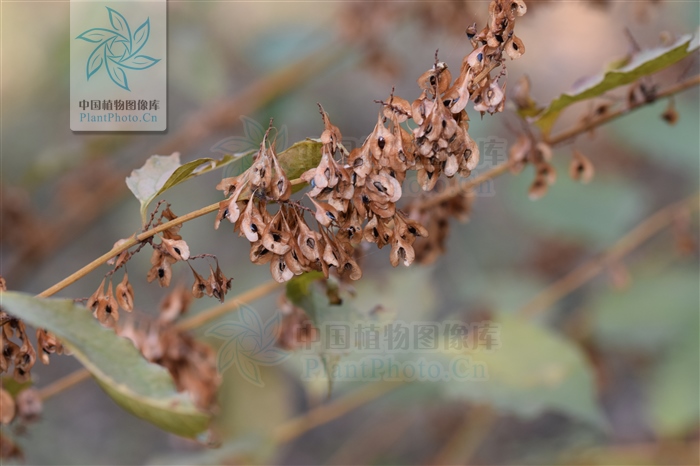
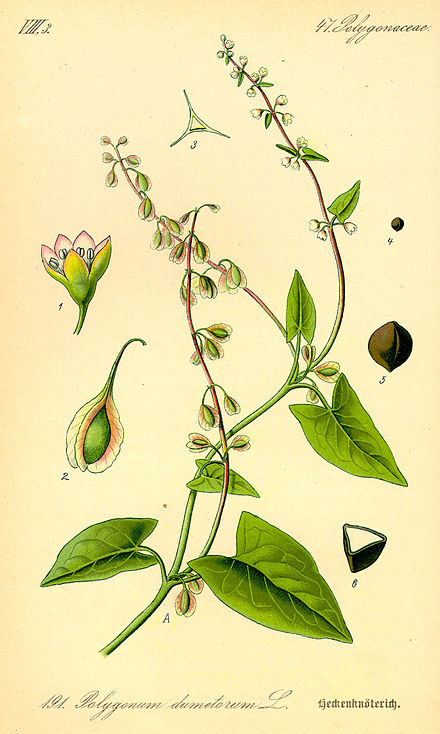
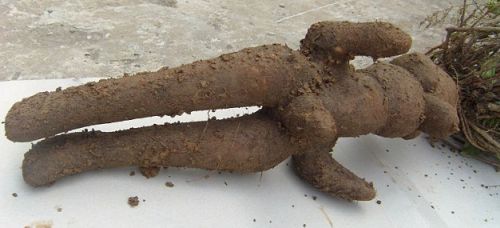
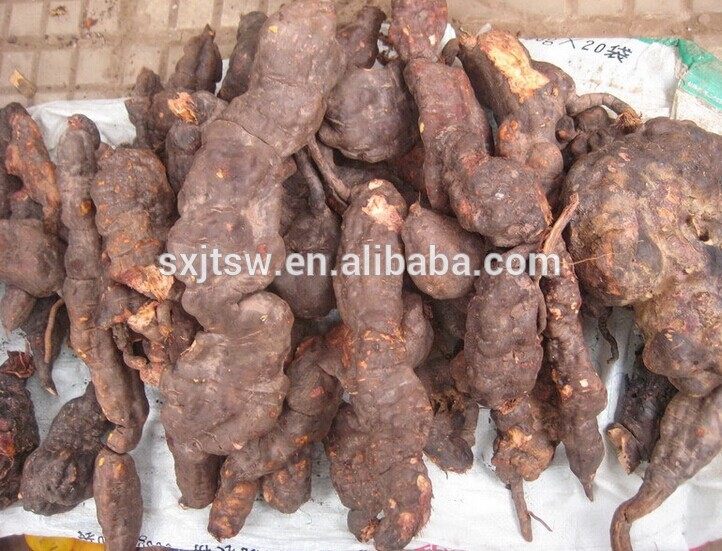
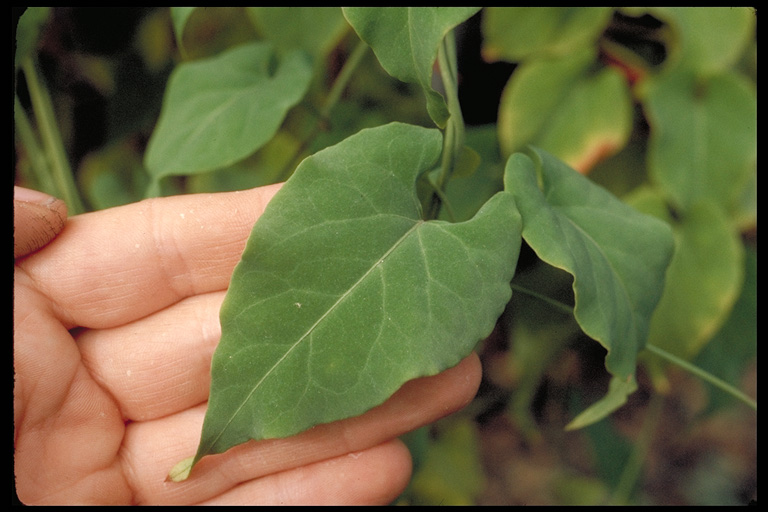
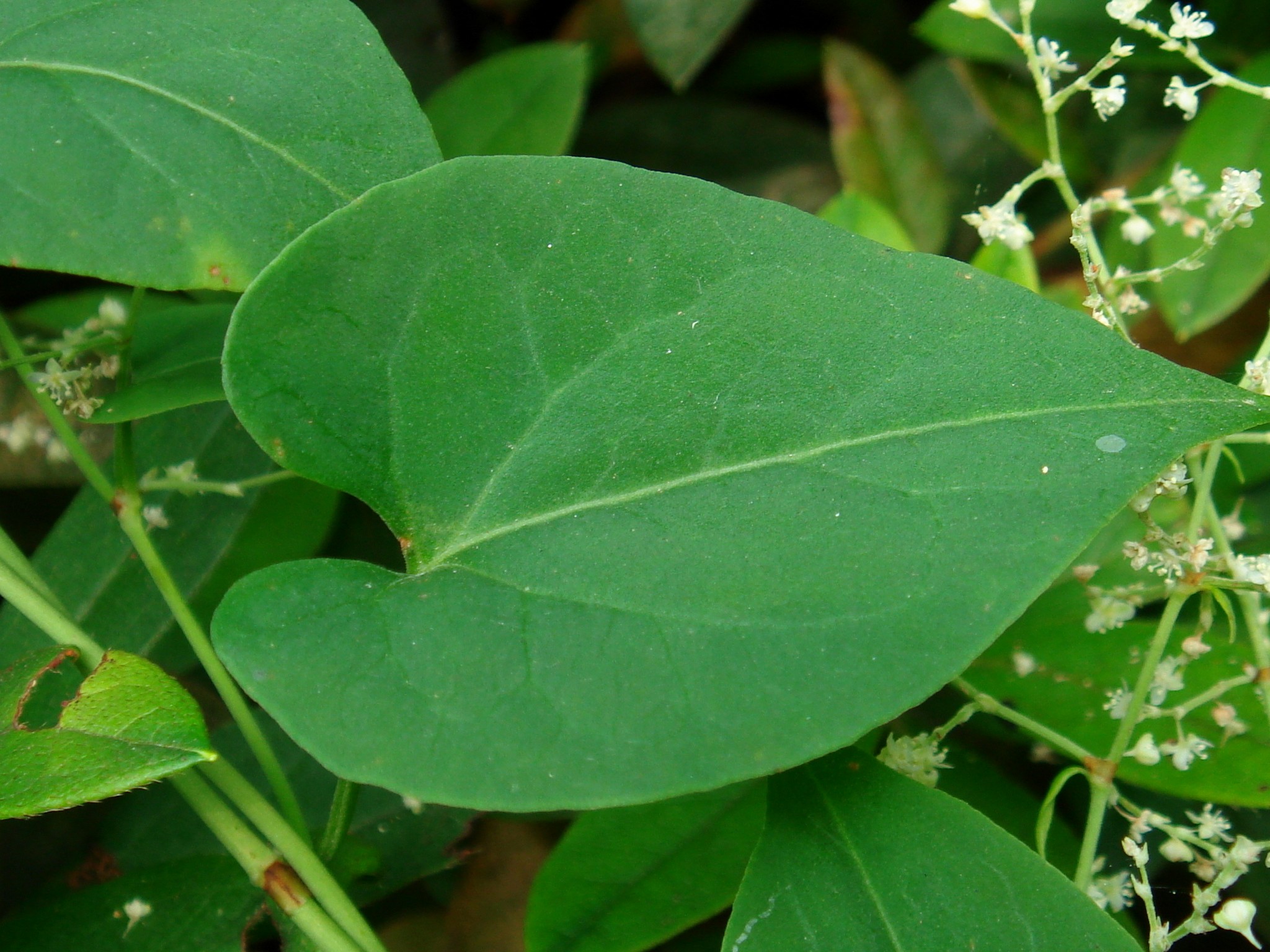
何首乌 (原变种) Fallopia multiflora (Thunb.) Harald. var. multiflora
俗名:夜交藤、紫乌藤、多花蓼、桃柳藤,九真藤
多年生草本。块根肥厚,长椭圆形,黑褐色。
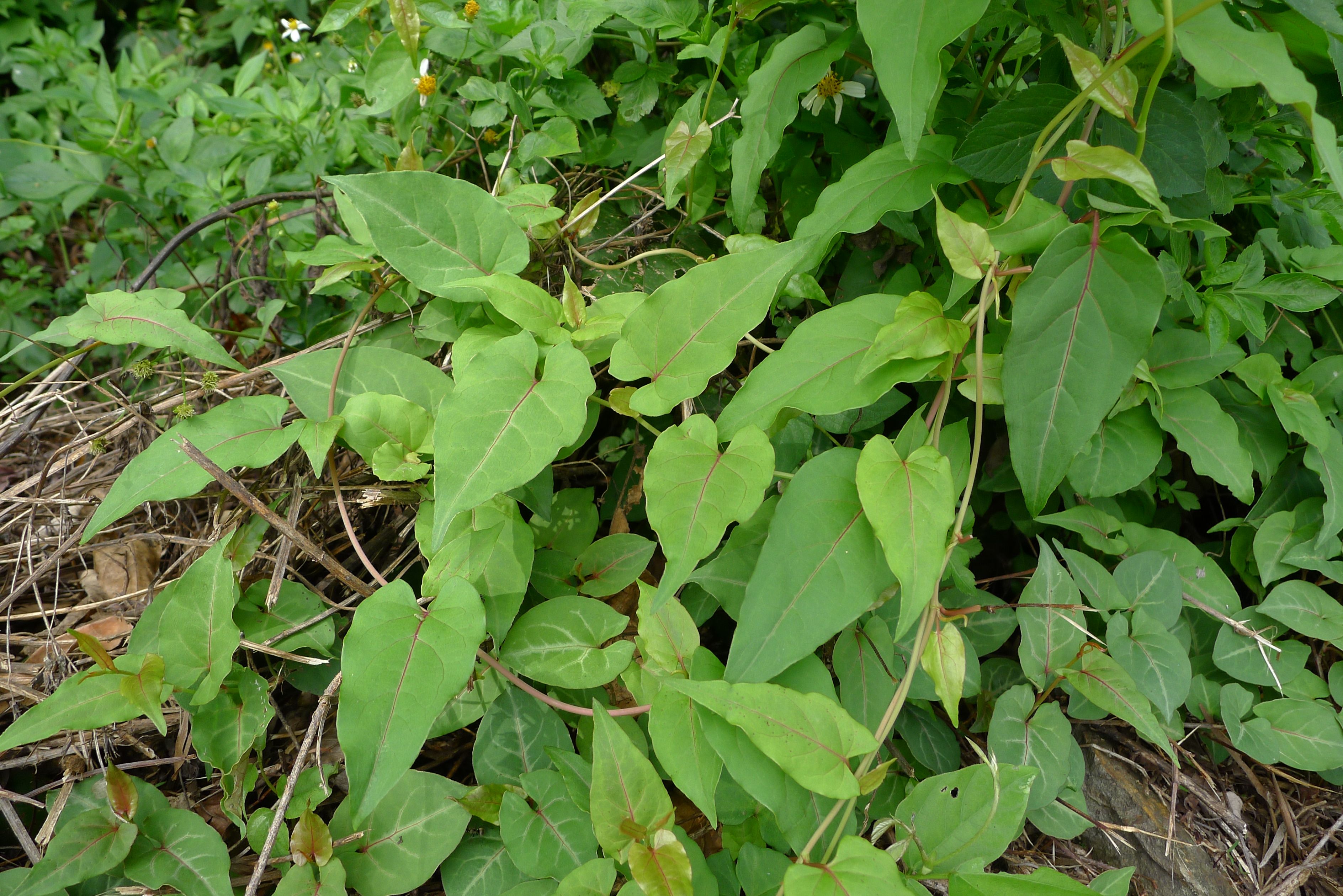
茎缠绕,长2-4米,多分枝,具纵棱,无毛,微粗糙,下部木质化。
叶卵形或长卵形,长3-7厘米,宽2-5厘米,顶端渐尖,基部心形或近心形,两面粗糙,边缘全缘;叶柄长1.5-3厘米;托叶鞘膜质,偏斜,无毛,长3-5毫米。
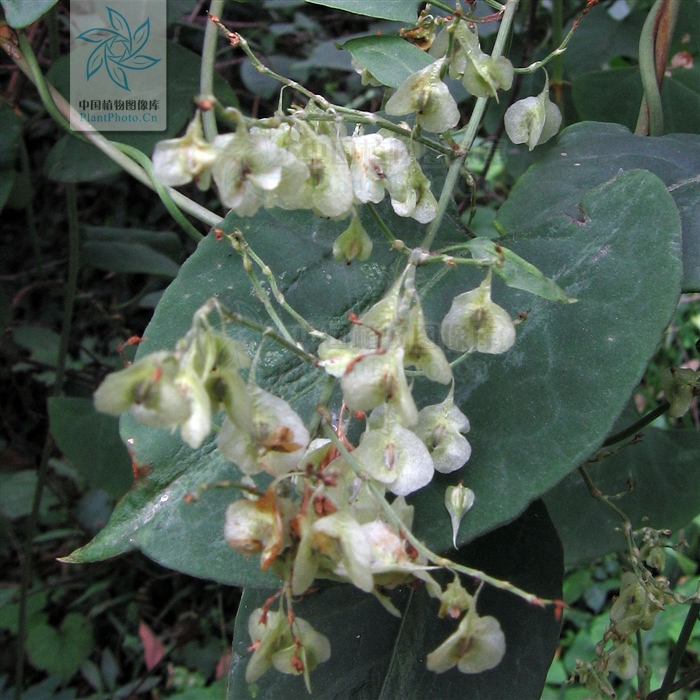
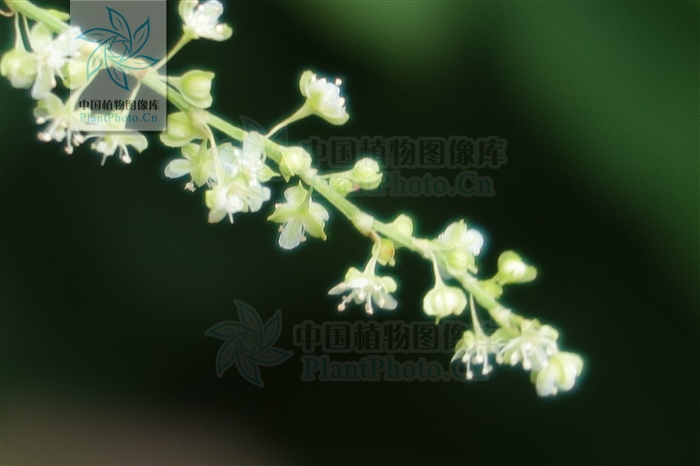
花序圆锥状,顶生或腋生,长10-20厘米,分枝开展,具细纵棱,沿棱密被小突起;苞片三角状卵形,具小突起,顶端尖,每苞内具2-4花;花梗细弱,长2-3毫米,下部具关节,果时延长;花被5深裂,白色或淡绿色,花被片椭圆形,大小不相等,外面3片较大背部具翅,果时增大,花被果时外形近圆形,直径6-7毫米;雄蕊8, 花丝下部较宽;花柱3, 极短,柱头头状。
瘦果卵形,具3棱,长2.5-3毫米,黑褐色,有光泽,包于宿存花被内。花期8-9月,果期9-10月。
产陕西南部、甘肃南部、华东、华中、华南、四川、云南及贵州。生山谷灌丛、山坡林下、沟边石隙,海拔200-3000米。日本也有。
块根入药,安神、养血、活络。
Reynoutria multiflora is a species of flowering plant in the buckwheat family Polygonaceae native to central and southern China. It is known by the English common names tuber fleeceflower and Chinese knotweed. It is known as he shou wu in China and East Asia. Another name for the species is fo-ti, which is a misnomer. The name he shou wu means 'the black-haired Mr. He'.
三. 蓼属 Polygonum L.
一年生或多年生草本,稀为半灌木或小灌木。茎直立、平卧或上升,无毛、被毛或具倒生钩刺,通常节部膨大。叶互生,线形、披针形、卵形、椭圆形、箭形或戟形,全缘,稀具裂片;托叶鞘膜质或草质,筒状,顶端截形或偏斜,全缘或分裂,有缘毛或无缘毛。花序穗状、总状、头状或圆锥状,顶生或腋生,稀为花簇,生于叶腋;花两性稀单性,簇生稀为单生;苞片及小苞片为膜质;花梗具关节;花被5深裂稀4裂,宿存;花盘腺状、环状,有时无花盘;雄蕊8,稀4-7;子房卵形;花柱2-3,离生或中下部合生;柱头头状。瘦果卵形,具3棱或双凸镜状,包于宿存花被内或突出花被之外。
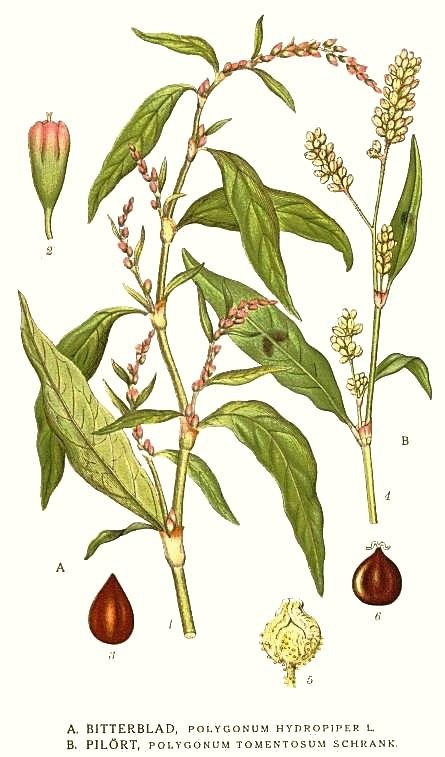
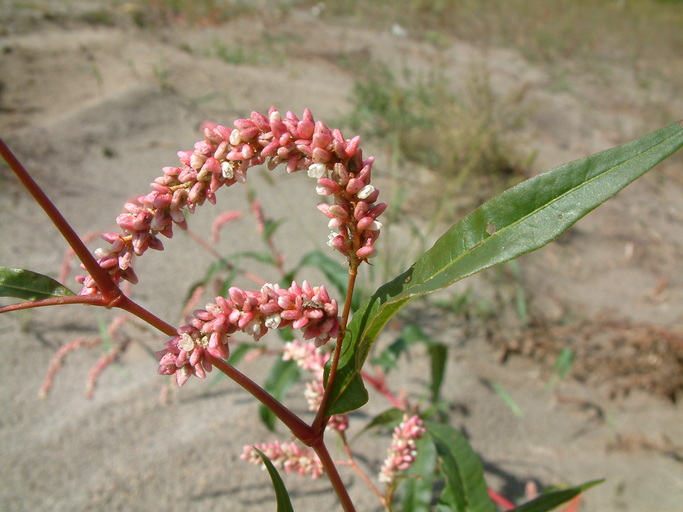
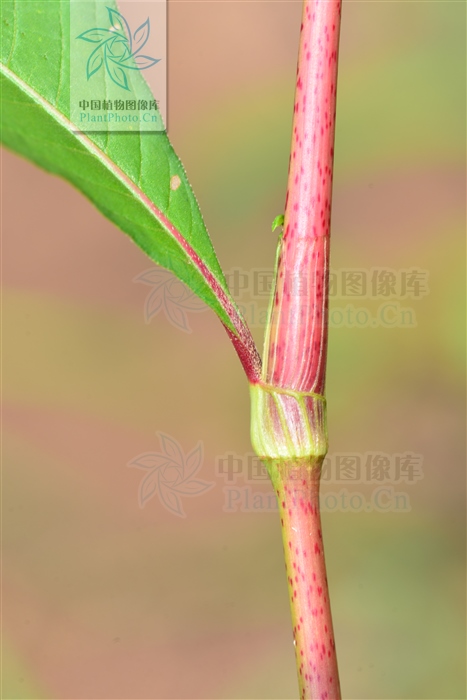
1. 酸模叶蓼 (原变种) Polygonum lapathifolium L. var. lapathifolium
一年生草本,高40-90厘米。
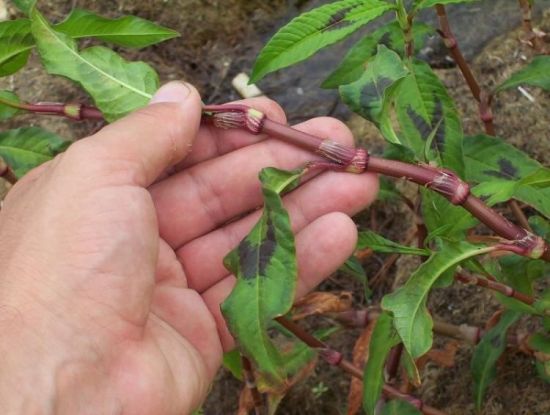
茎直立,具分枝,无毛,节部膨大。
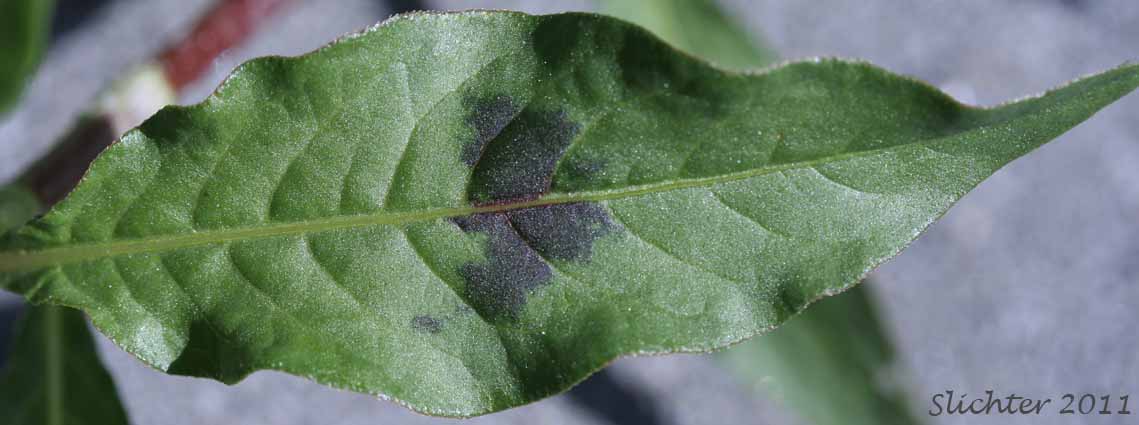
叶披针形或宽披针形,长5-15厘米,宽1-3厘米,顶端渐尖或急尖,基部楔形,上面绿色,常有一个大的黑褐色新月形斑点,两面沿中脉被短硬伏毛,全缘,边缘具粗缘毛;叶柄短,具短硬伏毛;托叶鞘筒状,长1.5-3厘米,膜质,淡褐色,无毛,具多数脉,顶端截形,无缘毛,稀具短缘毛。
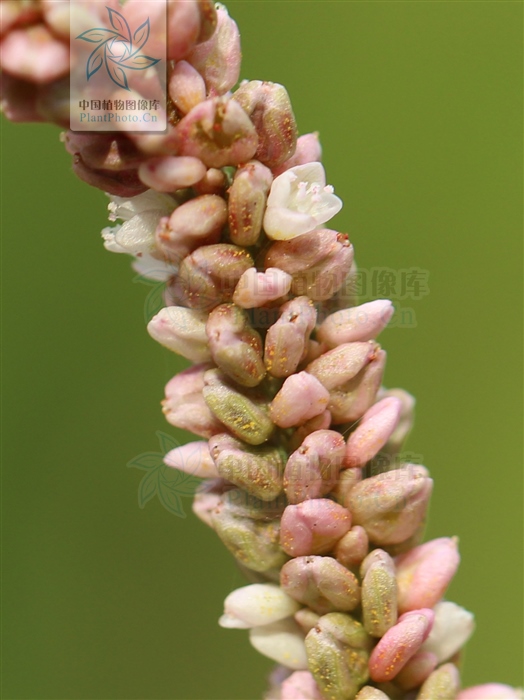
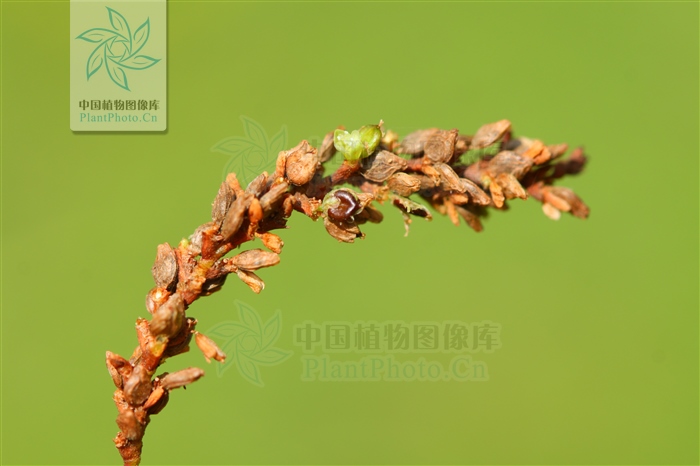
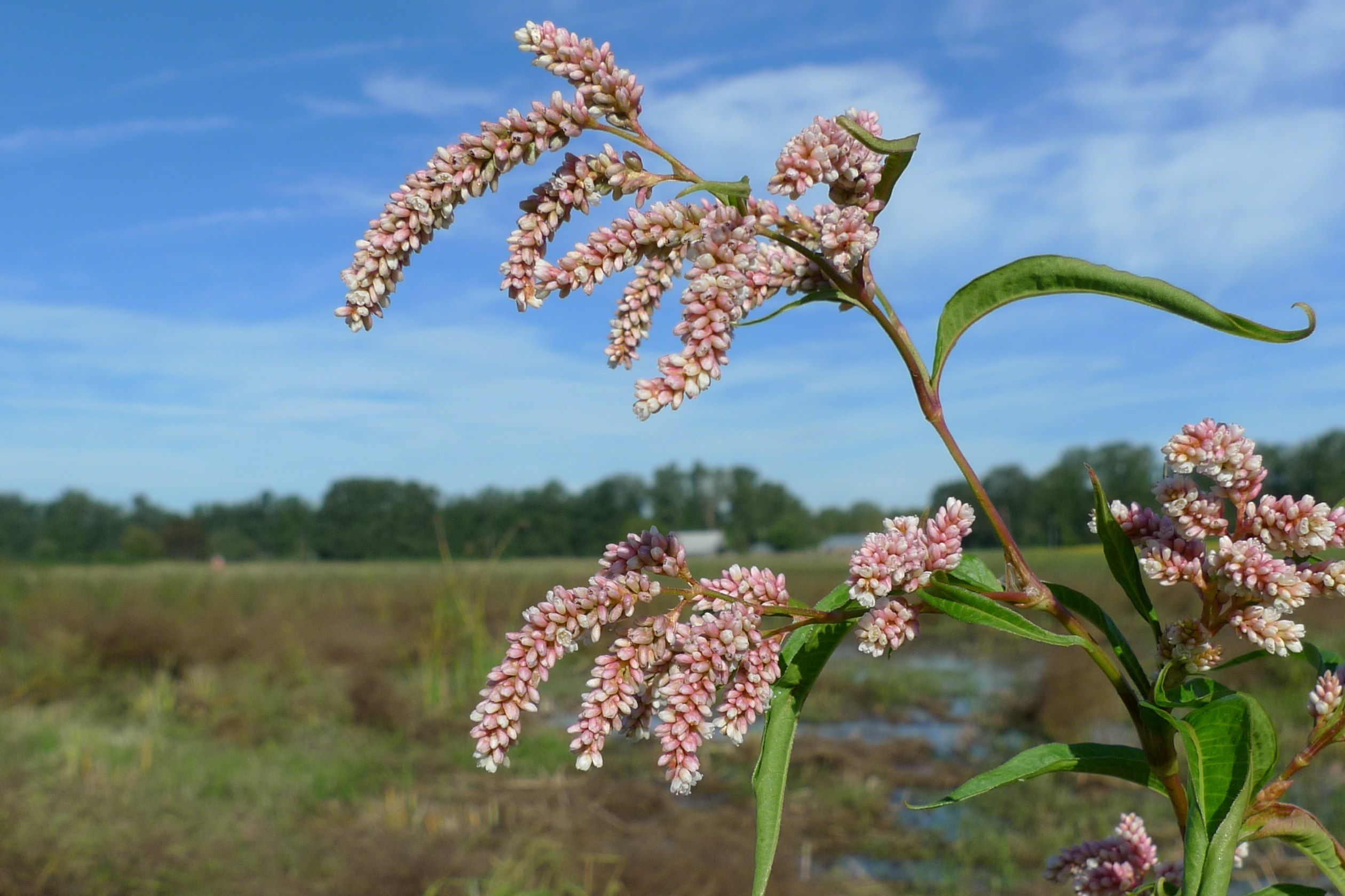
总状花序呈穗状,顶生或腋生,近直立,花紧密,通常由数个花穗再组成圆锥状,花序梗被腺体;苞片漏斗状,边缘具稀疏短缘毛;花被淡红色或白色,4(5)深裂,花被片椭圆形,外面两面较大,脉粗壮,顶端叉分,外弯;雄蕊通常6。
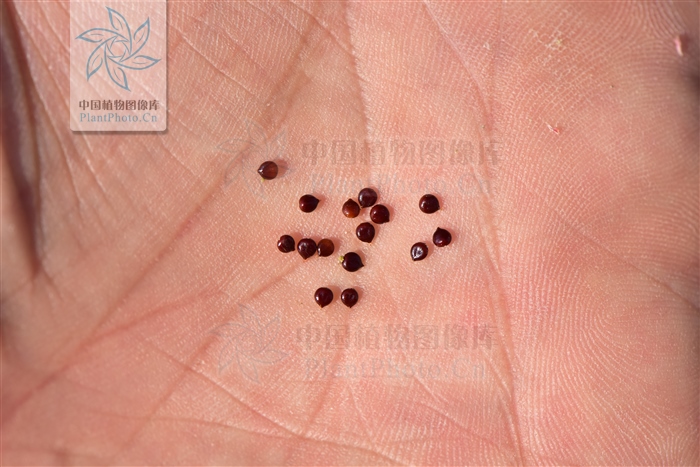
瘦果宽卵形,双凹,长2-3毫米,黑褐色,有光泽,包于宿存花被内。花期6-8月,果期7-9月。
广布于我国南北各省区。生田边、路旁、水边、荒地或沟边湿地,海拔30-3900米。朝鲜、日本、蒙古、菲律宾、印度、巴基斯坦及欧洲也有。
Persicaria lapathifolia, known as pale persicaria, is a plant of the family Polygonaceae. It is closely related to Persicaria maculosa and as such is considered a weed in Britain and Europe. Other common names for the plant include pale smartweed, curlytop knotweed, and willow weed. It is a species complex made up of a great many varying forms, sometimes considered varieties. The environment also has a strong influence on the morphology of an individual plant.
四.虎杖属Reynoutria Houtt.
多年生草本。根状茎横走。茎直立,中空。叶互生,卵形或卵状椭圆形,全缘,具叶柄;托叶鞘膜质,偏斜,早落。花序圆锥状,腋生;花单性,雌雄异株,花被5深裂;雄蕊6-8;花柱3,柱头流苏状。雌花花被片,外面3片果时增大,背部具翅。瘦果卵形,具3棱。
约3种,分布于东亚。我国有1种。产陕西南部、甘肃南部、华东、华中、华南至西南。
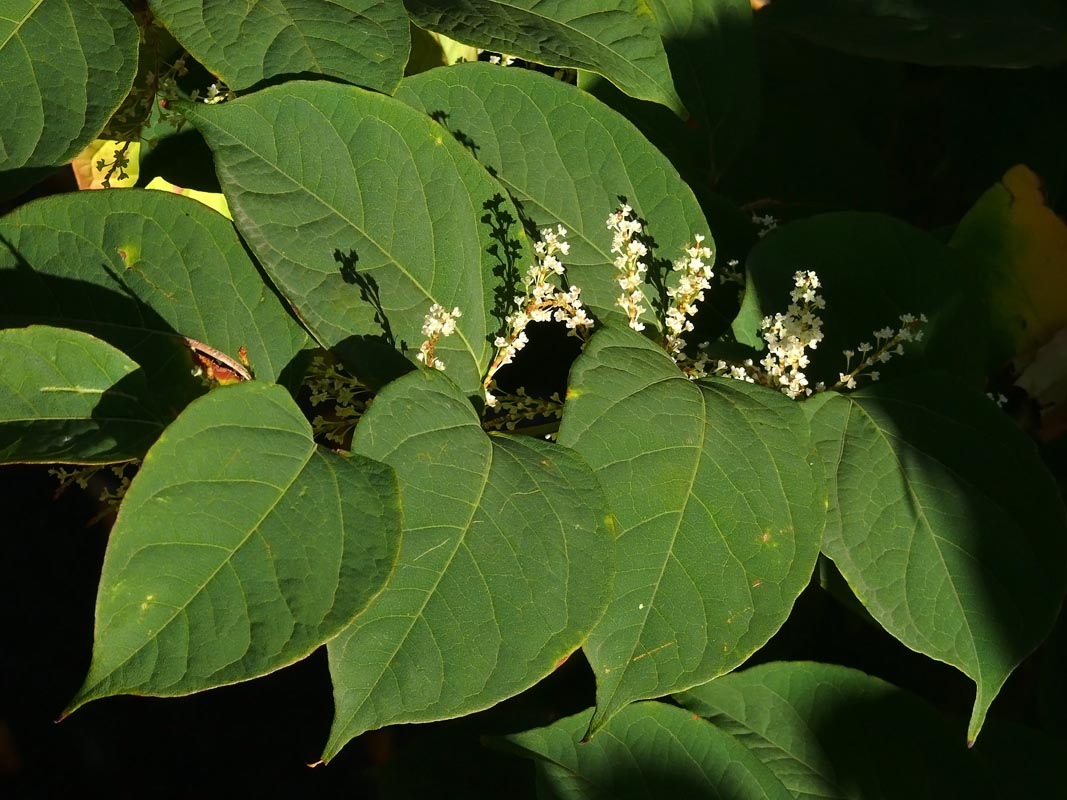
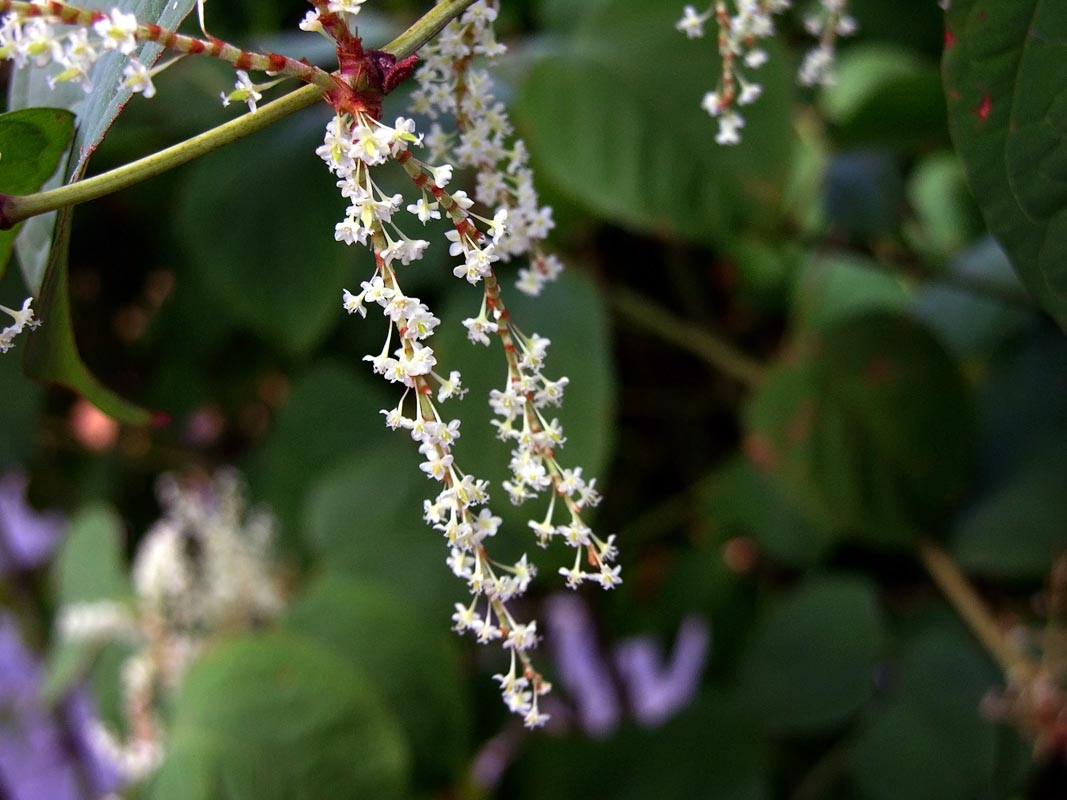
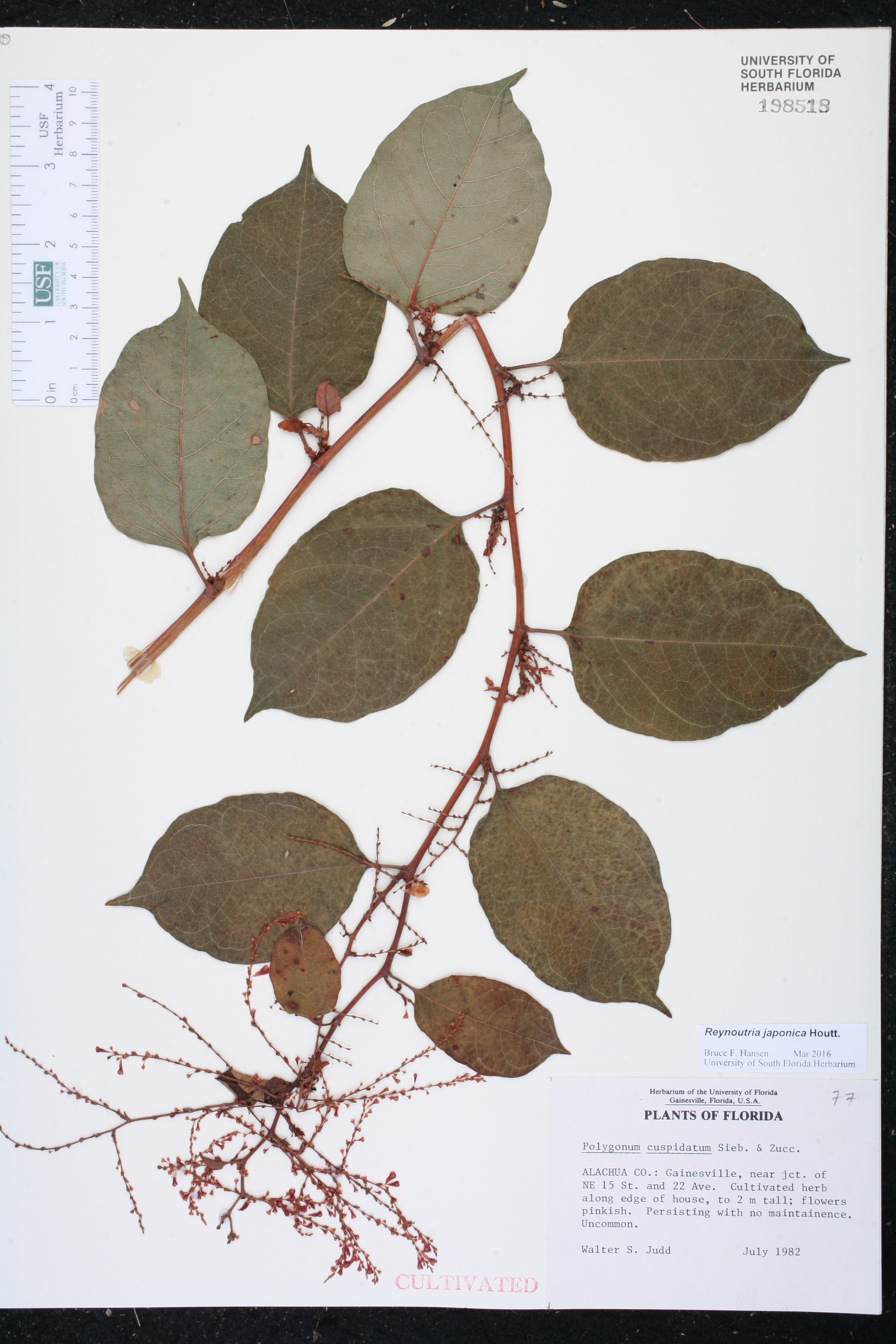
1.虎杖(名医别录)酸筒杆、酸桶芦、大接骨、斑庄根 Reynoutria japonica Houtt. Nat. Hist.
多年生草本。
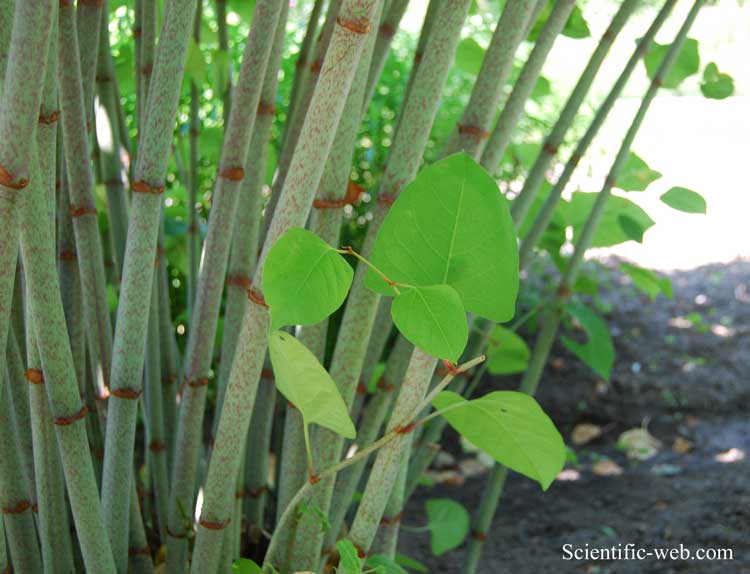
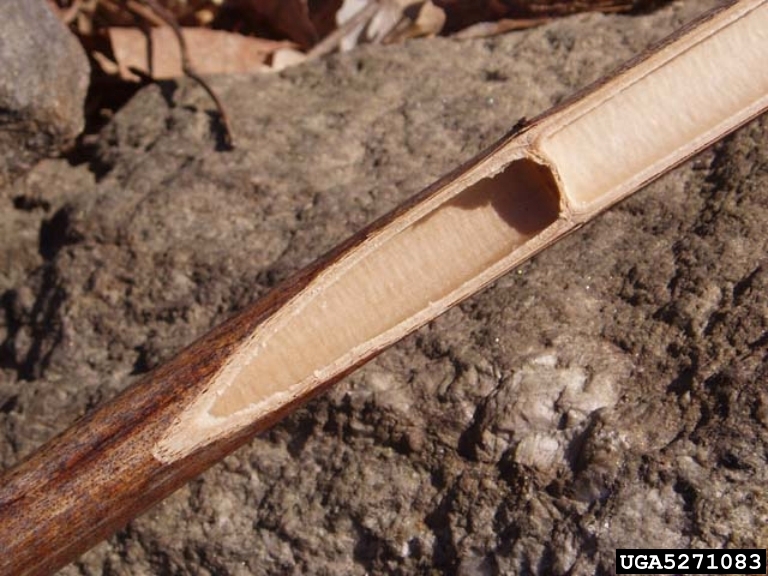
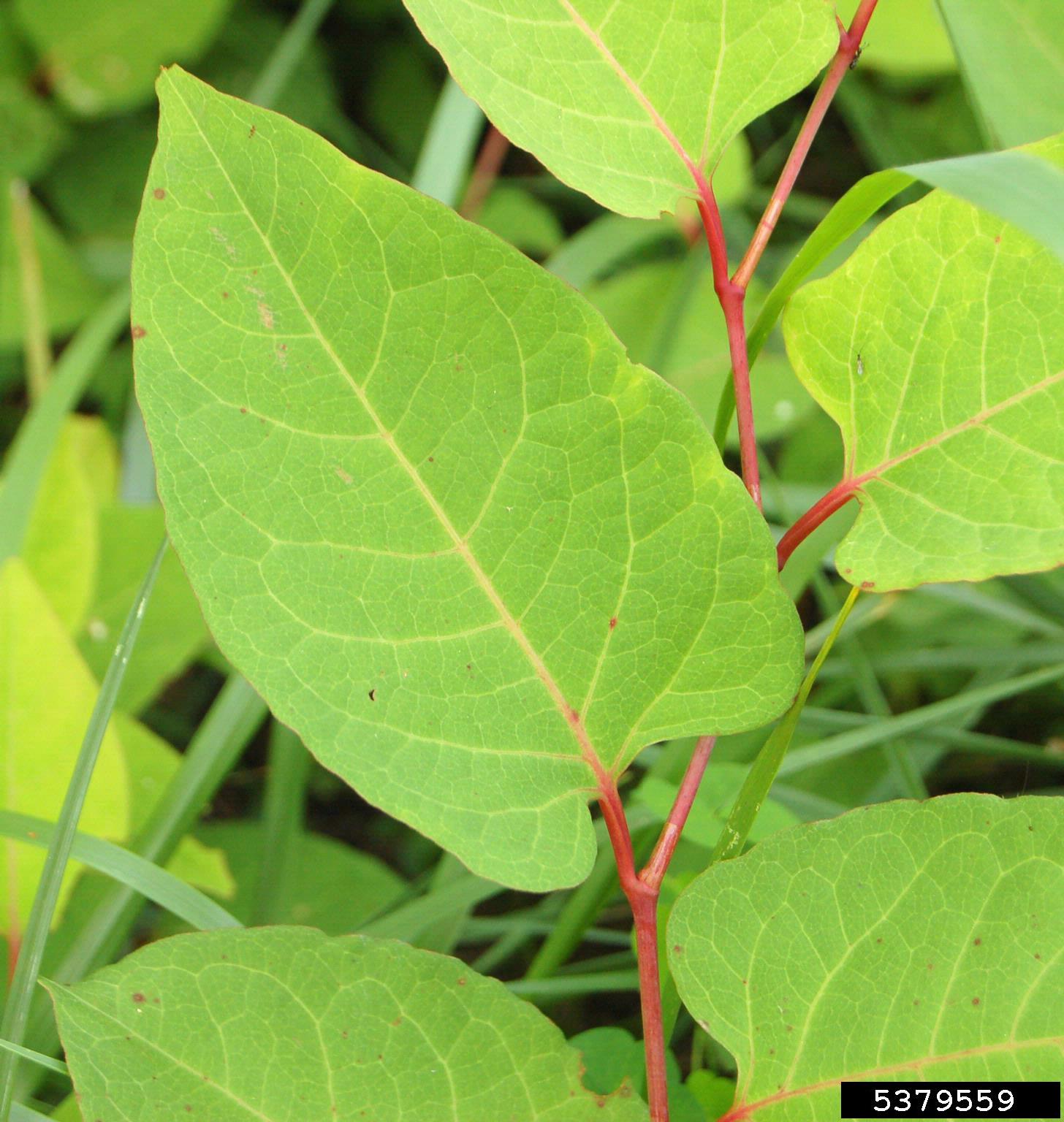
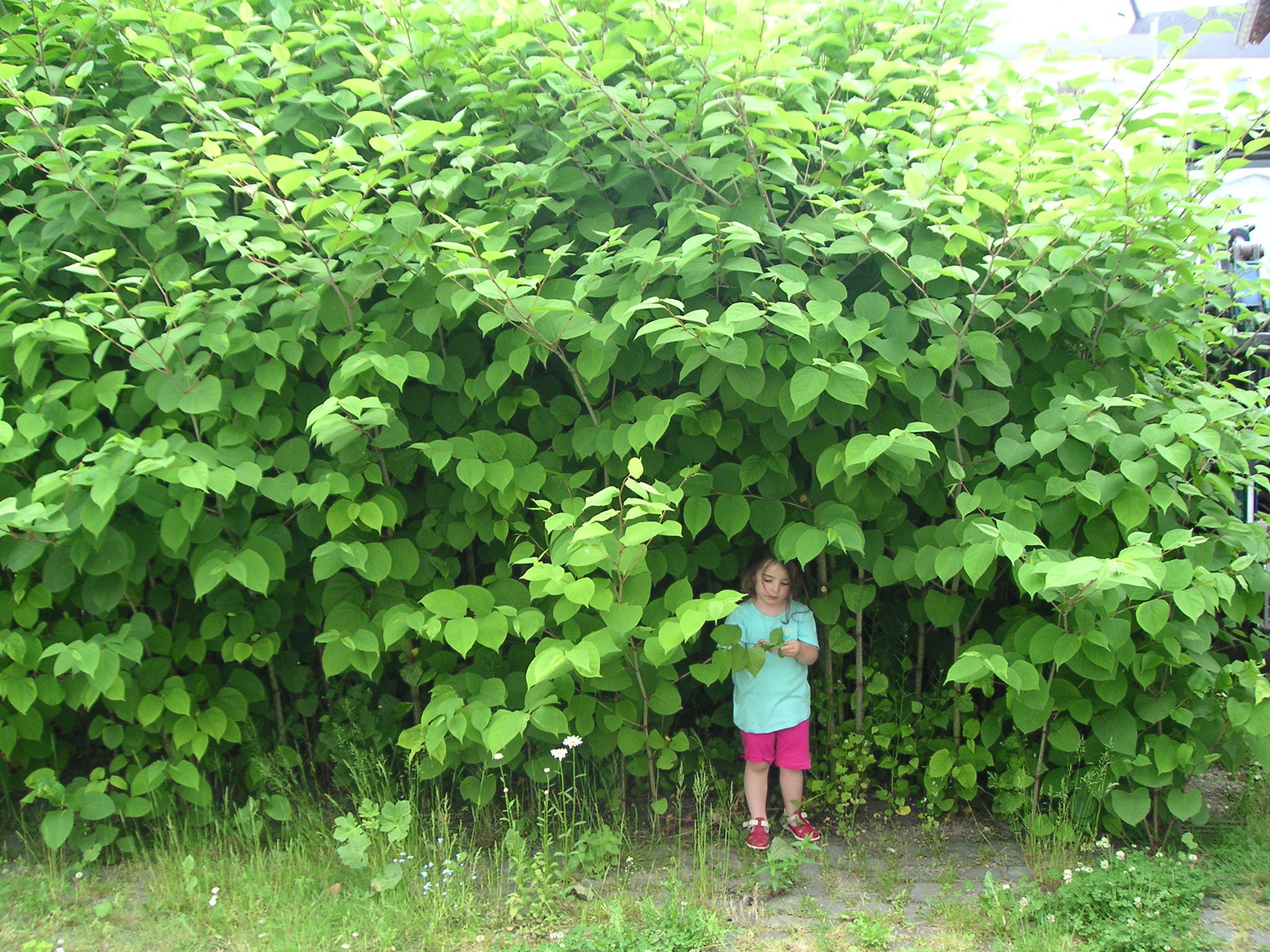
根状茎粗壮,横走。茎直立,高1-2米,粗壮,空心,具明显的纵棱,具小突起,无毛,散生红色或紫红斑点。
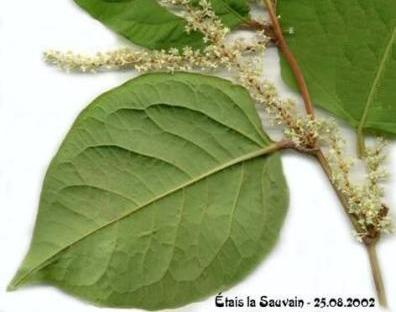
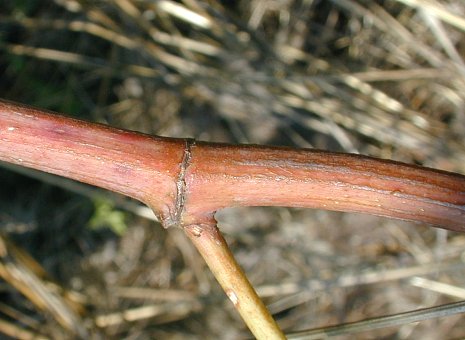
叶宽卵形或卵状椭圆形,长5-12厘米,宽4-9厘米,近革质,顶端渐尖,基部宽楔形、截形或近圆形,边缘全缘,疏生小突起,两面无毛,沿叶脉具小突起;叶柄长1-2厘米,具小突起;托叶鞘膜质,偏斜,长3-5毫米,褐色,具纵脉,无毛,顶端截形,无缘毛,常破裂,早落。
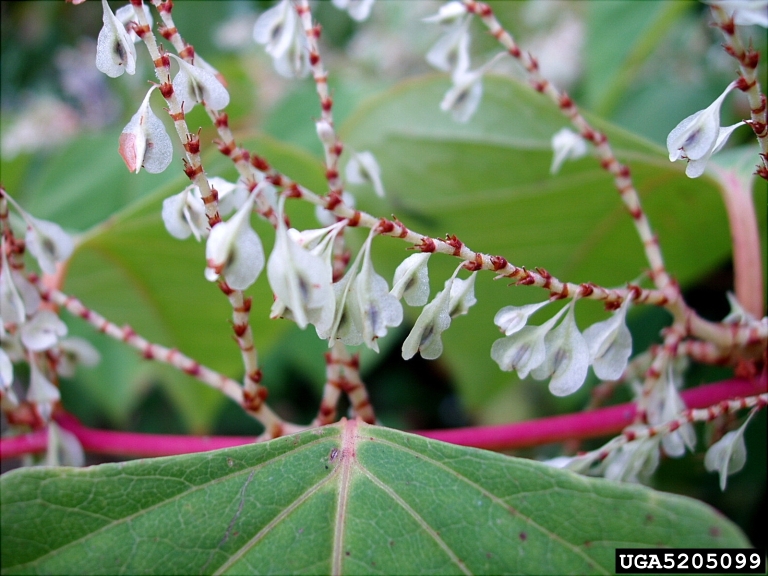
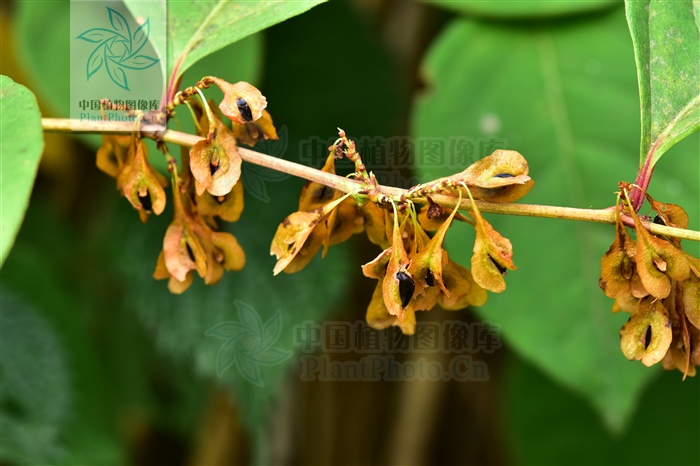
花单性,雌雄异株,花序圆锥状,长3-8厘米,腋生;苞片漏斗状,长1.5-2毫米,顶端渐尖,无缘毛,每苞内具2-4花;花梗长2-4毫米,中下部具关节;花被5深裂,淡绿色,雄花花被片具绿色中脉,无翅,雄蕊8, 比花被长;雌花花被片外面3片背部具翅,果时增大,翅扩展下延,花柱3, 柱头流苏状。
瘦果卵形,具3棱,长4-5毫米,黑褐色,有光泽,包于宿存花被内。花期8-9月,果期9-10月。
产陕西南部、甘肃南部、华东、华中、华南、四川、云南及贵州;生山坡灌丛、山谷、路旁、田边湿地,海拔140-2000米。朝鲜、日本也有。
根状茎供药用,有活血、散瘀、通经、镇咳等功效。
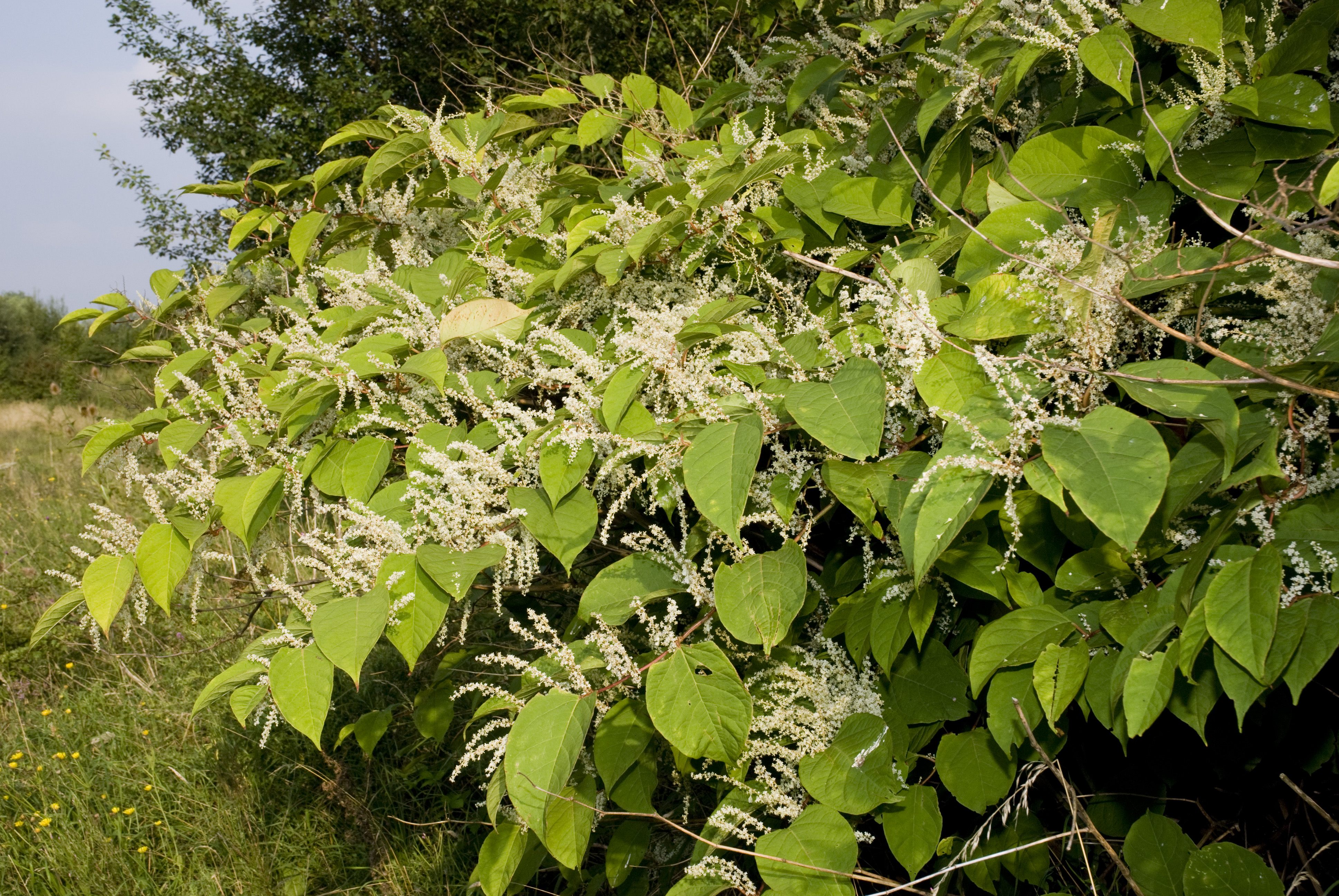
Reynoutria japonica, synonyms Fallopia japonica and Polygonum cuspidatum, is a species of herbaceous perennial plant in the knotweed and buckwheat family Polygonaceae. It is commonly known as Asian knotweed or Japanese knotweed. It is native to East Asia in Japan, China and Korea. In North America and Europe, the species has successfully established itself in numerous habitats, and is classified as a pest and invasive species in several countries.
Reynoutria japonica
Common Name(s): Asiatic Knotweed、Donkey Rhubarb Fleeceflower、Huzhang、Japanese Bamboo、Japanese Knotweed、Mexican Bamboo
Description
Asian Knotweed is a herbaceous perennial plant of the knotweed and buckwheat family and is native to Asia. In North America and Europe, it has rapidly established itself and is considered invasive in many places including North Carolina where it is found in a few coastal counties and 3 counties near Tennesse. It spreads very quickly by rhizomes and can come up in roads and foundations.
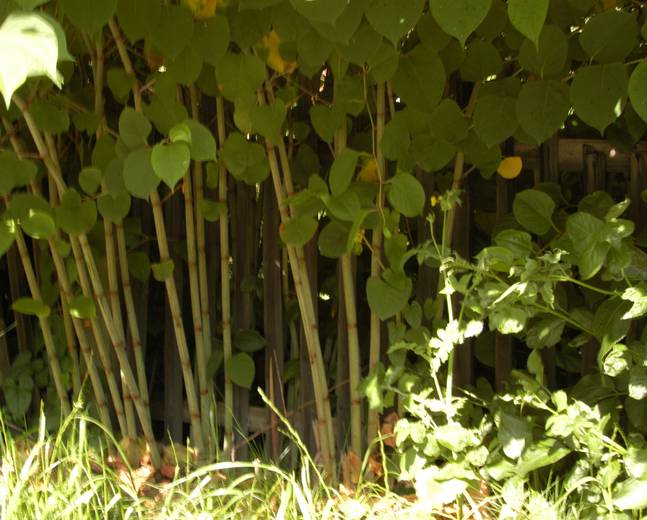
The hollow stems have raised nodes that give it the look of bamboo but it is not related. It dies to the ground in winter and new growth is reddish. Flowering occurs in late summer to fall on erect panicles.
Please do not plant this invasive plant.
Insects, Diseases, and Other Plant Problems:
Asian Knotwood spreads by strong underground stems (creeping rhizomes) that can damage foundations, roads, walls, and other structures. It quickly spreads to dominate and ecosystem and can be particularly problematic in riparian areas where the dead stems can accumulate and cause flooding or it can contribute to streambank erosion. Please avoid this plant.
Quick ID:
1、Upright stems are hollow and resemble bamboo
2、Leaves are heart to triangular shaped and alternate