-
1 主页
-
2 资料
-
3 苹果亚科
-
4 蔷薇亚科
-
5 李亚科
蔷薇科Rosaceae
1、乔、灌、藤本或草本,常有枝刺或皮刺。
2、单叶或复叶,互生,稀对生,有托叶,稀无托叶。
3、花两性,稀单性;花基数5,花萼基部多少于花托愈合成碟状或坛状萼管;雄蕊多数,着生在花托的边缘;心皮1至多数,离生或合生,子房上位或下位。
4、果实有聚合蓇葖果、核果、梨果、瘦果,稀蒴果。种子无胚乳。
有四个亚科,约124属3300余种,广布于世界各地,尤其北温带居多。
我国约有51属1000余种,分布于全国各地。
Rosaceae, the rose family, is a medium-sized family of flowering plants, including 4,828 known species in 91 genera. The name is derived from the type genus Rosa. Among the most species-rich genera are Alchemilla, Sorbus, Crataegus, Cotoneaster, Rubus, and Prunus which contains the plums, cherries, peaches, apricots, and almonds. However, all of these numbers should be seen as estimates – much taxonomic work remains.
Rosaceae, the rose family of flowering plants (order Rosales), composed of some 2,500 species in more than 90 genera. The family is primarily found in the north temperate zone and occurs in a wide variety of habitats. A number of species are of economic importance as food crops, including apples, almonds, cherries, pears, raspberries, and strawberries; some, such as the rose, are grown as ornamentals.
Members of Rosaceae are generally woody plants, mostly shrubs or small to medium-size trees, some of which are armed with thorns, spines, or prickles to discourage herbivores. The genus Rubus悬钩子属 (e.g., blackberries and raspberries) chiefly contains arching shrubs or scramblers of irregular, often tangled appearance. Herbaceous perennials are found in several genera, most notably strawberries (Fragaria草莓属), cinquefoil (Potentilla), avens (Geum水扬梅属), and goatsbeard (Aruncus). Most species in the family have alternate leaves, and small leaflike structures called stipules are routinely present at the base of the leaf stalks.
The bisexual flowers vary from small to large and range from white to various shades of yellow, pink, orange, lavender淡紫色, or red. Typically flat or shallowly cup-shaped, the flowers are radially symmetric and feature flower parts in multiples of five or four. The sepals and petals are almost always free from each other, and many species bear a characteristic hypanthium, or floral cup, from whose rim the sepals, petals, and stamens arise. The hypanthium is often lined with nectar-producing tissue. Most species are insect pollinated and produce a variety of fruit. In fact, the family is divided into four subfamilies based primarily on fruits: Spiraeoideae (Spirea subfamily), with follicles (dry fruits that open on one side); Rosoideae (rose subfamily), with achenes (dry fruits that do not open) or, in Rubus, drupelets (small drupes [fleshy stone fruits]); Amygdaloideae (plum subfamily), with drupes; and Maloideae (apple subfamily), with pomes (fruits in which the hypanthium becomes fleshy).
分亚科检索表
1.蓇葖果或蒴果,开裂;单叶或复叶,常无托叶…………………………………绣线菊亚科
1.果实不开裂;有托叶…………………………………………………………………………2
2.子房下位;萼筒与花托在果时变成肉质梨果,有时浆果状………………………苹果亚科
2.子房上位………………………………………………………………………………………3
3.心皮多数,果托膨大,聚合瘦果或小核果,萼宿存;复叶………………………蔷薇亚科
3.心皮常1,稀2或5,核果,萼常脱落;单叶………………………………………李亚科
Ⅰ.绣线菊亚科Spiraeoideae
落叶灌木,稀草本。单叶或羽状复叶,叶片全缘或有锯齿,常无托叶。心皮离生或基部合生;子房上位,具2至多数悬垂胚珠。果实成熟时多为开裂的聚合蓇葖果,稀为蒴果。
约100种,广布于北温带。
The subfamily Spiraeoideae was traditionally a subfamily of flowering plants within the family Rosaceae. The taxonomy of this subfamily has changed several times in the last century as more detailed studies have been carried out. Spiraeoideae as defined before 2007 is paraphyletic, leading some authors to define a broader subfamily which includes the Spiraeoideae as well as the Maleae, and the Amygdaloideae. Such an expanded subfamily is to be called Amygdaloideae under the International Code of Nomenclature for algae, fungi, and plants.
分属检索表
1.蒴果,种子有翅;花径约100px;单叶,无托叶…………………………白鹃梅属
1.蓇葖果,种子无翅;花径小于或等于50px…………………………………2
2.单叶;聚合蓇葖果不膨大,仅沿腹线开裂……………………………………绣线菊属
2.羽状复叶,有托叶……………………………………………………………………珍珠梅属
一.白鹃梅属ExochordaLindl.
落叶灌木。单叶互生,全缘或有齿;托叶无或小而早落。花白色,颇大,呈顶生总状花序;萼、瓣各5;雄蕊15~30;5心皮合生。蒴果5棱,瓣裂,每瓣具1~2粒带翅种子。
白鹃梅(金瓜果、茧子花、九活头)Exochordaracemosa(Lindl.)Rehd.
【形态】:高达3~5m,全株无毛。枝条细弱开展,小枝微有棱角,幼时红褐色,老时褐色;冬芽三角状卵形,平滑,暗紫红色。叶长椭圆形,全缘,无托叶。总状花序,花瓣倒卵形,白色;雄蕊与花瓣对生;花柱分离。蒴果倒圆锥形,有5脊。花期5月,果期6~8月。
【分布】:原产中国华中及华东地区,沿黄河、淮河及长江流域均有分布。
【习性】:喜温暖湿润的气候,喜光也稍耐阴,耐旱。抗寒力颇强,对土壤要求不严,在排水良好、肥沃而湿润的土壤中长势旺盛。萌芽力强,萌蘖性强。
【繁殖】:以播种为主,也可分株、扦插繁殖。
【用途】:姿态秀美,叶片光洁,花开时洁白如雪,光彩照人,是良好的优良观赏树木。适于在草坪、亭园、林缘、路边、假山、庭院角隅作为点缀树种。老树古桩又是制作树桩盆景的材料。盛花前将花蕾连带嫩梢采下,用开水烫后晒干可作蔬菜。
Exochorda racemosa
Common name: Common Pearlbush
Deciduous shrub or small tree, 10-15 ft (3-4.5 m) high, upright, slender branches. Leaves alternate, simple, oblong to obovate, 3-8 cm long, about half as wide, acute and terminated in an abrupt tip, entire, or serrate on vigorous shoots, medium green above, whitish below. Flowers perfect, white, about 4 cm wide, 5-petaled, 3 stamens at the base of each petal; 6-10 flowers per cluster (raceme); flower buds roundish, "pearl-like". Fruit 5-valved, dehiscent, about 8 mm wide, yellow to brown.
Sun to light shade, best in moist, rich loams, good heat and drought tolerance when established, flowers arise on old growth, so prune as needed soon after flowering
Native to northern China.
Description
Pearlbush is a loose, upright, spring-flowering deciduous shrub in the Roseaceae (rose) family. It is as broad as it is high, with a tolerance for heat and drought. The plant typically reaches a height of 10 feet but can go as high as 15 feet. It is a dependable, tough plant that leaves out early.
It grows well in sun and prefers rich, well-drained, acidic soil, although it does well in more average soil and will tolerate alkaline soils and partial shade. It has slender branches and tends to have a loose, or unkempt, appearance with age. The flowers in spring are white and pearl-like, hence the common name Pearlbush.
It can become overarching and floppy, but it can be severely pruned to rejuvenate. However, because it blooms on the previous year's growth, you should wait until the current blooms are spent before pruning and use that as a guide to how much to remove. It is reported to be invasive in some states but is not currently listed as such for North Carolina.
The plant is most suitable for borders, hedges, or foundation plantings. Dwarf forms make excellent bedding plants. Once established, it has a reputation for being tough and adaptable but choose its location wisely because its taproot can make transplanting difficult..
Quick ID Hints:
White, 5-petaled flowers on pins; buds pearl-like
Leaves are mucronate and entire below midsection
Fruit is persistent green-brown, top-shaped, dehiscent capsule
Some leaves 'batman-like' with tooth on either side of apex
二.绣线菊属SpiraeaL.
落叶灌木。冬芽小。单叶互生;叶缘有齿或分裂,无托叶。花小,排成伞形、伞房或圆锥花序;花瓣5;离生雌蕊。聚合蓇葖果,种子细小无翅。
约100种,中国50余种。
分种检索表
1.复伞房花序或圆锥花序,花粉红至红色…………………………………………2
1.伞形或总状花序,花白色……………………………………………………………3
2.圆锥花序…………………………………………………………………………………绣线菊
2.复伞房花序…………………………………………………………………………粉花绣线菊
3.伞形总状花序,着生于多叶的小枝上……………………………………………4
3.伞形花序,无总梗,有极小的叶状苞位于花序基部…………………………5
4.叶端尖,菱状长圆形至披针形,羽状脉…………………………………………麻叶绣线菊
4.叶端钝,菱状卵形至倒卵形,羽状脉,两面有毛………………………………中华绣线菊
5.叶椭圆形至卵形,背面常有毛……………………………………………………李叶绣线菊
5.叶线状披针形,光滑无毛…………………………………………………………珍珠绣线菊
1.绣线菊(柳叶绣线菊、空心柳)Spiraeasa licifolia L.
【形态】:直立,高可达2m。枝条密集,小枝有棱及短毛。单叶互生,长圆状披针形,缘具细密锐锯齿、缺刻,两面无毛。;叶柄短,无毛。花两性,粉红色,伞房或圆锥花序被生毛,长可6~325px,花密集;雄蕊50枚伸出花瓣外;花有花盘、苞片、花萼和萼片,均被毛。蓇葖果直立,沿腹缝线有毛并具反折萼片。花期6~8月,果熟8~10月。
【分布】:分布于北半球温带至亚热带地区,我国辽宁、内蒙古、山东、山西等地均有栽培分布。
【习性】:喜光也稍耐阴,抗寒,抗旱,喜温暖湿润的气候和深厚肥沃的土壤。萌蘖力和萌芽力均强,耐修剪。
【繁殖】:种子繁殖或扦插繁殖。
【用途】:花色艳丽,花序密集,花期亦长,是优良的夏季观花灌木。宜在庭院、池旁、路旁、草坪等处栽植,作整形树颇优美,亦可作花篱,盛花时宛若锦带。叶、果含有鞣质,可提取栲胶,用做饲料;根、果实可人药。
Spiraea salicifolia
Common Name(s): Bridewort、Willow-Leaf Meadowsweet、Willowleaf Meadowsweet、Willow-leaved Meadowsweet、Willow-leaved SpireaWillow Spiraea
Description
The name Spiraea is derived from the Greek speira, meaning twisting which refers to the fruits that appear as if they are twisted. First described by Carl Linnaeus in 1753, Spiraea salicifolia or Willowleaf Meadowsweet is a deciduous shrub in the rose family.
It's commonly found in wet boggy沼泽多的 areas, stream beds, river valleys or woodlands. It can adapt to most soil conditions, however prefers to be located in full sunlight in moist and loamy soil. In the US, it can be found in the lower 48 states, but it is more likely to be observed in the wild in Georgia, Kentucky, Mississippi, Michigan, North Carolina, Virginia and Vermont.
Spreading by suckers, it can form a dense thicket. These thickets can cause individual plants to become less hardy. Dividing on a regular basis will help keep the plants at their best. Its dense habitat is used for stabilization projects along rivers and lakes.
When in bloom, the rose-tinted white flowers produced on panicles create a dense, showy picture.
Its vitamin C rich young leaves can be cooked and eaten.


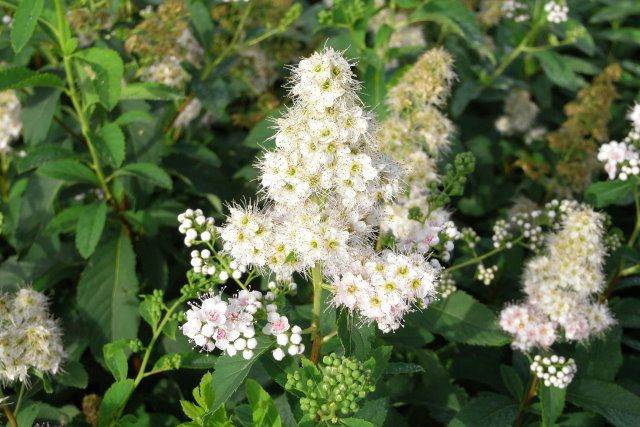


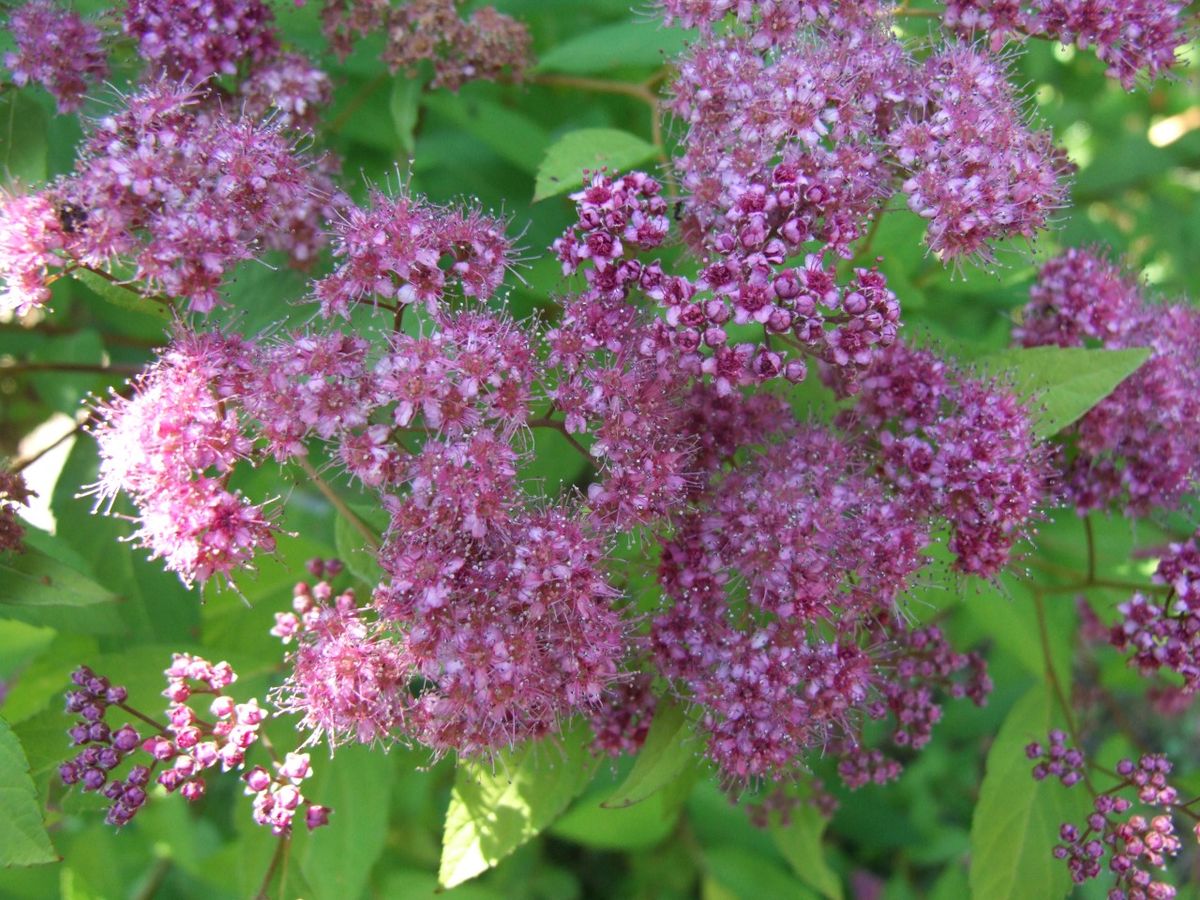
2.粉花绣线菊(日本绣线菊、蚂蝗梢、火烧尖)Spiraea japonica L.
【形态】:高达1.5m。枝开展,小枝光滑或幼时有细毛。单叶互生,卵状披针形至披针形,边缘具缺刻状重锯齿,叶面散生细毛,叶背略带白粉。花粉红色,复伞房花序生于当年生枝端。蓇葖果,卵状椭圆形。花期6月,果期8月。。
【变种】:尖叶粉花绣线菊(狭叶绣线菊var.acuminataFranck),原产我国。生于山谷或河沟边。叶椭圆状披针形至宽披针形,边缘有尖锐重锯齿,叶面有皱纹。花红141绣线菊色。
【分布】:原产日本和朝鲜半岛,我国华东地区有引种栽培。
【习性】:喜光,略耐阴。喜冷凉,忌高温潮湿。生长适温约i0~20℃,夏季力求阴凉通风,梅雨季节应避免长期潮湿或排水不良。生长强健,适应性强,耐寒、耐旱、耐瘠薄,分蘖能力强。
【繁殖】:分株、扦插或播种繁殖。
【用途】:枝叶茂密,开花繁盛,可布置草坪及小路角隅等处,或种植于门庭两侧或花坛、花径,也可做花篱。全株人药,通经、通便、利尿。
Spiraea japonica
Common Name(s): Bumald Spiraea、Goldmound Spiraea、Japanese Meadowsweet、Japanese Spiraea
Description
Spiraea japonica, or Japanese Spiraea, is a flowering dwarf deciduous shrub with leaves that change color over the season, growing 4 to 6 feet high and as many feet wide. The plant is drought tolerant and has an upright, low and broadly mounded form creating a dense thicket of thin wiry stems. Japanese Spiraea blooms in early summer with pink flowers that attract butterflies and is often the last of the common spiraeas to bloom in a calendar year. Old, dried flower heads will remain on the plant after blooming and can be pruned off with a light shearing to encourage continued blossoms. The plant, itself, flowers on new wood so it is best to prune the branches in late winter or early spring. This plant works well on banks, as a low mass or filler, or as the front of a shrub border.
The plant prefers rich loam, but grows in a range of soil types (including clay) in average, medium moisture, good drainage, and full sun. It will not do well in wet, poorly drained, soil. It tolerates light shade. Japanese Spiraea can be an aggressive self-seeder and has been known to escape gardens and naturalize in many areas of the eastern United States. The plant can also spread in the garden by suckering.
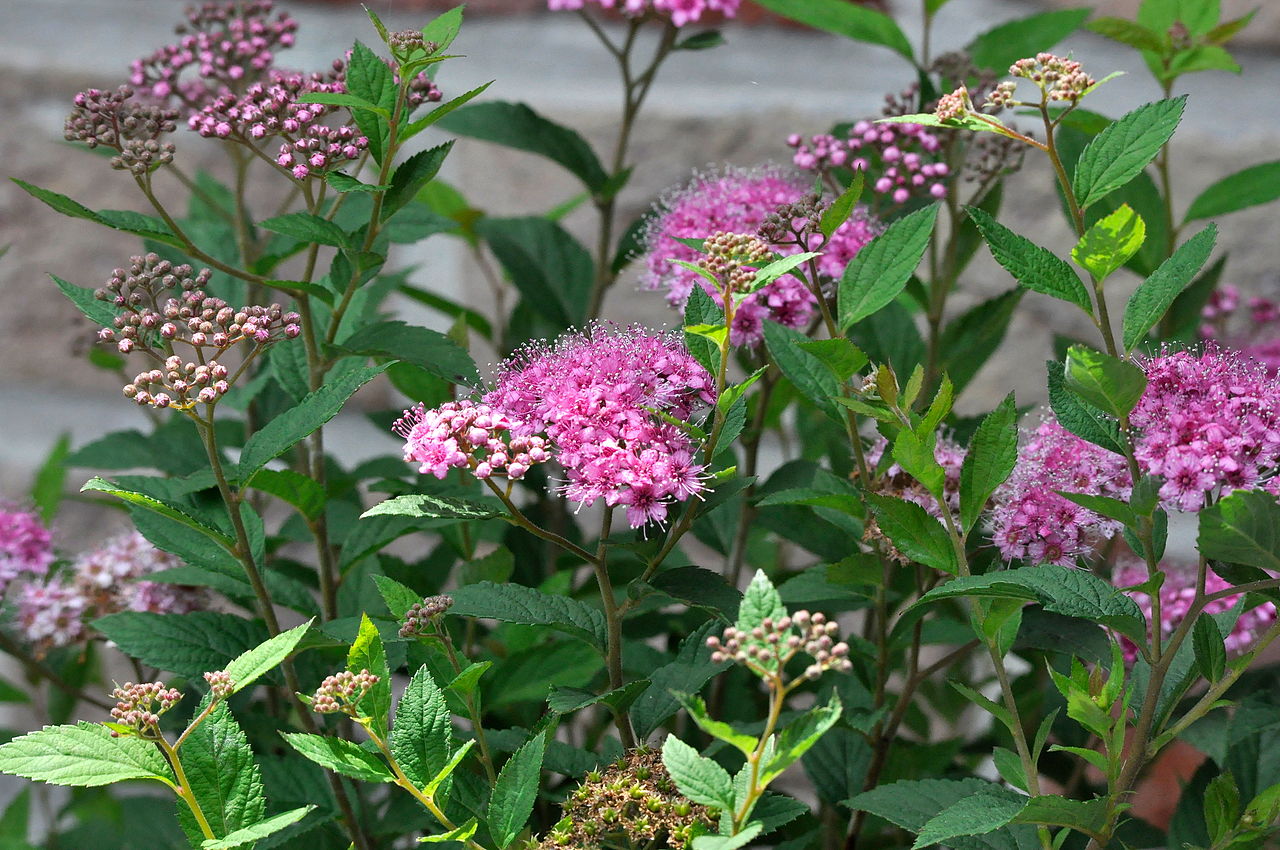



3.麻叶绣线菊(石棒子、麻叶绣球)Spiraea catoniensis Lour.
【形态】:直立丛生灌木。小枝密集,皮暗红单叶互生,长椭圆形至披针形,中部以上有大花白色,10~30朵密集成顶生半球形伞形花
【分布】:原产我国东部和南部,各地广泛栽培,华北、华东常见。日本亦有栽培。
【习性】:性喜光,也稍耐阴,耐干旱瘠薄,怕湿涝。对土壤要求不严,分蘖力强。
【繁殖】:以分株、扦插繁殖为主,也可用种子繁殖。
【用途】:夏季盛开白色或粉红色鲜艳花朵,可植于庭院、公园、水边、路旁或栽于假山及斜坡上,供观赏。列植路边,形成绿篱极为美观。又为蜜源植物。
Spiraea cantoniensis, the Reeve's spiraea, bridalwreath spirea, double white may, Cape may or may bush, is a species of plant native to China, belonging to the rose family Rosaceae. An ornamental plant featured in gardens, it is a shrub growing up to 1.5 metres tall with frothy多泡的、空洞的, pompom-like clusters of snow-white flowers borne along arching branches that bloom in May in its native country, hence its common name.
Spiraea cantoniensis
Common Name(s): Bridal-wreath Spiraea、Cape May、Double White May、May Bush、Reeves Spiraea (double)、Spiraea
Description
Spiraea cantoniensis, or Bridal-wreath Spiraea, is a deciduous perennial shrub typically grown as an ornamental feature in gardens. The plant can reach a height of 6 feet, tends to be twiggy and spreading into a fountain-like form, and displays frothy, pompom-like clusters of snow-white flowers along the terminal of arching branches. The bush blooms in May in its native China; hence the common name, May Bush.
Bridal-wreath Spiraea is a hardy plant that is drought and heat tolerant, slightly salt tolerant, and seldom damaged by deer. The plant is easily transplanted, grows rapidly, and will often require pruning, which should be done after the plant has completed flowering. It grows in a range of soil types with the exception of wet soil and produces new stems from the base of the plant. It is best grown in cooler climates with protection from the hot afternoon sun as that can cause leaf burn.
The flowers attract butterflies.


4.中华绣线菊(铁黑汉条、华绣线菊)Spiraea chinensis Maxim.
【形态】:小枝呈拱形弯曲,红褐色,幼时被红黄色绒毛,有时无毛;冬芽卵形,外被柔毛。单叶菱状卵形至倒卵形,边缘有缺刻状粗锯齿,或具不明显3裂,上面暗绿色,被短柔毛,下面密被黄色绒毛。花白色.雄蕊短于花瓣或与花瓣等长;花柱短于雄蕊;伞形花序,花梗具短绒毛;苞片线形.被短柔毛;萼筒钟状,外面有稀疏柔毛,内面密被柔毛。蓇葖果开张,被短柔毛。花期3~6月,果期6~10月。
【分布】:华北以南至云贵、两广等广大地区。
【习性】:生于山坡、山谷溪边、田野旁边,适宜海拔高度500~2040m。
【繁殖】:种子、分株、扦插繁殖。
【用途】:花人药,丛植、孤植、群植供观赏。

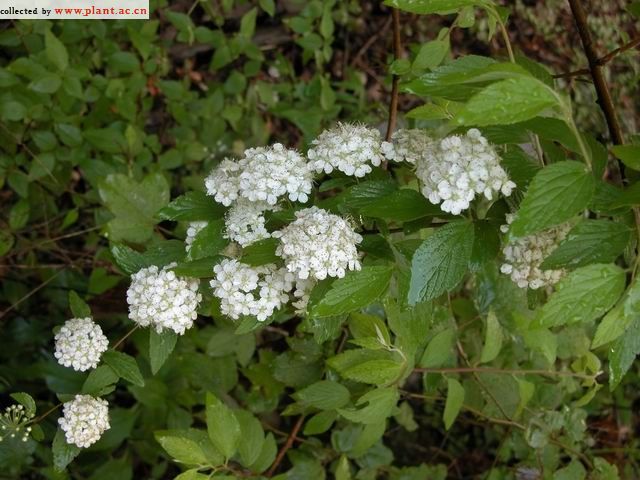


5.李叶绣线菊(笑靥花)Spiraea prunifolia Sieb.etZucc.
【形态】:高达3m。冬芽小,卵形,无毛。叶小,长2.5~125px,叶缘中部以上有锐锯齿,叶背有细短柔毛或光滑;叶柄短。3~6朵花组成伞形花序,无总梗,基部具少数叶状苞片;花瓣5,白色,重瓣,花朵平展,中心微凹如笑靥,花径约25px;化梗细长;雄蕊多数,短于花瓣。蓇葖果,顶端具宿存花柱,无毛。花期4~5月,果期7~8月。。
【变种】:单瓣李叶绣线菊var.siplicifraNakai,花单瓣,径约150px,极少栽培。
【分布】:产于我国长江流域,朝鲜、日本也有分布。
【习性】:喜光稍耐阴,耐寒,耐旱亦耐湿,耐瘠薄。萌蘖性、萌芽力强,生长健壮,耐修剪。
【繁殖】:扦插或分株繁殖。
【用途】:花大多重瓣,春天花色洁白,繁密似雪。
园林造景、环境绿化用树种。宜丛植池畔、山坡、路旁或树丛之边缘,亦可成片群植于草坪及建筑物角隅。
Spiraea prunifolia
Common Name(s): Bridal Wreath Spiraea、Bridal Wreath Spirea
Description
Bridal wreath spirea is a drought-tolerant, flowering, deciduous shrub that grows to 9 feet high and 8 feet wide. It tends to be twiggy in form, loose and fountain-like. The plant is easily grown in average, medium moisture, in well-drained soils, and does its best flowering when sited in full sun. It will tolerate light shade, a wide range of soils including clay, deer, and some drought. In its native China, the plant is often found on sunny hillsides or stony, barren places. Because it is an upright, arching shrub that can become leggy, you may want to prune as needed immediately after flowering. On the other hand, if left alone Bridal Wreath Spirea grows into what some consider a graceful, open, arching shrub with branches drooping all the way to the ground. Whether it is leggy or elegant, seems to be a matter of taste.
Bridal wreath is noted for its early spring bloom of double white flowers that appear in profusion along the bare branches. The pure white flowers are borne in long sprays that can be fashioned into wreaths and worn on the head for a special occasion, hence the name. The foliage appears after the blooms as small, shiny dark green leaves. Foliage often develops an attractive red-orange-yellow fall color.
S. prunifolia ‘Plena’ is the long-favored bridal wreath usually found in retail. Species plants as well as the single-flowered plant (Spiraea prunifolia var. simpliciflora) are generally not available. Note that the double-flowered plant was botanically described prior to the single-flowered plant, hence the double flower became the species and the single flower became a variety or form of the species.


6.珍珠绣线菊(珍珠花、雪柳、喷雪花)Spiraea thunbergii Sieb.etZucc.
【形态】:高达1.5m。枝条纤细开展,弧形弯曲,小枝有棱角,幼时密被柔毛,褐色,老时红褐色。叶条状披针形,叶近无柄。伞形花序无总梗或有短梗,基部有数枚小叶片;萼筒钟状,萼片三角形,内面有密短柔毛,花瓣宽倒卵形,白色;雄蕊多数,长为花瓣的1/3或更短;花柱与雄蕊近等长。聚合蓇葖果开张,花柱宿存。花期4~5月,果期7月。
【分布】:原产华东,主要分布于浙江、江西、云南,陕西、辽宁等省有栽培。
【习性】:耐寒,分蘖性强,耐修剪,栽培容易,易管理。在全光照下生长健壮,特别进入秋季,秋叶变色快,与庇荫下树相比,颜色变得更红,更鲜艳,持续时间长。
【繁殖】:扦插或播种繁殖。
【用途】:叶形似柳,开花早,花白如雪,故又称“雪柳”。树姿潇洒,小枝纤细向上倾斜弯曲,花朵小巧密集,布满枝头,在阳光照射下,犹如串串珍珠。是东北地区园林绿化中不可多得的观花、观叶的优良花灌木。通常作为彩叶篱多丛植于街道、公园、小区、广场等草坪角隅或作基础种植,亦可作切花用。
Spiraea thunbergii
Common Name(s): Baby's Breath Spiraea、Breath of Spring Spiraea、Thunberg's Meadowsweet、Thunberg Spira
Description
Spiraea thunbergii, or Breath of Spring Spiraea, is a drought-tolerant, upright, deciduous, flowering shrub that can reach a height of 5 feet and an equal width. The plant grows easily in average, medium moisture, well-drained soils in full sun, although it does tolerate light shade, a wide range of soils including clay, and some drought. In its native Asia, it is often found on rocky hillsides. However, it does not tolerate wet soil. To maximize blooming, you should site the plant in a warm, sheltered place where it will obtain full sun. The plant form is loose and fountain-like with wiry, outward-arching branches and tends to be twiggy, so you should prune as needed immediately after flowering to maintain a desired shape. The plant flowers on the previous summer's growth and should be pruned immediately after flowering in order to promote new growth.
Breath of Spring Spiraea is noted for its early spring bloom (April, usually the first spiraea to bloom) of tiny white flowers (each to 1/3” diameter) in 3- to 5-flowered clusters. The narrow, pale green leaves that emerge after the blooms have a willow-like appearance. Foliage turns yellow in fall, with orange and bronze hues.
This is one of several plants whose Latin species thunbergii honors the Swedish botanist and plant collector Carl Peter Thunberg (1743-1828).


三.珍珠梅属SorbariaA.Br.
落叶灌木。奇数羽状复叶互生,有小锯齿,具托叶;花两性,小,极多数,排成顶生圆锥花序;萼片5,反折;花瓣5;雄蕊20~50;心皮5,基部合生,蓇葖果。9种,分布于亚洲。中国有3种,产西南部和东北部。分种检索表
1.蓇葖果长圆形,果梗直立………………………………………………………………珍珠梅
1.蓇葖果圆柱形,下垂,果梗弯曲…………………………………………………高丛珍珠梅
1.珍珠梅(东北珍珠梅、华楸珍珠梅、吉氏绣线菊)Sorbaria kirilawii(Regel)Maxim.
【形态】:高达2m。枝开展,小枝弯曲,幼时绿色,老时暗黄褐色或暗红褐色;鳞芽卵形紫褐色。奇数羽状复叶,小叶近无柄,披针形至卵状披针形,有尖锐重锯齿,两面近无毛,羽状脉;托叶卵状披针形至三角状披针形。花白色,顶生圆锥花序大,总花梗和花梗均被星状毛或短柔毛,果期逐渐脱落;萼裂片三角状卵形,先端急尖。果梗直立,蓇葖果长圆形。花期5~7月,果期9~10月。。
【分布】:原产亚洲北部,河北、山,西、山东、河南、内蒙古均有分布,现各地栽培。
【习性】:喜光又耐阴,性强健,不择土壤,有一定的耐寒性。生长迅速,萌蘖性强,耐修剪。
【繁殖】:播种、扦插及分株繁殖。
【用途】:花蕾圆形、洁白如珍珠,花开似梅,故此得名。花期长,开时正值少花季节,尤其是其具极强的耐阴性,在避阳之处,仍能生机蓬勃,正常开花。枝叶茂密,姿态秀丽;花序恰似雪球,堪称花叶并美。丛植、散植颇为理想。也是制作桩景和切花的优良材料。
Sorbaria sorbifolia, the false spiraea, is a species of flowering plant in the family Rosaceae. The common name is also spelled false spirea. Other common names include false goat's beard, sorb-leaved schizonotus, Ural false spirea, and in Chinese: 珍珠梅; pinyin: zhen zhu mei; lit. 'pearl plum'.
Sorbaria sorbifolia
Common Name(s): False Spirea
Description
Sorbaria sorbifolia, or False Spirea, is a deciduous, erect, multi-stemmed shrub that is best grown in average, medium moisture, organically rich, well-drained soil. It flowers best when sited in full sun and spreads by suckers to form colonies. It is a hardy and aggressive plant and you should remove the root suckers promptly to control its spread and prune in late winter and early spring before new growth. To rejuvenate a tired plant, you can cut it close to the ground. Ural Spirea is a cultivar that does not have the invasive characteristic of the parent False Spirea, making it much improved variant for the home gardener.
This coarse shrub grows to 5 to 8 feet tall (sometimes to 10 feet) and as wide. It displays masses of tiny white flowers in early summer and the deep green foliage resembles mountain ash to which it is related. It is sometimes planted en mass for erosion control.


2.高丛珍珠梅(珍珠排、野生珍珠梅)SorbariaarboreaSchneid.
【形态】:直立丛生灌木,高达6m。小枝微有星状毛。小叶13~17枚,披针形至矩圆状披针形,边缘有重锯齿,下面稍有星状毛;小叶柄短或近无柄。大形圆锥花序顶生,花白色;萼片稍短于萼筒;雄蕊长于花瓣。蓇葖果圆柱形,下垂,果梗弯曲。花期6~7月,果期9~10月。
【分布】:产陕西、甘肃、湖北、四川、云南、贵州、西藏等地。生于山坡林缘、溪边。
【习性】:喜光又耐阴,抗寒,耐旱。对土壤要求不严,一般土壤均可栽培,但宜选择排水良好、肥沃、湿润的砂质壤土栽培。
【繁殖】:分株和扦插繁殖。
【用途】:树形优美,用于观赏。
A spreading deciduous shrub, usually 10 to 20 ft high, but said sometimes to be up to 30 ft; young shoots and leaf-stalks slightly downy. Leaves pinnate, with thirteen to seventeen leaflets which are oblong-ovate to lanceolate, long and slenderly pointed, 2 to 4 in. long, doubly toothed, stellately downy beneath but often only slightly so. Flowers white, 1⁄4 in. wide, produced densely in fine, often pyramidal panicles up to and over 12 in. long, during July.
Native of Central and Western China, introduced by E. H. Wilson in 1908. It is closely akin to S. tomentosa but superior to that species which differs in the hairs beneath the leaves being simple (not clustered). S. arborea has also a shorter calyx-tube and longer stamens. It is the finest of the genus and may be pruned every winter. It likes a good loamy soil and gives finer panicles if top-dressed with manure occasionally.


华北珍珠梅(Sorbaria kirilowii )
俗名:珍珠梅、吉氏珍珠梅
形态特征
生活型: 灌木;
株: 高达3米;
枝: 小枝无毛;冬芽近无毛;
叶: 羽状复叶具小叶13-21,连叶柄长21-25厘米;小叶披针形至长圆状披针形,长4-7厘米,先端渐尖,稀尾尖,有尖锐重锯齿,两面无毛或下面脉腋具短柔毛,侧脉15-23对,近平行:小叶柄短或近无柄,无毛,托叶线状披针形,无毛;
花: 圆锥花序密集,径7-11厘米,无毛,微被白粉;花梗长3-4毫米;苞片线状披针形,全缘:花径5-7毫米:被丝托钟状,无毛,萼片长圆形,无毛:花瓣白色,倒卵形或宽卵形,长4-5毫米;雄蕊20,与花瓣等长或稍短;花盘圆盘状;心皮5,花柱稍短于雄蕊;
果: 蓇葖果长圆柱形,无毛,长约3毫米,花柱稍侧生,宿存萼片反折,稀开展;果柄直立;
生态习性
国内产地: 河北、河南、山东、山西、陕西、甘肃、青海、内蒙古;
生境: 山坡阳处、杂木林中;
海拔: 200-1300m;
物候期: 花期6-7月,果期9-10月;
Sorbaria kirilowii
Wildflowers
Plants of the World
Kirilow false spiraea
S. kirilowii is a vigorous, thicket-forming shrub with leaves to 30cm in length, composed of lance-shaped, toothed leaflets and, in mid and late summer, bearing terminal panicles to 40cm in length of small white flowers.


