-
1 主页
-
2 资料
-
3 教材2
-
4 教材3
豆科 LEGUMINOSAE
更名:Fabaceae
1、乔木、灌木、亚灌木或草本,直立或攀援,常有能固氮的根瘤。
2、叶常绿或落叶,通常互生,稀对生,常为一回或二回羽状复叶,少数为掌状复叶或3小叶、单小叶,或单叶,罕可变为叶状柄,叶具叶柄或无;托叶有或无,有时叶状或变为棘刺。
3、花两性,稀单性,辐射对称或两侧对称,通常排成总状花序、聚伞花序、穗状花序、头状花序或圆锥花序;
花被2轮;萼片(3-)5(6),分离或连合成管,有时二唇形,稀退化或消失;花瓣(0-)5(6),常与萼片的数目相等,稀较少或无,分离或连合成具花冠裂片的管,大小有时可不等,或有时构成蝶形花冠,近轴的(adaxil)1片称旗瓣,侧生的2片称翼瓣,远轴的(abaxil)2片常合生,称龙骨瓣,遮盖住雄蕊和雌蕊;雄蕊通常10枚,有时5枚或多数(含羞草亚科),分离或连合成管,单体或二体雄蕊,花药2室,纵裂或有时孔裂,花粉单粒或常联成复合花粉;雌蕊通常由单心皮所组成,稀较多且离生,子房上位,1室,基部常有柄或无,沿腹缝线具侧膜胎座,呸珠2至多颗,悬垂或上升,排成互生的2列,为横生、倒生或弯生的胚珠;花柱和柱头单一,顶生。
4、果为荚果,形状种种,成熟后沿缝线开裂或不裂,或断裂成含单粒种子的荚节;种子通常具革质或有时膜质的种皮,生于长短不等的珠柄上,有时由珠柄形成一多少肉质的假种皮,胚大,内胚乳无或极薄。
约650属,18000种 1),广布于全世界。我国有172属,1485种,13亚种,153变种,16变型;各省区均有分布。
本科亦有不少植物学家将其分成3个独立的科,即含羞草科(Mimosaceae)、云实科(Caesalpiniaceae)和蝶形花科(Papilionaceae=Fabaceae),并认为和无患子科(Sapindaceae)、牛栓藤科(Connaraceae)或蔷薇科(Rosaceae)有较密切的亲缘关系。据R. M. Polhill(1981)等人的观点,本科中云实亚科的 Gleditsia 类群比较原始,由此分化成2个基本类群:1. Dimorphandra 类群,2. Sclerolobium 类群。前者向含羞草亚科演进,后者向蝶形花亚科演进。本志中将含羞草亚科排列在前,并不意味着云实亚科直接起源于含羞草亚科,只是考虑到云实亚科和蝶形花亚科有较紧密的联系。
The Fabaceae or Leguminosae, commonly known as the legume, pea, or bean family, are a large and agriculturally important family of flowering plants. It includes trees, shrubs, and perennial or annual herbaceous plants, which are easily recognized by their fruit and their compound, stipulate(有托叶的) leaves. Many legumes have characteristic flowers and fruits. The family is widely distributed, and is the third-largest land plant family in number of species, behind only the Orchidaceae and Asteraceae, with about 765 genera and nearly 20,000 known species.
1 花辐射对称,花瓣镊合状排列,分离或连合,花药顶端有时有1个脱落的腺体。............含羞草亚科
2 花稍两侧对称,近轴的1枚花瓣位于相邻两侧的花瓣之内,花丝通常分离。....................云实亚科
2花明显两侧对称,花冠蝶下蝶形,近轴的1枚花瓣(旗瓣)位于相邻两 的花瓣(翼瓣)之外,远轴的2枚花瓣(龙骨瓣)基部沿连接处合生呈龙骨状,雄蕊通常为二体(9+1)雄蕊或单体雄蕊,稀分离。..... 蝶形花科
一. 羊蹄甲属 Bauhinia Linn.
乔木,灌木或攀援藤本。托叶常早落;单叶,全缘,先端凹缺或分裂为2裂片,有时深裂达基部而成2片离生的小叶;基出脉3至多条,中脉常伸出于2裂片间形成一小芒尖。花两性,很少为单性,组成总状花序,伞房花序或圆锥花序;苞片和小苞片通常早落;花托短陀螺状或延长为圆筒状;萼杯状,佛焰状或于开花时分裂为5萼片;花瓣5片,略不等,常具瓣柄;能育雄蕊10、5或3枚,有时2或1枚,花药背着,纵裂,很少孔裂;退化雄蕊(或称不育雄蕊)数枚,花药较小,无花粉;假雄蕊先端渐尖,无花药,有时基部合生如掌状;花盘扁平或肉质而肿胀,有时缺;子房通常具柄,有胚珠2至多颗,花柱细长丝状或短而粗,柱头顶生,头状或盾状。荚果长圆形,带状或线形,通常扁平,开裂,稀不裂;种子圆形或卵形,扁平,有或无胚乳,胚根直或近于直。
约600种,遍布于世界热带地区。我国有40种,4亚种,11变种,主产南部和西南部。
1.羊蹄甲(广州)玲甲花(植物名实图考)
Bauhinia purpurea Linn.
俗名:紫花羊蹄甲、玲甲花
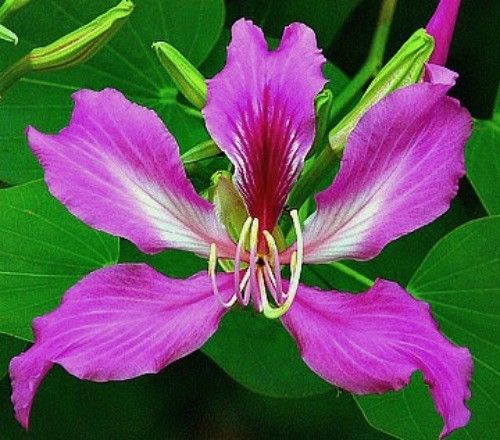
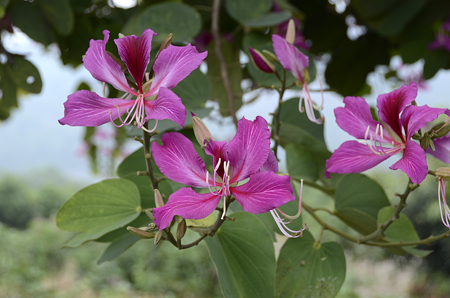
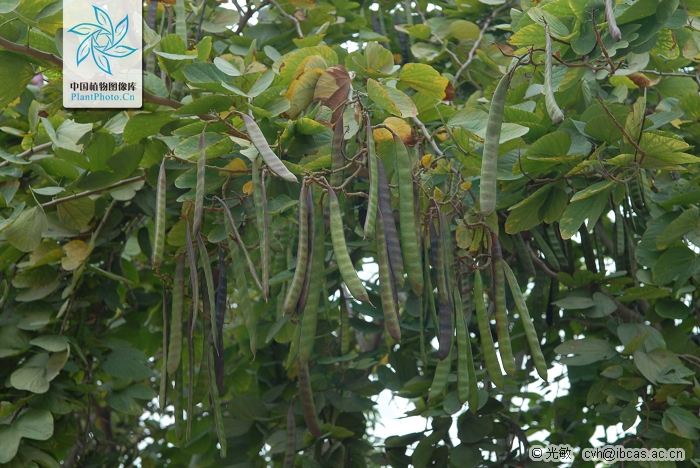
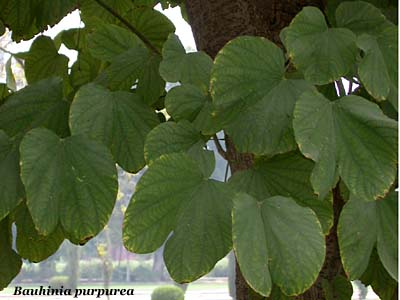
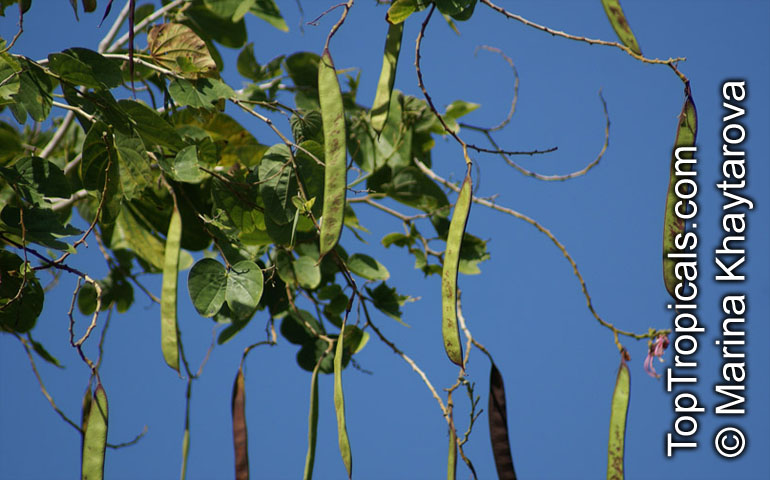
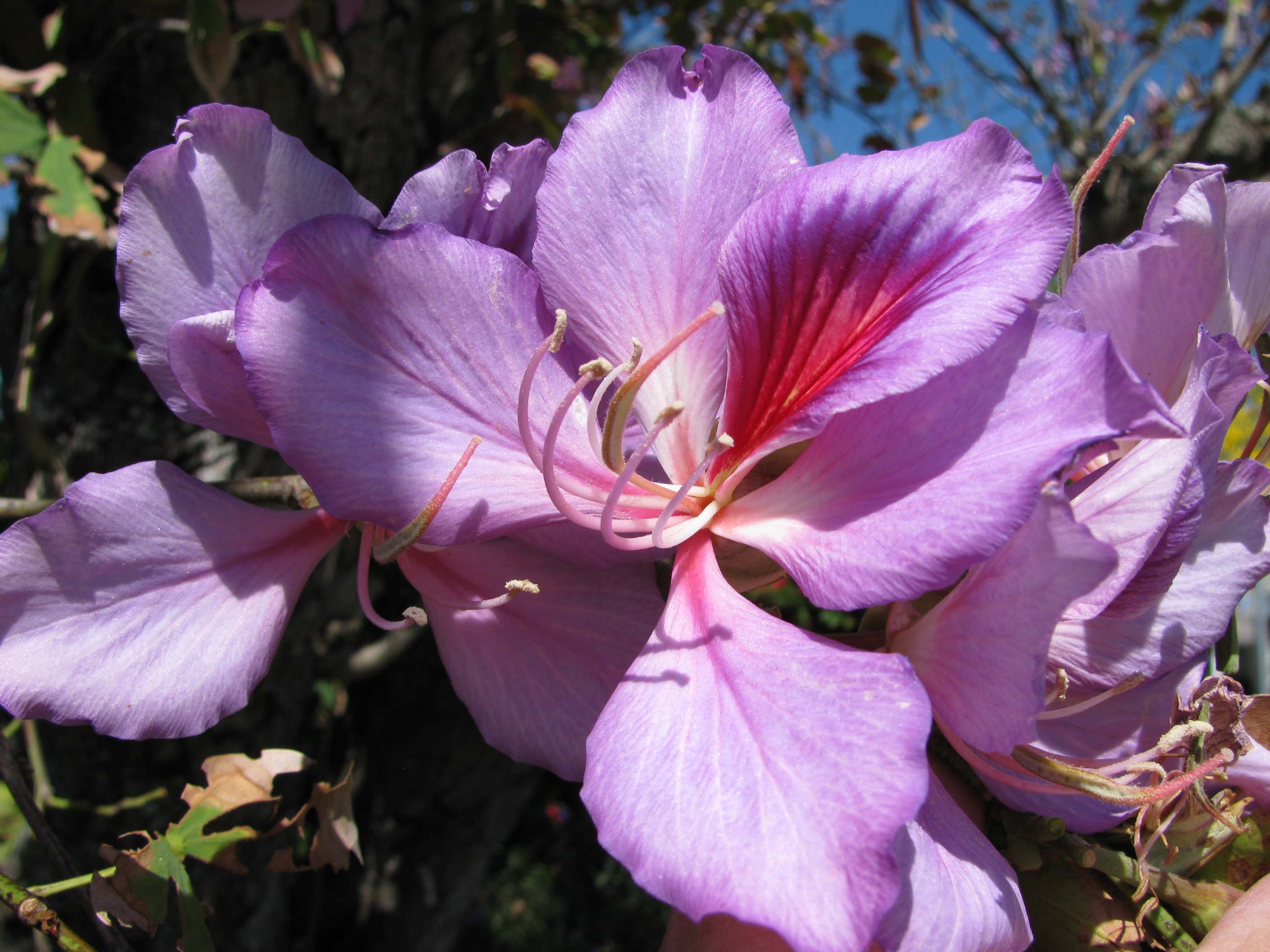
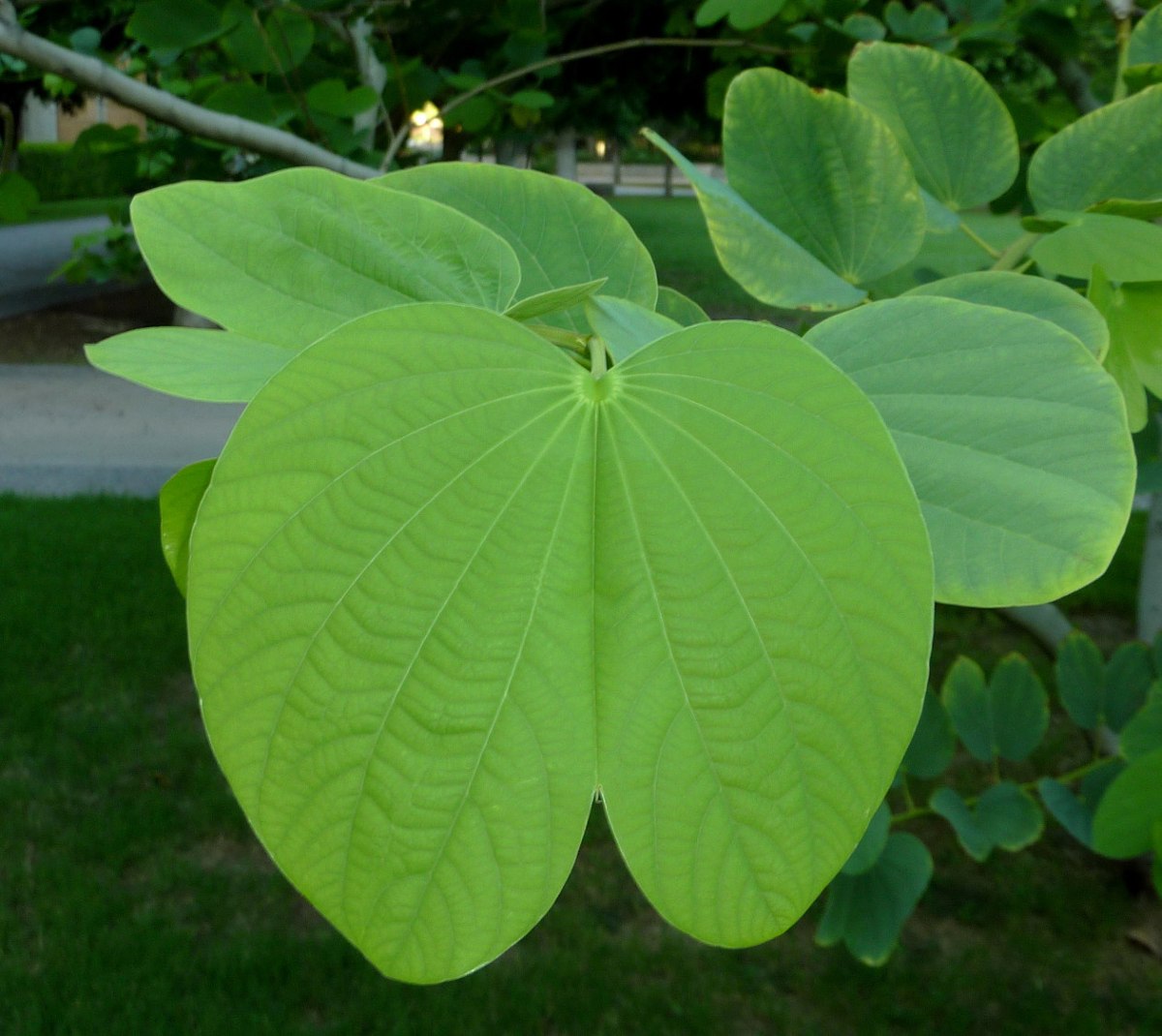
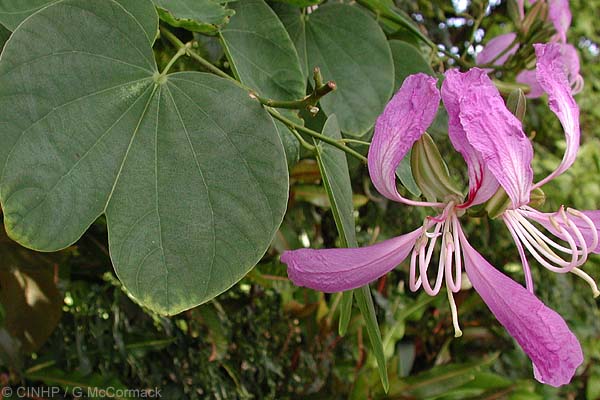
乔木或直立灌木,高7-10米;树皮厚,近光滑,灰色至暗褐色;枝初时略被毛,毛渐脱落,叶硬纸质,近圆形,长10-15厘米,宽9-14厘米,基部浅心形,先端分裂达叶长的1/3-1/2,裂片先端圆钝或近急尖,两面无毛或下面薄被微柔毛;基出脉9-11条;叶柄长3-4厘米。总状花序侧生或顶生,少花,长6-12厘米,有时2-4个生于枝顶而成复总状花序,被褐色绢毛;花蕾多少纺锤形,具4-5棱或狭翅,顶钝;花梗长7-12毫米;萼佛焰状,一侧开裂达基部成外反的2裂片,裂片长2-2.5厘米,先端微裂,其中一片具2齿,另一片具3齿;花瓣桃红色,倒披针形,长4-5厘米,具脉纹和长的瓣柄;能育雄蕊3,花丝与花瓣等长;退化雄蕊5-6,长6-10毫米;子房具长柄,被黄褐色绢毛,柱头稍大,斜盾形。英果带状,扁平,长12-25厘米,宽2-2.5厘米,略呈弯镰状,成熟时开裂,木质的果瓣扭曲将种子弹出;种子近圆形,扁平,直径12-15毫米,种皮深褐色。花期9-11月;果期2-3月。
产我国南部。中南半岛、印度、斯里兰卡有分布。
世界亚热带地区广泛栽培于庭园供观赏及作行道树、树皮、花和根供药用,为烫伤及脓疮的洗涤剂、嫩叶汁液或粉末可治咳嗽,但根皮剧毒,忌服。
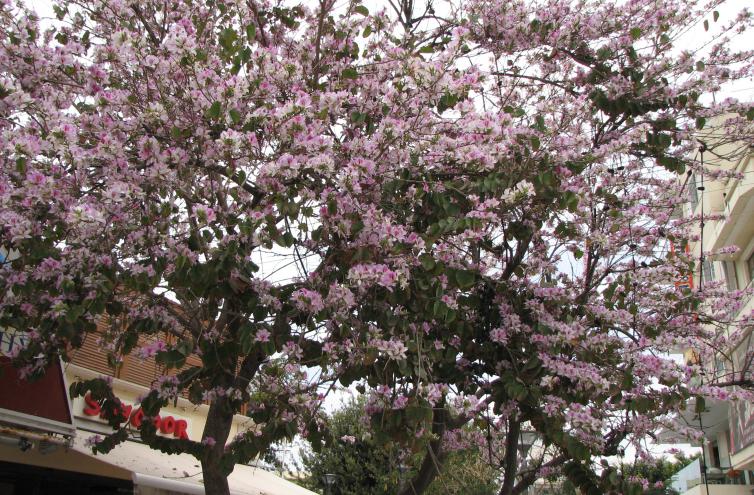
Bauhinia purpurea is a species of flowering plant in the family Fabaceae, native to the Indian subcontinent and Myanmar, and widely introduced elsewhere in tropical and subtropical areas of the world. Common names include orchid tree, purple bauhinia, camel's foot, butterfly tree, and Hawaiian orchid tree.
This fast-growing orchid-tree will ultimately reach 35 feet in height and width, the slender trunks topped with arching branches clothed in large, two-lobed, deciduous leaves. In fall, before the leaves drop, orchid-tree is festooned with many showy and delightfully fragrant, 5-inch-wide blossoms, the narrow purple, pink, and lavender petals arranged to closely resemble an orchid. These flowers appear on the trees from September through November and are a beautiful sight to see, creating a vivid splash of color in the autumn landscape. The flowers are followed by 12-inch-long, slender, brown, flat seedpods which usually persist on the tree throughout the winter, then fall to create a mess to clean up. The spectacular flower display makes orchid-tree a favorite for specimen plantings.



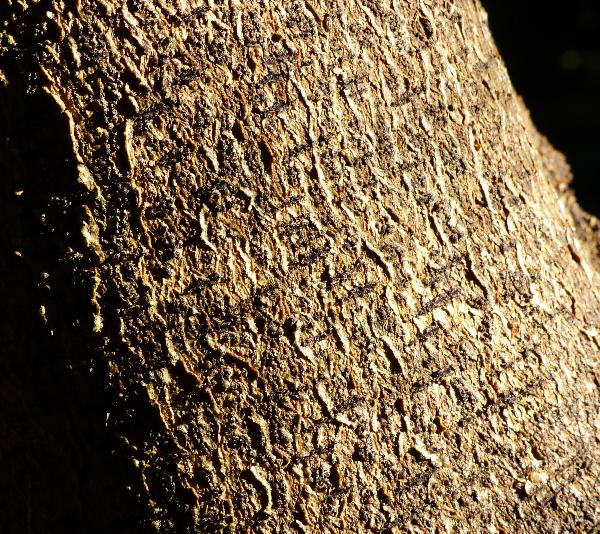
二、云实属 Caesalpinia Linn.
乔木、灌木或藤本,通常有刺。二回羽状复叶;小叶大或小。总状花序或圆锥花序腋生或顶生;花中等大或大,通常美丽,黄色或橙黄色;花托凹陷;萼片离生,覆瓦状排列,下方一片较大;花瓣5片,常具柄,展开,其中4片通常圆形,有时长圆形,最上方一片较小,色泽、形状及被毛常与其余四片不同;雄蕊10枚,离生,2轮排列,花丝基部加粗,被毛,花药卵形或椭圆形,背着,纵裂;子房有胚珠1-7颗,花柱圆柱形,柱头截平或凹入。荚果卵形、长圆形或披针形,有时呈镰刀状弯曲,扁平或肿胀,无翅或具翅,平滑或有刺,革质或木质,少数肉质,开裂或不开裂;种子卵圆形至球形,无胚乳。本属染色体2n=24。
约100种。分布热带和亚热带地区。我国产17种,除少数种分布较广外,主要产地在南部和西南部。
1) 属的异名:苏木属(中国树木分类学)
1.云实( 药王子(湖北宜昌),铁场豆(福建),马豆、水皂角、天豆 )
Caesalpinia decapetala (Roth) Alston
俗名:天豆、水皂角、马豆、铁场豆、药王子
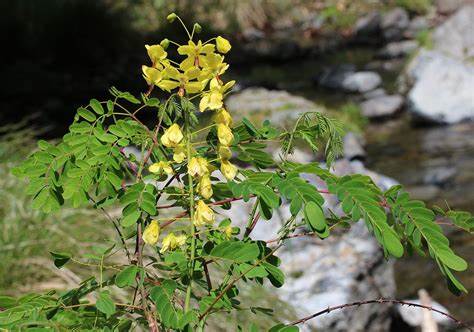
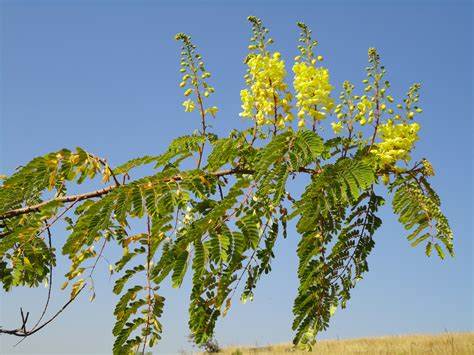
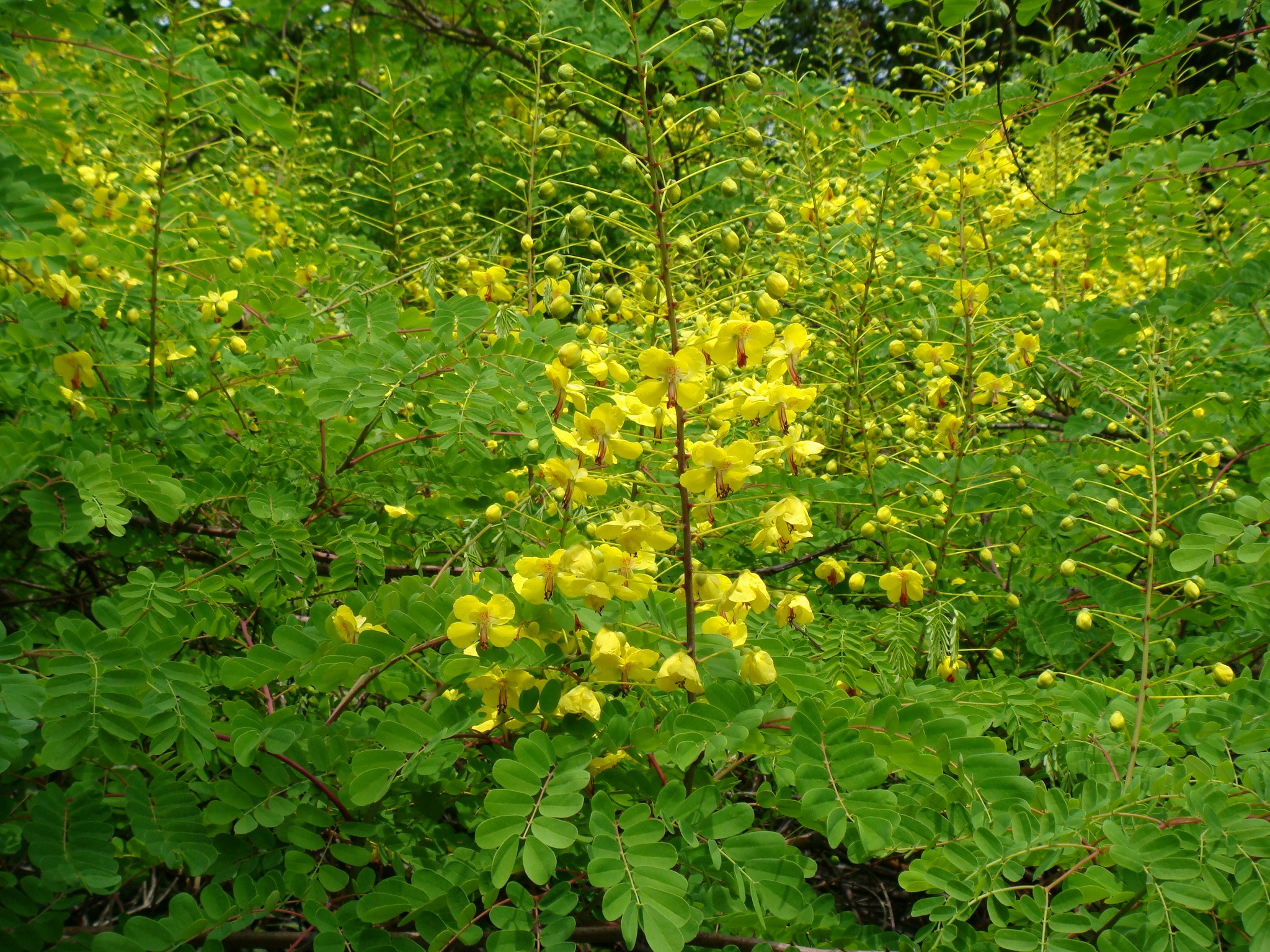
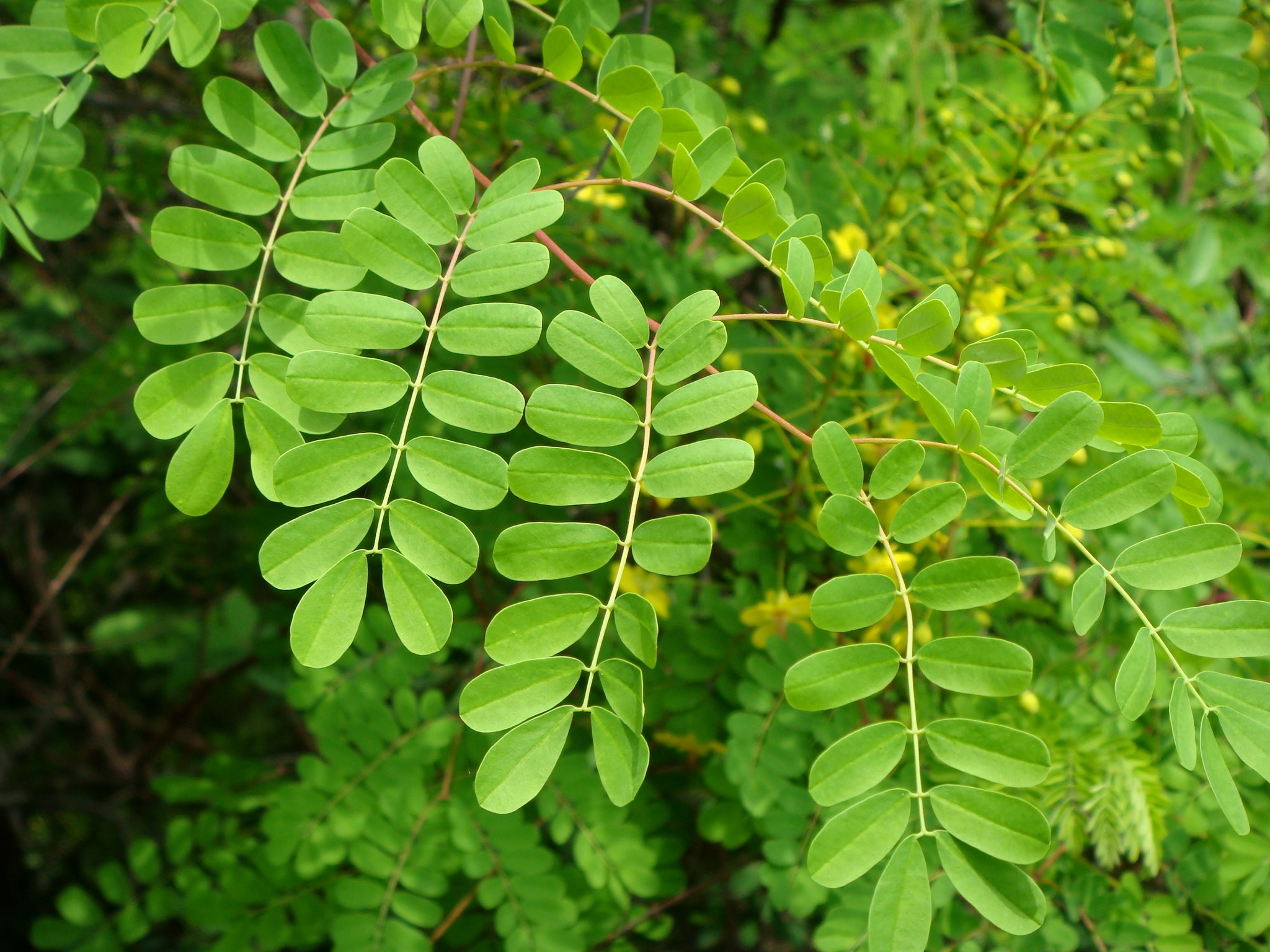
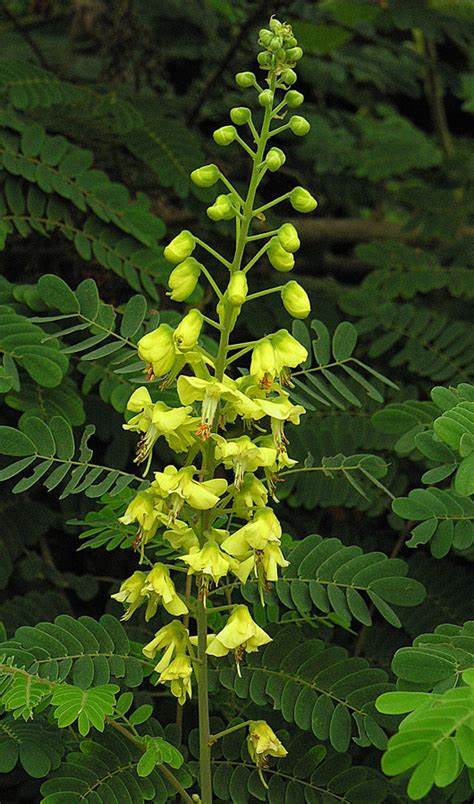
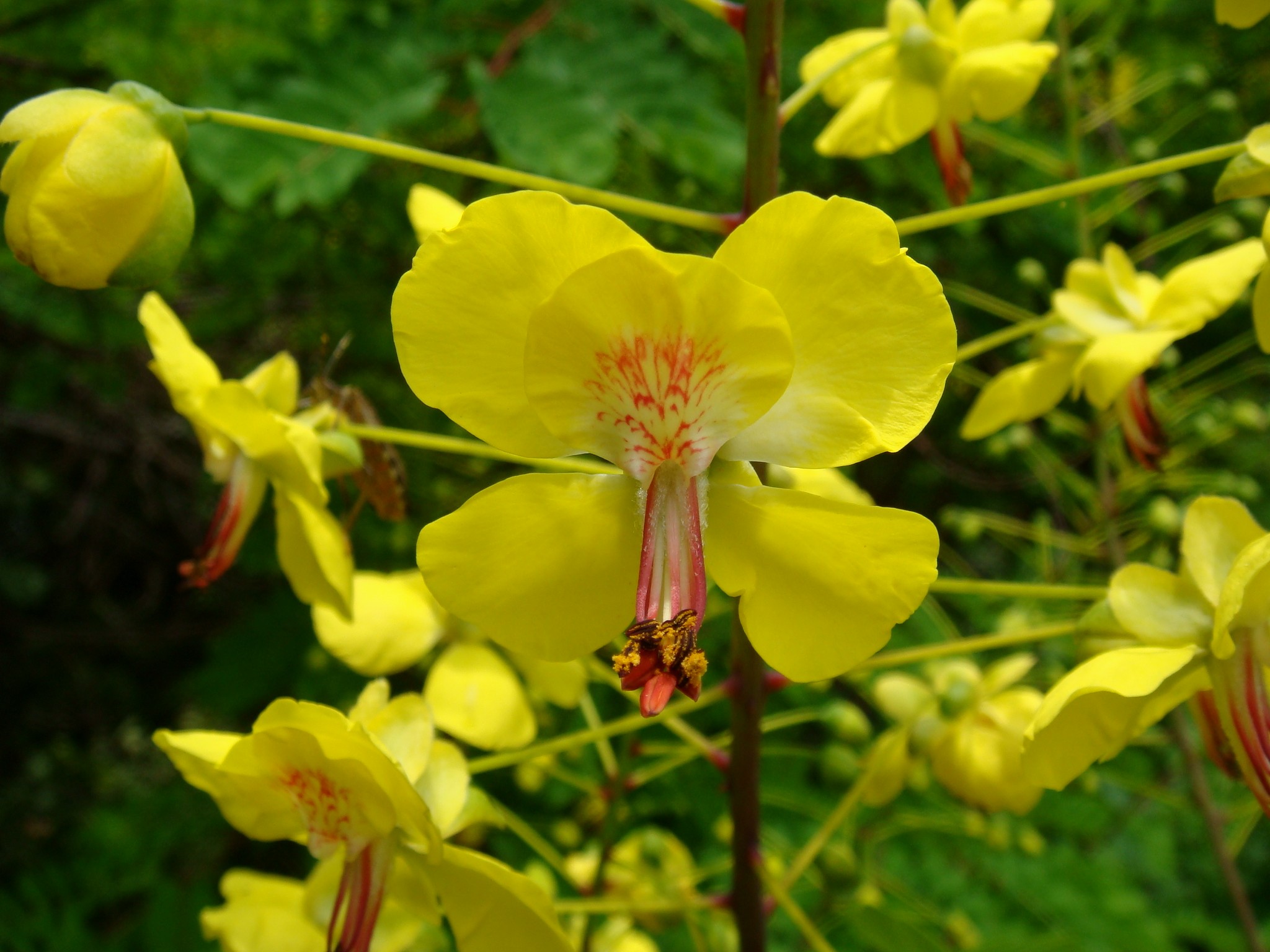
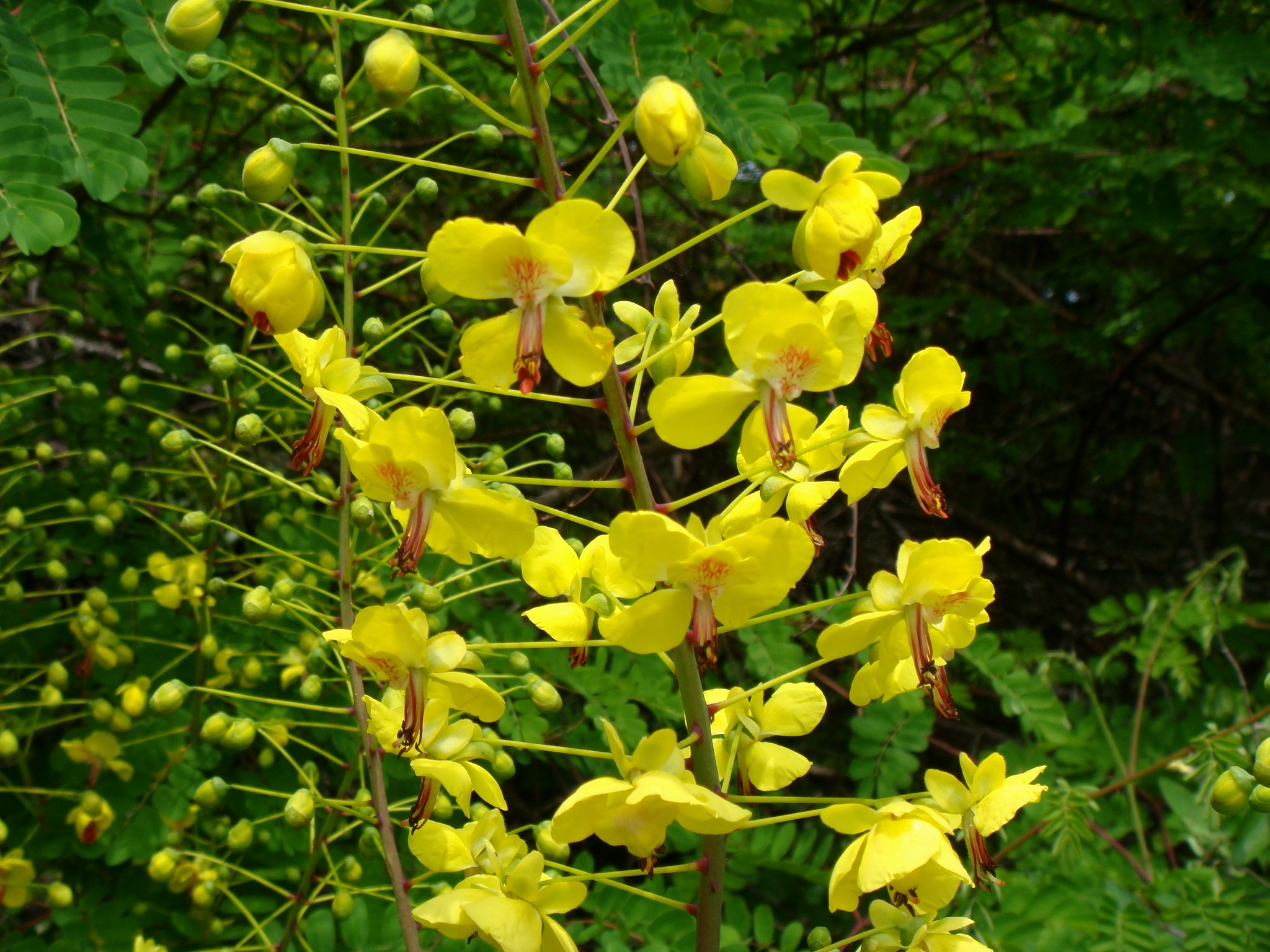
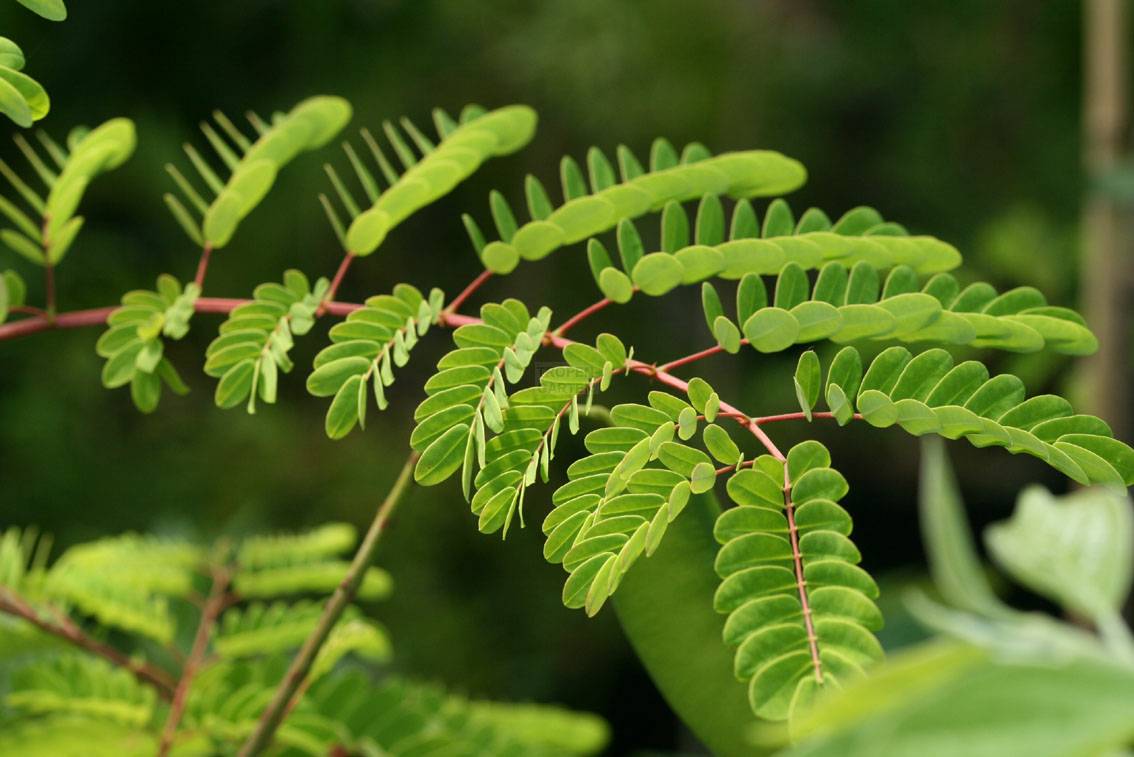
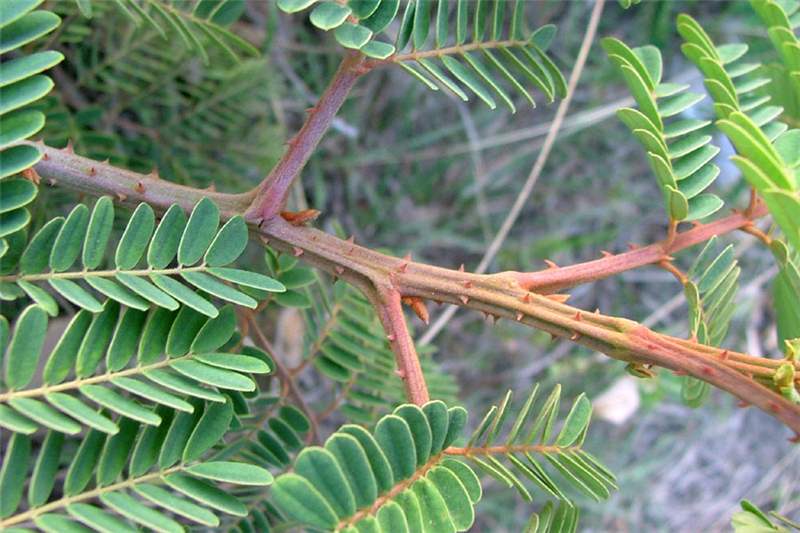
藤本;树皮暗红色;枝、叶轴和花序均被柔毛和钩刺。二回羽状复叶长20-30厘米;羽片3-10对,对生,具柄,基部有刺1对;小叶8-12对,膜质,长圆形,长10-25毫米,宽6-12毫米,两端近圆钝,两面均被短柔毛,老时渐无毛;托叶小,斜卵形,先端渐尖,早落。总状花序顶生,直立,长15-30厘米,具多花;总花梗多刺;花梗长3-4厘米,被毛,在花萼下具关节,故花易脱落;萼片5,长圆形,被短柔毛;花瓣黄色,膜质,圆形或倒卵形,长10-12毫米,盛开时反卷,基部具短柄;雄蕊与花瓣近等长,花丝基部扁平,下部被绵毛;子房无毛。荚果长圆状舌形,长6-12厘米,宽2.5-3厘米,脆革质,栗褐色,无毛,有光泽,沿腹缝线膨胀成狭翅,成熟时沿腹缝线开裂,先端具尖喙;种子6-9颗,椭圆状,长约11毫米,宽约6毫米,种皮棕色。花果期4-10月。
产广东、广西、云南、四川、贵州、湖南、湖北、江西、福建、浙江、江苏、安徽、河南、河北、陕西、甘肃等省区。亚洲热带和温带地区有分布。生于山坡灌丛中及平原、丘陵、河旁等地。
根、茎及果药用,性温、味苦、涩,无毒,有发表散寒、活血通经、解毒杀虫之效,治筋骨疼痛、跌打损伤。果皮和树皮含单宁,种子含油35%,可制肥皂及润滑油。又常栽培作为绿篱。
Biancaea decapetala, commonly known as shoofly, Mauritius or Mysore thorn or the cat's claw, is a tropical tree species originating in India.
C. decapetala is a robust and sprawling shrub or climber 0.5-10 m tall, with numerous straight to hooked thorns on the stems. Bipinnately compound leaves are dark green above, paler beneath, up to 30 cm long, with deciduous stipules 8-20 mm long. The leaf rachis is armed with downwardly hooked prickles. Each leaf consists of 3-15 pairs of pinnae, each pinna having 5-12 pairs of leaflets, elliptic-oblong to ovate, rounded at the apex, 10-22 mm long, 4-11 mm wide. Flowers are pale yellow, 25-30 mm diameter, borne in axillary and terminal racemes 10-40 cm long, petals 10-15 cm long and 8-15 mm wide. Fruits are dehiscent(裂开性的) pods 6-11 cm long, 2-3 cm wide, containing 4-9 black ellipsoid, flattened, black seeds 8-12 mm long and 6-8 mm wide.

三、紫荆属 Cercis Linn.
灌木或乔木,单生或丛生,无刺。叶互生,单叶,全缘或先端微凹,具掌状叶脉;托叶小,鳞片状或薄膜状,早落。花两侧对称,两性,紫红色或粉红色,具梗,排成总状花序单生于老枝上或聚生成花束簇生于老枝或主干上,通常先子叶开放;苞片鳞片状,聚生于花序基部,覆瓦状排列,边缘常被毛;小苞片极小或缺;花萼短钟状,微歪斜,红色,喉部具一短花盘,先端不等的5裂,裂齿短三角状;花瓣5,近蝶形,具柄,不等大,旗瓣最小,位于最里面;雄蕊10枚,分离,花丝下部常被毛,花药背部着生,药室纵裂;子房具短柄,有胚珠2-10颗,花柱线形,柱头头状。荚果扁狭长圆形,两端渐尖或钝,于腹缝线一侧常有狭翅,不开裂或开裂;种子2至多颗,小,近圆形,扁平,无胚乳,胚直立。
属模式种: C. siliquastrum Linn
约8种。其中2种分布于北美,1种分布于欧洲东部和南部,5种分布于我国。通常生于温带地区。
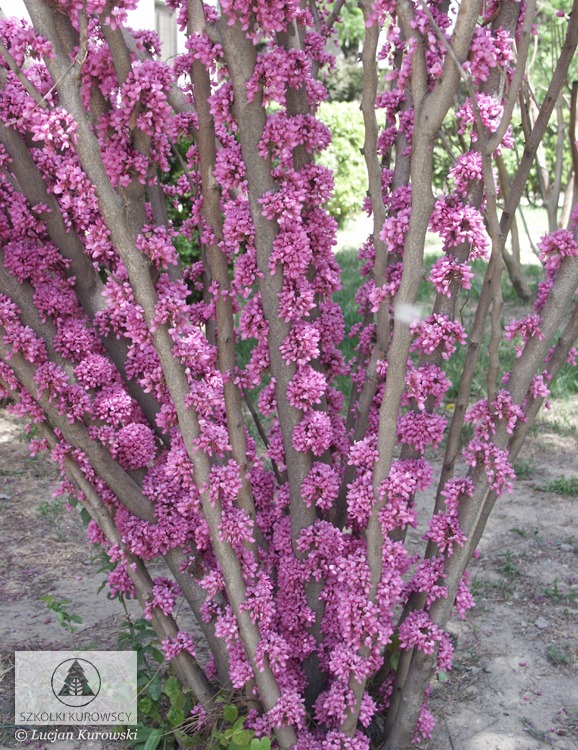
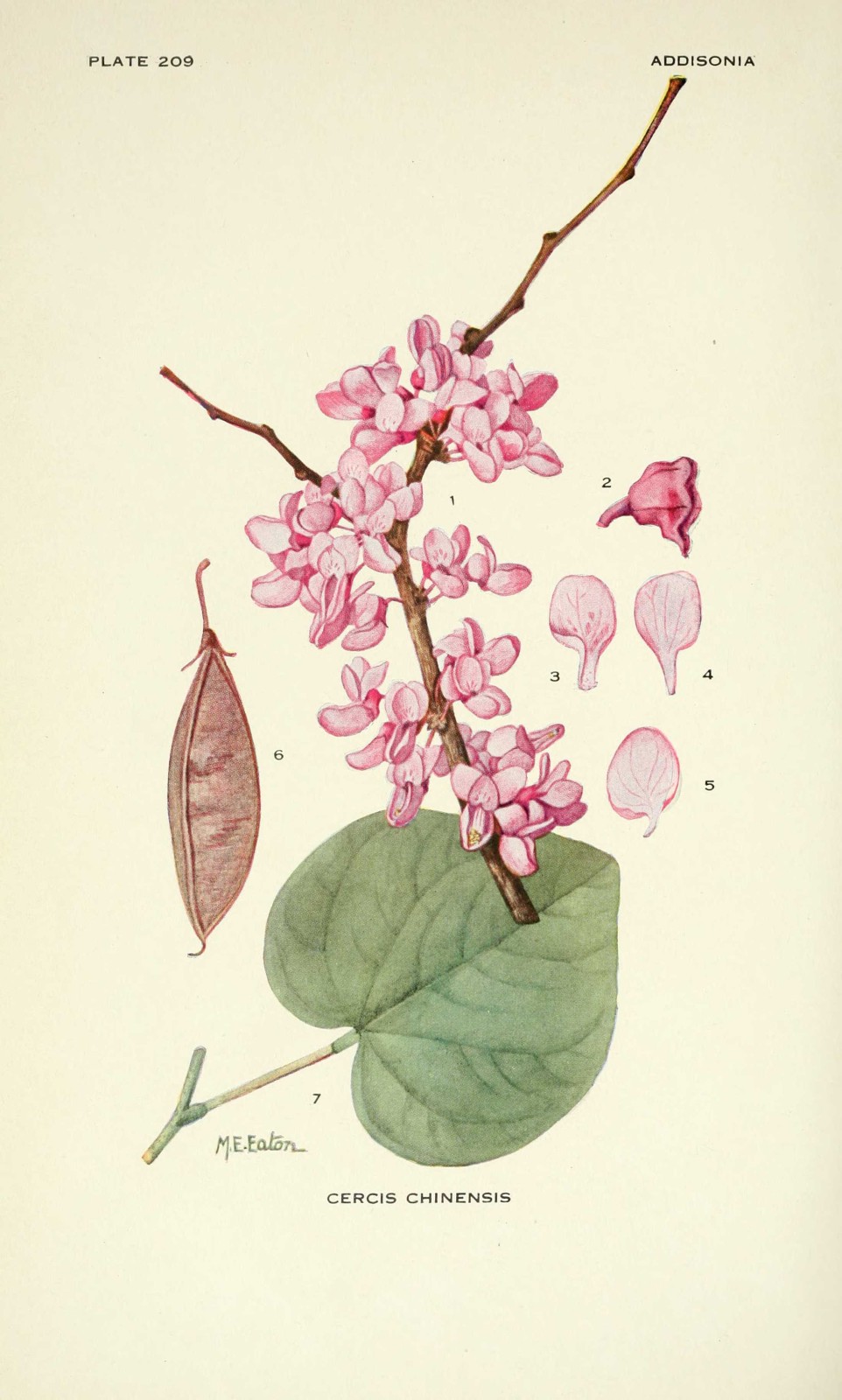
1.紫荆(原变型)Cercis chinensis Bunge
俗名:老茎生花、紫珠、裸枝树、满条红、白花紫荆、白花紫荆、短毛紫荆
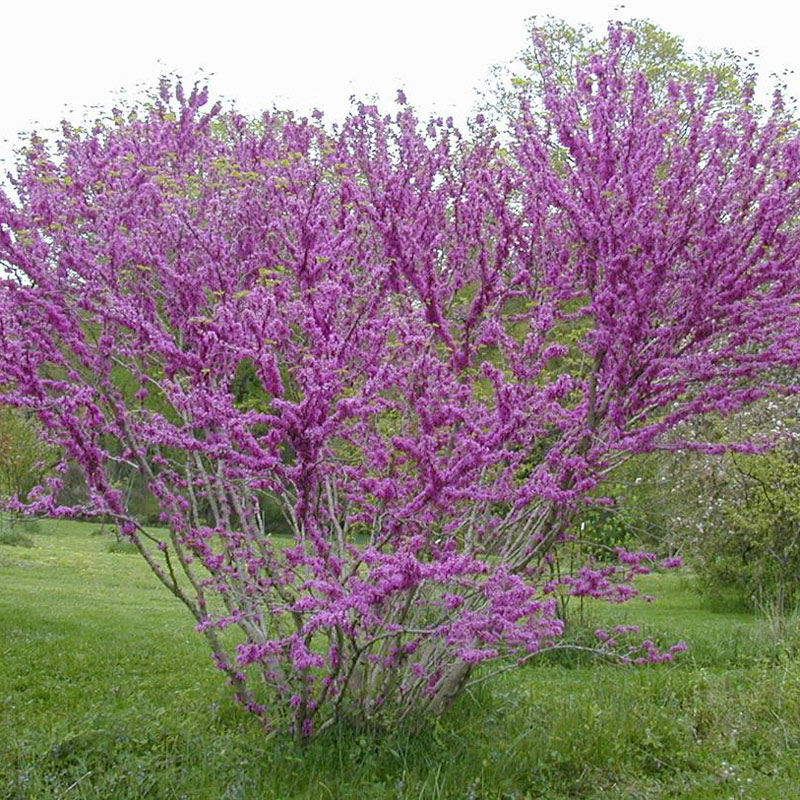
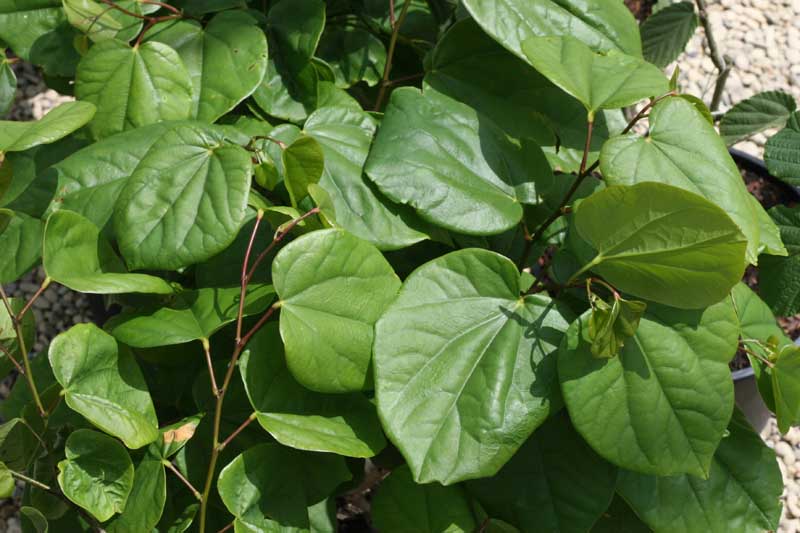
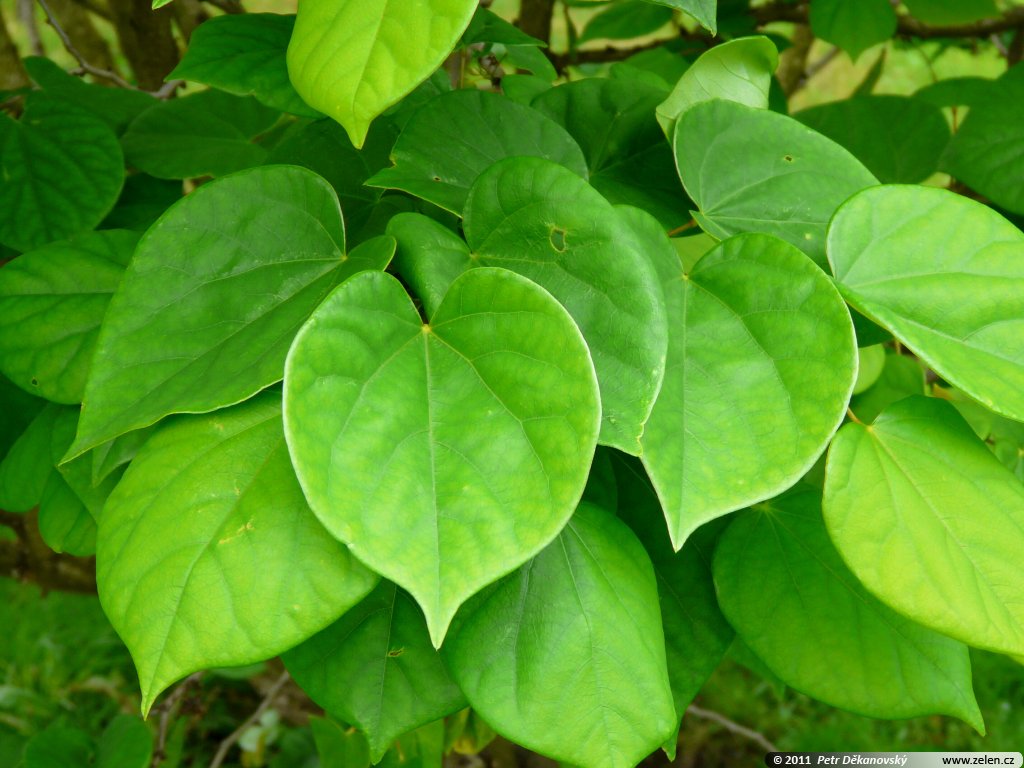
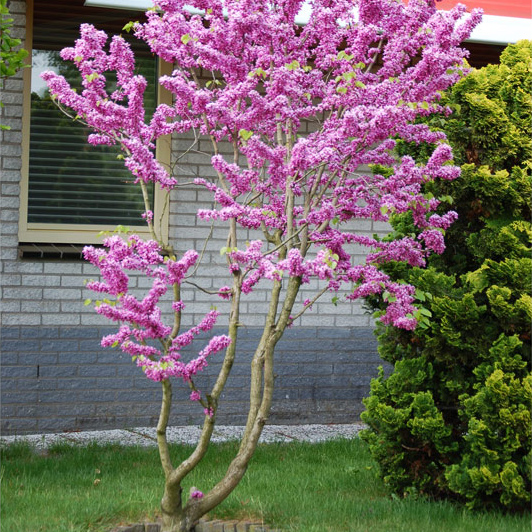
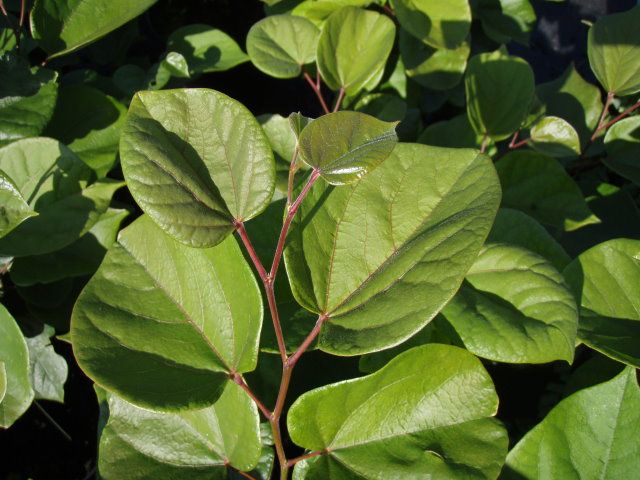
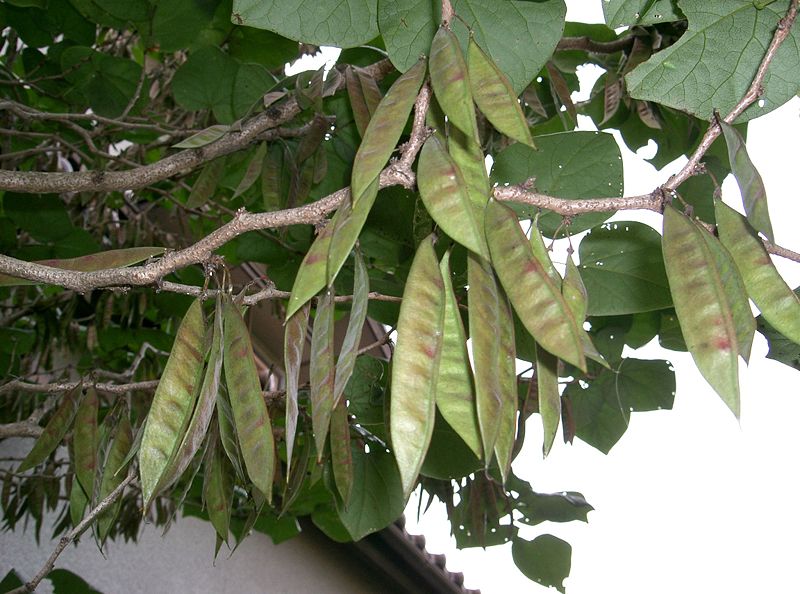
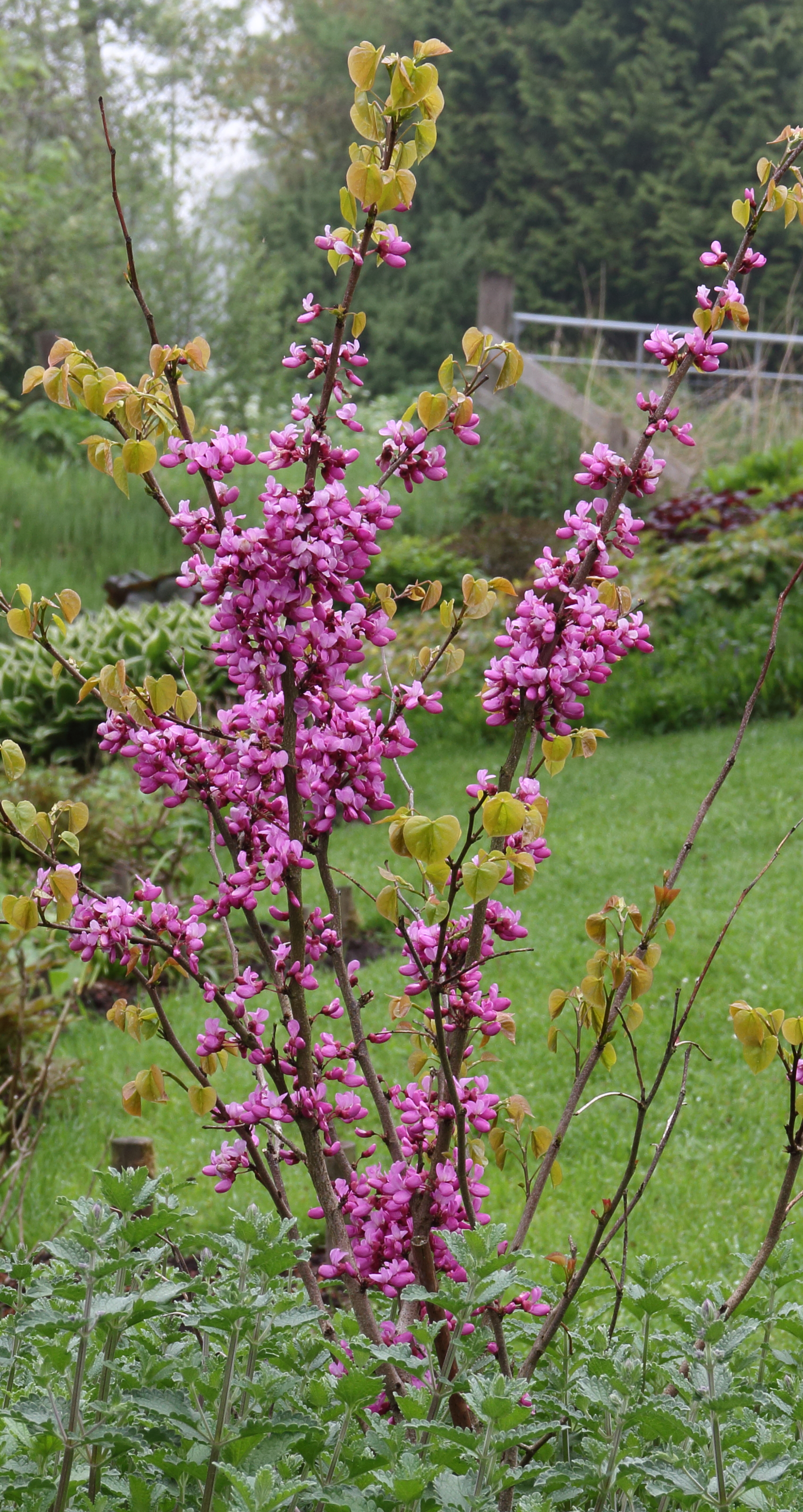
丛生或单生灌木,高2-5米;树皮和小枝灰白色。叶纸质,近圆形或三角状圆形,长5-10厘米,宽与长相若或略短于长,先端急尖,基部浅至深心形,两面通常无毛,嫩叶绿色,仅叶柄略带紫色,叶缘膜质透明,新鲜时明显可见。花紫红色或粉红色,2-10余朵成束,簇生于老枝和主干上,尤以主干上花束较多,越到上部幼嫩枝条则花越少,通常先于叶开放,但嫩枝或幼株上的花则与叶同时开放,花长1-1.3厘米;花梗长3-9毫米;龙骨瓣基部具深紫色斑纹;子房嫩绿色,花蕾时光亮无毛,后期则密被短柔毛,有胚珠6-7颗。荚果扁狭长形,绿色,长4-8厘米,宽1-1.2厘米,翅宽约1.5毫米,先端急尖或短渐尖,喙细而弯曲,基部长渐尖,两侧缝线对称或近对称;果颈长2-4毫米;种子2-6颗,阔长圆形,长5-6毫米,宽约4毫米,黑褐色,光亮。花期3-4月;果期8-10月。
产我国东南部,北至河北,南至广东、广西,西至云南、四川,西北至陕西,东至浙江、江苏和山东等省区。为一常见的栽培植物,多植于庭园、屋旁、寺街边,少数生于密林或石灰岩地区。模式标本采自北京(栽培植物)。
本种是一美丽的木本花卉植物。树皮可入药,有清热解毒,活血行气,消肿止痛之功效,可治产后血气痛、疗疮肿毒、喉痹;花可治风湿筋骨痛。
Cercis chinensis, the Chinese redbud, is a plant in the legume the family Fabaceae, native to China.
Cercis chinensis
Common Name(s): Chinese Redbud
Description:
The Chinese redbud紫荆 is native to the woodlands of central and southern China. The genus name Cercis comes from the Greek word kerkis which means weaver's shuttle, referring to the fact that the seed pod resembles the size and shape of a weaver's shuttle used to move thread back and forth on a loom.
In its native habitat, this plant acts as a woody tree that will grow up to 50 feet, however, due to differing conditions in the United States it generally grows as an open shrub that will reach 8 to 15 feet in height. It is similar in appearance to the Cercis canadensis which is native to North America however with several distinctions. It generally produces slightly larger purplish flowers, will end up growing to a shorter height than its North American counterpart and have longer seed pods.
The flowers on both species of redbud bloom in very early Spring for around 2 to 3 weeks, producing a brilliant display of clustering purple-pink flowers. After the flowering season, desirable medium-sized, heart-shaped leaves are produced. These leaves are bright green but do not have exemplary color in the fall and will at best turn yellow. Also of interest, this tree produces flat, bean-like seed pods which mature in late summer.
Developing a deep tap root, this tree is difficult to relocate. Choose the correct location when planting. Most forms are multi-stemmed shrubs, however single trunk cultivars like 'Don Egolf' do exist. Don Egolf is also noted for being shorter than many other C. chinensis varieties and for being sterile, as such it will not produce seed pods.
Plant in well-drained soil with medium moisture and not too much clay. This attractive shrub or small tree works well in shrub borders, planted in small groups or as a specimen, in a woodland garden or naturalized area. It can also be grown in a larger container and withstands the demands of being planted in a lawn or used as a street tree in urban areas.

四、凤凰木属 Delonix Raf.
高大乔木,无刺。大型二回偶数羽状复叶,具托叶;羽片多对;小叶片小而多。伞房状总状花序顶生;花两性,大而美丽,白色、橙色和鲜红色;苞片小,早落;花托盘状或陀螺状;萼片5,倒卵形,近相等,镊合状排列;花瓣5,与萼片互生,圆形,具柄,边缘皱波状;雄蕊10枚,离生,下倾;子房无柄,有胚珠多颗,花柱丝状,柱头截形。荚果带形,扁平,下垂,2瓣裂,果瓣厚木质,坚硬;种子横长圆形。
全世界2-3种。分布于非洲东部、马达加斯加至热带亚洲。我国引种栽培1种,见于广东、广西、云南、福建和台湾等省区。
1. 凤凰木(广州) 凤凰花、红花楹(广州)、火树Delonix regia (Boj.) Raf.
俗名:火凤凰、金凤花、红楹、火树、红花楹、凤凰花
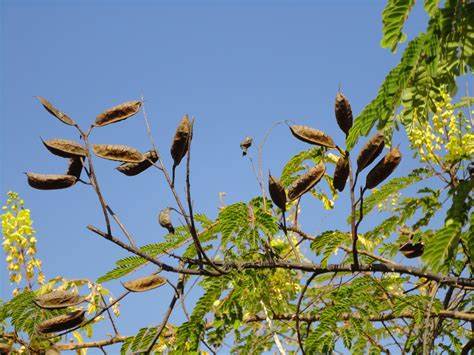
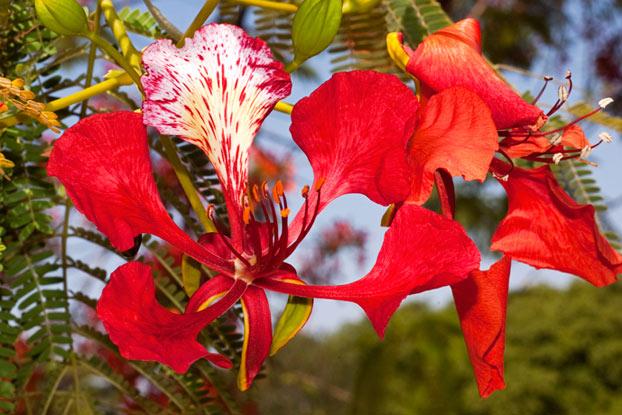
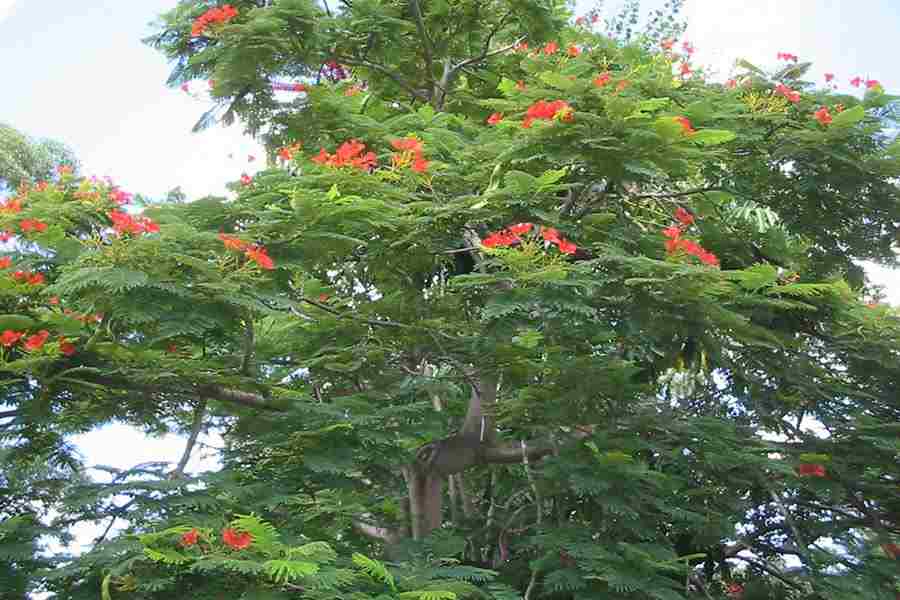
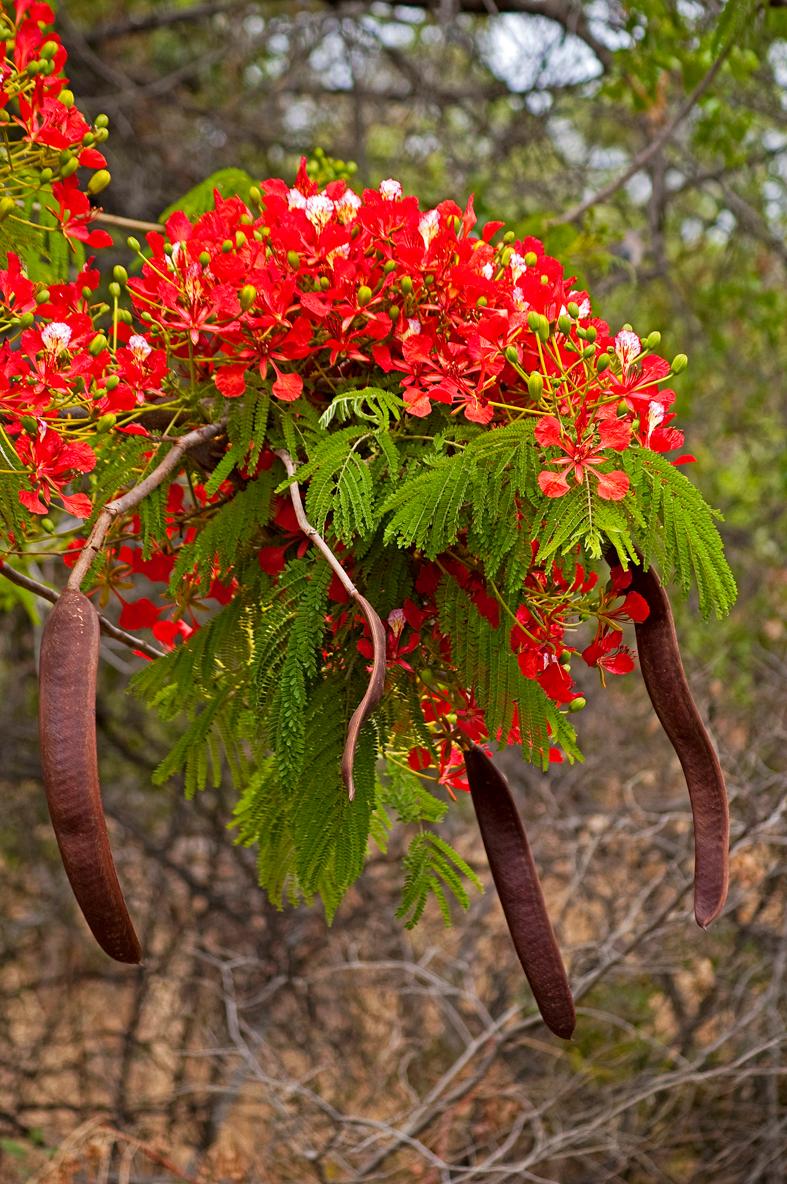
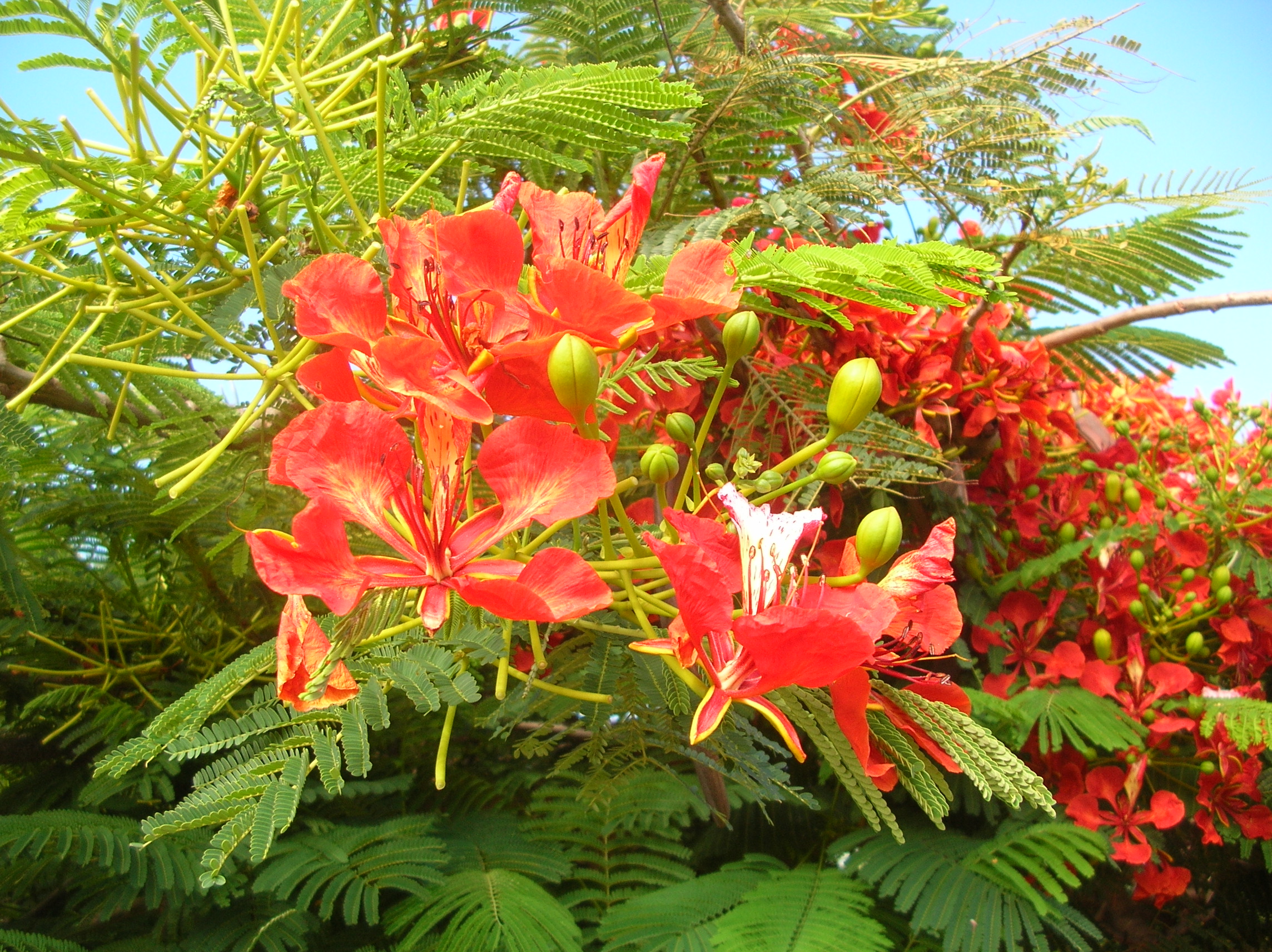
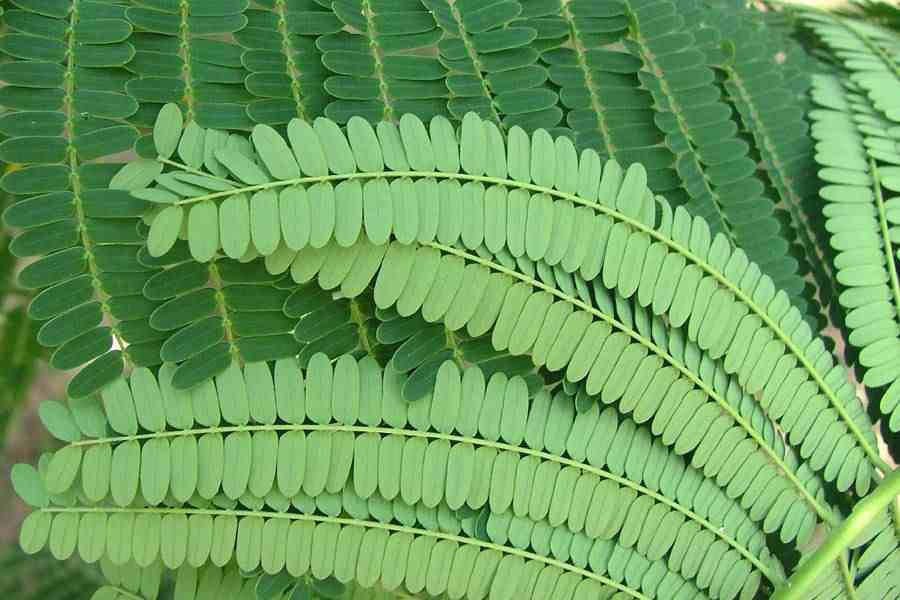
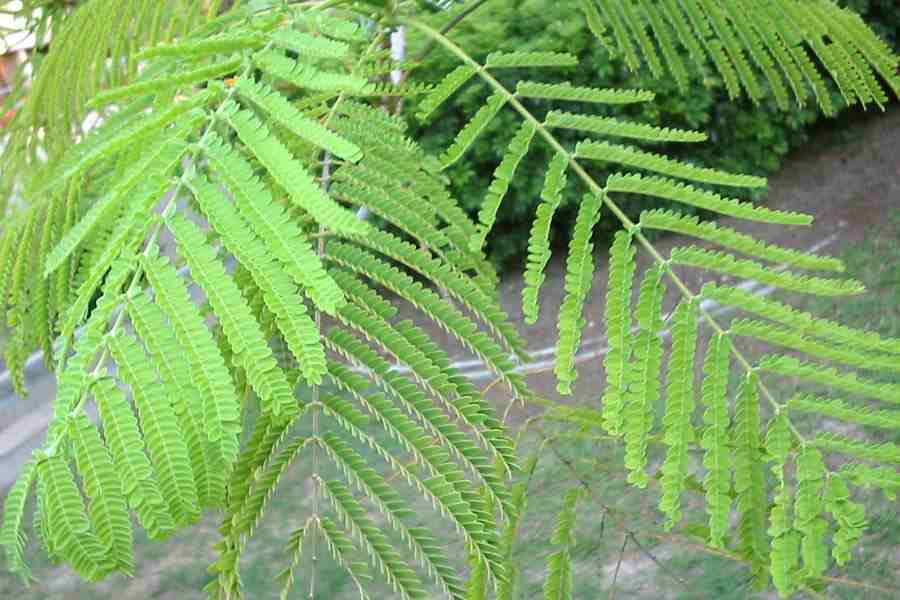
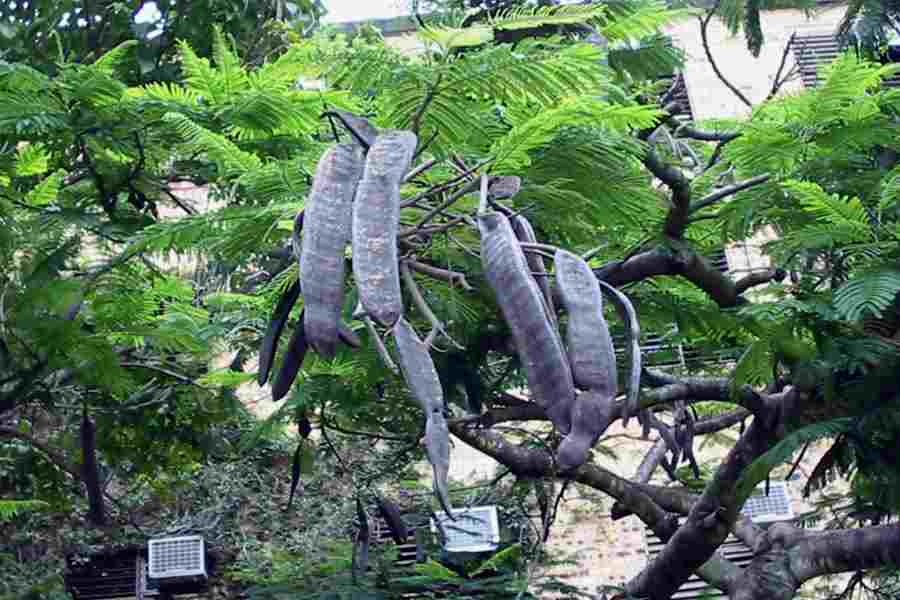
高大落叶乔木,无刺,高达20余米,胸径可达1米;树皮粗糙,灰褐色;树冠扁圆形,分枝多而开展;小枝常被短柔毛并有明显的皮孔。叶为二回偶数羽状复叶,长20-60厘米,具托叶;下部的托叶明显地羽状分裂,上部的成刚毛状;叶柄长7-12厘米,光滑至被短柔毛,上面具槽,基部膨大呈垫状;羽片对生,15-20对,长达5-10厘米;小叶25对,密集对生,长圆形,长4-8毫米,宽3-4毫米,两面被绢毛,先端钝,基部偏斜,边全缘;中脉明显;小叶柄短。伞房状总状花序顶生或腋生;花大而美丽,直径7-10厘米,鲜红至橙红色,具4-10厘米长的花梗;花托盘状或短陀螺状;萼片5,里面红色,边缘绿黄色;花瓣5,匙形,红色,具黄及白色花斑,长5-7厘米,宽3.7-4厘米,开花后向花萼反卷,瓣柄细长,长约2厘米;雄蕊10枚;红色,长短不等,长3-6厘米,向上弯,花丝粗,下半部被绵毛,花药红色,长约5毫米;子房长约1.3厘米,黄色,被柔毛,无柄或具短柄,花柱长3-4厘米,柱头小,截形。荚果带形,扁平,长30-60厘米,宽3.5-5厘米,稍弯曲,暗红褐色,成熟时黑褐色,顶端有宿存花柱;种子20-40颗,横长圆形,平滑,坚硬,黄色染有褐斑,长约15毫米,宽约7毫米。花期6-7月,果期8-10月。
原产马达加斯加,世界热带地区常栽种。我国云南、广西、广东、福建、台湾等省栽培。
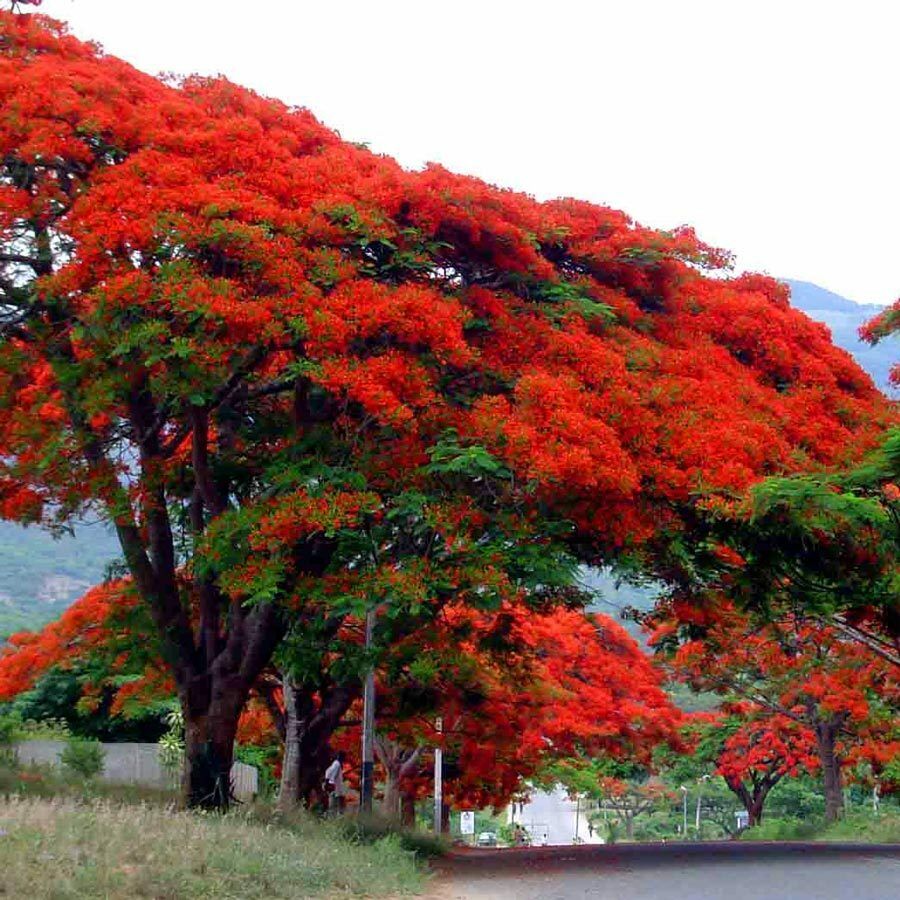
本种在我国南方城市的植物园和公园栽种颇盛,作为观赏树或行道树。树冠扁圆而开展,枝叶密茂,花大而色泽鲜艳,盛开时红花与绿叶相映,色彩夺目,特别艳丽,故名凤凰木。
树脂能溶于水,用于工艺;木材轻软,富有弹性和特殊木纹,可作小型家具和工艺原料。种子有毒,忌食。
Delonix regia is a species of flowering plant in the bean family Fabaceae, subfamily Caesalpinioideae native to Madagascar. It is noted for its fern-like leaves and flamboyant display of orange-red flowers over summer. In many tropical parts of the world it is grown as an ornamental tree and in English it is given the name royal poinciana, flamboyant, flame of the forest, or flame tree.
Description
The flamboyant (Delonix regia (Bojer) Raf.) is a perennial legume tree, grown in tropical and subtropical regions as an ornamental species because of its showy flowers. It is a valuable shade tree and the leaves and seed meal can be used to feed livestock.
Morphology
Delonix regia is a conspicuous(引人注目的), fast growing almost evergreen legume(豆科植物) tree that can be 10-30 m in height and is shallow-rooted. Tree can shed its leaves in areas with a marked dry season. The bole(树干、木材) is sometimes relatively short. The trunk may reach 2 m in girth(周长、腰身) and it can be buttressed(支撑、加固) towards the base. The bark is smooth, sometimes slightly cracked, with lenticels(皮孔). The crown is umbrella-shaped, broadly spreading its long horizontal branches. The overall tree is thus larger in diameter than in height. The twigs(细枝、嫩枝) are stout(强壮、结实), greenish, finely hairy when young becoming brown. The leaves are bipinnate(二回羽状的), alternate, feathery, 20-60 cm long, bearing 10-25 pairs of pinnae(羽、翼), each with 30-60 opposite leaflets. The leaflets are 0.5-1 cm long, stalkless, minutely(精密的) hairy on both sides. The inflorescences are slightly fragrant corymbs borne laterally at the end of the twigs. The inflorescence bears large (5-13 cm), magnificent flowers, orange-red in colour, loosely arranged on 5-7.5 cm long stalks. The 4 clawed-petals are spoon-like in shape and the 5 sepals are thick, green in color, finely hairy. The fruit is a 30-75 cm long pod, It is green and flaccid(柔软的) when young, turning to brown and woody at maturity. The pods remain on the tree after it has shed its leaves. The 30-45 seeds contained in the pods are hard, greyish, mottled(斑驳的), oblong in shape, looking like date pits. They are hardcoated. The taxon name Delonix regia is after the greek "delos" meaning visible and "onyx" meaning claw and the latin "regia" meaning royal, magnificent. Most of the common names for Delonix regia (see Common names) are derived from the colour of its flowers .
Uses
The main use of the flamboyant is ornamental. It is mostly planted in parks and avenues for its magnificent flowering and as a shade tree for cows or for other tree species in plantations, for instance in tea plantations. However, as the tree has been known to collapse without warning, they are no longer so popular as street trees in South Africa (Roux, 2003). Delonix regia leaves provide forage for livestock and the seed meal can be fed to farm animals. The flowers are a good and profuse(慷慨的) source of feed for bees. The wood and the woody pods can be used as firewood. The timber can be used for light construction, fence posts or pirogues. The seeds can be used as pearls in collars. The bark is useful in ethnomedicine and the leaves and flowers have been reported to have herbicide effects on Mikania micrantha, an invasive climber. The wood ash of Delonix regia could significantly reduce several fungi and insects .
Distribution
Delonix regia originated from Madagascar where it is now almost extinct. Because of its ornamental potential, it has been introduced in many tropical and subtropical areas where it became naturalized and is now cosmopolitan wherever there is no risk of frost. It is found in both hemispheres from 12°N to 25 °S and from sea level up to 2000 m altitude in places where annual rainfall is between 700 and 1800 mm and where average annual temperature is the range of 18-26°C. It does not grow where minimal temperature is lower than 6°C. If rainfall is not high enough, it should be irrigated or it will shed its leaves. It does not survive dry spells of more than 6 months with less than 40 mm water.
The flamboyant thrives on well-drained soils with a wide range of pH from acidic to alkaline and it has some tolerance of salinity, especially of salt winds. In India, seedlings were found to have good growth performance and to be suitable for plantation and provision of fodder in lateritic soils. On the contrary, flamboyants had poor performance on alluvial soils (Nath et al., 1990; Nath et al., 1989). Delonix regia is a full sunlight tree that will grow weakly and sparsely under shade. It is a good shade tree in plantations (Rojas-Sandoval et al., 2013; Orwa et al., 2009).


五、皂荚属 Gleditsia Linn.
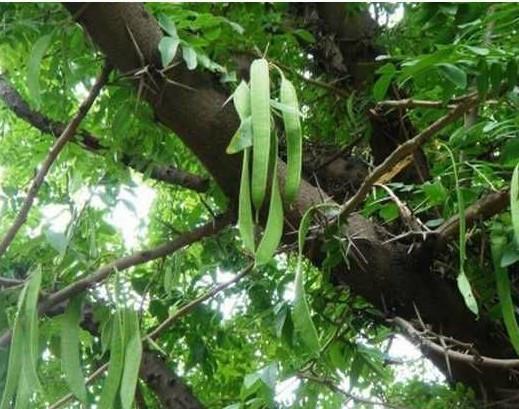
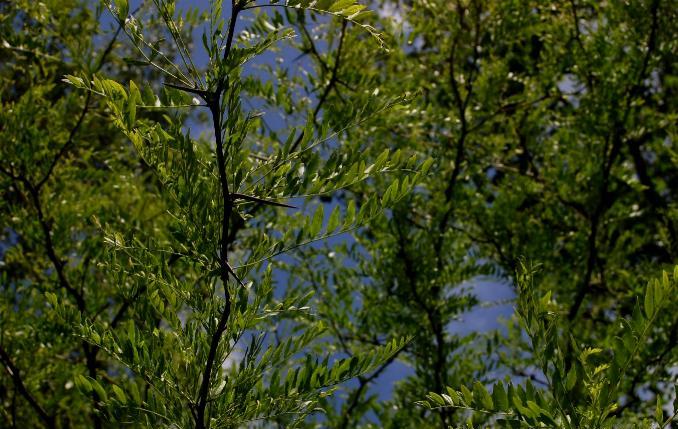
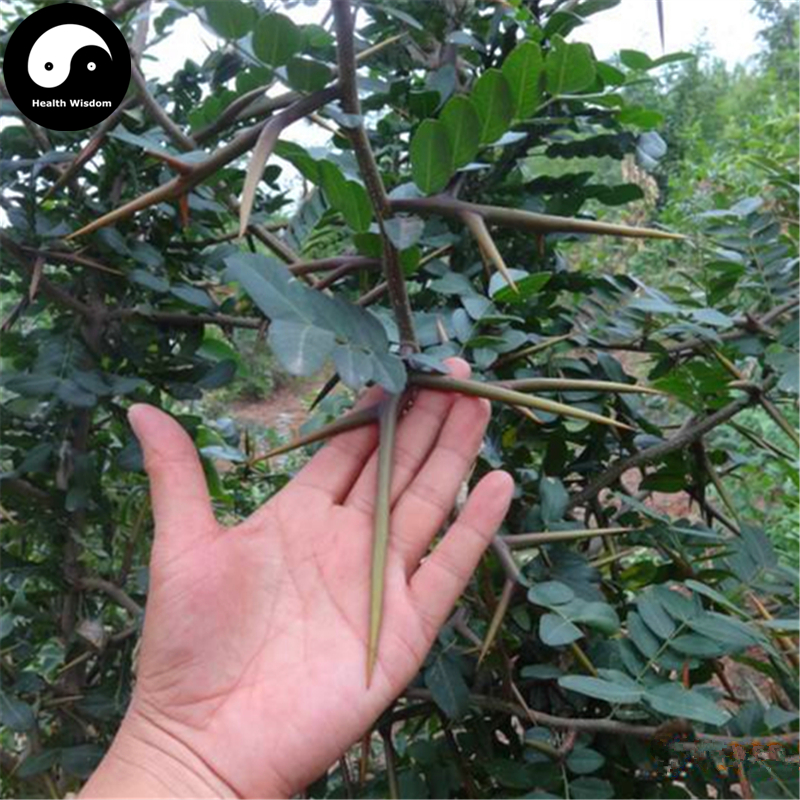
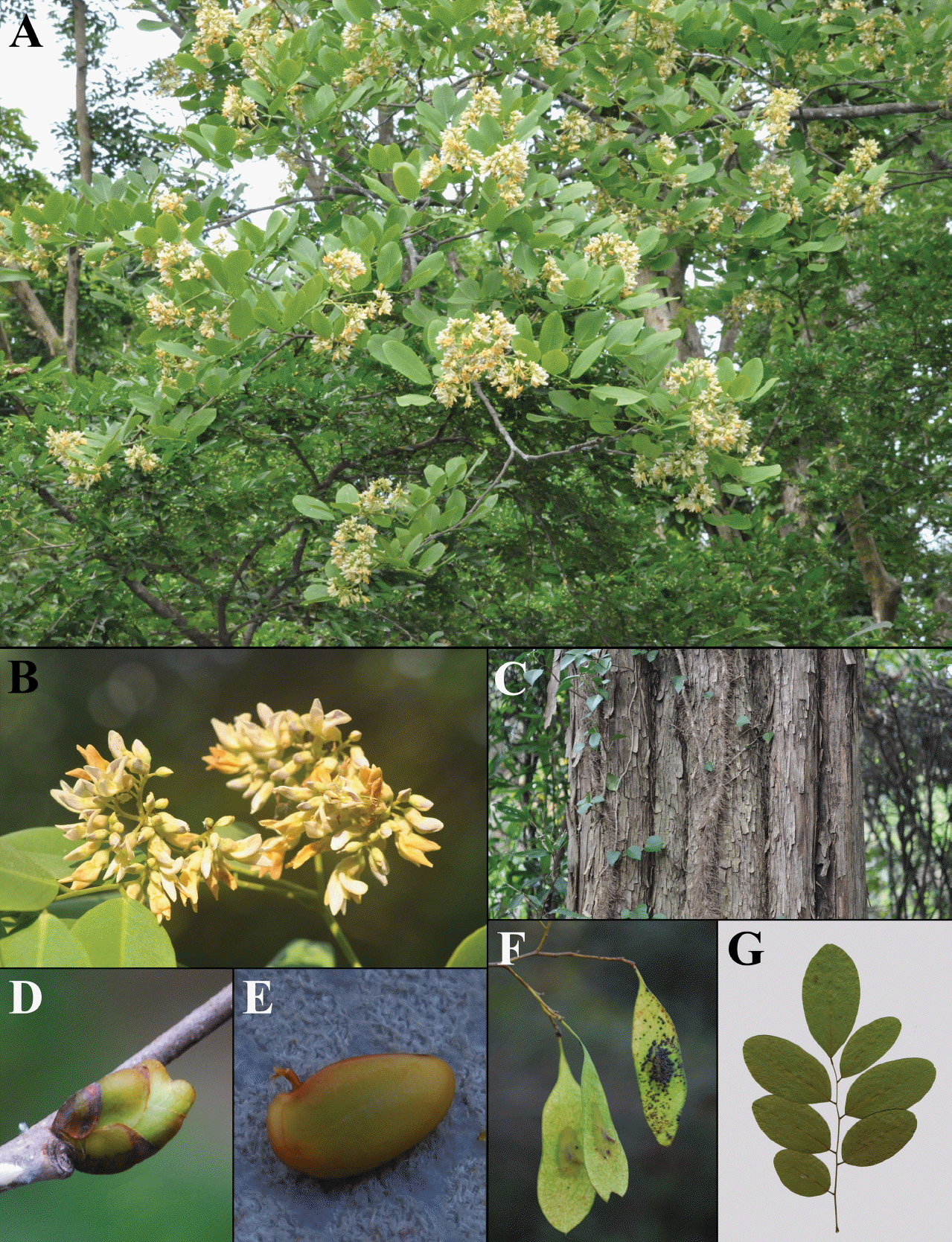
落叶乔木或灌木;干和枝通常具分枝的粗刺。叶互生,常簇生,一回和二回偶数羽状复叶常并存于同一植株上;叶轴和羽轴具槽;小叶多数,近对生或互生,基部两侧稍不对称或近于对称,边缘具细锯齿或钝齿,少有全缘;托叶小,早落。花杂性或单性异株,淡绿色或绿白色,组成腋生或少有顶生的穗状花序或总状花序,稀为圆锥花序;花托钟状,外面被柔毛,里面无毛;萼裂片3-5,近相等;花瓣3-5,稍不等,与萼裂片等长或稍长;雄蕊6-10,伸出,花丝中部以下稍扁宽并被长曲柔毛,花药背着;子房无柄或具短柄,花柱短,柱头顶生;胚珠1至多数。荚果扁,劲直、弯曲或扭转,不裂或迟开裂;种子1至多颗,卵形或椭圆形,扁或近柱形。染色体2n=28。
全世界约16种。分布于亚洲中部和东南部和南北美洲。我国产6种2变种,广布于南北各省区。
本属植物木材多坚硬,常用于制作器具;荚果煎汁可代皂供洗涤用。
1. 野皂荚(中国树木分类学) 山皂角、马角刺(河南),小皂角(山西),短荚皂角(河北习见树木图说)
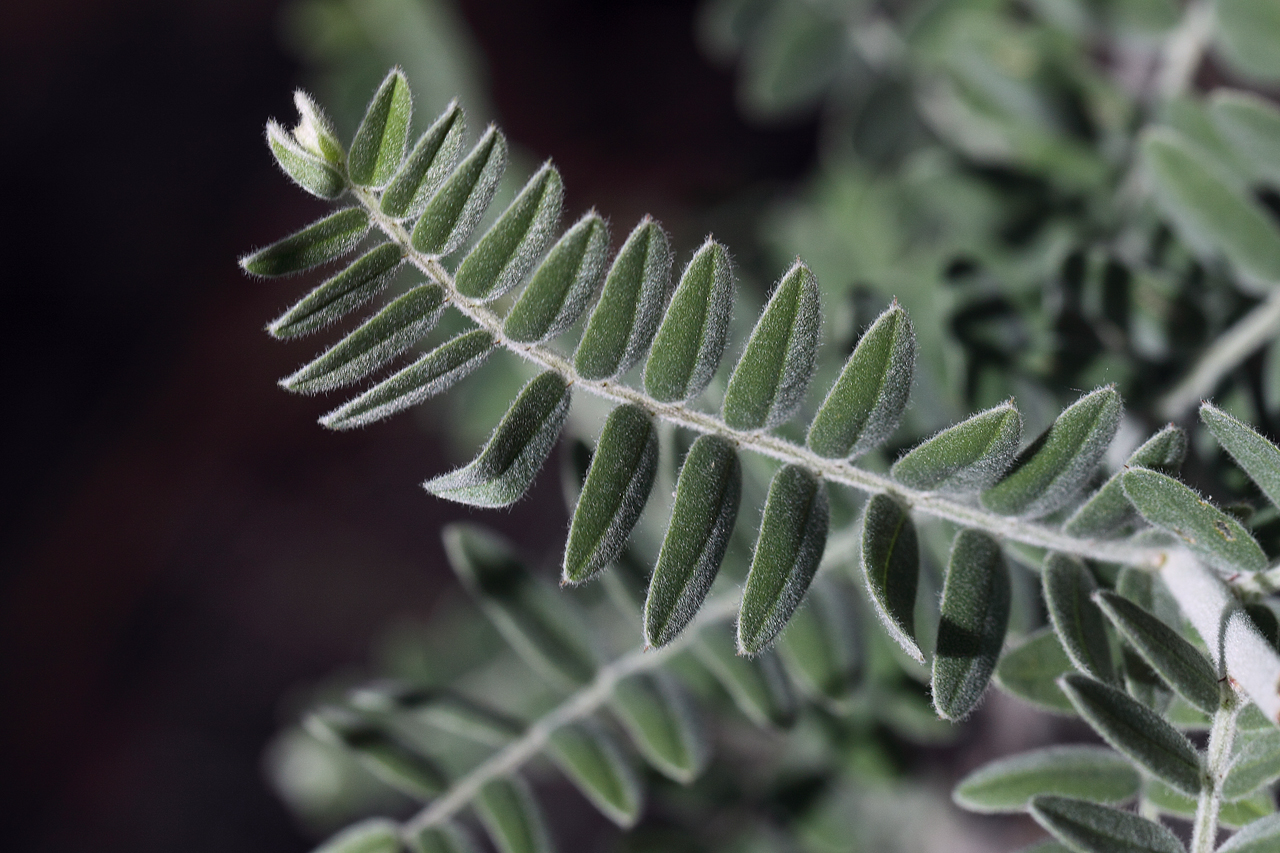
Gleditsia microphylla Gordon ex Y. T. Lee
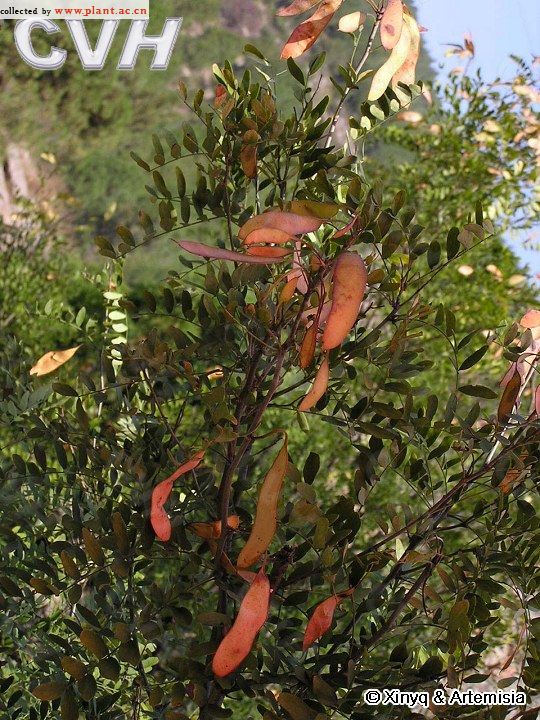
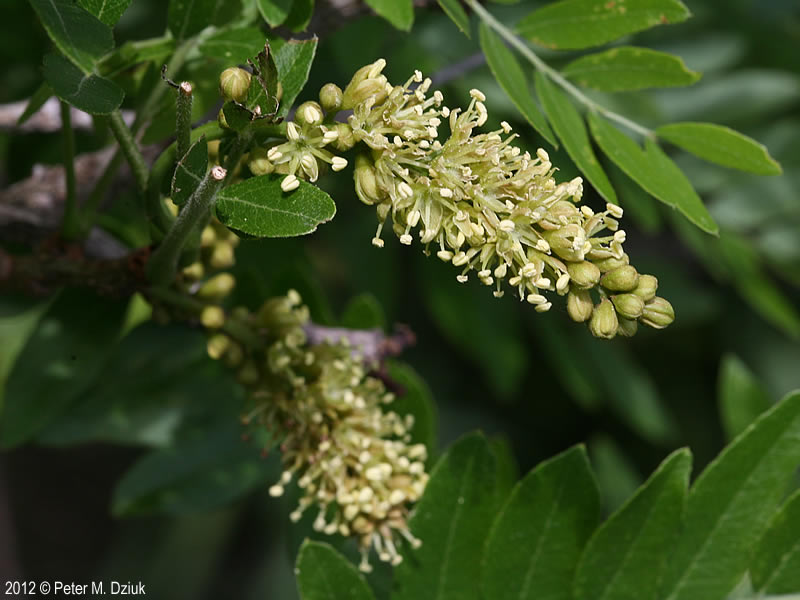
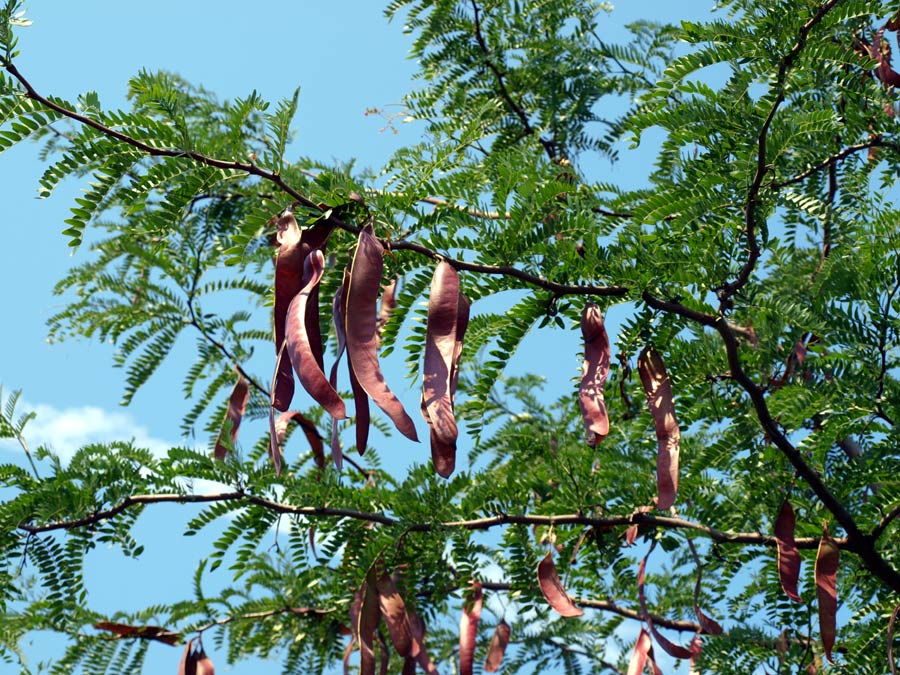
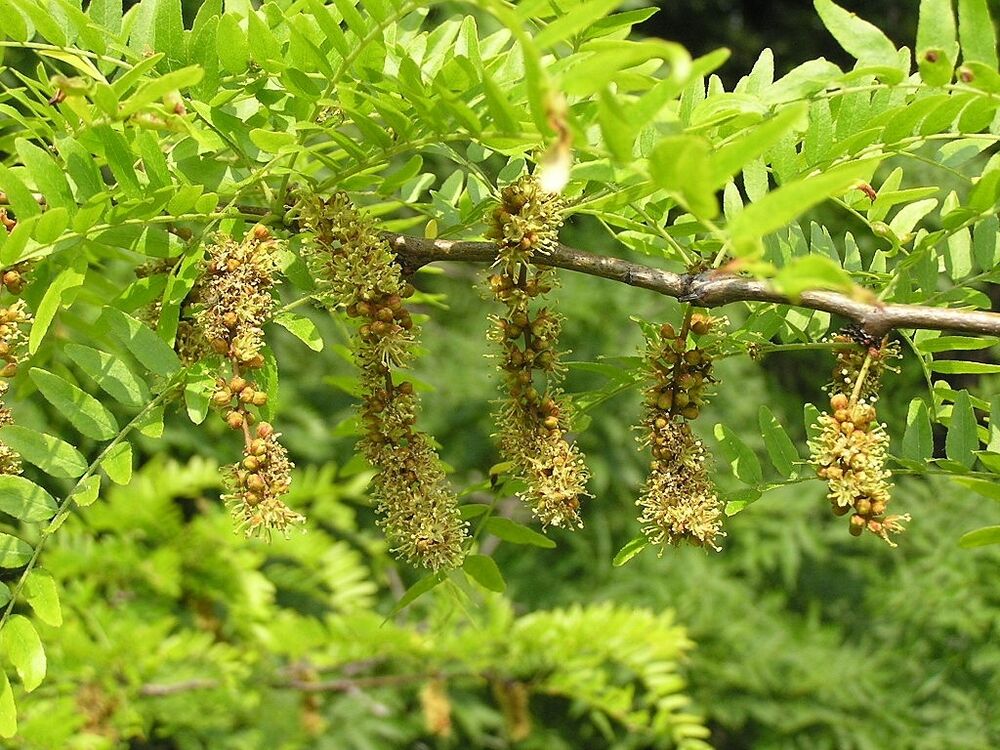
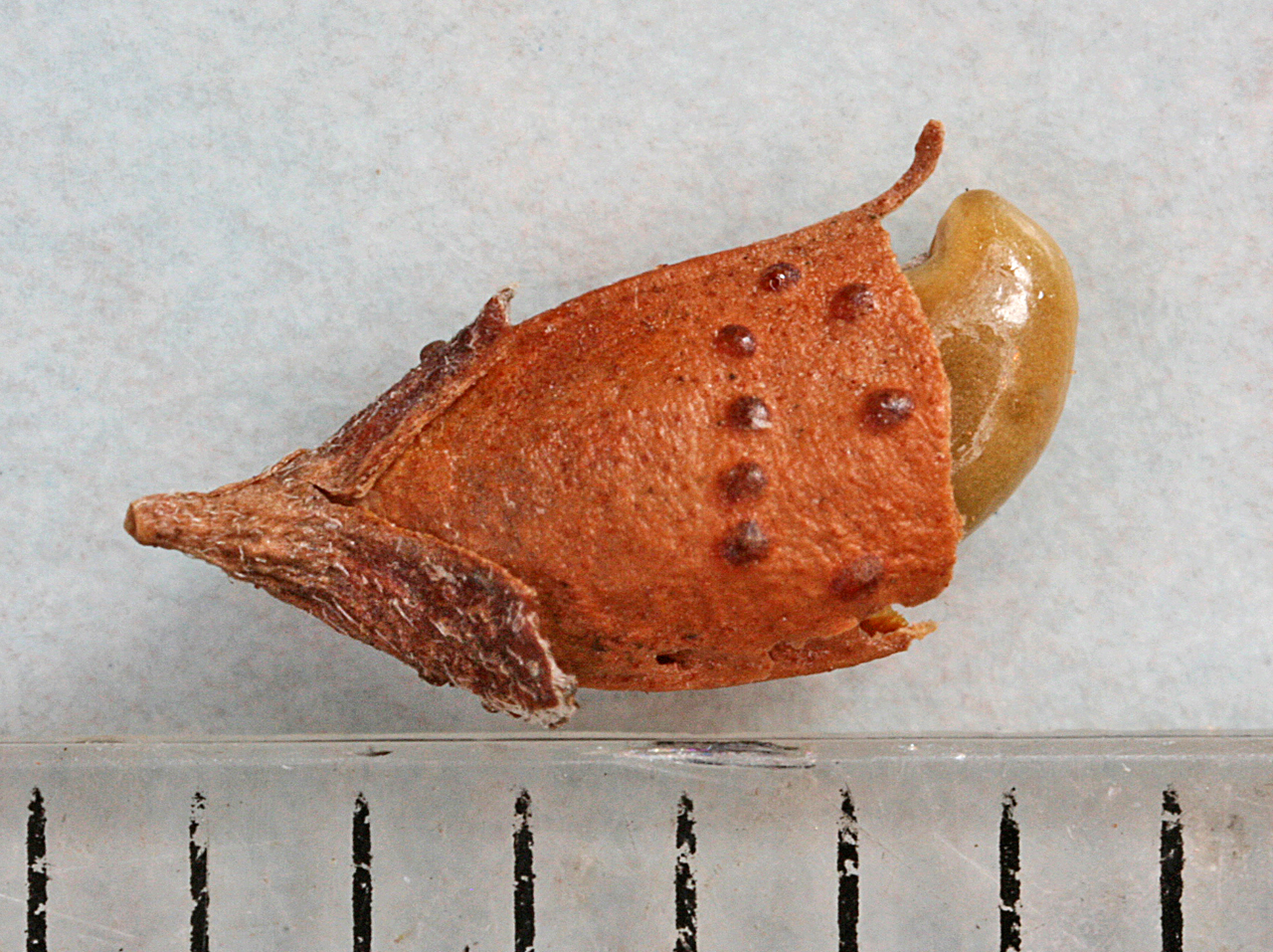
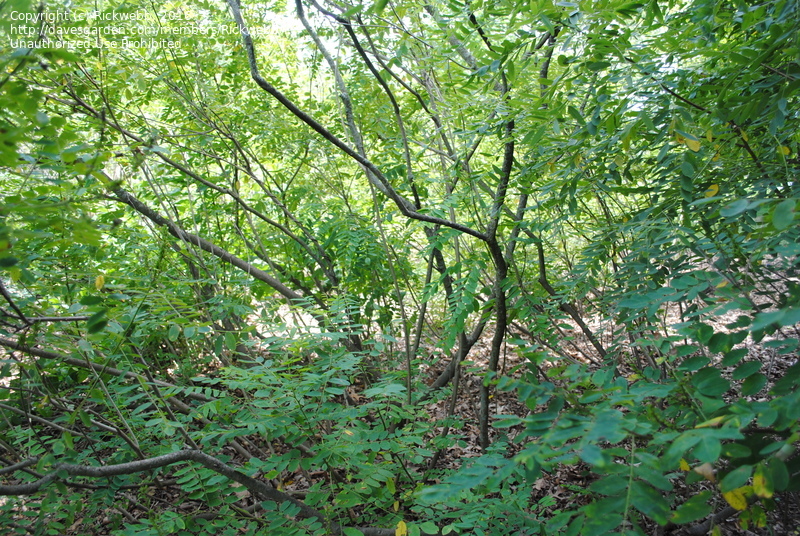
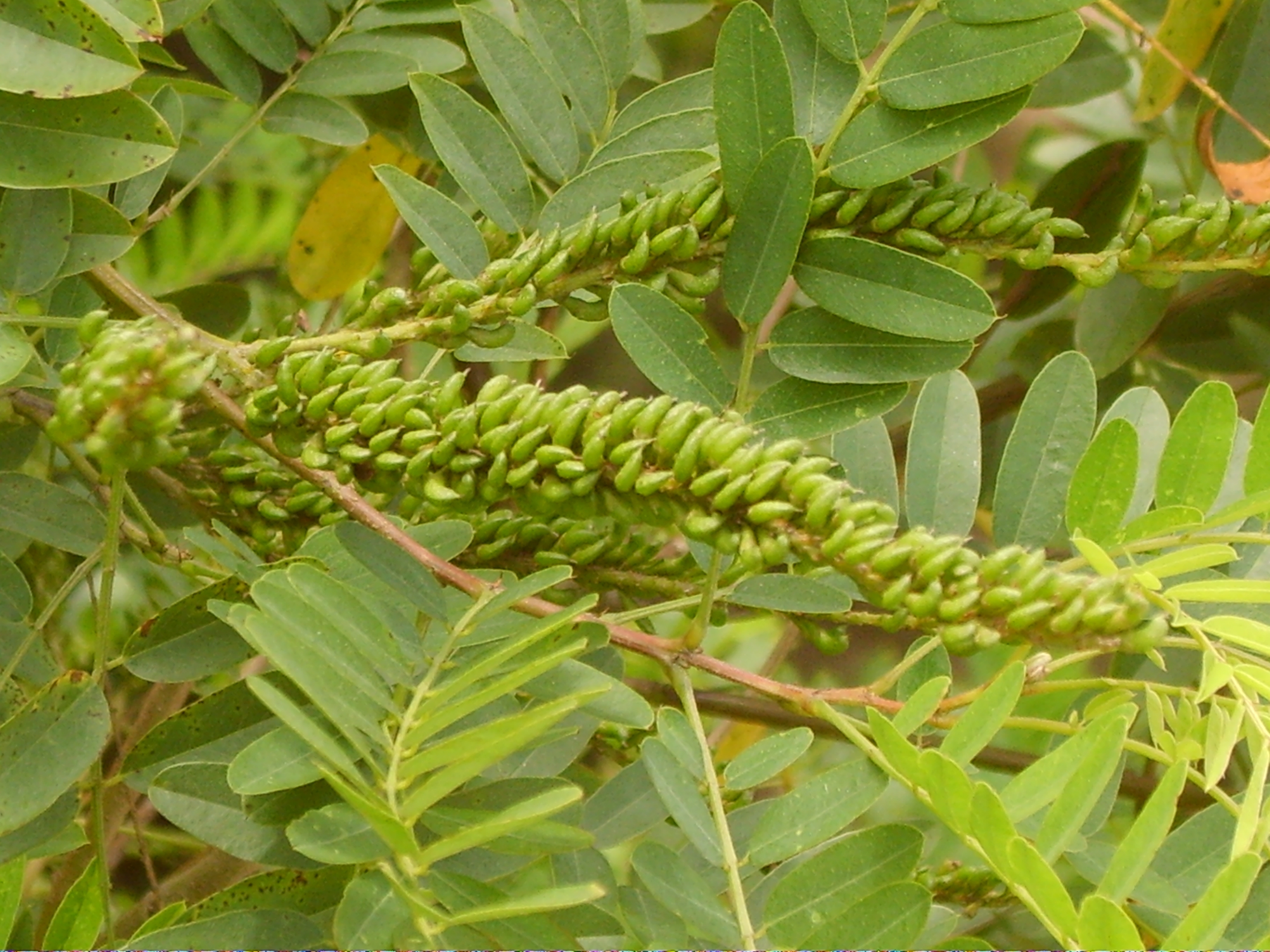
灌木或小乔木,高2-4米;枝灰白色至浅棕色;幼枝被短柔毛,老时脱落;刺不粗壮,长针形,长1.5-6.5厘米,有少数短小分枝。叶为一回或二回羽状复叶(具羽片2-4对),长7-16厘米;小叶5-12对,薄革质,斜卵形至长椭圆形,长6-24毫米,宽3-10毫米,植株上部的小叶远比下部的为小,先端圆钝,基部偏斜,阔楔形,边全缘,上面无毛,下面被短柔毛;叶脉在两面均不清晰;小叶柄短,长1毫米,被短柔毛。花杂性,绿白色,近无梗,簇生,组成穗状花序或顶生的圆锥花序;花序长5-12厘米,被短柔毛;苞片3,最下一片披针形,长1.5毫米,上面两片卵形,长1毫米,被柔毛;雄花:直径约5毫米;花托长约1.5毫米;萼片3-4,披针形,长2.5-3毫米;花瓣3-4,卵状长圆形,长约3毫米,与萼裂片外面均被短柔毛,里面被长柔毛;雄蕊6-8;两性花:直径约4毫米;萼裂片4,三角状披针形,长1.5-2毫米,两面被短柔毛;花瓣4,卵状长圆形,长2毫米,外面被短柔毛,里面被长柔毛;雄蕊4,与萼片对生;子房具长柄,无毛,有胚珠1-3。荚果扁薄,斜椭圆形或斜长圆形,长3-6厘米,宽1-2厘米,红棕色至深褐色,无毛,先端有纤细的短喙,果颈长1-2厘米;种子1-3颗,扁卵形或长圆形,长7-10毫米,宽6-7毫米,褐棕色,光滑。花期6-7月,果期7-10月。
产河北、山东、河南、山西、陕西、江苏、安徽。生于山坡阳处或路边,海拔130-1,300米。模式标本采自我国北部。